Undefined DIY Or Hire A Pro: 14 Essential Tools
Discover which home projects you can tackle yourself to save thousands and which ones require a professional touch to avoid costly mistakes.

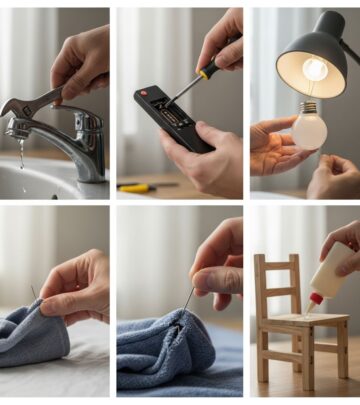
Homeownership comes with endless opportunities to improve your space, but each project brings a big question: Should you roll up your sleeves for a DIY effort or hire a professional? The choice impacts your wallet, safety, and results. DIY can save hundreds or thousands on labor, but botched jobs lead to expensive fixes or hazards. We consulted contractors, electricians, and plumbers to pinpoint what’s safe for amateurs and what demands expertise. This guide breaks it down with real savings data, tool lists, learning resources, and clear warnings.
Why Choose DIY Home Repairs?
Taking on home repairs yourself slashes costs dramatically. According to the U.S. Census Bureau’s American Housing Survey, homeowners save significantly by handling repairs and remodels personally. Labor often comprises 50-70% of project totals, so skipping pros keeps money in your pocket. Beyond savings, DIY boosts home value for resale and cuts utility bills via efficiency upgrades like better insulation or fixtures.
For instance, pros charge about $2,000 for interior painting (excluding paint), but DIYers finish for materials only, spreading work over weekends. Simple tasks build confidence and skills, turning novices into capable homeowners. However, misjudging complexity risks injury, code violations, or voided warranties. Always assess your skill level first.
Top DIY Home Repair Projects That Save Big
Not all fixes need experts. Start with these beginner-to-intermediate tasks proven to yield high returns.
Painting Your Home Interior
Interior painting tops the DIY list for savings. Professionals average $2,000-$3,000 for a standard home, plus paint costs. DIY drops this to $200-$500 in supplies. Prep by taping edges, laying drop cloths, and sanding surfaces. Apply primer, then two coats of paint using quality rollers and brushes. Tackle one room weekly to avoid burnout. You’ll achieve pro-like results with practice, refreshing your space affordably.
Installing Light Fixtures
Swap outdated lights for modern ones yourself if comfortable with basic wiring. Turn off power at the breaker, remove old fixture, connect wires (black to black, white to white, ground to green), and secure. Home Depot tutorials guide safely. Savings: $100-$300 in electrician fees. Partner with a spotter for ladder safety; skip if wiring seems complex.
Installing Ceiling Fans
Upgrade to a ceiling fan post-light fixture success. Fans save on cooling bills year-round. Disconnect power, remove old fixture, mount bracket, wire fan (match colors), and attach blades. Expect 1-2 hours; have help for balance. HomeAdvisor notes $250 labor savings. Ensure attic access for support bracing if needed.
Other Easy Wins
- Hanging Shelves or Pictures: Use stud finder, level, and anchors. Cost: Under $50 vs. $150 pro.
- Caulking and Sealing: Prevents leaks; $20 tube lasts months.
- Changing Locks or Doorknobs: Basic tools; enhances security cheaply.
- Minor Drywall Patches: Sand, patch, paint over small holes.
These build skills progressively, amassing savings over time.
14 Essential Tools for DIY Home Repairs
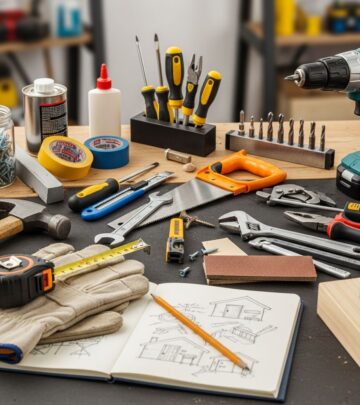
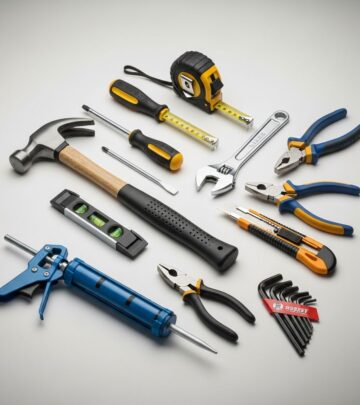
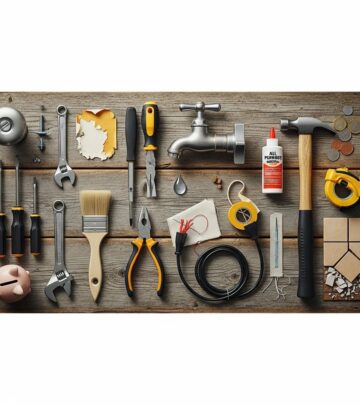
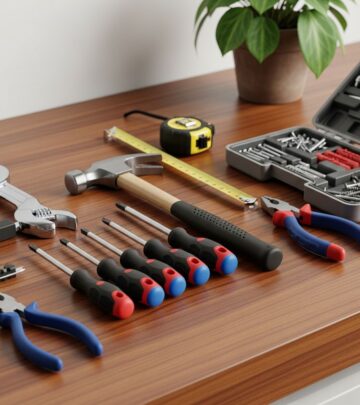
Stock a basic toolkit to handle 80% of tasks. Invest gradually; buy used where safe. Here’s the must-have list:
- Hammer: For nails, light demolition.
- Multibit screwdriver: Flathead and Phillips heads.
- Nails, screws, anchors: Variety pack.
- Cordless drill/driver: With bits for drilling/screwing.
- Tape measure: Accurate 25-footer.
- Retractable utility knife: For cutting.
- Putty knife: Scraping, patching.
- Paint brushes/rollers: Angled for trim.
- Pliers (needle-nose, slip-joint): Gripping wires.
- Stepladder: Stable, rated for weight.
- Stud finder: Locates framing.
- Socket wrench set: Nuts/bolts.
- Work lights: LED shop light.
- Hacksaw: Metal/plastic cutting.
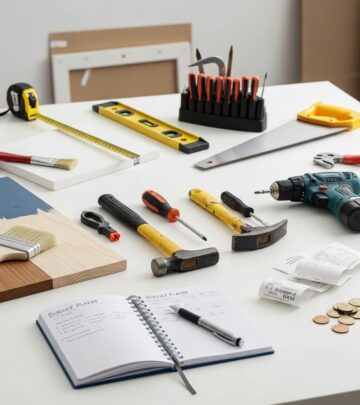
Budget $200-$400 initially. Advanced jobs may need circular saw or level, but rent specialty tools from home centers to test before buying.
How to Learn DIY Skills Confidently
No experience? No problem. Resources abound for safe learning.
- Online Videos: YouTube channels by licensed pros (search ‘how to install ceiling fan electrician’). Free, step-by-step.
- Workshops: Home Depot/Lowe’s offer free classes on painting, tools. Community colleges provide cheap certifications.
- Mentor Up: Ask handy friends/family; trade labor for lessons over dinner.
- Volunteer: Habitat for Humanity builds teach real-world skills while helping others.
- Apps/Books: ‘Home Repair for Dummies’ or iFixit guides.
Practice on small jobs first. Watch full tutorials before starting; pause for safety checks.
Projects You Must Hire a Pro For
Some tasks risk life, property, or legality if DIYed. Pros warn: Beyond basics, call experts.
| Project | Why Pro Only | Avg. Cost Savings Risk |
|---|---|---|
| Electrical Wiring (New Circuits) | Fire/shock hazard; code violations. | $500-$2,000; fines possible. |
| Plumbing (Repiping, Drains) | Water damage, mold; permits needed. | $300-$1,500; floods cost more. |
| Roofing/Shingles | Falls, leaks; warranty voids. | $1,000-$5,000; structural damage. |
| HVAC Installation | Gas leaks, inefficiency. | $2,000+; health risks. |
| Foundation Work | Cracks signal issues; engineering req. | $5,000+; home collapse. |
| Major Structural (Load-Bearing) | Permits, inspections mandatory. | Varies; insurance denies. |
Rule: If it involves permits, high voltage/gas, or heights over one story, hire licensed pros. Check reviews, get multiple quotes, verify insurance.
Cost Comparison: DIY vs. Pro
| Project | DIY Cost | Pro Cost | Savings |
|---|---|---|---|
| Painting (Interior) | $300 | $2,500 | $2,200 |
| Ceiling Fan Install | $150 (fan+tools) | $400 | $250 |
| Light Fixture | $50 | $250 | $200 |
| Full Roof | N/A | $10,000 | Risk outweighs |
Data from HomeAdvisor and Census. DIY shines on cosmetics; pros on technical.
Frequently Asked Questions (FAQs)
What’s the biggest DIY mistake beginners make?
Rushing without planning. Measure twice, cut once; follow tutorials fully.
Do DIY projects increase home value?
Yes, especially kitchens/baths. Neutral colors, quality work appeal to buyers.
How do I know if I need a permit?
Check local codes online or city hall. Electrical/plumbing/structural usually require.
Can renters do DIY repairs?
Minor cosmetics yes; get landlord OK. Avoid permanent changes.
What if DIY goes wrong?
Stop, assess damage. Pros fix most; insurance may cover if not negligence.
Mastering DIY-pro balance empowers smart homeownership. Start small, learn continuously, and save strategically.
References
- Learn These 20 DIY Home Repair Skills and Save Big — Timothy Moore, The Penny Hoarder. 2025-06-03. https://www.moneytalksnews.com/slideshows/20-free-diy-home-repair-skills-thatll-save-you-money/
- DIY or Hire a Pro? These Home Projects Need a Pro — The Penny Hoarder. Accessed 2026. https://www.thepennyhoarder.com/save-money/diy-or-hire-a-pro/
- American Housing Survey — U.S. Census Bureau. Recent data. https://www.census.gov/programs-surveys/ahs.html
- Cost of Home Repairs — HomeAdvisor (now Angi). 2025 data. https://www.angi.com/articles/how-much-do-handyman-services-cost.htm
Similar Articles








Read full bio of Sneha Tete