DIY Home Gym: Make Your Own Fitness Weights & Equipment
Create affordable workout gear at home using everyday items and household supplies.
DIY Fitness Gear: How to Make Homemade Weights and Other Workout Equipment
Building and maintaining a home fitness routine doesn’t require expensive equipment or a costly gym membership. With creativity and readily available materials from your local hardware store, supermarket, or kitchen cabinet, you can create a fully functional home gym that rivals commercial fitness facilities. According to fitness experts, everyday household items and inexpensive supplies can be transformed into effective workout tools that deliver comparable results to traditional weights and equipment.
Max Cicero, general manager and performance coach at a major fitness facility, emphasizes the versatility of DIY fitness solutions: “You can really use anything from weight vests to soup cans to gallon jugs. You can add resistance with your own body weight to make exercises more intense.” This approach allows you to build a customized workout environment tailored to your specific fitness goals while keeping your budget in check.
Making Dumbbells at Home
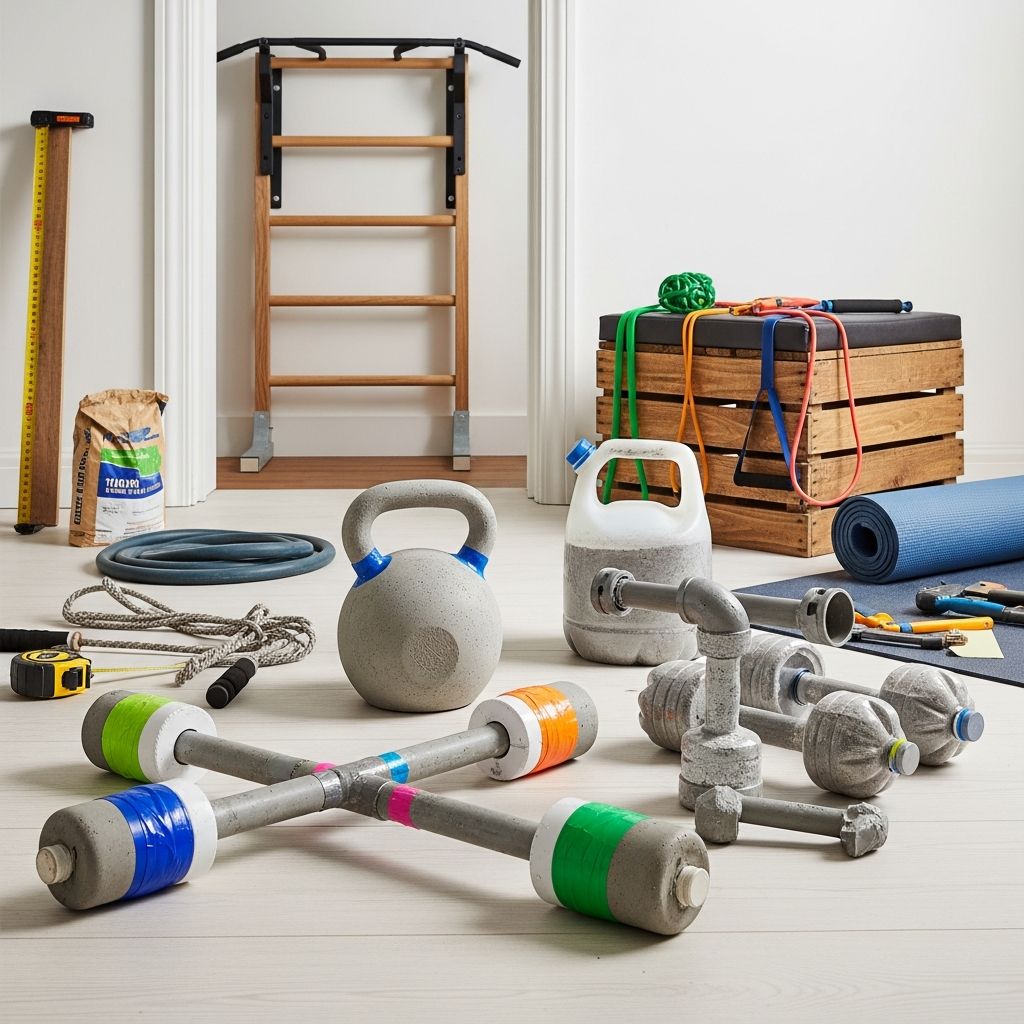
Creating your own dumbbells is one of the most straightforward DIY fitness projects. The basic concept involves filling containers with weighted materials and securing them to a handle for convenient use during exercises.
To make effective dumbbells, gather two gallon jugs and fill them with sand, rocks, or water—each material offers different advantages. Sand provides a consistent weight and smooth settling, rocks offer a more budget-friendly option if available, and water allows for easy weight adjustment by adding or removing liquid. Once filled, use sturdy socks to tie the jugs securely to either end of a metal rod, creating a barbell-style dumbbell.
One of the greatest advantages of this DIY approach is adjustability. You can easily modify the weight by switching to half-gallon jugs instead of full-gallon containers, allowing you to progress your workouts as you build strength. This flexibility means a single set of homemade dumbbells can serve multiple purposes across different workout routines.
Hand Weights and Portable Options
Beyond traditional dumbbells, several lightweight alternatives work excellently for upper body exercises and mobility work.
Water Bottles: Individual water bottles filled with sand or water create convenient hand weights for exercises requiring lighter resistance. These portable options are ideal for traveling or keeping at your desk for quick workout breaks throughout the day.
Wine Bottles: Before discarding empty wine bottles, consider repurposing them as hand weights. The glass construction provides durability, and the bottle’s design naturally accommodates a grip pattern similar to traditional dumbbells.
Canned Goods: Cans of beans, soup, or other pantry staples serve as ready-made weights without any modification necessary. This option is particularly convenient since these items are already in your kitchen and require no preparation time.
Ankle and Wrist Weights
Adding resistance to lower body and arm exercises becomes simple with homemade ankle and wrist weights. Fill knee socks with rocks, dried beans, or sand—materials that provide balanced weight distribution and won’t shift excessively during movement. Tie these filled socks securely around your wrists or ankles before engaging in walking routines, leg exercises, or arm-focused workouts. This approach adds intensity to bodyweight exercises while maintaining mobility and comfort.
Weighted Vests and Backpack Weights
For compound movements requiring significant added resistance, load a sturdy backpack with bricks or books wrapped in towels for padding protection. Wear this weighted backpack during squats, lunges, or other lower body exercises to dramatically increase intensity and challenge. This setup transforms a basic backpack into functional equipment that adds measurable resistance to your workouts.
Jump Ropes for Cardio Training
Effective jump rope training doesn’t require purchasing expensive equipment. First, determine the appropriate length by measuring twice the distance from your feet to your armpit—this standard measurement ensures proper rope length for safe jumping.
Nylon Rope Method: Cut a nylon rope to your desired length and attach short pieces of PVC pipes as handles. This combination provides durability and comfortable grip during extended jumping sessions.
Plastic Bag Alternative: For a completely free option, use plastic grocery bags by making loops, tying them together to create three strands of your desired length, and braiding the strands tightly together. Wrap each end with duct tape to create functional handles. While this method requires more preparation time, it produces a functional jump rope using completely recycled materials.
Water Flow Bar for Core Engagement
A PVC pipe partially filled with water creates an innovative tool that forces your body to engage its core muscles throughout movement. Hold the bar level while lifting it in various motions, focusing on keeping the water from flowing from one end to the other. This specialized tool works exceptionally well for deadlifts, crunches, and even walking patterns. The unstable nature of the water inside the pipe requires constant core activation and balance adjustment, significantly increasing exercise difficulty compared to traditional static weights.
DIY Medicine Ball
That same backpack mentioned earlier transforms into an effective medicine ball by using it for lifting or moving side-to-side during crunches and rotational exercises. The filled backpack provides weighted resistance during dynamic movements, allowing you to perform medicine ball exercises without purchasing specialized equipment.
Tire Training Equipment
Car repair shops frequently sell damaged or used tires for minimal cost, typically $20 and up. These tires offer remarkable versatility in your home workout routine. Use them as free weights for lifting and flipping movements, as elevated steps for cardio and plyometric training, as obstacles for jumping and agility drills, or as heavy implements for functional training exercises. A single tire can serve multiple purposes across different workout styles, making it an exceptionally valuable addition to your home gym.
Yoga Mat Alternatives
Quality yoga mats represent another area where household items can provide adequate substitutes.
Bath Mat: A bath mat featuring a rubber bottom that prevents slipping provides cushioning comparable to traditional yoga mats while adding extra comfort for floor exercises.
No-Skid Socks: No-skid socks with rubber treads on the bottoms enable stable, slip-free yoga practice without requiring a mat at all, offering maximum portability.
Stacked Towels: While a single towel provides basic surface coverage, stacking two or three towels together creates additional cushioning for more comfortable floor work and prolonged exercise sessions.
Homemade Resistance Bands
Resistance bands form an essential component of functional fitness training. Create effective resistance bands by tying a pair of tights or pantyhose into an oval approximately 20 inches long. These homemade bands provide stretchy resistance suitable for lower body work around your ankles.
For upper body resistance training, stand on the center of another pair of tights or pantyhose and pull upward on each leg, creating resistance work that effectively targets your arms and shoulders. This simple approach generates genuine resistance without requiring commercial resistance bands.
Intensifying Exercises Without Additional Weights
Beyond creating equipment, fitness professionals recommend several techniques for increasing exercise difficulty when weights aren’t available.
Slow Tempo Training
Instead of performing squats or other movements at rapid speed—one second down and one second up—dramatically increase difficulty by counting slowly to four during the descent phase. This extended time under tension significantly increases muscular demands and effectiveness, requiring no additional equipment.
Isometric Holds
Hold your position statically for several additional seconds when performing exercises such as leg lifts, push-ups, or squats. This technique maximizes muscular engagement without requiring external resistance, building significant strength through sustained tension.
Adding Manual Tension
Hold a broom handle, lacrosse stick, or small tree limb from your yard above your head with both hands, squeezing tightly throughout lunges or squats. This creates tension that activates your core and upper body muscles, increasing overall exercise intensity without adding external weight.
Equipment Comparison Table
| Equipment Type | Materials Needed | Cost | Adjustability | Best For |
|---|---|---|---|---|
| Homemade Dumbbells | Gallon jugs, sand/water, metal rod, socks | $5-15 | High | Upper body strength |
| Water Bottles | Empty water bottles, sand | Free-$5 | Medium | Hand weights, portability |
| Jump Rope | Nylon rope or plastic bags, PVC pipe, duct tape | $3-10 | Low | Cardio training |
| Resistance Bands | Tights or pantyhose | Free-$5 | Medium | Arm and leg resistance |
| Weighted Backpack | Backpack, bricks, books, towels | $10-25 | High | Lower body strength |
| Used Tire | Used car tire | $20+ | Low | Functional training, cardio |
Frequently Asked Questions
Q: What materials work best for filling homemade weights?
A: Sand, rocks, and water all work effectively. Sand provides consistent weight and smooth settling, rocks offer budget-friendly options, and water allows easy adjustability by adding or removing liquid. Choose based on your preference for weight stability and ease of adjustment.
Q: How do I ensure homemade weights are safe to use?
A: Use sturdy containers and secure all attachments thoroughly. Test your equipment by performing light movements before full-intensity training. Inspect regularly for damage or weakening of materials, and replace worn components immediately.
Q: Can I really get a complete workout using only homemade equipment?
A: Yes. Homemade weights, resistance bands, and your own bodyweight provide sufficient resistance for building strength, improving cardiovascular fitness, and increasing muscle endurance. Many fitness professionals confirm that DIY equipment delivers comparable results to commercial alternatives.
Q: How much does it cost to set up a complete home gym with DIY equipment?
A: Most basic setups cost between $30 and $75, dramatically less than commercial gym memberships or purchasing new equipment. Your exact costs depend on which pieces you choose and what materials you already have at home.
Q: What’s the best way to store homemade weights safely?
A: Store weights in a designated area away from high-traffic zones and away from children. Keep them on a sturdy shelf or rack to prevent damage and ensure easy access. Inspect storage areas regularly to confirm weights remain secure and undamaged.
Q: Can I make adjustable weights for progressive training?
A: Absolutely. Using water as your filling material allows easy weight adjustment by adding or removing liquid. You can also create multiple sets using different-sized containers to progress through various weight levels as your strength improves.
References
- How to Make Weights and Other Fitness Gear for Home Workouts — The Penny Hoarder. 2025. https://www.thepennyhoarder.com/save-money/homemade-weights/
- Physical Activity Guidelines for Americans — U.S. Department of Health and Human Services. 2018. https://health.gov/our-work/nutrition-physical-activity/physical-activity-guidelines
- Resistance Training for Health and Disease: Background, Prescription, Progression and Special Considerations — American College of Sports Medicine. 2022. https://www.acsm.org/
Similar Articles








Read full bio of Sneha Tete