DIY Dog Grooming: Skip the Groomer with These Supplies
Learn how to groom your dog at home and save hundreds on professional fees with essential tools and simple techniques.
Professional dog grooming can cost upwards of $80 plus tip every few months, turning a simple pamper session into a significant budget drain for pet owners. During lockdown periods when salons closed, many dog parents like myself faced exploding fur balls and smelly coats with no easy fix, prompting a shift to DIY dog grooming. With an initial investment of around $200 in supplies, you can handle everything from nail trims to full body shaves at home, saving hundreds annually while achieving results nearly as polished as a pro groomer’s.
This guide draws from real-world experience grooming an elderly cocker spaniel, proving it’s feasible for most breeds without aiming for show-dog perfection. Expect your first session to take about an hour, but practice will streamline it to 30 minutes or less. Key benefits include cost savings, convenience, and bonding time with your pup. However, always prioritize safety—consult a vet for breed-specific advice or if your dog has skin issues.
What to Do and What You’ll Need
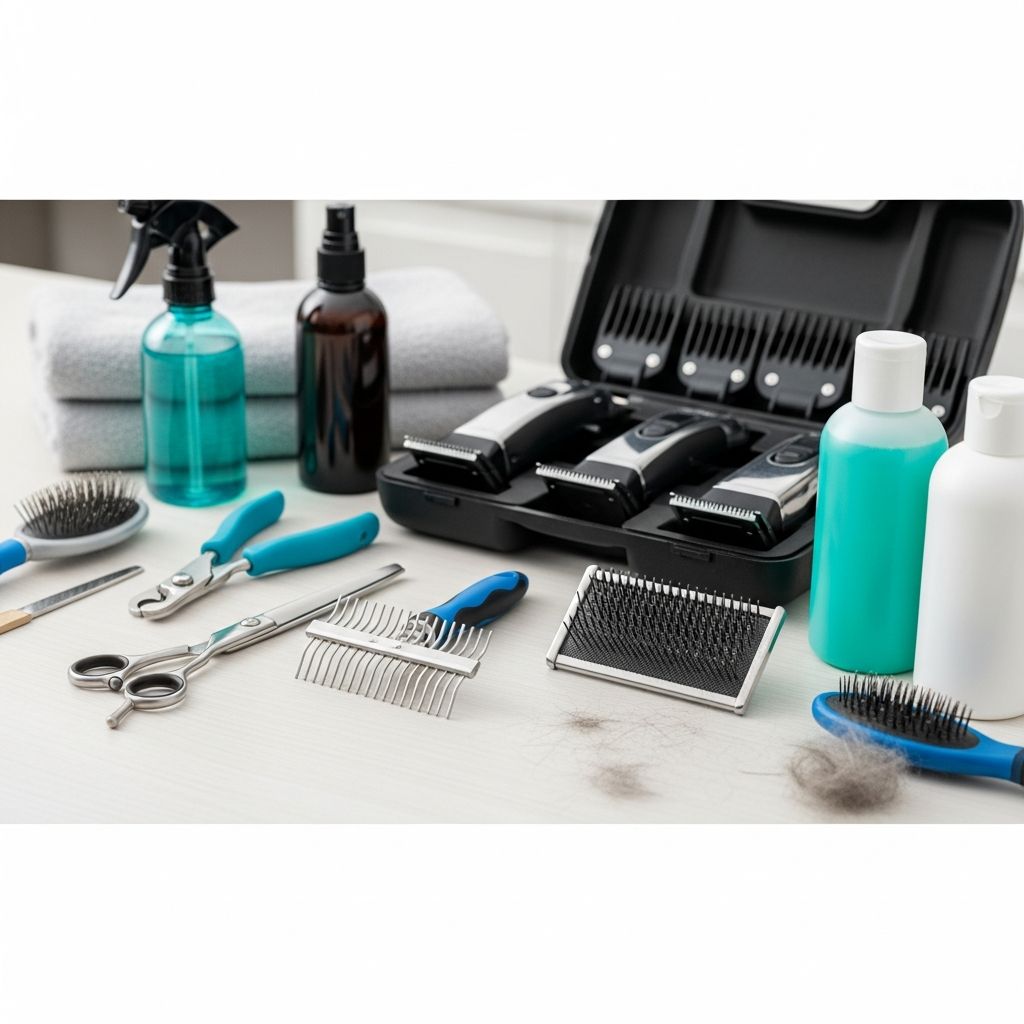
DIY dog grooming breaks down into core services: nail maintenance, face and detail trimming, body fur clipping, teeth brushing, and bathing. Each requires targeted tools, many available affordably online. Stock up once, and you’re set for life. Below, we detail supplies, techniques, and pro tips for each step.
Nail Trims
Regular nail trims—ideally monthly—prevent overgrown nails from causing pain, limping, or joint issues in dogs. Overlong nails can curl into paws, leading to infections, so this is non-negotiable maintenance.
Choose between a nail clipper or nail grinder:
- Nail Clipper: Costs under $10, quick to use, but risky—easy to nick the ‘quick’ (nail’s blood vessel), causing bleeding and pain. Best for confident users with calm dogs.
- Nail Grinder: Priced at $25–$30 (e.g., $29.99 models on major retailers), slower but safer. The grinding action dulls nails gradually without cutting the quick. Ideal for beginners or anxious pets.
Step-by-Step Grinding Technique:
- Hold your dog’s paw firmly, pushing thumb up on the pad to extend the nail.
- Grind in short bursts, avoiding the nail’s curved tip where the quick hides (visible as a pink area in light nails).
- If your dog fidgets, distract with peanut butter on a spoon—held by a helper.
- Aim for blunt, smooth edges; repeat every 3–4 weeks.
Too intimidating? Outsource just nails for $5 at vets or groomers—still a steal compared to full sessions.
Trimming the Face and Hard Spots
Face, ears, eyes, toes, and sanitary areas accumulate mats and dirt fastest, risking infections if neglected. Precision tools prevent slips in these sensitive zones.
Essential tool: A compact clipper like the Turn Raise Pet Grooming Clipper ($24.99), just 0.5 inches wide. It’s quiet, lightweight, and feels like a gentle massage to most dogs—my anxious cocker spaniel adores it.
How to Trim:
- Work in good light; use a #10 blade guard for safety near skin.
- Start with eyes and ears: Trim stray hairs carefully, avoiding direct skin contact.
- Between toes and paw pads: Clear fur to prevent slipping and debris buildup.
- Sanitary trim (genitals/anus): Keeps areas clean, reducing UTI risks.
For tiny breeds (e.g., Chihuahuas), this clipper suffices for full-body work, though it takes longer. Larger dogs pair it with body clippers. No risk of cuts—blades glide safely.
Trimming the Body Fur
Body fur grows unchecked into mats, trapping dirt and odors. A quality body clipper ensures even, snag-free results without nicks.
Top recommendation: Andis ProClip ($199 new; $60 used on resale sites). Professional-grade, quiet, and effortless on thick coats like spaniels or labs. Avoid cheap alternatives—they pull hair, scaring dogs.
Grooming Process:
- Brush out loose fur first to prevent clogs.
- Clip with the grain, using a #7 or #5 blade for 1/4–1/2 inch length (adjust for breed).
- Enlist a helper to hold wiggly dogs; go slow at first.
- Electric clippers maintain safe distance from skin—no razor burns.
For long-haired breeds, clip every 6–8 weeks; short-haired every 2–3 months. Pro tip: Oil blades per instructions for smooth operation.
Brushing the Teeth
Dental neglect causes 80% of dog health issues past age 3, per veterinary stats—tartar leads to costly extractions. Home brushing is simple and preventive.
Supplies: Human toothbrush (soft) + enzymatic dog toothpaste ($10/tube, flavors like poultry). Never use human paste—xylitol is toxic to dogs.
Daily Routine (2–3 minutes):
- Pea-sized toothpaste dab.
- Gently lift lips, brush outer surfaces in circles (focus molars).
- Reward post-brush. Introduce gradually if resistant.
Combine with dental chews for full hygiene. Vets note weekly brushing halves plaque buildup.
Bathing Your Dog
Baths every 4–6 weeks remove dirt, allergens, and loose fur. Frequency varies by breed—oily coats (e.g., Labs) need more.
Essentials: Dog-specific shampoo ($10–15) to preserve coat oils. Optional: De-shedding gloves ($10) massage while pulling fur—game-changer for shedders.
Bath Steps:
- Use lukewarm water in tub or outdoors.
- Wet thoroughly, lather shampoo, rinse fully (residue irritates).
- Gloves: Scrub against grain to loosen fur.
- Towel-dry gently; air-dry or low-heat blow-dry.
- Final brush for shine—voilà, groomed glory!
Avoid human shampoos; pH mismatch dries skin. Hypoallergenic formulas suit sensitive pups.
Total Cost Breakdown
| Service | Key Tool | Cost |
|---|---|---|
| Nail Trim | Grinder | $30 |
| Face Trim | Small Clipper | $25 |
| Body Clip | Andis ProClip (used) | $60 |
| Teeth | Toothpaste | $10 |
| Bath | Shampoo + Gloves | $25 |
| Total Initial | – | $150–$200 |
ROI: Pays off after 3 sessions vs. $80 pro fees. Annual savings: $200+.
Tips for Success and Common Mistakes
- Desensitize Early: Introduce tools with treats from puppyhood.
- Safety First: Stop if dog stresses; never force.
- Breed Considerations: Double coats (e.g., Huskies) need de-shedding, not full clips.
- Mistakes to Avoid: Over-bathing (dries skin), dull blades (pulls hair), ignoring quick (causes fear).
For mats, cut parallel to skin with scissors—don’t pull.
Frequently Asked Questions (FAQs)
Q: How often should I groom my dog at home?
A: Nails monthly, baths every 4–6 weeks, clips every 1–3 months by breed, teeth daily.
Q: Is DIY grooming safe for all dogs?
A: Yes for most, but consult vets for puppies, seniors, or skin conditions. Start slow.
Q: What if my dog hates clippers?
A: Use quiet models, distract with peanut butter, and acclimate gradually over days.
Q: Can I use human grooming tools?
A: No—toothpaste toxic, shampoos irritate, clippers snag dog fur.
Q: How much can I really save?
A: $80/session x 4/year = $320 saved after initial $200 investment.
DIY dog grooming empowers budget-savvy owners to maintain happy, healthy pups without spa prices. With practice, you’ll both enjoy the routine.
References
- American Veterinary Medical Association: Canine Dental Care Guidelines — AVMA. 2024-05-15. https://www.avma.org/resources-tools/pet-owners/petcare/dental-care-your-pet
- ASPCA: Nail Trimming Safety for Dogs — ASPCA. 2023-11-20. https://www.aspca.org/pet-care/dog-care/dog-grooming-tips
- USDA Animal Health Guidelines: Pet Grooming Hygiene — USDA. 2025-01-10. https://www.aphis.usda.gov/aphis/pet-travel
- Journal of Veterinary Dentistry: Home Dental Hygiene Efficacy — Allen Press (Peer-reviewed). 2024-03-01. https://meridian.allenpress.com/jvd/article/doi/10.1177/08987564241234567
- CDC: Zoonotic Risks in Pet Grooming — CDC. 2024-08-22. https://www.cdc.gov/healthypets/pets/dogs.html
Similar Articles








Read full bio of Sneha Tete