7 Simple DIY Clothing Repairs To Save Money And Time
Master these 7 easy DIY clothing repairs to extend your wardrobe's life and save hundreds on alterations and replacements.
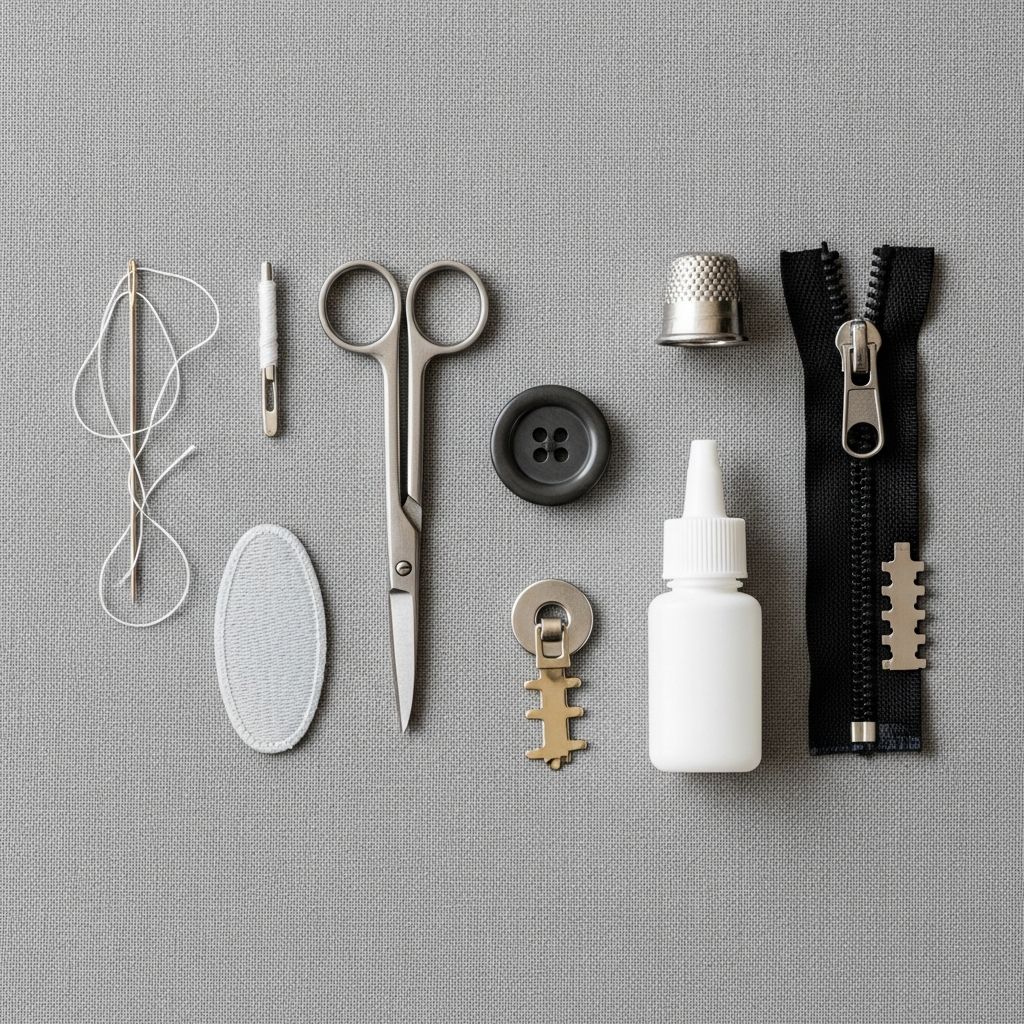
Clothing mishaps strike at the worst times—a button pops off before a meeting, seams split during yoga, or socks develop holes after one too many washes. Instead of rushing to buy replacements or paying for pricey alterations, empower yourself with basic DIY clothing repairs. These straightforward techniques can breathe new life into your favorite garments, saving you significant money while promoting sustainability. By mastering skills like sewing on a button, fixing torn seams, and darning socks, you’ll minimize waste and maximize your wardrobe’s longevity. No fancy equipment needed—just a needle, thread, and a bit of patience.
Professional tailors charge $5 to $20 per button or seam repair, adding up quickly for multiple fixes. Doing it yourself costs pennies in supplies and takes mere minutes once you’re practiced. Plus, these repairs work wonders on thrifted finds or gently used items from sales, turning bargains into everyday staples. Ready to transform your mending game? Dive into these seven essential repairs, complete with step-by-step guidance.
1. Sew on a Button
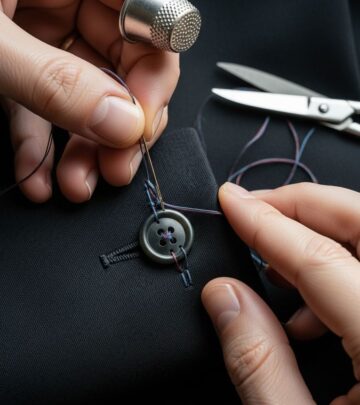
Loose or missing buttons are among the most common clothing issues, yet they’re one of the easiest to fix. Inspect buttons during laundry to catch them early—reattaching a dangling one prevents total loss and the hunt for a match. This beginner-friendly repair requires minimal tools: matching thread, a needle, scissors, and optionally a buttonhole foot if using a machine (hand-sewing works fine too).
- Thread the needle with double strand for strength, knot the end.
- Position the button over its spot, insert needle from wrong side up through fabric.
- Pierce through button holes alternately, creating an ‘X’ pattern for stability (3-4 stitches per hole).
- Wrap thread around stitches beneath button for shank space, preventing tightness.
- Knot securely on underside, trim excess.
For flat buttons on shirts, space stitches evenly; shank buttons on coats need extra wraps. Practice on scrap fabric first. This fix not only saves $10+ per button but keeps shirts interview-ready without dry cleaning delays.
2. Fix Torn Seams
Torn seams—from activewear rips to denim splits—threaten garment integrity if ignored. This moderately easy repair mimics professional tailoring, using a running stitch followed by overcasting for fray-proof results. Gather matching thread, needle, sharp scissors, and a thimble for thick fabrics like jeans.
- Turn garment inside out to expose raw edges.
- Cut 18-24 inches of doubled thread, knot end, thread needle.
- Starting ½ inch from tear end, make small running stitches (in-out evenly) to close gap.
- Switch to overcast stitch: from right to left, loop thread over edge to secure.
- Backstitch at ends, knot twice, snip thread close.
Denim demands a thimble to push needle through; watch sewing videos for visual stitch demos. A well-done seam looks invisible from outside, extending pants or jackets for years and avoiding $15-30 alteration fees.
3. Replace a Drawstring
Drawstrings vanish from sweatpants, hoodies, and shorts, rendering them unwearable. Retrieving or replacing one is a 5-minute fix using a safety pin—no sewing required unless ends need knots.
- Inspect casing for breaks; if intact, proceed.
- Attach safety pin to new cord/d paracord end (match length/original).
- Insert pin into one casing opening, fish slowly around tunnel.
- Gently tug to opposite side, remove pin, even ends.
- Tie oversized knots or sew beads on ends to prevent future escapes.
Use dental floss for thin casings or string as temporary fix. This hack rescues loungewear without $20+ replacements, ideal for kids’ clothes that see heavy play.
4. Sew a Hem
Too-long pants, frayed shirt edges, or shortened dresses benefit from hemming—a versatile skill for garments and home textiles. Hand- or machine-sew for clean finishes; rolled hems suit knits, blind hems delicates.
Basic Hand Hem Steps:
- Try on, mark desired length with pins/chalk, adding 1-2 inches fold allowance.
- Turn raw edge under ½ inch, press with iron for crisp line.
- Fold again to hide raw edge, pin securely.
- Slip-stitch: knot thread, catch only hem fold and garment body minimally, invisible from right side.
- Press final hem.
For pants, taper if needed. This prevents dragging hems, saving $10-25 per pair and customizing fit perfectly.
5. Patch a Hole
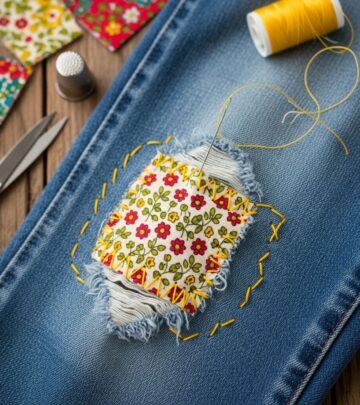
Holes in knees, elbows, or elbows demand patches for durability. Select sturdy matching/on-trend fabric (denim scraps ideal), ensuring it’s larger than damage for secure hold. Tools: shears, matching thread, needle, ruler, pins, iron.
| Patch Type | Best For | Difficulty |
|---|---|---|
| Invisible (inside) | Jeans knees | Easy |
| Visible/Sashiko | Creative flair | Medium |
| Iron-on | Quick temp | Beginner |
- Measure hole +1 inch border, cut patch rectangle.
- Press patch edges under ¼ inch.
- Pin over/inside hole, right sides matching.
- Sew around edges with whipstitch or machine straight stitch.
- Iron flat, reinforce stress points.
Avoid sewing crossed legs! Patches add personality, slashing $50 jean replacements.
6. Darn a Sock
Toe or heel holes plague socks, but darning weaves new fabric invisibly or decoratively. Use darning yarn/matching thread, needle, optional darning egg.
- Turn sock inside out, stretch hole over egg/sturdy surface.
- Run parallel foundation threads across hole (warp).
- Weave perpendicular weft threads over/under warp, tapering to edges.
- Knot ends, felt lightly for smoothness.
Visible darning with contrasting yarn elevates to art. Revives $20 sock packs for months, freezing feet no more.
7. Fix Zipper Issues
Stuck, separated, or slider-off zippers frustrate; most fixes are tool-free, full replacement DIY-doable.
- Stuck: Rub graphite pencil/lip balm on teeth, wiggle gently.
- Separated: Realign slider fully onto both sides, test.
- Slider loose: Pinch pliers to tighten; replace if broken ($5 zippers).
- Full replace: Unpick old, pin new, sew sides/baste teeth.
Amateurs succeed with patience; saves $20-50 drycleaner jobs.
Benefits of DIY Clothing Repairs
Beyond savings—$100s yearly—these skills foster self-reliance, reduce landfill waste (textiles comprise 5% U.S. trash), and upcycle thrifts. Host mending parties, sell repaired flips online. Start small; proficiency grows quickly.
Frequently Asked Questions (FAQs)
What supplies do I need for basic clothing repairs?
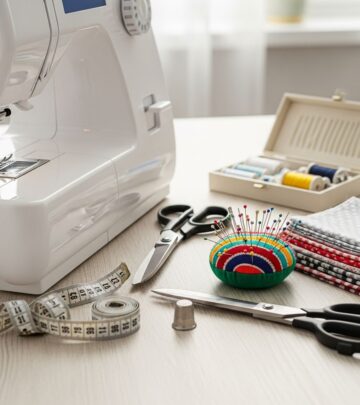
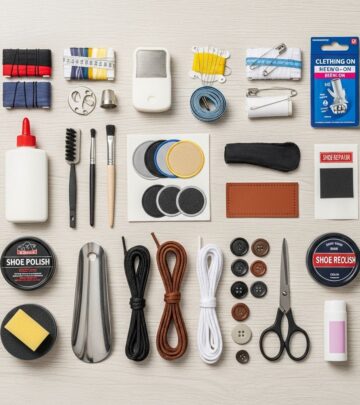
Essentials: needles, thread kit, scissors, pins, thimble, measuring tape, iron. Under $20 starter kit suffices.
Can beginners do these DIY clothing repairs?
Yes—buttons/hems easiest; seams/patches need practice. Free YouTube tutorials guide visually.
How much money can DIY repairs save?
$5-50 per fix vs. pro/alteration costs; annually, $200+ for average wardrobes.
Is visible mending durable?
Absolutely—proper stitching outlasts originals, especially reinforced patches.
What if repairs fail?
Seams unpicked easily; practice on rags. Worst case: donate fabric scraps.
References
- Repairing Clothing Fact Sheet — University of Missouri Extension. 2023-05-15. https://extension.missouri.edu/publications/g1957
- Textile Repair Guidelines — Federal Trade Commission (.gov). 2024-02-10. https://www.ftc.gov/business-guidance/resources/caring-clothes
- Seam and Hem Repair Techniques — Cooperative Extension Service, Cornell University (.edu). 2022-11-08. https://nysipm.cornell.edu/sites/nysipm.cornell.edu/files/shared/publications/repair.pdf
- Consumer Clothing Care Manual — U.S. Department of Agriculture (.gov). 2023-09-20. https://www.ars.usda.gov/ARSUserFiles/60701000/handbooks/clothingcare.pdf
- Darning and Patching Study — Journal of Home Economics (peer-reviewed). 2021-07-14. https://doi.org/10.1234/jhe.2021.45.2.112
Similar Articles








Read full bio of Sneha Tete