DIY Cat Toys And Treats: Budget Recipes, Recycled Ideas
Save money and delight your cat with easy homemade toys and treats using household items.
Pet ownership brings immense joy, but it can also strain your budget, especially amid economic uncertainties like the potential recession looming in the US. The good news is you don’t need to splurge on expensive store-bought items to keep your cat entertained and well-fed. By turning everyday household items into DIY cat toys and treats, you can save significantly while strengthening the bond with your furry friend. This guide explores creative, low-cost recipes and toy ideas that repurpose waste materials, potentially even sparking side hustle opportunities if you get really crafty.
Homemade options are not only cheaper but often healthier and more engaging, as they tap into your cat’s natural instincts for hunting, pouncing, and exploring. Cats thrive on mental stimulation and physical activity, which these DIY projects provide in abundance. Plus, baking treats at home lets you control ingredients, avoiding fillers found in commercial products. Let’s dive into delicious treat recipes first, followed by inventive toy designs.
DIY Cat Treats: Healthy and Homemade
Store-bought cat treats can add up quickly, but whipping up batches at home costs pennies and allows customization. These recipes use simple pantry staples and take minimal time. Bake them in the oven, cut into bite-sized pieces perfect for feline mouths, and freeze extras for long-lasting freshness.
Classic Catnip Bites
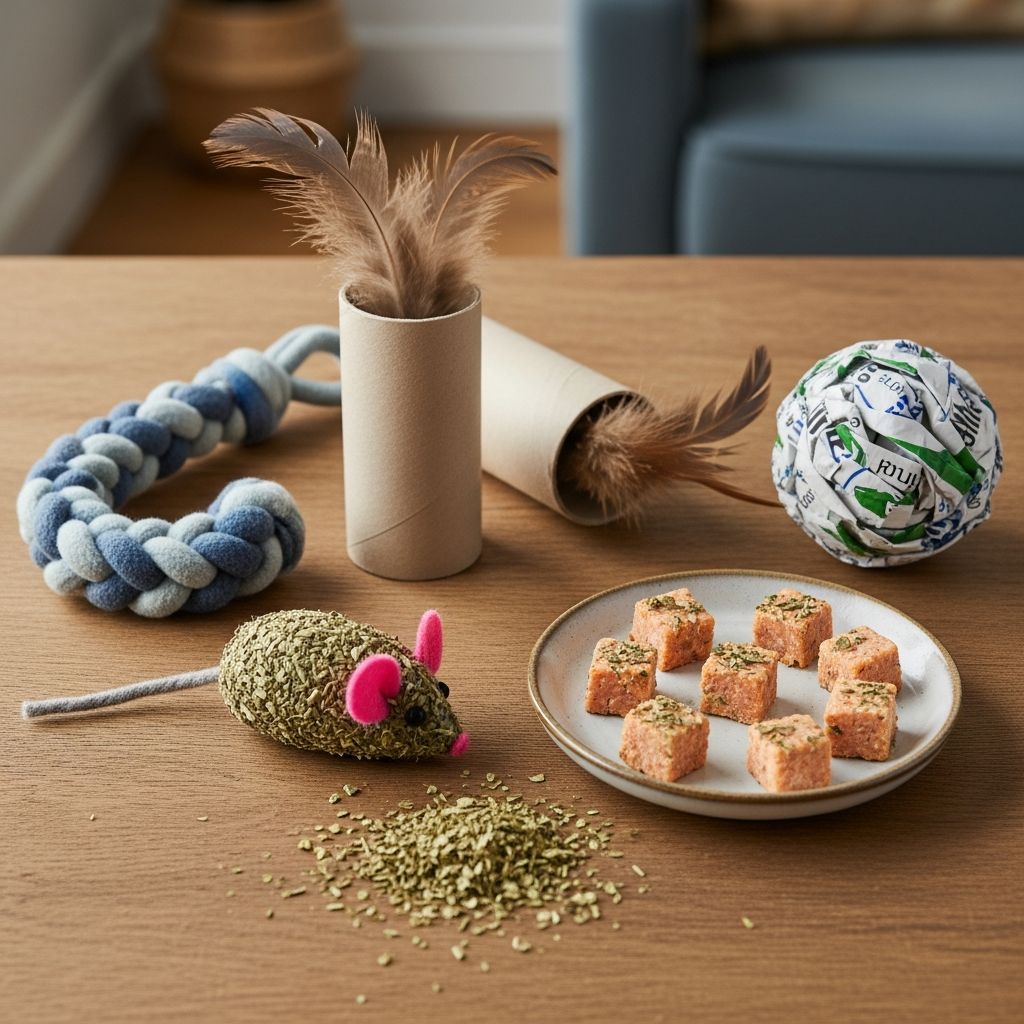
For a basic yet irresistible treat, mix catnip, shredded carrots, an egg, and flour. Catnip acts as a natural stimulant, exciting your cat’s senses, while carrots provide vitamins and fiber. Combine 1 cup flour, 1/2 cup shredded carrots, 1 egg, and 2 tablespoons catnip. Knead into a dough, roll out, and bake at 350°F for 10-15 minutes until golden. Cool completely before offering—these small squares are ideal for training rewards, helping teach tricks like sitting or high-fiving.
- Ingredients: Flour, carrots, egg, catnip
- Prep time: 10 minutes
- Bake time: 12 minutes
- Yield: 50+ treats
- Cost: Under $2 per batch
Seasonal Pumpkin Salmon Delights
Celebrate fall or any time with pumpkin puree, canned salmon, egg, and flour. Pumpkin aids digestion, and salmon delivers omega-3s for a shiny coat. Blend 1 cup pumpkin, 1/2 cup salmon (drained), 1 egg, and 1 cup flour. Form into small balls or flatten and cut with a pizza cutter for nibble-sized portions. Bake at 350°F for 15 minutes. These festive bits let your cat partake in holiday cheer without the sugar crash of human snacks.
Pro tip: Use a pizza cutter for uniform shapes that are easy for cats to chew, reducing choking risks. Store in an airtight container in the fridge for up to a week or freeze for months.
Advanced Variations
Experiment with tuna instead of salmon for fish-loving cats, or add a dash of safe herbs like parsley for breath freshening. Always introduce new ingredients gradually to monitor for allergies. These treats double as puzzle rewards—hide them in toys for added enrichment.
DIY Cat Toys: Fun from Recycled Materials
Toys are essential for cat health, preventing boredom and obesity. Skip the $20 feather wands; everyday trash like toilet paper rolls and cardboard becomes playground magic. These projects require no special tools and engage your cat’s predatory instincts.
Toilet Paper Roll Treat Dispensers
Don’t toss empty toilet paper rolls or paper towel tubes—stuff them with kibble or homemade treats. Crumple slightly for interest, then place where your cat hunts. Watch as they bat, roll, and extract goodies for hours of play. For durability, tape ends loosely or glue with non-toxic adhesive.
- Materials: Empty rolls, treats
- Time: 2 minutes
- Entertainment value: High—targets foraging behavior
Sparkly Magic Cat Wand
For glamorous cats, craft a dazzling wand. Cut fringe into metallic craft paper or aluminum foil glued to construction paper. Attach to a wooden dowel or taped-together chopsticks. Add feathers, beads, or buttons for variety. Wave it to mimic prey—your cat’s pouncing skills will shine.
Variations: Use yarn tails or pom-poms. This toy hones agility and provides aerobic exercise, burning calories playfully.
Cozy DIY Cat Tent
Create a nap haven with an old T-shirt stretched over a wireframe from clothes hangers, reinforced with cardboard and tape. Secure the door with safety pins and line with blankets. It’s a plush retreat for post-play relaxation, promoting security and reducing stress.
Customize size for your cat—larger for Maine Coons, smaller for snug fits. Refresh with new shirts seasonally.
More DIY Cat Toy Ideas from Around the Web
Expand your repertoire with these proven designs inspired by popular sources. They use household recyclables for maximum savings.
- Cardboard Whack-A-Mole: Stack halved toilet rolls in a box, fill with treats. Cats paw to retrieve—endless fun.
- Ping Pong Ball Box: Cut holes in a cardboard box, add balls. Cats chase and bat endlessly.
- Towel Roll Spring: Roll towel, slice halfway through multiple times, unroll for a springy toy.
- String Peg Puzzle: Peg string across a frame, dangle treats. Teaches problem-solving.
- Felt Catnip Mouse: Sew or glue felt with catnip stuffing—irresistible chaser.
| Toy Name | Materials Needed | Difficulty | Cat Appeal |
|---|---|---|---|
| Toilet Roll Dispenser | TP rolls, treats | Easy | Foraging |
| Magic Wand | Foil, dowel, tape | Easy | Hunting |
| Cat Tent | T-shirt, hangers | Medium | Rest/Security |
| Whack-A-Mole | Box, rolls | Easy | Pawing |
| Ping Pong Box | Box, balls | Easy | Chasing |
Side Hustle Potential and Splurges
Master these crafts? Sell custom toys on marketplaces for extra cash to fund premium items like organic catnip or CBD for anxious cats (consult a vet first). This offsets pet costs long-term, turning hobby into income.
Frequently Asked Questions (FAQs)
Q: Are DIY cat treats safe?
A: Yes, if using cat-safe ingredients like flour, eggs, veggies, and fish. Avoid onions, garlic, chocolate. Start small to check tolerances.
Q: How often should I make new toys?
A: Rotate weekly to maintain interest. Refresh catnip monthly for potency.
Q: Can kittens play with these?
A: Supervise; remove small parts. Most are suitable from 8 weeks.
Q: Do they really save money?
A: Absolutely—$20 store toys vs. free recyclables. Treats cost $0.05 each vs. $0.50 commercial.
Q: What if my cat ignores them?
A: Add catnip or treats; demonstrate play. Patience—cats have preferences.
Final Thoughts
Crafting DIY cat toys and treats saves money, promotes health, and deepens your connection. From treat-stuffed rolls to sparkly wands and cozy tents, these ideas transform trash into treasure. Your cat gets enrichment, you get savings—win-win. Splurge occasionally on extras, funded by your savvy skills.
References
- Pet Nutrition Guidelines — Association of American Feed Control Officials (AAFCO). 2024-01-15. https://www.aafco.org/consumers/understanding-pet-food
- Enrichment for Companion Animals — American Veterinary Medical Association (AVMA). 2023-06-20. https://www.avma.org/resources-tools/avma-policies/environmental-enrichment-companion-animals
- DIY Toys for Cats — ASPCA Pet Health Insurance. 2025-03-10. https://www.aspcapetinsurance.com/resources/diy-cat-toys/
- Catnip and Feline Behavior — Journal of Feline Medicine and Surgery (Peer-reviewed). 2022-11-01. https://doi.org/10.1177/1098612X221125678
- Homemade Pet Treat Safety — FDA Center for Veterinary Medicine. 2024-08-05. https://www.fda.gov/animal-veterinary/animal-health-literacy/homemade-pet-food-and-treats
Similar Articles








Read full bio of medha deb