Diversifying Investments in a Volatile Market
Learn proven strategies to diversify your portfolio and reduce risk during turbulent market conditions for long-term stability.

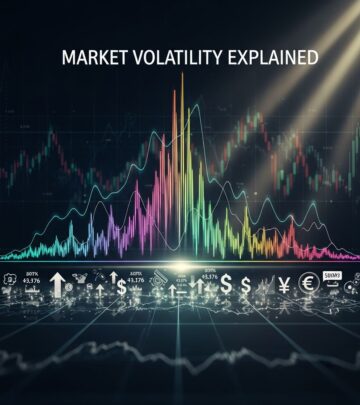
Market volatility is an inherent part of investing, characterized by rapid and unpredictable price swings in stocks, bonds, and other assets. In 2025, factors like persistent interest rate fluctuations, policy uncertainties, and geopolitical tensions have elevated volatility beyond long-term averages, challenging even traditional 60/40 stock-bond portfolios. Diversification—spreading investments across uncorrelated assets—serves as a critical buffer, reducing risk without necessarily sacrificing returns.
This article explores how to diversify effectively during volatile periods, covering core principles, strategies like liquid alternatives, asset rebalancing, and practical steps for implementation. By adopting these approaches, investors can smooth returns, preserve capital, and position for recovery.
Understanding Market Volatility
Volatility refers to the degree of variation in trading prices over time, often measured by metrics like the VIX index or standard deviation of returns. Recent years have seen heightened volatility due to inflation spikes, shifting Federal Reserve expectations, and global events, leading to correlated declines in equities and fixed income. During such times, asset correlations rise, diminishing the protective effect of traditional diversification.
For instance, the 60/40 portfolio—60% equities and 40% bonds—experienced significant drawdowns in 2022 and continued bumps in 2025 as interest rates swung. Investors face emotional pressures to sell low, locking in losses, but history shows markets recover, with best days often following worst ones.
Why Diversification Matters in Volatile Markets
Diversification is often called the ‘only free lunch in investing,’ as coined by Harry Markowitz, because it reduces portfolio risk without proportionally lowering expected returns. In volatile environments, it acts as a shock absorber: when one asset falls, others may rise or hold steady, smoothing overall performance.
- Reduces downside risk: Limits impact from sector-specific or regional downturns.
- Smooths returns: Lowers volatility, helping investors stay disciplined.
- Enhances opportunities: Rotating leadership creates buy-low chances in underperformers.
- Supports long-term goals: Maintains growth potential amid short-term noise.
Strategic diversification goes beyond ‘a little bit of everything’; it aligns with risk tolerance, time horizon, and objectives.
Core Diversification Strategies
Across Asset Classes
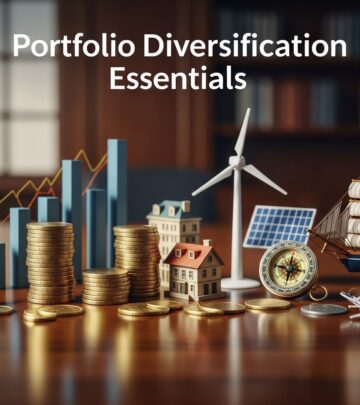
Spread investments beyond stocks and bonds to include real assets like real estate, commodities, and precious metals, which often perform well during inflation or equity slumps. Bonds provide ballast when stocks decline, though rate volatility has tested this recently.
| Asset Class | Role in Volatility | Example Performance |
|---|---|---|
| Equities | Growth driver | High returns, high volatility |
| Bonds/Fixed Income | Income, stability | Opposite moves to stocks in stress |
| Real Estate/Commodities | Inflation hedge | Strong in rising prices |
| Cash/Short-term | Liquidity buffer | Preserves capital for opportunities |
Within Asset Classes
Diversify equities across large-cap, mid-cap, small-cap, domestic, international, and emerging markets; bonds by duration, credit quality, and sectors. This mitigates risks from regional crises or industry disruptions.
Sectors and Geographies
Avoid overexposure to tech or U.S. markets by including healthcare, energy, international holdings, and emerging economies. Market leadership rotates in volatility, rewarding broad exposure.
Advanced Strategies: Liquid Alternatives and Beyond
What Are Liquid Alts?
Liquid alternative strategies offer diversification with daily liquidity, unlike illiquid private markets. They employ hedging, tactical allocation, and non-traditional approaches to generate returns uncorrelated with stocks/bonds. Morningstar research shows they outperformed during 2022 downturns.
Fixed Income Liquid Alts
These navigate rate volatility via:
- Active duration management: Shorten to protect against rises, extend for falls, or go near-zero.
- Broad opportunity set: Global markets, derivatives like credit default swaps, securitized credit.
- Strategic credit shifts: From investment-grade to high-yield based on value.
- Hedging and cash: Short positions and cash for risk control and opportunistic deployment.
Fast and Slow Diversification with Return Stacking
Classify alts by response time: immediate (volatility strategies during sharp drops), delayed (managed futures in prolonged declines), and diversifiers (flat markets). Return stacking layers these atop core stocks/bonds without reducing growth exposure, enhancing resilience across scenarios.
Other Alternatives
For qualified investors, private equity/credit offer uncorrelated returns. Socially responsible investments (SRI) provided diversification during COVID-19. Real assets like REITs add inflation protection.
Practical Steps to Diversify Now
- Review portfolio: Check for overexposure to sectors, styles, or regions.
- Rebalance regularly: Restore target allocations skewed by market moves.
- Incorporate alts: Allocate 10-20% to liquid alts for quick adjustments.
- Use dollar-cost averaging: Invest fixed amounts regularly to avoid timing errors.
- Harvest tax losses: Sell losers for offsets, reinvest proceeds diversely.
- Consult advisors: Tailor to personal risk profile and goals.
Frequently Asked Questions (FAQs)
What is the best way to diversify in volatile markets?
Combine asset classes, geographies, and liquid alts; rebalance periodically while using dollar-cost averaging.
Do liquid alternatives really help during downturns?
Yes, they provide uncorrelated returns and hedging, outperforming in 2022 per Morningstar.
How much should I allocate to alternatives?
Typically 10-30%, depending on risk tolerance; start small for liquidity.
Is diversification foolproof?
No, but it significantly reduces risk; no strategy eliminates all volatility.
When should I rebalance my portfolio?
Quarterly or when allocations drift 5-10% from targets.
Conclusion
In volatile markets, proactive diversification through multi-asset allocation, liquid alts, and disciplined rebalancing builds resilient portfolios. Stay invested, avoid emotional trades, and focus on long-term horizons for optimal outcomes.
References
- How can investors quickly diversify during market volatility? — J.P. Morgan Asset Management. 2025. https://am.jpmorgan.com/us/en/asset-management/adv/insights/market-insights/market-updates/on-the-minds-of-investors/how-can-investors-quickly-diversify-during-market-volatility/
- Return Stacking with Fast and Slow Diversification: A Framework for Market Volatility — ReturnStacked. 2025. https://www.returnstacked.com/return-stacking-with-fast-and-slow-diversification-a-framework-for-market-volatility/
- How Diversification Can Protect Your Portfolio in Volatile Markets — Trajan Wealth. 2025-06-26. https://trajanwealth.com/blog/how-diversification-can-protect-your-portfolio-in-volatile-markets/
- A playbook for market volatility — TIAA. 2025. https://www.tiaa.org/public/invest/services/wealth-management/perspectives/protecting-investments-market-decline
- Personal Finance: Budgeting & Money-Saving Tips — Equifax. 2025. https://www.equifax.com/personal/education/personal-finance/
Similar Articles








Read full bio of medha deb