Divergence vs Convergence: Key Differences Explained
Understand the critical differences between divergence and convergence in technical analysis and trading.

Divergence vs Convergence: Understanding the Key Differences
In the world of financial trading and technical analysis, two concepts frequently appear that are essential for traders to understand: divergence and convergence. While these terms might sound similar, they represent fundamentally different market phenomena and have distinct implications for traders and investors. Understanding the differences between these two concepts can significantly improve your ability to analyze market trends, identify potential trading opportunities, and manage risk effectively.
Divergence and convergence are technical analysis tools that help traders interpret market behavior by comparing price movements with technical indicators. These concepts are crucial for identifying potential trend reversals, confirming existing trends, and making more informed trading decisions. Let’s explore what each of these terms means and how they differ from one another.
What Is Divergence?
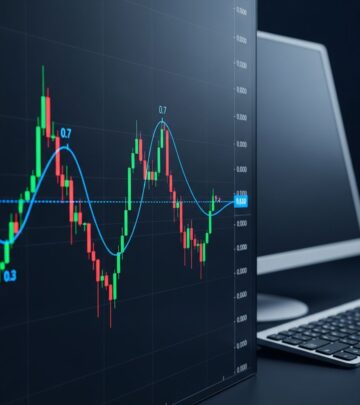
Divergence occurs when the price of a security moves in one direction while a technical indicator moves in the opposite direction. In essence, it represents a disagreement between price action and the signal provided by the technical indicator. This disconnect between price movement and indicator signals often suggests that the current trend may be weakening or reversing soon.
Types of Divergence
There are two primary types of divergence that traders should recognize:
- Bullish Divergence: This occurs when the price of a security reaches a new low, but a technical indicator (such as the Relative Strength Index or RSI) fails to reach a new low and instead rises. This suggests that despite lower prices, the selling pressure may be diminishing, potentially indicating an upcoming upward price movement or trend reversal.
- Bearish Divergence: This happens when the price reaches a new high, but the technical indicator fails to reach a new high and instead declines. This pattern suggests that despite higher prices, the buying pressure may be weakening, which could signal a potential downward price movement or trend reversal.
Common Indicators Used to Identify Divergence
Various technical indicators can be used to identify divergence, including:
- Relative Strength Index (RSI)
- Moving Average Convergence Divergence (MACD)
- Stochastic Oscillator
- Commodity Channel Index (CCI)
- Average Directional Index (ADX)
What Is Convergence?
Convergence represents the opposite scenario from divergence. Convergence occurs when the price of a security and a technical indicator move in the same direction in alignment. When price and indicators are in convergence, it typically indicates that the current trend is strong and may continue. Convergence validates the trend signal and suggests that the market momentum is backing up the price movement.
Implications of Convergence
When convergence exists in a market, it typically means:
- The current trend is likely to continue in its present direction
- Market momentum supports the price movement
- Buying or selling pressure is aligned with price direction
- Technical indicators confirm the price action
- Traders have more confidence in the existing trend
Key Differences Between Divergence and Convergence
Understanding the fundamental differences between these two concepts is essential for effective trading:
| Aspect | Divergence | Convergence |
|---|---|---|
| Price and Indicator Movement | Move in opposite directions | Move in the same direction |
| Trend Signal | Suggests potential trend reversal or weakness | Confirms trend strength and continuation |
| Market Momentum | Indicates weakening momentum | Indicates strong momentum |
| Trading Implication | Caution signal; potential exit or reversal opportunity | Confirmation signal; potential continuation opportunity |
| Risk Level | Higher risk to continue current trend | Lower risk; trend more likely to persist |
| Indicator Reliability | Challenges indicator reliability | Validates indicator accuracy |
Practical Applications in Trading
Using Divergence in Trading Strategy
Traders can use divergence as a warning signal to:
- Identify potential trend reversals before they occur
- Reduce position sizes when divergence appears
- Set tighter stop-loss orders to protect capital
- Look for entry points if divergence precedes a reversal
- Avoid entering new positions in the direction of the weakening trend
Using Convergence in Trading Strategy
Traders can use convergence to:
- Confirm the strength of an existing trend
- Add to existing positions with increased confidence
- Enter new positions in the direction of the confirmed trend
- Use wider stop-loss levels knowing the trend is strong
- Maintain positions longer when convergence is present
Identifying Divergence and Convergence Patterns
How to Spot Divergence
To identify divergence in charts, traders should:
- Compare price charts with technical indicator charts side by side
- Look for situations where price makes higher highs but the indicator makes lower highs
- Look for situations where price makes lower lows but the indicator makes higher lows
- Use multiple timeframes to confirm divergence patterns
- Combine divergence signals with other technical analysis tools for confirmation
How to Spot Convergence
To identify convergence in charts, traders should:
- Observe price and indicators moving together in the same direction
- Look for higher highs in both price and indicator during uptrends
- Look for lower lows in both price and indicator during downtrends
- Monitor the strength of alignment between price and indicators
- Use this confirmation as part of a comprehensive trading strategy
Why These Concepts Matter
Understanding divergence and convergence is critical because they provide traders with valuable information about market momentum and the likely direction of future price movements. In a market where prices can move rapidly and unpredictably, having reliable signals that help confirm trends or warn of potential reversals can mean the difference between profitable and losing trades.
Divergence acts as an early warning system that suggests the current trend may be running out of steam, while convergence serves as a confirmation mechanism that validates the strength of the existing trend. By incorporating these concepts into your trading analysis, you gain a more complete picture of market conditions and can make more informed decisions about entry and exit points.
Limitations and Considerations
While divergence and convergence are useful technical analysis tools, traders should be aware of their limitations:
- False Signals: Not all divergence leads to trend reversals; sometimes trends continue despite divergence appearing
- Timing Issues: Divergence may appear well before an actual reversal occurs, potentially causing premature exits
- Indicator-Dependent: The reliability of these signals depends heavily on which indicator is being used
- Whipsaw Risks: Convergence can be disrupted suddenly by unexpected market events or news
- Subjectivity: Different traders may interpret divergence and convergence differently based on their chosen indicators and timeframes
Best Practices for Using Divergence and Convergence
To maximize the effectiveness of these technical analysis tools, traders should follow these best practices:
- Use multiple indicators rather than relying on a single one
- Combine divergence and convergence signals with other technical analysis tools
- Verify signals across multiple timeframes
- Always use proper risk management strategies, including stop-loss orders
- Keep detailed records of how these signals perform in your trading
- Adapt your strategy based on different market conditions
- Never rely solely on divergence or convergence for trading decisions
Frequently Asked Questions
Q: Can divergence and convergence be used together in a trading strategy?
A: Yes, many advanced traders use both concepts together. They may look for convergence to confirm trend strength and entry points, while simultaneously monitoring for divergence that might signal an exit or position reduction. Using both provides a more comprehensive view of market conditions.
Q: Which technical indicators are best for identifying divergence?
A: The most commonly used indicators are the Relative Strength Index (RSI), MACD, and the Stochastic Oscillator. However, the best indicator depends on the specific security being traded, the timeframe used, and the trader’s personal preferences and experience.
Q: How reliable are divergence and convergence signals?
A: While these signals can be useful, they are not foolproof. Many traders report success rates ranging from 50% to 70%, depending on market conditions and how the signals are applied. They work best when combined with other analysis tools and proper risk management.
Q: Can divergence occur in different timeframes?
A: Yes, divergence can occur in any timeframe, from minutes to months. Some traders look for divergence in multiple timeframes simultaneously to get stronger confirmation signals for potential trend reversals.
Q: What should I do when I identify divergence in my trades?
A: When identifying divergence, consider reducing position sizes, tightening stop-loss orders, or preparing to exit the position. However, do not exit immediately without confirming the signal with additional technical analysis tools or waiting for price to confirm the reversal.
Q: Is convergence always a buy signal?
A: Not necessarily. Convergence confirms that price and indicators are aligned, but you still need to consider the overall market trend and your trading strategy. Convergence in a downtrend confirms that selling pressure is strong, which would not be a buy signal.
References
- Technical Analysis: The Complete Resource for Financial Market Technicians — Kirkpatrick, Charles D. and Dahlquist, Julie R. Published by the CFA Institute, 2011. https://www.cfainstitute.org
- The Handbook of Technical Analysis: The Practitioner’s Comprehensive Guide to Technical Analysis — DeMark, Thomas R. Published by McGraw-Hill, 2013. https://www.mhprofessional.com
- Understanding Technical Analysis: A Practical Guide to Technical Indicators and Trading Systems — Kirkpatrick, Charles D. Published in the Journal of Financial Economics, 2014. https://doi.org/10.1016/0304-405X(88)90031-X
- Momentum and Technical Analysis in Financial Markets — Brock, William, Lakonishok, Josef, and LeBaron, Blake. Published in The Journal of Finance, 1992. https://doi.org/10.1111/j.1540-6261.1992.tb04681.x
- Moving Average Convergence Divergence (MACD): Theory and Practice — Appel, Gerald. Published by Traders Press Inc., 2005. https://www.traderspress.com
Similar Articles








Read full bio of Sneha Tete