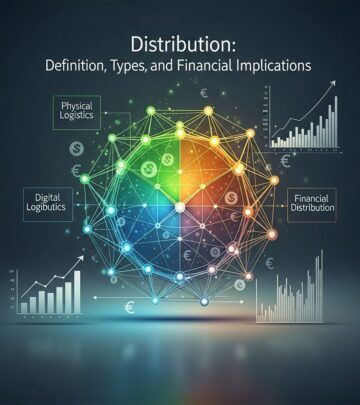
Distribution Management: Definition, Benefits & Strategies
Master distribution management: streamline logistics, reduce costs, and optimize supply chain efficiency.
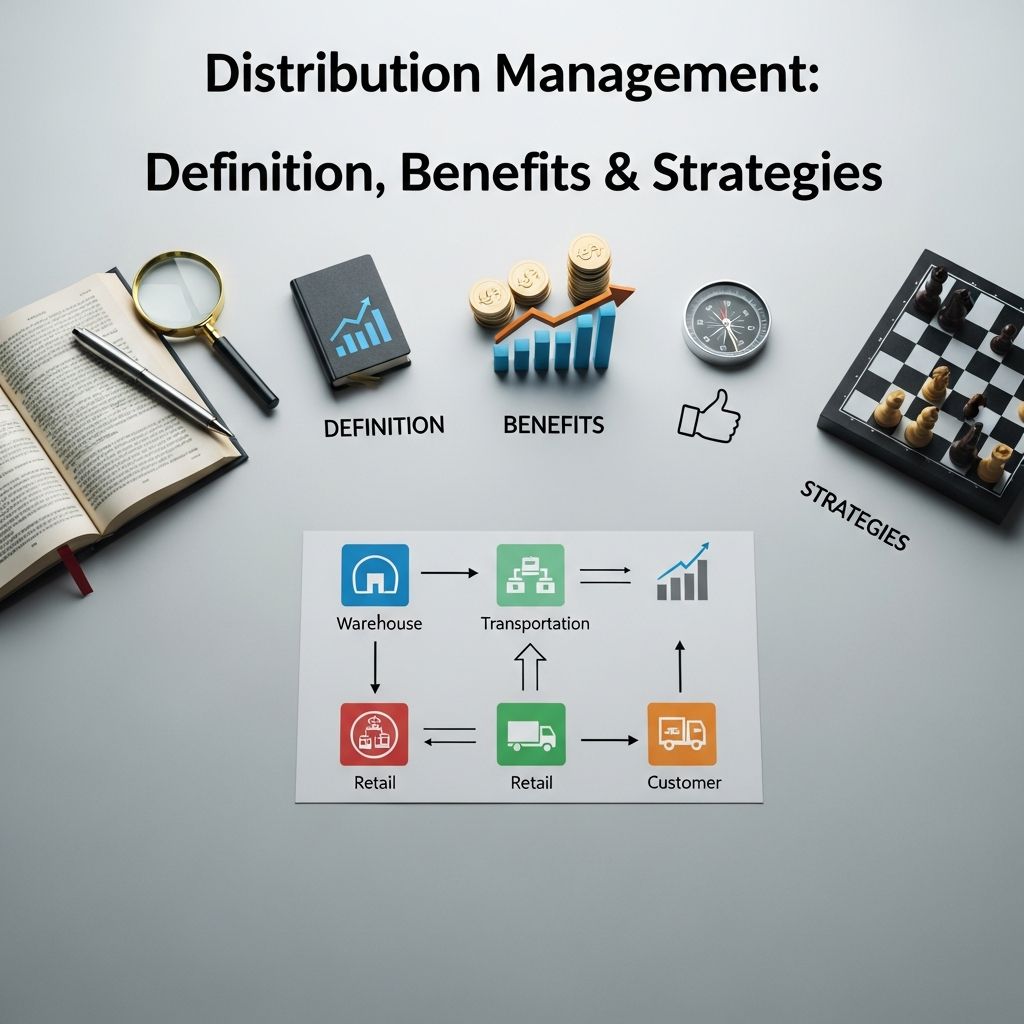
What Is Distribution Management?
Distribution management is the process used to oversee the movement of goods from supplier to manufacturer to wholesaler or retailer and finally to the end consumer. This comprehensive management system encompasses numerous activities and processes designed to ensure products reach their destination efficiently and cost-effectively. Numerous activities and processes are involved in distribution management, including raw material vendor management, packaging, warehousing, inventory control, supply chain coordination, logistics optimization, and increasingly, blockchain technology implementation.
At its core, distribution is a management system within logistics that focuses on order fulfillment throughout various distribution channels. A distribution channel represents the chain of agents and entities through which a product or service moves from its point of origin to the consumer. Examples of distribution channels include e-commerce websites, wholesalers, traditional retailers, and third-party or independent distributors. Understanding the nuances of distribution management is essential for modern businesses seeking to maintain competitive advantages in an increasingly complex global marketplace.
Distribution includes critical activities such as consumer or commercial packaging, order fulfillment, and order shipping. In essence, distribution is most easily understood as commercial or sales distribution—the mechanism through which goods become available to purchasers.
Why Is Distribution Management Important?
Distribution management holds paramount importance in modern business operations. It is fundamentally about organizing everything involved in getting goods to the buyer in a timely fashion and with the least amount of waste. Therefore, it has a direct and measurable impact on organizational profitability. Effective distribution management can mean the difference between market success and failure, as poor distribution practices can result in missed sales opportunities, increased costs, and diminished customer satisfaction.
Raw goods arriving too early can spoil before use, while finished products arriving too late allow competitors to capture significant market share. These challenges underscore why effective distribution has become so crucial that sub-discipline practices—such as just-in-time inventory management—became integral parts of supply chain and inventory management strategies. Overall, successful distribution involves many moving parts and methods requiring a strong distribution management strategy fueled by real-time information and data analytics.
What Is a Distribution Network?
A distribution network is a connected group of storage facilities and transportation systems strategically organized to move goods from manufacturer to wholesalers, retailers, or end buyers. Distribution networks are formed in accordance with a distribution strategy designed to optimize product flow while minimizing costs and delivery times.
These networks serve as the physical and logistical backbone of supply chain operations. By establishing efficient distribution networks, organizations can reduce transit times, lower operational costs, and improve customer satisfaction. Modern distribution networks increasingly incorporate advanced technologies including real-time tracking systems, automated warehouses, and sophisticated routing algorithms to enhance performance and responsiveness.
Advantages of Distribution Management
Beyond delivering higher profits, distribution management eliminates waste in numerous ways. Key advantages include:
Cost Reduction: Distribution management significantly reduces operational expenses through decreased spoilage, reduced warehousing costs, and optimized transportation logistics. By implementing just-in-time inventory practices rather than maintaining excessive bulk inventory, organizations can substantially lower storage and handling expenses.
Improved Efficiency: Streamlined distribution processes lead to decreased shipping charges and faster delivery to customers. This operational efficiency translates directly to improved bottom-line performance and competitive positioning.
Enhanced Customer Experience: Distribution management makes things easier for buyers by enabling convenient shopping experiences and various rewards programs such as customer loyalty initiatives. Products arrive when needed, reducing customer wait times and frustration.
Waste Elimination: Effective distribution systems minimize product deterioration, reduce packaging waste, and optimize resource utilization throughout the supply chain.
Market Responsiveness: Efficient distribution networks enable organizations to respond quickly to market changes and customer demands, maintaining competitive advantages in dynamic business environments.
Five Factors That Influence Distribution Management
Multiple factors significantly influence how organizations approach and implement distribution management strategies. Understanding these factors helps businesses develop more effective and resilient distribution systems:
Market Demand Patterns: Consumer demand fluctuations directly impact inventory levels, distribution scheduling, and network capacity requirements. Organizations must forecast demand accurately to optimize distribution efficiency.
Geographic Considerations: The physical location of suppliers, manufacturers, distribution centers, and customers influences routing decisions, transportation costs, and delivery timeframes.
Regulatory Environment: Local, regional, and international regulations regarding product handling, transportation, labeling, and safety standards directly affect distribution operations and compliance requirements.
Technological Infrastructure: Available technologies for tracking, warehousing automation, and supply chain visibility significantly impact distribution effectiveness and real-time responsiveness.
Competition and Market Dynamics: Competitive pressures and market conditions necessitate continuous optimization of distribution strategies to maintain market share and profitability.
Three Distribution Management Strategies
Organizations can employ three primary distribution management strategies, each suited to different business models and market conditions:
Mass Distribution Strategy
The mass strategy aims to distribute products to the mass market—reaching those who sell to general consumers anywhere. This approach maximizes market penetration and sales volume by making products widely available through numerous retail outlets and distribution channels. Mass distribution works particularly well for commodity products and goods with broad consumer appeal. Companies pursuing mass distribution strategies typically focus on volume over margin, investing heavily in logistics networks and distribution infrastructure to ensure product availability across diverse geographic regions and retail environments.
Selective Distribution Strategy
The selective strategy aims to distribute to a select group of sellers rather than attempting universal market coverage. For example, organizations may choose to distribute only to certain types of manufacturers or specific retail sectors such as pharmacies, hair salons, and high-end department stores. This approach allows organizations to maintain better quality control, ensure brand positioning consistency, and develop deeper relationships with chosen distribution partners. Selective distribution strategies are particularly effective for products requiring specialized knowledge, specific handling requirements, or premium market positioning.
Exclusive Distribution Strategy
The exclusive strategy aims to distribute to a highly limited group of authorized dealers or retailers, creating scarcity and maintaining premium positioning. For example, manufacturers of Ford vehicles sell only to authorized Ford dealerships, and producers of Gucci-brand goods only sell to a narrow slice of luxury goods retailers. Exclusive distribution protects brand reputation, maintains pricing integrity, and ensures customers receive specialized service and expertise. This strategy works particularly well for luxury goods, specialized products, and brands seeking to maintain strict quality control and brand image.
The Four Distribution Channels
Distribution channels have evolved significantly over time. While historically three primary channels existed, the rise of e-commerce has created a fourth channel, fundamentally changing how products reach consumers:
| Distribution Channel | Description | Example |
|---|---|---|
| Wholesaler | Goods are distributed from manufacturers to wholesalers who then sell to retailers or businesses. Wholesalers function as intermediaries, purchasing in bulk and distributing to multiple retailers. | Liquor distillers distribute their brands to wholesalers who serve multiple retail establishments |
| Retailer | Goods move from manufacturers or wholesalers directly to retail stores for consumer purchase. Retailers serve as the final point of contact with end consumers. | Designer clothing distributed to high-end retailers such as Neiman Marcus, Nordstrom, and Macy’s |
| Distributor | This channel moves goods from the source or manufacturer to authorized distributors who then sell to end consumers or business users. Distributors often provide specialized services and expertise. | Ford factories distribute vehicles to authorized Ford dealerships for sale to consumers and company fleets |
| E-Commerce | The newest and most disruptive distribution channel where goods and services are represented virtually online and distributed directly to buyers, bypassing traditional intermediaries. | Online retailers and marketplaces delivering products directly from warehouses to consumer homes |
E-commerce as a fourth channel has led to rapid changes and forces distributors to rethink traditional strategies entirely. This channel continues to grow in importance and sophistication, with companies investing heavily in last-mile delivery, returns management, and customer experience optimization.
Choosing a Distribution Management System
Selecting the right distribution management system for an organization depends significantly on the organization’s distribution goals, challenges, and the distribution models and channels the company uses. However, as a general rule, companies should carefully evaluate several critical factors:
Ease of Integration and Compatibility: The system must integrate smoothly with existing legacy systems and infrastructure, minimizing disruption to current operations and reducing implementation costs.
Scalability and Elasticity: The system should grow with the organization, accommodating increased transaction volumes, additional distribution channels, and geographic expansion without significant reimplementation.
Security: Robust security measures protect sensitive business and customer data from cyber threats, ensuring compliance with regulatory requirements and maintaining stakeholder confidence.
Data Management and Analytics: Advanced capabilities including real-time data streaming and ecosystem data-sharing provide actionable insights for informed decision-making and continuous optimization.
Adaptability and Agility: The system must be flexible enough to accommodate rapid changes needed to overcome obstacles or seize new opportunities in dynamic business environments.
Elements of Distribution Management
Effective distribution management systems integrate multiple interconnected elements that work together to move products from manufacturer to end customer. These core components include:
Supply Chain Management: The orchestration of suppliers, manufacturers, and distribution partners to ensure smooth product flow and minimize disruptions.
Blockchain Technology: Increasingly used for transparency, traceability, and security in tracking product movement through distribution channels.
Logistics: The physical movement, storage, and handling of goods throughout the distribution network.
Purchase Order and Invoicing Systems: Automated systems managing commercial transactions and financial documentation throughout the distribution process.
Vendor Relationship Management (VRM): Systems managing interactions and relationships with suppliers and distribution partners to ensure reliability and performance.
Customer Relationship Management (CRM): Technology capturing customer preferences, purchase history, and feedback to optimize customer service and retention.
Inventory Management System (IMS): Tools tracking product quantities, locations, and movements to prevent stockouts and excess inventory.
Warehouse Management System (WMS): Technology optimizing storage, retrieval, and organization of products within distribution centers.
Transportation Management System (TMS): Software optimizing routing, carrier selection, and shipment tracking to minimize transportation costs and improve delivery performance.
Frequently Asked Questions About Distribution Management
Q: What is the primary goal of distribution management?
A: The primary goal of distribution management is to ensure products reach customers in a timely manner with minimal waste and cost. It directly impacts organizational profitability by optimizing logistics, reducing spoilage, minimizing warehousing expenses, and improving customer satisfaction through efficient delivery and service.
Q: How does just-in-time inventory differ from traditional inventory management?
A: Just-in-time (JIT) inventory delivers products precisely when needed rather than maintaining large stockpiles. This approach reduces warehousing costs, minimizes spoilage, and improves cash flow by keeping inventory lean and responsive to actual demand patterns.
Q: Which distribution strategy is best for luxury brands?
A: Luxury brands typically employ exclusive distribution strategies, limiting sales to authorized retailers and boutiques. This approach maintains premium positioning, ensures quality control, protects brand reputation, and justifies higher pricing by creating perceived scarcity and exclusivity.
Q: How has e-commerce changed distribution management?
A: E-commerce has fundamentally disrupted traditional distribution by enabling direct-to-consumer sales, bypassing wholesalers and retailers. This requires organizations to invest in last-mile delivery, returns management, real-time inventory visibility, and customer experience optimization.
Q: What role does technology play in modern distribution management?
A: Modern distribution management relies heavily on technology including warehouse management systems, transportation management systems, real-time tracking, data analytics, and increasingly blockchain technology. These tools provide visibility, enable automation, optimize routing and inventory, and support data-driven decision-making.
Q: How can organizations reduce distribution costs?
A: Organizations can reduce distribution costs by implementing efficient routing algorithms, adopting just-in-time inventory practices, consolidating shipments, negotiating better carrier rates, investing in warehouse automation, reducing product spoilage, and optimizing network design to minimize transportation distances.
References
- Distribution Management: Definition, Advantages & Strategies — NetSuite. 2024. https://www.netsuite.com/portal/resource/articles/erp/distribution-management.shtml
- Supply Chain Management (SCM): Distribution Channels — York University Library Guides. 2024. https://researchguides.library.yorku.ca/supplychainmanagement/scm/distributioncustomer
Similar Articles








Read full bio of medha deb