Dishwasher Smells Bad? Here’s How to Fix It
Discover effective, simple methods to eliminate foul odors from your dishwasher and keep it fresh for years with expert cleaning tips.
Your dishwasher should leave dishes sparkling clean and smelling fresh, not emit foul odors every time you open the door. A smelly dishwasher is a common household issue that can ruin your kitchen ambiance and even transfer bad smells to your clean dishes. The good news is that most causes are fixable with simple, at-home solutions using everyday items like white vinegar and baking soda. This guide covers why your dishwasher smells bad, step-by-step cleaning methods, prevention tips, and answers to frequently asked questions to help you tackle the problem effectively.
Why Does My Dishwasher Smell?
A foul odor from your dishwasher often stems from trapped food particles, bacterial growth, or buildup in key areas. Food debris accumulates in filters, hoses, and seals, creating a moist environment where bacteria and mold thrive, producing that rotten egg or musty smell. Other culprits include soap scum mixed with grease, hard water mineral deposits, and poor drainage that leaves standing water inside the unit.
Understanding the root causes is the first step to elimination. Common reasons include:
- Dirty drain filter: Food scraps clog this component, preventing proper drainage and fostering bacteria.
- Clogged drain hose: Grease, debris, and even foreign objects like glass shards block water flow, leading to sewage-like smells.
- Mold and mildew in seals: The rubber door gasket traps moisture and organic matter, ideal for mold growth.
- Soap scum and food buildup: Layers of residue on walls and spray arms trap particles, amplifying odors over time.
- Hard water deposits: Minerals coat surfaces, trapping bacteria and odors, especially in areas with hard water.
- Standing water: Incomplete draining leaves water to stagnate and stink.
Identifying the specific cause—such as checking for visible gunk or testing drainage—allows targeted cleaning for faster results.
How to Clean a Smelly Dishwasher: Step-by-Step Guide
Regular maintenance prevents most odors, but when smells persist, follow these proven steps. Always consult your owner’s manual for model-specific instructions, like filter location.
Step 1: Empty and Inspect the Dishwasher
Remove all dishes and utensils. Check the bottom for loose food scraps—scrape them out manually. This simple action often resolves minor odors immediately, as old food is the primary culprit.
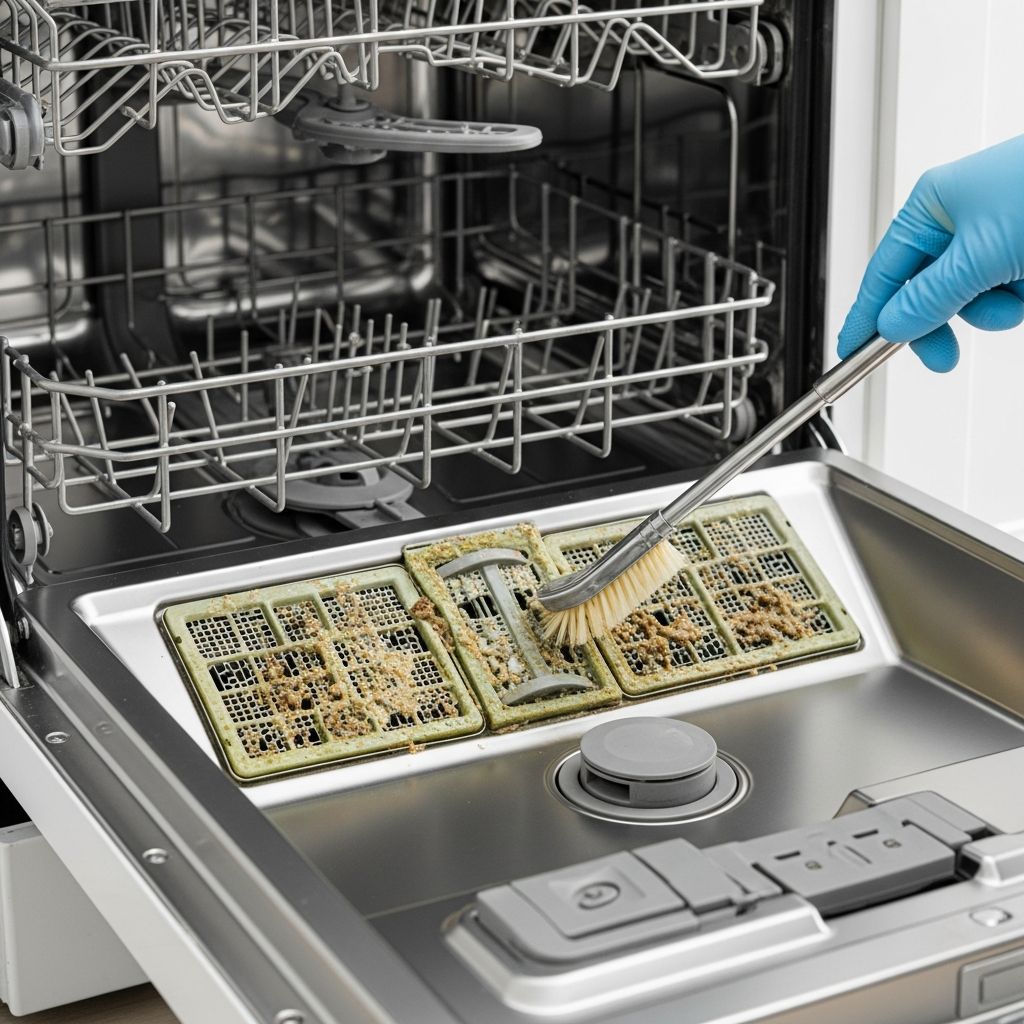
Step 2: Clean the Drain Filter
The filter catches food particles but needs monthly cleaning. Locate it (usually at the bottom), twist or unclip to remove, rinse under hot water, and scrub with a brush to dislodge debris. Reinstall securely. A clogged filter recirculates dirty water, worsening smells and cleaning performance.
Step 3: Wipe Down the Interior and Seals
Food residue, grease, and scum build on walls, door, and gaskets. Mix equal parts white vinegar and warm water in a spray bottle. Spray surfaces, including crevices in the door seal, then wipe with a microfiber cloth. For tough spots, use a vinegar-soaked sponge. Dry thoroughly to prevent mold. Pay extra attention to the gasket—mold hides in its folds.
Step 4: Clean Spray Arms and Check Drain Hose
Inspect spray arms for clogged holes; soak in vinegar and poke clear with a toothpick. For the drain hose, disconnect if accessible, flush with hot water or a pipe cleaner to remove blockages. Pour boiling water down the drain first for grease buildup. If smells like sewage persist, the hose may need replacement.
Step 5: Run a Cleaning Cycle with Vinegar or Baking Soda
Place a dishwasher-safe bowl with 1 cup white vinegar on the top rack. Run the hottest cycle. Vinegar’s acidity dissolves mineral deposits and kills bacteria. Follow with 1 cup baking soda sprinkled on the bottom, running a short hot cycle to neutralize odors. This duo disinfects without harsh chemicals.
For hard water areas, repeat monthly or use a water softener to minimize deposits.
Prevention Tips: Keep Your Dishwasher Odor-Free
Prevention is easier than cure. Implement these habits for a fresh dishwasher long-term:
- Scrape plates: Remove large food bits before loading to reduce debris.
- Load correctly: Follow manufacturer guidelines—avoid overcrowding spray arms for proper water flow.
- Air dry: Prop the door open after cycles to evaporate moisture and prevent mold.
- Run hot water first: Heat your sink’s hot tap before starting to ensure optimal cleaning temperatures.
- Monthly deep clean: Vinegar or baking soda cycles keep buildup at bay.
- Annual service: Professional checks for hoses, pumps, and seals, especially in hard water regions.
Avoid overloading with plastics near heating elements, as melting can cause persistent smells. Use quality, low-sudsing detergent to minimize scum.
Common Mistakes That Cause Dishwasher Odors
Even diligent users make errors leading to smells. Overusing detergent creates excess suds and scum. Skipping rinse aids in hard water leaves films. Not cleaning filters monthly allows clogs to form unnoticed. Running cool cycles fails to kill bacteria—always use hot settings. Pre-rinsing isn’t necessary with modern detergents, but scraping is key.
When to Call a Professional
If odors persist after cleaning, issues like a faulty pump, kinked hose, or sump buildup (grease in the base) may require disassembly. Pull the unit out for access or hire a technician. Frequent smells signal deeper problems like hard water damage—consider a softener.
Frequently Asked Questions (FAQs)
Q: Why does my dishwasher smell like rotten eggs?
A: Rotten egg odors often come from bacterial growth in standing water or a clogged drain hose due to grease and sulfur-reducing bacteria. Clean the filter, hose, and run a vinegar cycle.
Q: How often should I clean my dishwasher filter?
A: Monthly for regular use, or weekly if you have heavy food residue or hard water.
Q: Can I use bleach to clean my dishwasher?
A: Bleach can damage seals and interiors; stick to vinegar or baking soda for safe, effective deodorizing.
Q: Why does my dishwasher smell musty?
A: Musty smells indicate mold in the door gasket or from trapped moisture. Clean seals and air dry after cycles.
Q: Does affresh or commercial cleaners work?
A: Yes, products like affresh remove soap scum effectively, but natural methods suffice for most.
Table: Quick Comparison of Cleaning Methods
| Method | Best For | Steps | Frequency |
|---|---|---|---|
| Vinegar Cycle | Deposits, bacteria | 1 cup top rack, hot cycle | Monthly |
| Baking Soda | Odor neutralization | Sprinkle bottom, short hot cycle | After vinegar |
| Filter Clean | Food clogs | Remove, scrub, reinstall | Monthly |
| Gasket Wipe | Mold | Vinegar spray, dry | Weekly |
These methods ensure comprehensive care. By addressing smells promptly, you’ll extend your dishwasher’s life and enjoy fresh dishes daily.
References
- 5 Easy Steps to Get Rid of a Smelly Dishwasher — Mr. Appliance. 2023-05-15. https://www.mrappliance.com/blog/how-to-clean-a-smelly-dishwasher/
- 5 Reasons Why Your Dishwasher Smells Bad — Maytag. 2024-02-10. https://www.maytag.com/blog/kitchen/why-does-dishwasher-smell-bad.html
- How to Clean a Smelly Dishwasher and Keep It Fresh — Metro Appliances and More. 2023-11-20. https://metroappliancesandmore.com/blog/how-to-clean-a-smelly-dishwasher
- How to Clean a Smelly Dishwasher — Cascade. 2024-01-05. https://cascadeclean.com/en-us/how-to/dishwasher-maintenance/how-to-clean-a-smelly-dishwasher/
- Why Does My Dishwasher Smell? — GE Appliances. 2023-08-12. https://repair.geappliances.com/resources/faq/article/why-does-my-dishwasher-smell
Similar Articles








Read full bio of medha deb