Diseconomies of Scale: Definition, Types & Examples
Understanding how business expansion can increase per-unit costs and reduce profitability.

Diseconomies of scale represent a critical economic concept that occurs when a company’s average cost per unit of production increases as the organization expands its output beyond an optimal level. Unlike economies of scale—where production costs decline with increased volume—diseconomies of scale produce the opposite effect: higher per-unit costs that threaten profitability and competitive positioning. This phenomenon emerges when organizations become too large or complex, causing efficiency to decline and operational challenges to multiply. Understanding diseconomies of scale is essential for business leaders planning expansion strategies, as uncontrolled growth can undermine the very advantages that drove initial success.
Understanding Diseconomies of Scale
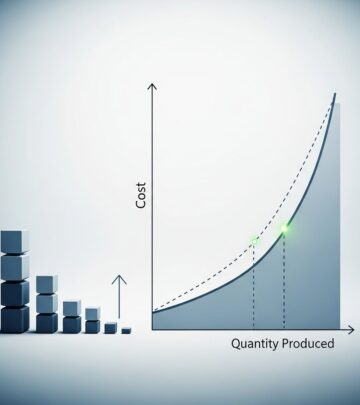
Diseconomies of scale occur when the marginal cost of producing additional units rises, resulting in reduced profitability despite higher production volumes. As businesses expand beyond their optimal size, they often encounter inefficiencies that offset the benefits of increased production. This inflection point marks a critical transition where growth becomes counterproductive rather than beneficial. Consider a typical production scenario: initially, a company benefits from spreading fixed costs across more units. However, once the organization passes a certain threshold, coordination becomes difficult, management layers proliferate, and communication breaks down.
The concept directly contrasts with economies of scale, where per-unit costs decline as output increases. Beyond a certain production point, the trajectory reverses, with profit margins facing downward pressure. Many businesses face significant challenges during expansion, as increased workload and client bases create coordination difficulties. Effective cost control under these changing circumstances becomes increasingly difficult, potentially leading to reduced profitability even when production volumes increase substantially.
Types of Diseconomies of Scale
Diseconomies of scale manifest in two primary categories: internal and external. Understanding these distinctions helps businesses identify where inefficiencies originate and how to address them strategically.
Internal Diseconomies of Scale
Internal diseconomies stem directly from within the organization and its operations. These include technical, organizational, and financial challenges that arise as companies grow larger.
Technical Diseconomies: These occur when production processes become less efficient as scale increases. Manufacturing plants may experience bottlenecks, coordination issues, and waste management problems when expansion outpaces the organization’s ability to manage resources effectively. Equipment may become overutilized, creating maintenance challenges and reducing productivity.
Organizational Diseconomies: As companies expand, organizational complexity increases exponentially. Communication breakdowns become more frequent, decision-making slows considerably, and management layers multiply. Large retail chains exemplify this challenge, where hierarchical structures limit responsiveness to customer needs and market changes. Employee morale may decline due to overwork, reduced autonomy, and diluted company culture, further exacerbating inefficiency.
Financial Diseconomies: Expanding companies often take on greater levels of financial activity, including larger debt obligations. Making extensive purchases, managing complex financial portfolios, and pursuing potentially unprofitable investments can strain financial resources. For example, a computer hardware company investing $100,000 in a new product that fails to generate sufficient productivity gains might experience substantial losses that smaller, more cautious competitors avoid.
External Diseconomies of Scale
External diseconomies arise from factors outside the organization’s direct control but are influenced by industry-wide or market conditions as the company scales.
Supply Chain and Infrastructure Limitations: Companies heavily dependent on resources with fixed or relatively fixed supplies face production constraints. Timber companies, for instance, cannot increase production beyond the sustainable harvest rate of their land, regardless of market demand. Similarly, service companies are limited by available labor and tend to concentrate in densely populated metropolitan areas where talent pools exist.
Market Saturation and Competition: As companies grow larger and attempt to capture greater market share, they may face increased competition from new entrants attracted by market opportunities. Rising per-unit costs reduce competitive advantages, making the company vulnerable to more efficient competitors entering the market.
Primary Causes of Diseconomies of Scale
Multiple interconnected factors contribute to the emergence of diseconomies of scale, particularly as organizations navigate rapid expansion.
Loss of Control in Organizational Structure: Growing companies often struggle to maintain effective control and oversight. As organizations become more decentralized, ensuring consistent quality, adherence to standards, and alignment with company values becomes increasingly challenging. Management may lose touch with day-to-day operations and employee concerns.
Ineffective Communication Between Divisions: Larger organizations with multiple departments and geographic locations frequently experience communication breakdowns. Information delays, misunderstandings, and siloed decision-making can result in duplicated efforts, missed opportunities, and operational inefficiencies that drive up costs.
Overlap in Business Functions: As companies expand, they sometimes create redundant departments and overlapping responsibilities. Multiple divisions may perform similar functions independently, wasting resources and creating confusion about accountability and authority.
Strategic Mistakes by Management: Poor strategic decisions during expansion—such as entering unfamiliar markets, acquiring incompatible companies, or overextending resources—can quickly erode profitability. Management teams may lack the expertise to handle the complexities of large-scale operations.
Misalignment in Production Capacity and Market Demand: Companies that expand production capacity without accurately forecasting demand may find themselves with expensive excess capacity. Conversely, underestimating demand can create bottlenecks and operational disruptions that increase costs.
Real-World Examples of Diseconomies of Scale
Several industries and well-documented cases illustrate how diseconomies of scale materialize in practice.
Large Retail Chains
Major retail chains frequently encounter diseconomies of scale when expanding too rapidly without optimizing supply chain and workforce management. A company opening hundreds of locations simultaneously may face stock shortages, poor staff performance, and diminished customer service. Complex organizational structures create slower decision-making processes, limiting the company’s ability to respond quickly to market changes or customer feedback. The result is increased operational costs despite higher sales volumes, ultimately reducing profitability and customer satisfaction.
Manufacturing Firms
Manufacturing provides clear illustrations of diseconomies of scale. When firms expand production too rapidly, they frequently encounter increased production bottlenecks and higher per-unit costs. Coordination challenges arise as managing resources effectively becomes more difficult with scale. Overworked staff experience declining morale, further reducing productivity and increasing error rates. Quality control becomes harder to maintain, potentially leading to waste and rework expenses that offset the benefits of increased production volume.
Ice Cream Shop Example
A practical illustration involves a small ice cream shop operation. Initially, Mary’s shop serves 60 customers per hour with three employees at $15 per hour each ($45 total labor cost). When demand increases to 90 customers per hour, she must hire two additional employees, raising labor costs to $75 per hour. However, the additional employees prove less efficient in the cramped space, serving fewer than 20 customers each due to crowding and equipment limitations. The result is higher per-unit labor costs despite increased customer volume, exemplifying how physical constraints and organizational challenges create diseconomies of scale.
Diseconomies of Scale vs. Economies of Scale
| Factor | Economies of Scale | Diseconomies of Scale |
|---|---|---|
| Relationship to Production | Per-unit costs decrease as output increases | Per-unit costs increase as output increases |
| Profit Margins | Expand and improve | Contract and decline |
| Competitive Positioning | Strengthens with scale | Weakens with scale |
| Fixed Cost Spread | Fixed costs distributed across more units | Fixed costs create inefficiency burdens |
| Operational Efficiency | Generally improves | Generally deteriorates |
| Management Complexity | Manageable with proper systems | Becomes unwieldy and problematic |
The fundamental distinction centers on the relationship between production volume and per-unit costs. Economies of scale represent the cost advantage arising from increased production output, where each additional unit produced results in declining per-unit fixed costs. Diseconomies of scale represent the opposite scenario, where expansion creates rising per-unit costs that pressure profitability. Understanding this distinction is crucial for strategic planning, as it highlights the existence of an optimal production scale beyond which growth becomes counterproductive.
Impact on Business Operations and Strategy
Diseconomies of scale significantly affect how businesses approach growth and operational management. Companies must recognize that expansion has limits and that unchecked growth can destroy shareholder value. Strategic management requires identifying the optimal scale for operations—the point where per-unit costs reach their minimum before diseconomies begin to emerge. This optimal point varies significantly across industries based on technological requirements, labor market conditions, and supply chain complexities.
Organizations should implement robust communication systems, establish clear accountability structures, and maintain flexibility in organizational design as they grow. Regular assessment of operational efficiency metrics helps identify emerging diseconomies before they significantly impact profitability. Some companies address diseconomies through decentralization, allowing local management greater autonomy in decisions regarding employee management, purchasing, and customer service—enabling better alignment with local market conditions and maintaining responsiveness.
Frequently Asked Questions
Q: What are diseconomies of scale?
A: Diseconomies of scale occur when a company’s average production cost per unit increases as output expands. This represents the opposite of economies of scale and typically results from organizational inefficiencies, communication challenges, and management complexity that emerge as companies grow beyond their optimal operational size.
Q: How do diseconomies of scale differ from economies of scale?
A: Economies of scale reduce per-unit costs through increased production volume, improving profitability. Diseconomies of scale increase per-unit costs despite higher production, reducing profitability and competitive strength. The key difference lies in the relationship between output and cost per unit.
Q: What are the main types of diseconomies of scale?
A: Diseconomies of scale fall into two categories: internal (technical, organizational, and financial challenges within the company) and external (supply chain limitations and market conditions outside direct organizational control).
Q: Can companies prevent or minimize diseconomies of scale?
A: Yes, companies can minimize diseconomies through strong communication systems, clear organizational structures, effective management, strategic capacity planning, and maintaining flexibility in decision-making processes. Regular monitoring of operational efficiency helps identify emerging inefficiencies before they substantially impact costs.
Q: What is the optimal scale for a business?
A: The optimal scale represents the production level where per-unit costs are minimized before diseconomies emerge. This optimal point varies significantly across industries depending on technological factors, labor availability, supply chain structure, and market conditions. Identifying this point is crucial for strategic planning.
Q: Are diseconomies of scale permanent once they occur?
A: Diseconomies are not necessarily permanent. Companies can reverse them through organizational restructuring, implementing new technologies, improving management systems, and addressing underlying inefficiencies. However, addressing diseconomies requires deliberate strategic action and investment.
References
- Diseconomies of Scale — Corporate Finance Institute. https://corporatefinanceinstitute.com/resources/economics/diseconomies-of-scale/
- Diseconomies of Scale: Types, How They Work and Examples — Indeed Career Advice. https://www.indeed.com/career-advice/career-development/diseconomies-of-scale
- Diseconomies of Scale — Wikipedia. https://en.wikipedia.org/wiki/Diseconomies_of_scale
- Diseconomies of Scale: Definition + Examples — Wall Street Prep. https://www.wallstreetprep.com/knowledge/diseconomies-of-scale/
- What are Diseconomies of Scale? — Bizmasterz. https://bizmasterz.com/what-are-diseconomies-of-scale/
Similar Articles








Read full bio of Sneha Tete