Discretionary Income: 5 Practical Ways To Boost Your Cash
Unlock the power of your extra cash: Learn what discretionary income means, how to calculate it, and smart ways to use it for a brighter financial future.

Discretionary income represents the portion of your earnings remaining after covering taxes and basic necessities, empowering you to pursue savings, investments, or enjoyable pursuits. This financial buffer plays a pivotal role in personal budgeting and economic analysis, as it signals consumer spending potential and overall economic vitality.
Defining Discretionary Income in Everyday Terms
At its core, discretionary income is the cash at your disposal once you’ve settled mandatory obligations like income taxes, housing costs, groceries, utilities, transportation, and minimum debt payments. Unlike broader income categories, it excludes survival essentials, focusing instead on flexible spending.
Economists view it as a barometer of financial flexibility. When households have ample discretionary income, they fuel sectors like retail, travel, and leisure, stimulating job growth and business expansion. For individuals, it translates to freedom—whether funding a family vacation, upgrading gadgets, or building an emergency fund.
Discretionary Income vs. Disposable Income: Key Distinctions
Many confuse discretionary income with disposable income, but they serve different purposes. Disposable income is gross earnings minus taxes only, encompassing both needs and wants. Discretionary income drills deeper, subtracting essential living costs from disposable income.
| Aspect | Disposable Income | Discretionary Income |
|---|---|---|
| Definition | Income after taxes | Income after taxes and essentials |
| Includes | Needs + Wants | Wants + Savings only |
| Example Calculation | $5,000 gross – $1,000 taxes = $4,000 | $4,000 – $3,000 essentials = $1,000 |
| Purpose | Overall spending power | Flexible financial choices |
This table illustrates the progression: disposable income sets the stage, while discretionary income reveals true spending latitude.
Step-by-Step Guide to Calculating Your Discretionary Income
Computing discretionary income requires tracking three main components: gross income, taxes/deductions, and essential outflows. Here’s a straightforward process:
- Determine Gross Income: Start with your pre-tax earnings from salary, bonuses, or side gigs. For annual views, multiply monthly figures by 12.
- Subtract Taxes and Deductions: Deduct federal/state taxes, social security, retirement contributions, and health insurance premiums to reach take-home pay (disposable income).
- Itemizing Essential Expenses: List fixed necessities: rent/mortgage, utilities (electricity, water, gas), groceries, basic transportation (gas, public transit), insurance (health, auto), minimum debt payments, and healthcare costs.
- Perform the Subtraction: Discretionary Income = Disposable Income – Essential Expenses.
Tools like spreadsheets or budgeting apps simplify this by automating categorization and monthly tracking.
Practical Examples Across Income Levels
Consider a mid-level earner with $60,000 annual gross income, facing 25% taxes ($15,000) and $36,000 in yearly essentials (housing $18,000, food/utilities $12,000, transport/debt $6,000). Disposable income: $45,000. Discretionary: $9,000—enough for modest savings or occasional outings.
For a higher earner at $120,000 gross (30% taxes = $36,000; essentials $48,000), discretionary reaches $36,000, enabling investments or luxuries.
Low-income scenario: $30,000 gross (20% taxes = $6,000; essentials $22,000). Discretionary: $2,000—highlighting the need for cost-cutting or income boosts.
Common Uses and Smart Allocation Strategies
With discretionary income identified, allocation decisions shape your financial trajectory. Primary channels include:
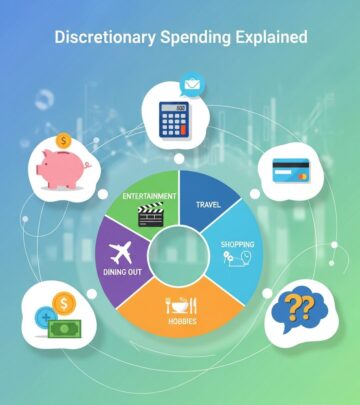
- Non-Essential Spending: Dining out, streaming subscriptions, hobbies, apparel beyond basics.
- Savings and Emergency Funds: Aim for 3-6 months’ expenses in a high-yield account.
- Investing: Contribute to retirement accounts (401(k), IRA) or stocks for compound growth.
- Debt Reduction: Accelerate payments beyond minimums to free future income.
- Experiences: Travel, concerts, gym memberships for quality of life.
Balance is key: the 50/30/20 rule suggests 20% toward savings/investments from total after-tax income, adaptable to discretionary portions.
Factors Influencing Your Discretionary Income Amount
Several variables dictate discretionary size:
- Location and Cost of Living: Urban areas inflate essentials like rent, shrinking discretionary shares.
- Household Size: Families spend more on food/transport, reducing per-person discretionary.
- Debt Load: High-interest obligations eat into flexibility.
- Income Stability: Freelancers face variability vs. salaried predictability.
- Tax Bracket: Progressive rates impact take-home pay disproportionately.
Inflation erodes purchasing power, making regular recalculations essential.
Boosting Discretionary Income: Actionable Tips
To expand this fund:
- Trim Essentials: Negotiate bills, shop sales for groceries, refinance debts.
- Increase Earnings: Side hustles, raises, or skill upgrades.
- Avoid Lifestyle Creep: Don’t inflate spending with income jumps.
- Automate Savings: Transfer discretionary portions immediately to investments.
- Track Religiously: Use apps to categorize and curb impulse buys.
These steps can double discretionary income within a year for proactive individuals.
Discretionary Income in Broader Applications
Beyond personal use, it’s vital in policy and lending. Governments track aggregate discretionary income for economic forecasts. In education finance, the U.S. Department of Education defines it as Adjusted Gross Income minus 150% of the poverty line for income-driven student loan repayments.
Lenders assess it for creditworthiness, as it indicates repayment capacity post-essentials.
Frequently Asked Questions (FAQs)
What counts as an essential expense?
Essentials cover housing, utilities, basic food, transport, insurance, healthcare, and minimum debt payments. Non-essentials like premium cable or luxury clothes are discretionary.
Is discretionary income taxed?
No, as taxes are deducted upfront. However, investment gains from it may incur future taxes.
How often should I recalculate it?
Monthly or after life changes like raises, moves, or family additions for accuracy.
Can discretionary income be negative?
Yes, signaling overspending—prompting budget cuts or income increases.
What’s a healthy discretionary income percentage?
20-30% of disposable income is ideal, varying by goals and circumstances.
Mastering discretionary income fosters financial independence. Regularly assess and allocate it wisely to build wealth and enjoy life.
References
- Discretionary Income – Overview, Economic Impact, Example — Corporate Finance Institute. 2023. https://corporatefinanceinstitute.com/resources/wealth-management/discretionary-income/
- What is discretionary income? — Standard Bank. 2024-01-15. https://www.standardbank.co.za/southafrica/personal/learn/understanding-discretionary-income
- What is discretionary income? With definition and examples — Indeed UK. 2024. https://uk.indeed.com/career-advice/career-development/what-is-discretionary-income
- What Is Discretionary Income? How Do You Calculate It? — SoFi. 2025-02-01. https://www.sofi.com/learn/content/what-is-discretionary-income/
- What Is Discretionary Income | PNC Insights — PNC Bank. 2024-11-20. https://www.pnc.com/insights/personal-finance/spend/what-is-discretionary-income.html
- What is Discretionary Income And How Do You Calculate It? — Rocket Money. 2024. https://www.rocketmoney.com/learn/personal-finance/discretionary-income
- Discretionary Income — Federal Student Aid (U.S. Department of Education). 2025. https://studentaid.gov/help-center/answers/article/discretionary-income
Similar Articles








Read full bio of Sneha Tete