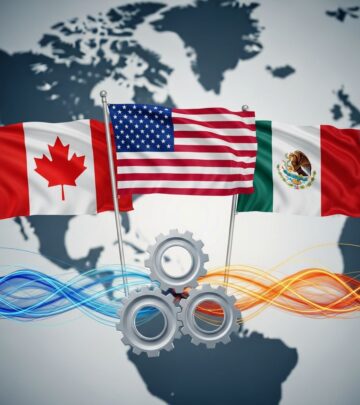
NAFTA Disadvantages: Impact on Jobs and Economy
Understanding NAFTA's negative effects on U.S. jobs, wages, and worker protections

Understanding the Disadvantages of NAFTA
The North American Free Trade Agreement (NAFTA), which took effect on January 1, 1994, was intended to facilitate trade and economic growth across the United States, Mexico, and Canada. However, despite its goal of creating prosperity for all member nations, NAFTA has generated significant controversy and criticism over its actual economic consequences. Since its implementation, numerous economists, policymakers, and workers have identified substantial disadvantages that affected millions of people across the continent. Understanding these drawbacks is essential for evaluating trade policy and assessing the long-term impact of international trade agreements on working families and communities.
Job Losses in U.S. Manufacturing
One of the most visible and documented disadvantages of NAFTA has been the substantial loss of manufacturing jobs in the United States. According to research, the rise in the U.S. trade deficit with Canada and Mexico through 2002 caused the displacement of production that supported approximately 879,280 U.S. jobs, with most of these being high-wage positions in manufacturing industries. Critics cite manufacturing job losses as the primary reason to question NAFTA’s value, particularly in states like California, New York, and Texas, which experienced significant employment disruptions in sectors including automotive, textile, computer, and electrical appliance manufacturing.
The loss of manufacturing employment did not occur evenly across all regions or demographics. Instead, specific communities that had relied heavily on factory-based economies found themselves economically devastated. Companies seeking to reduce labor costs made the strategic decision to relocate production operations to Mexico, where wages were significantly lower than in the United States. This deliberate shift in manufacturing capacity fundamentally altered the employment landscape and created long-term economic challenges for affected workers and their families.
Wage Suppression for Non-College-Educated Workers
Beyond direct job losses, NAFTA had a more insidious effect on American wages. The agreement suppressed wages for non-college-educated workers across multiple sectors of the economy, not just in manufacturing. While the manufacturing sector experienced the heaviest job losses, wages decreased in many other sectors that do not require workers to have a college degree, including service industries and other labor-intensive fields.
This wage suppression occurred through multiple mechanisms. First, competition from workers in Mexico, who earned lower wages than U.S. workers on average, exerted direct downward pressure on American wages. When employers could credibly threaten to move operations to Mexico to avoid unionization and wage demands, workers lost negotiating power. Without the ability to form unions, workers could not effectively bargain for better wages or working conditions. Second, the displacement of manufacturing workers created an excess supply of labor in the service sector, which further depressed wages for workers already employed in those industries. This cascading effect meant that wage stagnation spread well beyond those directly exposed to foreign competition, affecting the broader labor market and reducing living standards for millions of American workers.
NAFTA’s impact on wage inequality was particularly severe for workers without college degrees, who comprised 72.1% of the workforce in 2001. These workers faced the most direct competition and experienced the most significant wage losses. The agreement contributed to rising income inequality and to the declining relative wages of American workers, exacerbating economic disparities that continue to affect communities today.
Impact on Mexican Small Farmers and Businesses
While job losses in the United States represented NAFTA’s most visible domestic impact, the agreement’s effect on Mexican agriculture was equally devastating. NAFTA hurt the economic prospects of Mexican small farmers and small business owners by exposing them to competition they could not withstand. The agreement allowed U.S. government-subsidized farm products to flow into Mexico at prices that local farmers simply could not match. Mexican family-owned farms, which had sustained rural communities for generations, found themselves unable to compete with larger agribusinesses operating with significant government support.
The consequences were profound and far-reaching. Research estimates that NAFTA put almost two million small-scale Mexican farmers, especially corn producers, out of work. When traditional agricultural livelihoods disappeared, unemployed farmers had limited options. Many were forced to seek factory work in the maquiladora program, where they encountered substandard working conditions, low wages, and limited job security. Others faced the difficult choice of remaining in marginal rural areas or immigrating to the United States. This displacement of Mexican farmers contributed to significant increases in both legal and illegal migration to the United States, as individuals sought economic opportunities to support their families.
The environmental consequences of this agricultural displacement were severe. To remain competitive, Mexican agribusiness operations increasingly relied on chemical-intensive farming practices, including heavy fertilizer use and pesticide applications, resulting in increased pollution. Rural farmers forced to operate on marginal land to maintain their livelihoods contributed to accelerated deforestation rates in Mexico, which in turn contributed to global environmental challenges including increased greenhouse gas emissions and climate change.
Inadequate Labor and Environmental Standards
A fundamental criticism of NAFTA concerns the weakness of its labor and environmental protections. When the United States negotiates trade deals with middle- or low-income countries, American negotiators typically demand higher labor, environmental, and intellectual property standards than those countries previously imposed. However, critics argue that U.S. negotiators did not push hard enough for stringent protections for workers and the environment when negotiating NAFTA, missing a crucial opportunity to promote pro-labor and pro-environment agendas.
The core agreement provided investors with a unique set of guarantees designed to stimulate foreign direct investment and facilitate the movement of factories within the hemisphere, particularly from the United States to Mexico. Significantly, no protections were contained in the core agreement to maintain labor or environmental standards. This structural imbalance meant that the economic playing field was tilted decisively in favor of investors and against workers and the environment, resulting in what economists describe as a hemispheric “race to the bottom” in wages and environmental quality.
U.S. companies, seeking to minimize production costs, had little incentive to maintain high environmental or labor standards in their Mexican operations. Without robust enforcement mechanisms or meaningful penalties for violations, companies could damage the Mexican environment with relative impunity to keep costs low. The absence of strong labor standards also meant that workers in all three countries faced downward pressure on wages, benefits, and working conditions as companies leveraged the threat of relocation to extract concessions from workers and communities.
Weakening of Worker Protections and Collective Bargaining
NAFTA’s disadvantages extended to the broader framework of worker protections and labor rights. The agreement contributed to weakening workers’ collective bargaining power and their ability to organize unions. Companies used the threat of relocating operations to Mexico as leverage against workers seeking to form unions or negotiate for better wages and conditions. This fear of capital mobility—the ability of corporations to move factories across borders—fundamentally altered the power dynamics between workers and employers.
When workers could not effectively organize or collectively bargain, they lost critical tools for protecting their interests. Employers could demand concessions that would have been unacceptable in a strong union environment. Additionally, NAFTA contributed to reduced fringe benefits for many American workers, including health insurance and retirement benefits that are essential components of total compensation. These losses often went less noticed than outright job losses but had significant impacts on worker well-being and family economic security.
Trade Deficit and Job Displacement
NAFTA’s effect on the U.S. trade deficit represents another significant disadvantage. The agreement was designed to facilitate increased trade between member nations, but the resulting import surge had consequences that many did not anticipate. The Center for Economic and Policy Research and the Economic Policy Institute have argued that the surge of imports after NAFTA caused the loss of up to 600,000 U.S. jobs over two decades, though they acknowledge that some import growth would likely have occurred even without the agreement.
It is important to understand that trade both creates and destroys jobs. While increases in U.S. exports tend to create jobs domestically, increases in imports tend to reduce jobs because imports displace goods that otherwise would have been made in the United States by domestic workers. NAFTA facilitated rapid growth in imports from Mexico and Canada, creating the conditions for substantial job displacement even as some new jobs were created in export-related sectors.
Migration and Regional Instability
The displacement of Mexican farmers contributed to significant migration patterns with consequences for both Mexico and the United States. Migration to the United States, both legal and illegal, more than doubled after 1994, peaking in 2007. While multiple factors contributed to this migration increase, the agricultural displacement caused by NAFTA was a significant driver. Unemployed farmers, unable to compete in NAFTA-transformed agricultural markets, sought economic opportunities north of the border.
This migration pattern reflected the failure of NAFTA to broadly distribute its benefits. Rather than creating prosperity that would encourage workers to remain in their home countries, NAFTA created conditions of economic desperation that pushed people toward international migration. The subsequent reversal of migration flows after 2008, as more Mexican-born immigrants left the United States than arrived, further reflected the economic instability created by the agreement’s implementation.
Insufficient Policy Response and Regional Hardship
While Trade Adjustment Assistance (TAA) programs were theoretically available to help workers displaced by trade, many economists argue that funding levels remain insufficient to address the increase in trade-related job losses. Communities that experienced severe economic disruption from NAFTA-driven job losses often received inadequate support for worker retraining, income replacement, or community economic development. “There are pockets that have felt lots of pain,” according to analysis of NAFTA’s impact, with these pockets highlighting policy failures in helping regions and individuals adjust to the impact of globalization.
Manufacturing communities that lost anchor employers faced cascading economic decline. Local tax bases eroded, schools and public services suffered, and young people often had to leave their communities to find economic opportunities elsewhere. This contributed to the hollowing out of many American industrial cities and towns, with effects that persist more than three decades after NAFTA’s implementation.
Frequently Asked Questions
Q: How many jobs did NAFTA actually cost the United States?
A: Estimates vary, but research indicates that the rise in the U.S. trade deficit with Canada and Mexico through 2002 displaced production supporting approximately 879,280 U.S. jobs, with some estimates suggesting up to 600,000 jobs were lost over two decades. Most of these were high-wage manufacturing positions.
Q: Did NAFTA affect wages beyond manufacturing?
A: Yes, NAFTA suppressed wages for non-college-educated workers across multiple sectors. Competition from lower-wage workers in Mexico and the displacement of manufacturing workers into service sectors created downward wage pressure affecting millions of American workers across the economy.
Q: How did NAFTA affect Mexican farmers?
A: NAFTA exposed Mexican small farmers to competition from subsidized U.S. agricultural products they could not match. Research estimates that nearly two million small-scale Mexican farmers, particularly corn producers, were displaced from farming, forcing migration to factories or the United States.
Q: Were labor and environmental standards part of NAFTA’s core agreement?
A: No. NAFTA’s core agreement contained no protections to maintain labor or environmental standards, instead tilting the economic playing field in favor of investors and creating a “race to the bottom” in wages and environmental quality.
Q: Did NAFTA help or hurt workers in all three countries?
A: NAFTA’s effects were mixed. While it created some benefits and jobs in certain sectors, it resulted in significant disadvantages for workers overall, contributing to rising income inequality, wage stagnation, and job losses across all three member nations.
References
- The Pros and Cons of NAFTA — SmartAsset. Accessed 2025. https://smartasset.com/mortgage/the-pros-and-cons-of-nafta
- The high price of ‘free’ trade: NAFTA’s failure has cost the United States jobs at home and abroad, and workers’ wages and benefits — Economic Policy Institute. 2003. https://www.epi.org/publication/briefingpapers_bp147/
- NAFTA and the USMCA: Weighing the Impact of North American Trade — Council on Foreign Relations. 2024. https://www.cfr.org/backgrounder/naftas-economic-impact
- NAFTA Pros and Cons — Exploros. Accessed 2025. https://www.exploros.com/summary/NAFTA-Pros-and-Cons
- TRADE: The Nafta Paradox — Center for Latin American & Caribbean Studies, UC Berkeley. Accessed 2025. https://clacs.berkeley.edu/trade-nafta-paradox
Similar Articles








Read full bio of medha deb