Direct Participation Program (DPP): Definition, Types, and Structure
Understanding DPPs: pooled investments offering cash flow, tax benefits, and diversification opportunities.
What Is a Direct Participation Program (DPP)?
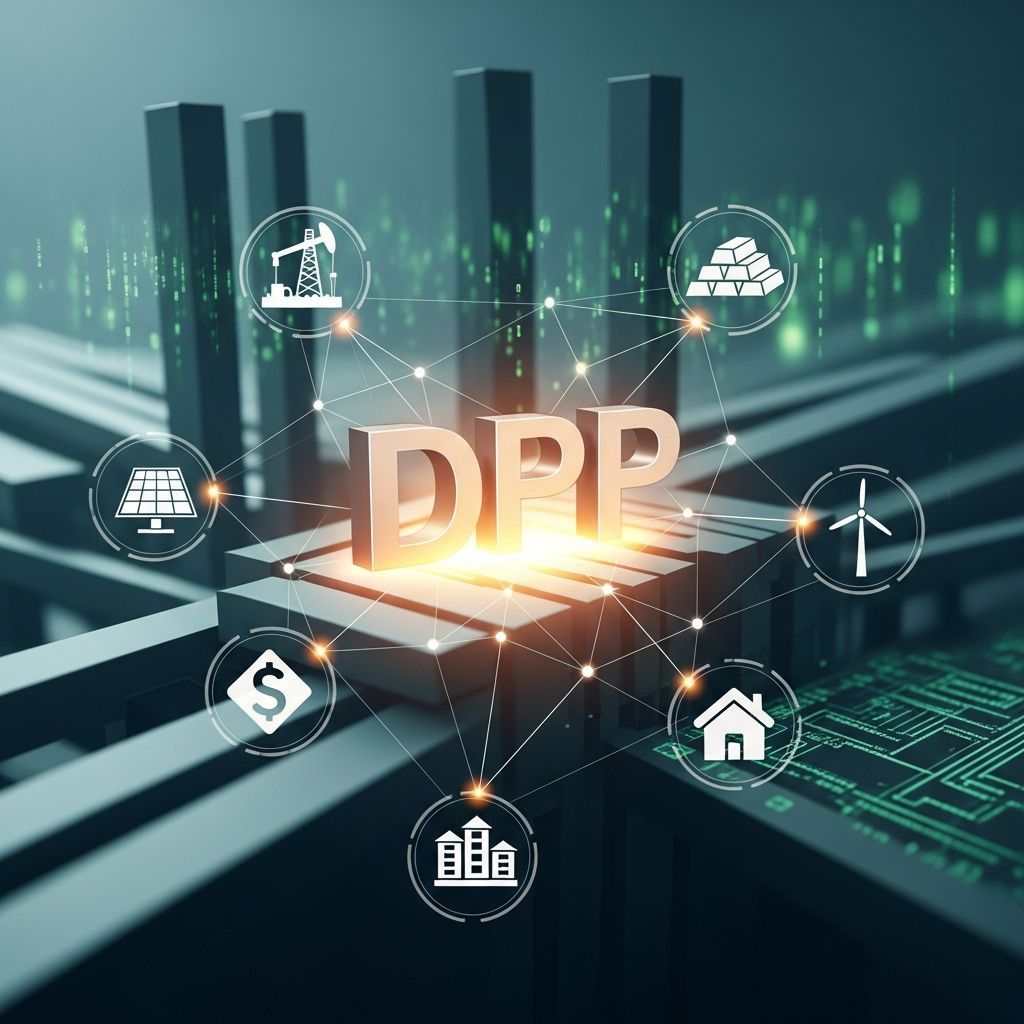
A Direct Participation Program (DPP), also known as a direct participation plan, represents a pooled investment structure that provides investors with direct access to business ventures’ cash flows and associated tax benefits. These non-traded pooled investments typically focus on real estate or energy-related ventures over extended time horizons, offering average investors opportunities that have traditionally been reserved for wealthy individuals and institutional investors.
DPPs operate by allowing multiple investors to combine capital and participate directly in the underlying business operations. Unlike traditional investments such as stocks or mutual funds, DPPs provide investors with partial ownership of physical assets and the ability to benefit from operational income and tax advantages on a pass-through basis.
Understanding Direct Participation Programs
The fundamental structure of most direct participation programs involves limited partners contributing capital, quantified in units, which a general partner then invests according to the program’s investment strategy. These investments are typically managed passively and maintain a lifespan ranging from five to ten years, though some may extend to fifteen years.
One of the most significant advantages of DPPs is their tax treatment. All tax deductions, income, gains, losses, and tax credits generated by the DPP pass through to individual partners on a pre-tax basis. Consequently, the DPP entity itself avoids corporate-level taxation, allowing investors to benefit from tax-advantaged income directly.
Because of the income they generate and their pooled structure, DPPs have become increasingly popular among investors seeking to diversify portfolios and access alternative investment opportunities. However, participation requires meeting specific asset and income thresholds, which vary by state and are established to protect retail investors from unsuitable investments.
Legal Structure and Tax Treatment
Direct participation programs are typically organized as limited partnerships, subchapter S corporations, or general partnerships. These structures are specifically chosen because they allow the DPP’s income, losses, gains, tax credits, and deductions to flow through to underlying partners on a pre-tax basis.
This flow-through treatment means that DPP investors receive K-1 forms reporting their share of the program’s taxable income and deductible losses. The tax benefits associated with DPPs can be substantial, particularly for investors in higher tax brackets or those seeking to offset other sources of income.
The absence of entity-level taxation distinguishes DPPs from traditional corporations and makes them particularly attractive for tax-conscious investors. This structural advantage is a primary reason why DPPs have gained significant popularity since the 2008-2009 financial crisis, with approximately $5.8 billion invested in SEC-registered DPPs.
Types of Direct Participation Programs
The DPP market encompasses several distinct categories of investments, each serving different investor objectives and risk profiles:
Non-Traded REITs: These represent approximately two-thirds of the DPP market and provide investors with real estate exposure without the liquidity of publicly traded REITs. Non-traded REITs invest in commercial properties, residential developments, or specialized real estate sectors.
Non-Listed Business Development Companies (BDCs): These entities function as debt instruments for small and medium-sized businesses, providing capital to companies that may struggle to obtain traditional financing. BDCs operate as closed-end investment companies and distribute income to investors.
Energy Partnerships: Oil and gas exploration and development partnerships allow investors to participate in energy ventures, benefiting from commodity price appreciation and operational cash flows. These programs often offer significant tax deductions through depletion allowances and intangible drilling costs.
Equipment Leasing Corporations: These DPPs purchase equipment and lease it to operating companies, generating rental income and depreciation deductions for investors. Equipment leasing programs provide exposure to various industries including transportation, manufacturing, and technology.
DPP Structure and Investor Roles
The typical DPP structure creates distinct roles and responsibilities for different participants. Limited partners serve as investors, contributing capital in exchange for ownership units and passive income. Their liability is limited to their initial investment, protecting them from company debts beyond their stake.
The general partner manages all day-to-day operations, investment decisions, and strategic planning. While limited partners have no voice in management decisions, they retain certain rights including the ability to vote on removing or replacing the general partner and to sue for breach of fiduciary duty.
This arrangement allows investors to participate in business ventures without requiring active management involvement, making DPPs attractive for those seeking passive income and tax benefits without operational responsibilities.
Investment Timeline and Distribution Phases
Most DPP investments follow a two-phase timeline spanning seven to fifteen years. During the reinvestment phase, the general partner acquires tangible assets such as real estate, equipment, oil wells, or other commodities and generates income through sales, leases, or rentals.
The liquidation phase follows the reinvestment period, during which the DPP’s assets are sold and remaining capital is distributed to investors. Distributions received throughout both phases are measured against each investor’s adjusted cost basis to determine capital gains and losses for tax reporting purposes.
Key Characteristics and Benefits
| Characteristic | Description |
|---|---|
| Tax Pass-Through | Income, deductions, and credits pass to investors without entity-level taxation |
| Physical Asset Backing | DPPs invest in tangible assets like real estate, equipment, or natural resources |
| Diversification | Pooled structure allows individual investors to access investments typically requiring substantial capital |
| Income Generation | Structured to provide regular distributions from underlying asset operations |
| Limited Liability | Investors’ risk is limited to their initial investment amount |
Risks and Considerations
Liquidity Risk: DPPs are non-traded investments, meaning they lack the liquidity and pricing transparency of exchange-traded securities. Investors cannot easily sell their units if they need capital, and any secondary market sales typically occur at steep discounts.
Long-Term Commitment: The typical seven to fifteen-year investment horizon locks investors’ capital for extended periods. This makes DPPs unsuitable for individuals who may encounter liquidity needs during the investment term.
Complexity and Information Asymmetry: Many DPPs operate as “dark pools,” meaning sponsors do not acquire assets or begin operations until after collecting investments. This creates significant information asymmetry, making it difficult for investors to evaluate asset quality before committing capital.
Fee Structure: DPPs typically charge substantial fees that can significantly impact returns. Upfront fees range from 15% to 22% of the investment, with 7% to 10% going directly to selling brokers as commissions. Ongoing management fees typically range from 2% to 3% annually.
Leverage Risk: Some DPPs utilize substantial leverage, with leverage ratios potentially exceeding 300% of net assets. This amplifies both gains and losses, increasing overall investment risk.
Regulatory Framework
Direct participation programs have their regulatory origins in the Securities Act of 1933 and are governed by Financial Industry Regulatory Authority (FINRA) Rule 2310. These regulations establish suitability standards and sales practice requirements for DPP offerings.
Regulatory bodies have expressed significant concerns about DPP suitability. FINRA has filed complaints characterizing non-traded DPPs as speculative investments containing high degrees of risk, including the possibility of substantial or complete loss of initial investment. State securities regulators have issued similar warnings, highlighting the combination of severe liquidity restrictions, complex corporate structures, high fees, and leverage risks.
Suitability and Investor Requirements
Due to their illiquidity, complexity, and risk profile, DPPs are restricted to investors meeting specific financial criteria. These requirements typically include minimum net worth thresholds, annual income levels, and investment experience requirements. Specific requirements vary by state and by individual DPP offerings.
Brokers recommending DPPs must conduct thorough suitability analyses to ensure recommendations align with clients’ financial situations, investment objectives, risk tolerance, and liquidity needs. The significant fee structure and conflicts of interest inherent in DPP sales have led regulatory bodies to scrutinize sales practices closely.
Conflicts of Interest
The DPP industry structure creates several potential conflicts of interest that investors should understand. Selling brokers receive substantial commissions, typically 7% to 10% of initial investment, creating incentives to recommend DPPs regardless of suitability. Additionally, DPP sponsors often pay brokerage firms to conduct due diligence on their products, further compromising objectivity in the sales process.
Special Considerations for DPP Investors
Investors considering DPPs should carefully evaluate their financial situations and investment objectives. These investments are most suitable for accredited investors with substantial net worth, stable income, no anticipated liquidity needs during the investment period, and strong tax profiles that can benefit from pass-through deductions.
Prospective DPP investors should thoroughly review offering documents, understand the specific assets underlying the investment, evaluate the general partner’s track record and investment philosophy, and carefully consider fee implications on overall returns. Professional tax and financial advice is strongly recommended before making DPP investments.
How DPPs Compare to Other Alternative Investments
| Investment Type | Liquidity | Tax Treatment | Minimum Investment | Fee Structure |
|---|---|---|---|---|
| DPP | Very Low | Pass-Through | High ($25k-$100k+) | 15-22% Upfront + 2-3% Annual |
| Public REIT | Very High | Ordinary Income | Low ($100+) | 0.5-1% Annual |
| Private Equity | Low | Capital Gains | Very High ($250k+) | 2% Annual + 20% Performance |
| Hedge Funds | Low | Capital Gains | High ($100k+) | 1-2% Annual + 15-20% Performance |
Frequently Asked Questions (FAQs)
Q: What qualifies an investor to participate in a DPP?
A: Investors must typically meet accredited investor status, which generally requires a net worth exceeding $1 million (excluding primary residence) or annual income above $200,000 for individuals ($300,000 for couples). Specific requirements vary by state and offering.
Q: How often do DPPs distribute income to investors?
A: Distribution frequency varies by program but typically occurs quarterly or annually. Distributions depend on underlying asset performance and may fluctuate significantly based on market conditions and operational results.
Q: Can I exit a DPP investment early?
A: Most DPPs offer no early exit mechanism other than secondary market sales, which typically require substantial discounts. Some sponsors may offer limited redemption opportunities at reduced prices. Always review the offering documents carefully.
Q: What are the tax implications of investing in a DPP?
A: DPPs provide pass-through taxation, meaning you receive K-1 forms reporting your share of income, deductions, and losses. This can generate significant tax deductions but also creates ordinary income distributions. Consult a tax professional about implications for your situation.
Q: How much of my investment goes to fees in a DPP?
A: Upfront fees typically consume 15% to 22% of your initial investment, with 7% to 10% paid as broker commissions. Additional ongoing management fees of 2% to 3% annually reduce returns throughout the investment period.
Q: What happens if the DPP performs poorly?
A: Your loss is limited to your investment amount, but this could mean losing your entire initial capital. Illiquidity means you cannot easily sell to recover losses, and you must wait out the investment period or accept secondary market discounts.
References
- Direct Participation Program (DPP) Definition & Rules — Crown Exploration. 2021. https://www.crownexploration.com/Blogs/direct-participation-program-dpp-definition-and-requirements
- Growth of DPP Sector Buoyed By Unsuitable Sales — Mika Meyers PLC. 2025. https://www.mikameyers.com/security/dppinvestmentlosses/
- Securities and Exchange Commission Official Guidance on Investment Company Act — U.S. Securities and Exchange Commission. 2025. https://www.sec.gov/divisions/invest/
- FINRA Rule 2310: Direct Participation Programs and Other Non-Traded Securities — Financial Industry Regulatory Authority. 2024. https://www.finra.org/rules-guidance/rulebooks/finra-rules/2310
- Direct Participation Program (DPP) Explained — Nasdaq. 2025. https://www.nasdaq.com/articles/direct-participation-program-dpp-explained
Similar Articles








Read full bio of medha deb