Direct Marketing: Definition, Strategy, and Implementation
Master direct marketing strategies to reach customers and drive measurable business results effectively.
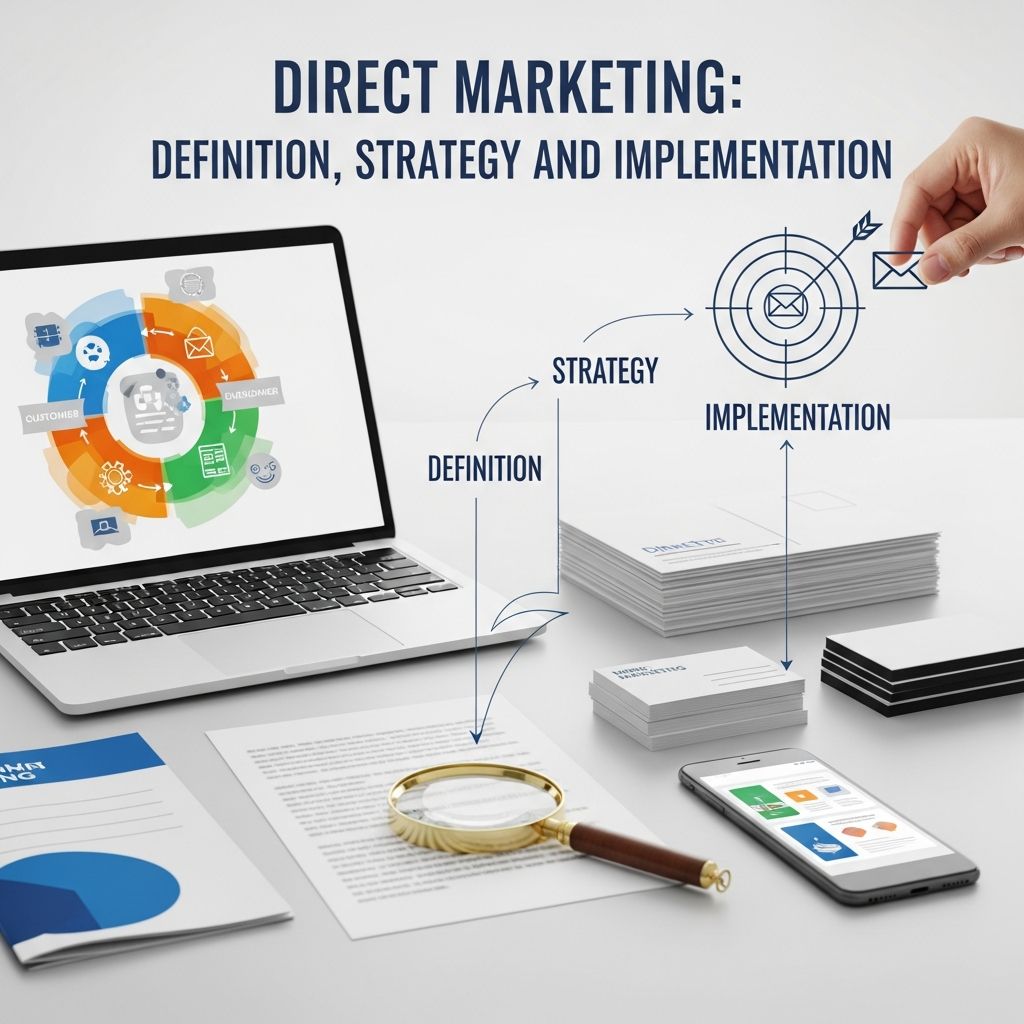
What is Direct Marketing?
Direct marketing is a form of advertising that allows businesses to communicate directly with targeted customers without intermediaries. Unlike traditional mass marketing approaches that broadcast messages to wide audiences, direct marketing focuses on personalized communication with specific individuals or segments most likely to convert into buyers. This strategy enables companies to establish personal relationships with customers through one-on-one interactions while maintaining complete control over the customer experience.
The primary distinction between direct marketing and conventional advertising lies in its approach. Traditional advertising relies on mass media channels such as billboards, television, and print publications to reach broad audiences, hoping that a portion will eventually show interest. In contrast, direct marketing eliminates this uncertainty by targeting pre-selected customers with tailored messages delivered through specific channels like email, direct mail, SMS, or social media.
Understanding the Fundamentals of Direct Marketing
Direct marketing operates on two essential components: direct promotion and direct distribution. Direct promotion involves reaching customers through channels that enable personalized messaging and direct communication. Direct distribution, meanwhile, means selling products or services directly from the manufacturer to the consumer without involving intermediaries such as wholesalers, retailers, or distribution companies.
The core principle of direct marketing is establishing measurable responses. Organizations employing direct marketing must create mechanisms for customers to respond directly to marketing efforts. These responses might include making purchases, requesting more information, visiting a website, or providing contact details. This measurable aspect distinguishes direct marketing from passive advertising, as companies can track and analyze customer reactions in real-time.
How Direct Marketing Works: A Step-by-Step Process
Successful direct marketing campaigns follow a structured approach designed to maximize effectiveness and return on investment:
1. Identifying Target Audience
The first step involves identifying and defining the specific market segment most likely to respond positively to marketing messages. Companies analyze various criteria including demographics, geographic location, purchase history, browsing behavior, and psychographic characteristics to create detailed customer profiles.
2. Building Customer Databases
Organizations develop comprehensive databases containing customer information such as names, email addresses, physical addresses, phone numbers, and previous purchase history. This data foundation enables personalized marketing and ensures messages reach the right people through appropriate channels.
3. Crafting Personalized Messages
Marketing teams create customized messages tailored to specific customer segments rather than generic broadcasts. Personalization increases engagement rates significantly by making customers feel that communications address their individual needs and interests.
4. Selecting Appropriate Channels
Companies choose distribution channels that best reach their target audience, whether email, social media, direct mail, phone calls, or mobile messaging. Channel selection depends on audience preferences, campaign objectives, and resource availability.
5. Encouraging Direct Response
Every direct marketing initiative includes clear calls-to-action designed to prompt immediate customer responses. Whether requesting a purchase, quote, website visit, or feedback submission, these prompts drive measurable engagement.
6. Tracking and Measuring Results
Direct marketing campaigns employ analytics tools to monitor performance metrics including response rates, conversion rates, customer acquisition costs, and return on investment. This data-driven approach enables continuous optimization.
7. Adjusting and Iterating
Based on performance data, marketers refine strategies and messages for subsequent campaigns, continuously improving effectiveness and results over time.
Primary Types of Direct Marketing Channels
Email Marketing
Email marketing represents one of the most popular direct marketing channels. Companies send targeted emails containing promotions, newsletters, product recommendations, and valuable content directly to subscriber lists. Email enables cost-effective communication with strong personalization capabilities and detailed performance tracking.
Direct Mail Marketing
Physical promotional materials including postcards, catalogs, letters, and brochures sent directly to customer mailboxes constitute direct mail marketing. Despite the rise of digital channels, direct mail remains effective for certain demographics and industries due to its tangible nature and ability to stand out in crowded digital environments.
Telemarketing
Telemarketing involves direct phone communication between marketing representatives and potential customers. Sales professionals discuss products and services, answer questions, and attempt to close sales during real-time conversations. Many regions maintain do-not-call registries allowing consumers to opt out of unsolicited marketing calls, though companies may still contact existing customers or those who have explicitly opted in.
SMS and Mobile Marketing
Text message marketing and push notifications deliver concise promotional messages and alerts directly to mobile devices. This channel offers high engagement rates due to the personal nature of mobile devices and the immediacy of notifications.
Social Media Marketing
Brands utilize social media platforms to identify target audiences, build follower communities, and deliver customized promotional content. Social media enables direct interaction, relationship building, and community engagement while allowing sophisticated audience targeting based on user data and behavior.
Digital Advertising
Targeted online advertising through search engines, display networks, and social platforms directs customized messages to users based on browsing history, search queries, and demographic information, creating personalized digital experiences.
Key Advantages of Direct Marketing
Personalization and Customer Connection
Direct marketing enables companies to craft individualized messages using customer purchase history, preferences, and behavior data. This personalization creates stronger emotional connections, increases engagement, and demonstrates that brands understand individual customer needs.
Cost Efficiency
By targeting customers already interested in products or services, direct marketing proves more cost-effective than mass marketing. Companies invest resources reaching high-probability buyers rather than broadcasting to disinterested audiences. Additionally, retaining existing customers through direct marketing costs significantly less than acquiring entirely new customers.
Higher Return on Investment
Direct marketing campaigns typically generate superior ROI compared to traditional advertising because they target audiences with demonstrated purchase interest. The combination of targeted reach and personalized messaging increases conversion probability, maximizing the value of marketing expenditures.
Measurable Results
Direct marketing provides precise performance metrics enabling companies to assess campaign effectiveness accurately. Tracking response rates, conversion rates, customer acquisition costs, and revenue generated offers clear visibility into what works and what requires adjustment.
Direct Customer Feedback
Direct marketing channels facilitate two-way communication, enabling customers to respond, ask questions, and provide feedback. This interaction provides valuable insights for product development, service improvement, and future marketing strategy refinement.
Database Building and Analysis
Direct marketing campaigns generate data that companies can analyze to understand customer preferences, behaviors, and trends. This information informs future marketing strategies and helps identify new growth opportunities.
Disadvantages and Challenges of Direct Marketing
While direct marketing offers significant benefits, it also presents challenges. High startup costs for database development and technology infrastructure can burden smaller businesses. Additionally, privacy concerns and evolving regulations like GDPR and CCPA require companies to carefully manage customer data and obtain appropriate consent. Some customers view certain direct marketing tactics, particularly telemarketing and unsolicited direct mail, as intrusive or annoying, potentially damaging brand reputation if not executed thoughtfully.
Direct Marketing vs. Traditional Advertising: Key Differences
| Aspect | Direct Marketing | Traditional Advertising |
|---|---|---|
| Targeting Approach | Highly targeted to specific segments | Broad audience approach |
| Personalization | Customized individual messages | Generic mass messages |
| Intermediaries | Direct contact, no intermediaries | Uses media intermediaries |
| Measurability | Easily trackable and measurable | Difficult to measure precisely |
| Response Rate | Higher engagement and conversion | Lower response rates |
| Cost | More cost-effective per conversion | Higher absolute costs |
| Timeline | Immediate and real-time results | Slower, delayed response |
Implementing Effective Direct Marketing Campaigns
Successful direct marketing implementation requires establishing proper infrastructure, data systems, and customer service processes. Companies must invest in customer relationship management platforms to organize and analyze customer information effectively. Marketing teams need access to quality data including customer contact details, purchase history, and behavioral preferences to execute targeted campaigns.
Organizations should also develop clear campaign objectives, whether increasing sales, generating leads, building brand awareness, or driving website traffic. Each objective determines appropriate channels, messaging, and success metrics. Testing different approaches through A/B testing with customer segments helps identify most effective messages and tactics before full-scale deployment.
Customer service excellence becomes critical in direct marketing because direct interaction creates opportunities to build loyalty or damage relationships. Responding promptly to customer inquiries, addressing concerns professionally, and following through on promises strengthens long-term customer relationships.
Measuring Direct Marketing Success
Key performance indicators for direct marketing campaigns include response rate (percentage of recipients responding), conversion rate (percentage converting to customers), customer acquisition cost (total marketing investment divided by new customers), return on investment (revenue generated compared to costs), and customer lifetime value (total profit from customer relationships). Regular analysis of these metrics enables continuous campaign optimization and improved results over time.
Future Trends in Direct Marketing
Direct marketing continues evolving with technological advances. Artificial intelligence and machine learning enable more sophisticated audience segmentation and personalization. Marketing automation platforms streamline campaign execution while maintaining personalized communication. Data analytics capabilities grow increasingly sophisticated, providing deeper customer insights. Omnichannel strategies integrate multiple direct marketing channels creating seamless customer experiences across touchpoints.
Frequently Asked Questions About Direct Marketing
Q: What is the primary goal of direct marketing?
A: The primary goal is generating specific, measurable responses from targeted customers such as purchases, website visits, form submissions, or information requests. Direct marketing aims to establish direct communication and drive immediate customer action.
Q: How does direct marketing differ from email marketing?
A: Email marketing is one specific channel within the broader direct marketing strategy. Direct marketing encompasses multiple channels including email, direct mail, telemarketing, SMS, and social media, while email marketing focuses exclusively on email communication.
Q: What data is necessary for successful direct marketing?
A: Essential data includes customer names, contact information (email, phone, address), purchase history, demographic details, and behavioral preferences. This information enables targeted messaging and personalization.
Q: How can businesses comply with privacy regulations in direct marketing?
A: Companies should obtain explicit customer consent before marketing, honor opt-out requests promptly, maintain secure data systems, and comply with regulations like GDPR, CCPA, and CAN-SPAM Act. Transparency about data usage builds customer trust.
Q: What is a reasonable response rate for direct marketing campaigns?
A: Response rates vary by industry, channel, and audience, but typical direct marketing campaigns achieve response rates between 1-5%. Email marketing often achieves 2-3%, while direct mail might generate 1-2%. Highly targeted campaigns can exceed these averages.
Q: How should businesses handle negative responses to direct marketing?
A: Businesses should respect opt-out requests immediately, remove uninterested parties from mailing lists, and use feedback to improve future campaigns. Some negative responses provide valuable insights for refining messaging and targeting.
References
- Direct Marketing Overview — Shopify Blog. 2024. https://www.shopify.com/blog/what-is-direct-marketing
- Direct Marketing: Meaning, Working, Types and Examples — GeeksforGeeks. 2024. https://www.geeksforgeeks.org/marketing/direct-marketing-meaning-working-types-and-examples/
- What is Direct Marketing — Directive Consulting. 2024. https://directiveconsulting.com/resources/glossary/direct-marketing/
- Direct Marketing – Overview, How It Works, Benefits — Corporate Finance Institute. 2024. https://corporatefinanceinstitute.com/resources/management/direct-marketing/
Similar Articles








Read full bio of medha deb