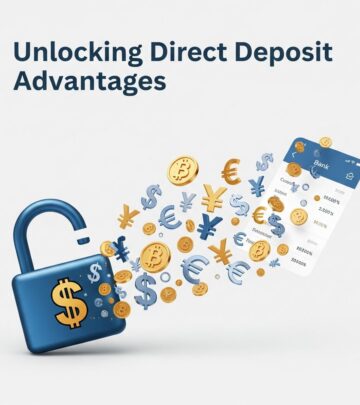
Direct Deposit: A Simple Way to Boost Your Savings
Turn your paycheck into a powerful savings tool by routing deposits through high-yield savings or money market accounts first.

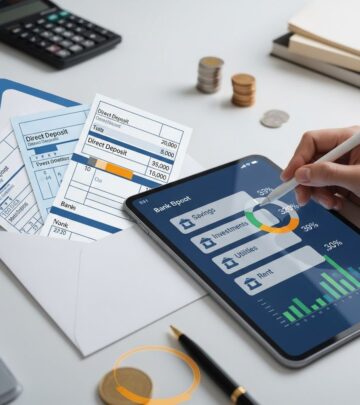
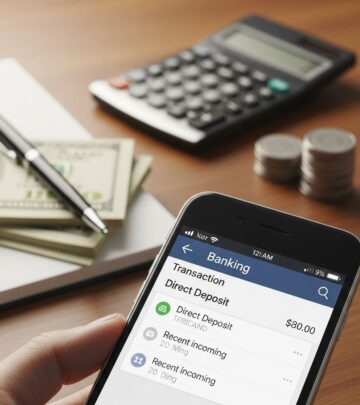
Routing your paycheck through a savings account or money market account instead of directly into checking can quietly increase how much interest you earn, strengthen your budget discipline, and help you avoid unnecessary bank fees. This simple adjustment builds on the traditional advice to use direct deposit, but updates it for a world dominated by debit cards and digital spending.
Instead of seeing checking as the default home for your paycheck, you can treat a high-yield savings or money market account as your primary landing zone and then move only what you need each month into checking. This slight change in habit can make a meaningful difference in your long-term savings growth and everyday financial behavior.
Why Reroute Your Paycheck? The Core Strategy
The classic recommendation from financial experts has been to use direct deposit rather than cashing paper checks, so you are less tempted to overspend physical cash. Today, because debit cards give instant access to checking balances, routing your paycheck into checking first can feel almost the same as having cash in your pocket.
A more strategic approach is:
- Have your paycheck directly deposited into a high-yield savings or money market account.
- Set up a single automatic monthly transfer from that account to your checking account for the exact amount of your monthly budget.
- Leave any extra in savings to earn higher interest and grow toward your goals.
This setup effectively makes savings your default and spending your controlled output, rather than the other way around.
Benefits of Direct Deposit to Savings or Money Market Accounts
Directing your paycheck to savings or a money market account first offers several advantages that go beyond convenience. These benefits support both your short-term cash management and your long-term financial health.
You Start Earning Interest Immediately
When your paycheck lands in an interest-bearing account right away, every dollar starts working for you as soon as it is paid. If you wait to move funds from checking into savings manually, you lose days or even weeks of potential interest.
Many checking accounts still pay little to no interest, while high-yield savings and money market accounts can pay significantly higher rates. Even modest differences in annual percentage yield (APY) compound into larger balances over time.
Key advantages include:
- More days per month in a higher-yield account.
- Automatic compounding without extra effort from you.
- Less risk of forgetting to transfer funds to savings.
It Puts Discipline Into Your Budget
Many people save only “whatever is left over” at the end of the month. In practice, this often means saving very little. By having your paycheck land in savings first, you reverse that pattern and pay yourself first—a concept widely recommended in personal finance guidance.
This approach helps you:
- Commit to a specific monthly spending amount by transferring only your budgeted figure into checking.
- Separate money earmarked for bills and everyday expenses from money designated for goals and emergencies.
- Reduce impulse spending, because excess funds are not sitting in checking where they are easy to swipe away.
Over time, this simple structure can make your spending more intentional and your saving more automatic.
It Helps You Meet Balance Thresholds for Better Rates
Many savings and money market accounts use tiered interest rates, where higher balances qualify for higher APYs. Directing your paycheck to these accounts first can help your balance cross rate thresholds more quickly and stay above them more consistently.
For example, a money market account might offer:
| Balance Tier | Example APY | Potential Benefit |
|---|---|---|
| Up to $2,500 | Lower APY | Starter rate while building balance |
| $2,500–$10,000 | Higher APY | Better earnings for mid-range savers |
| Over $10,000 | Highest APY | Maximum growth for larger deposits |
By pooling your incoming pay in a single savings or money market account, you may hit these tiers faster than if your funds were scattered across checking and small savings subaccounts.
Direct Deposit Into Checking Can Qualify You for Fee Waivers
Most traditional checking accounts still charge monthly maintenance fees, often adding up to more than $100 per year. Many banks, however, will waive these fees if you maintain a certain minimum balance or receive qualifying direct deposits each month.
Because you want direct deposit anyway, you can sometimes structure your accounts to get the best of both worlds:
- Set your primary direct deposit to a savings or money market account with a competitive rate.
- Confirm whether your bank will treat a recurring transfer from that account as a qualifying direct deposit for fee-waiver purposes.
- If required, route a portion of your paycheck directly to checking to meet the bank’s direct deposit requirement while sending the rest to savings.
Banks favor predictable electronic deposits because they reduce branch traffic and manual processing, so they often reward this behavior with reduced fees.
Consider Splitting Direct Deposit Between Checking and Savings
If your employer or payroll platform allows it, you can split your direct deposit so that different portions of your paycheck automatically go to different accounts. For example:
- 70% to your high-yield savings or money market account.
- 30% to your checking account for everyday bills and spending.
This method offers several advantages:
- You automate savings without needing to remember transfers.
- You can align deposit percentages with your budget and goals.
- You can still ensure enough money flows into checking to cover necessary expenses.
If your employer cannot split deposits, you can still deposit 100% into savings first and then use automatic transfers to move a fixed budget amount into checking on a schedule that matches your bill due dates.
How to Optimize Your Checking Account
While savings and money market accounts help your money grow, you still need a checking account for daily transactions, bill payments, and withdrawals. Choosing the right checking account and using it strategically can reduce costs and make your overall system work more smoothly.
Shop Around for Free Checking
“Free checking” generally refers to accounts with no monthly maintenance fee. These accounts are increasingly common at online banks and credit unions, though less so at large traditional banks.
When comparing checking accounts, focus on:
- Monthly maintenance fees and conditions for waivers.
- Overdraft policies and fees.
- ATM network size and out-of-network charges.
- Minimum balance requirements.
Surveys of bank fees show that a minority of checking accounts are completely fee-free, but they are easier to find if you include online-only institutions and credit unions in your search.
Use an Online Bank for Better Rates and Lower Fees
Online banks often have lower overhead costs than brick-and-mortar institutions, allowing them to offer:
- Higher interest rates on savings and money market accounts.
- No or lower monthly maintenance fees on checking.
- Large surcharge-free ATM networks or ATM fee reimbursements.
Independent comparisons of high-yield savings and money market accounts consistently show online banks near the top of rate tables, especially for customers who maintain moderate to higher balances. Moving your primary savings or money market account to an online institution can significantly boost the return on your direct-deposit strategy.
Opt Out of Overdraft Protection
Overdraft fees—often around $30 per incident—can quickly erode the financial benefits of your savings plan. Many banks enroll customers in overdraft protection by default, allowing transactions to go through even when funds are insufficient, then charging a fee.
Consider opting out of overdraft protection for debit card and ATM transactions so that purchases are declined instead of approved with a fee. To make this safe and manageable:
- Track your balance regularly through mobile banking apps.
- Enable low-balance alerts via email or text.
- Keep a small buffer amount in checking above your expected spending.
Good recordkeeping habits and alerts can help you avoid overdrafts altogether, allowing your savings to grow uninterrupted.
Choose a Bank With an ATM Network That Fits Your Needs
Withdrawing cash from out-of-network ATMs can incur both a fee from your bank and a surcharge from the machine owner. These small charges can add up and effectively reduce the benefit of higher interest earnings elsewhere.
To minimize ATM costs:
- Choose a bank or credit union with a large fee-free ATM network or partner network.
- Look for banks that reimburse out-of-network ATM fees up to a set monthly limit.
- Plan withdrawals in advance so you do not rely on expensive, random ATMs.
Pairing a robust ATM network with your high-yield savings or money market account ensures you can access cash when needed without eroding returns with frequent small fees.
The Bottom Line: Make Your Money Work Harder
Checking accounts are essential for everyday transactions, but they are rarely optimized for growth. In contrast, savings and money market accounts are designed to help you earn more on idle balances through higher interest rates and, in some cases, tiered rewards for larger deposits.
By flipping the usual sequence—paycheck into checking, then occasional transfers to savings—you can:
- Have your paycheck land in a high-yield savings or money market account first.
- Automate transfers to checking for only the amount needed to cover your monthly budget.
- Use bank selection and account features to minimize fees and maximize interest.
This structure requires only a few minutes to set up, but it can quietly improve your financial results every month by turning savings into the default and spending into a planned, controlled process.
Frequently Asked Questions (FAQs)
Q: Is it safe to direct deposit my paycheck into a savings or money market account?
A: Yes. As long as the account is held at an FDIC-insured bank or NCUA-insured credit union within coverage limits, your direct deposits are protected to the same extent as in a checking account.
Q: What if I need quick access to my money for bills?
A: You can schedule automatic transfers from savings or your money market account to checking to coincide with your paydays or bill due dates. Transfers between accounts at the same institution typically process quickly, often on the same day.
Q: Are there limits on transfers out of savings or money market accounts?
A: Federal Regulation D, which used to limit certain savings transfers, was suspended in 2020, and many banks no longer strictly cap monthly transfers. However, some institutions still impose their own limits or fees, so it is important to check your bank’s current policy.
Q: How do I know if I am getting a competitive savings or money market rate?
A: Compare your APY to rates published by reputable, up-to-date comparison tools and directly by financial institutions. Online banks and credit unions frequently offer some of the most competitive high-yield savings and money market rates.
Q: Can splitting direct deposit help with other financial goals?
A: Yes. In addition to routing part of your paycheck into a general savings or money market account, you can direct fixed amounts to goal-specific accounts, such as an emergency fund, vacation savings, or a down payment fund. This makes progress toward multiple goals automatic and measurable.
References
- Savings Rates — Navy Federal Credit Union. 2025-10-01. https://www.navyfederal.org/checking-savings/savings/savings-resources/savings-rates.html
- Savings rates — Everence Federal Credit Union. 2025-09-15. https://www.everence.com/banking/rates-and-service-schedule/savings-rates
- Rates – Checking & Savings — TruStone Financial Credit Union. 2025-08-20. https://trustonefinancial.org/rates/rates-checking-savings
- Best High-Yield Online Savings Accounts for 2026 — NerdWallet. 2026-01-05. https://www.nerdwallet.com/banking/best/high-yield-online-savings-accounts
- Best Money Market Account Rates of January 2026 — Bankrate. 2026-01-04. https://www.bankrate.com/banking/money-market/rates/
- Regulation D Reserve Requirements of Depository Institutions — Board of Governors of the Federal Reserve System. 2020-04-24. https://www.federalreserve.gov/newsevents/pressreleases/bcreg20200424a.htm
- Savings & Money Market Accounts — First Seacoast Bank. 2025-07-10. https://www.fsbnh.bank/personal-banking/savings-money-market-accounts/
Similar Articles








Read full bio of Sneha Tete