Diminished Value Claims: 5-Step Filing Guide For 2025
Learn how to pursue compensation for your vehicle's lost market value after an accident, even post-repair.

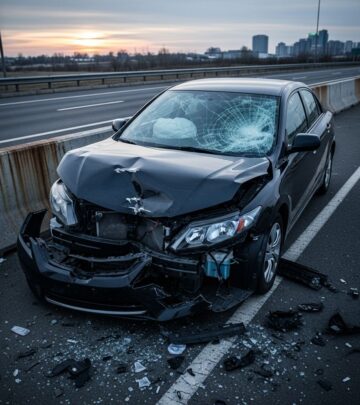
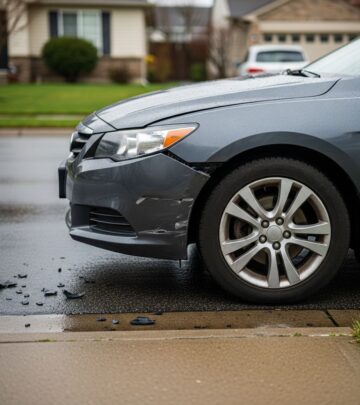
Your vehicle suffers more than just physical damage in an accident—its market worth drops too, even after top-notch fixes. This drop, called diminished value, reflects buyer hesitation over accident history recorded in reports like Carfax. Owners can seek reimbursement through claims against at-fault parties’ insurers or their own policies in certain cases.
Understanding the Core Concept of Diminished Value
Diminished value captures the gap between a car’s pre-accident market price and its post-repair resale potential. Buyers pay less for vehicles with crash records, regardless of repair quality. Insurers often resist these payouts, but legal precedents in many states affirm owners’ rights to compensation. The Insurance Information Institute notes this loss stems directly from accident documentation on vehicle history reports.
Average claims hover around $1,500 nationwide, though amounts vary by vehicle type, damage extent, and location. High-end models or luxury cars see steeper losses due to sensitive resale markets.
Three Main Categories of Diminished Value
Claims fall into distinct types, each addressing different value erosion aspects:
- Inherent Diminished Value: Arises from the accident itself, appearing on history reports. Even perfect repairs can’t erase this ‘stigma’ effect, as buyers discount crash-involved cars. This is the most frequent claim basis.
- Repair-Related Diminished Value: Occurs when fixes fall short—think mismatched paint, creaky panels, or subpar parts. Poor workmanship amplifies value loss beyond the inherent drop.
- Immediate Diminished Value: Measures the instant post-crash drop before any repairs. This pre-fix valuation difference compensates for the wrecked state right after impact.
Most filings target inherent loss, as it’s hardest for insurers to dispute without vehicle history proof.
Ideal Timing and Eligibility for Filing Claims
File after repairs complete, when true market impact emerges. Key scenarios include:
- Not-at-fault accidents: Target the responsible driver’s liability coverage.
- Hit-and-run incidents: Use your uninsured motorist (UM) policy if available—about half of states permit diminished value recovery here.
- Uninsured at-fault drivers: Again, lean on your UM or collision coverage, subject to policy terms.
Act within your state’s statute of limitations, which may differ from personal injury deadlines. Delays risk claim denial.
State-by-State Variations in Claim Rules
No uniform national standard exists; regulations diverge sharply:
| State | Third-Party Claims | First-Party Claims | Notes |
|---|---|---|---|
| Nebraska | Banned | Restricted | No at-fault driver claims allowed. |
| Maryland | Allowed | Policy-dependent | 2023 case yielded $3,800 settlement after appraisal. |
| Kansas | Recognized | Variable | Courts uphold all three types. |
| Florida | Allowed with proof | Limited by policy | Siegle v. Progressive (2002) clarified PAP limits. |
First-party claims (against your insurer) face tighter restrictions, often hinging on policy language. Third-party (at-fault insurer) claims dominate where permitted. Always verify local laws, as they evolve—consult attorneys for nuances.
Step-by-Step Guide to Filing a Claim
- Gather Evidence: Collect police reports, repair receipts, pre-accident photos, and mileage logs. Obtain a vehicle history report highlighting the accident.
- Get Professional Appraisal: Hire an independent appraiser for a detailed report quantifying loss. This trumps insurer estimates.
- Submit to Insurer: File with the at-fault party’s company or yours, including all docs. Request their valuation method in writing.
- Negotiate or Escalate: Counter lowballs with your appraisal. If stalled, pursue small claims court or arbitration—many successes reported.
- Track Deadlines: Note filing windows to avoid bars.
Documentation is king; insurers challenge weakly supported claims aggressively.
Common Valuation Methods and Formulas
Insurers employ varied approaches, often minimizing payouts:
- 17c Formula: Georgia-origin standard multiplies base value by damage multiplier (0.00-1.00), then applies mileage factor. Critics say it undervalues claims. Example: $20,000 car, 0.30 damage, 0.60 mileage = $3,600 max.
- Market-Based: Compares similar accident-free vs. crash-history sales data for real-world gaps.
- Independent Appraisal: Expert inspections yield tailored, often higher figures.
Challenge insurer formulas with alternatives; courts increasingly favor market evidence over rigid math.
Overcoming Insurer Resistance Tactics
Companies deploy strategies to dodge payments:
- Claiming ‘no coverage’ for non-physical losses—counter with state mandates.
- Lowball formulas ignoring market data.
- Arguing owner fault reduces payout proportionally.
Demand written denial reasons and cite precedents. Independent appraisers level the field, as in Maryland’s $3,800 win.
Potential Payout Factors Influencing Awards
Several elements dictate compensation:
- Vehicle Age/Mileage: Newer, low-mileage cars lose more percentage-wise.
- Damage Severity: Major collisions tank value harder.
- Model Popularity: Desirables like SUVs depreciate less resiliently.
- Repair Quality: Certified shops bolster claims.
- Local Market: Buyer attitudes vary regionally.
Proactive owners with strong evidence often secure 2-3x initial offers.
Frequently Asked Questions
Does my insurance cover diminished value?
Depends on claim type and state. Liability from at-fault drivers usually does; your policy may for UM scenarios.
How long after an accident can I file?
Typically 2-6 years, but check statutes—post-repair timing ideal.
Is an appraisal worth the cost?
Often yes; fees ($200-500) pale against boosted settlements.
Can I claim if partially at fault?
Yes, but payout prorates by fault percentage.
What if the insurer denies my claim?
Appeal with evidence, sue in small claims, or hire counsel.
Pro Tips for Maximizing Your Claim
- Delay sale until claim resolves to prove ongoing loss.
- Use multiple comparables in appeals.
- Document everything meticulously.
- Consider legal help for complex cases—many work contingency.
Armed with knowledge, turn post-accident frustration into fair recovery.
References
- Diminished Value of a Car: Estimations After an Accident — Kelley Blue Book. 2023. https://www.kbb.com/car-advice/diminished-value-car-estimations-after-accident/
- Diminished Value Claims by State (2025) — DJC Law. 2025. https://teamjustice.com/diminished-value-claims-by-state/
- What is diminished value? — Insurance Information Institute. 2023. https://www.iii.org/article/what-is-diminished-value
- Understanding Diminished Value Claims — Denning Law Firm, LLC. 2023. https://denninglawfirm.com/blog/understanding-diminished-value-claims/
- How Insurance Companies Avoid Paying Diminished Value — Appraisal Engine. 2023. https://appraisalengine.com/appraiser-blog/insurance-loopholes-diminished-value-claims/
- Automobile Diminished Value Claims — National Association of Insurance Commissioners (NAIC). 2023-05-01. https://content.naic.org/sites/default/files/cipr-jir-2023-5.pdf
Similar Articles








Read full bio of Sneha Tete