Digital vs Brick-and-Mortar Banking for Small Firms
Discover how digital and traditional banking stack up for small businesses, from fees and access to loans and support services.
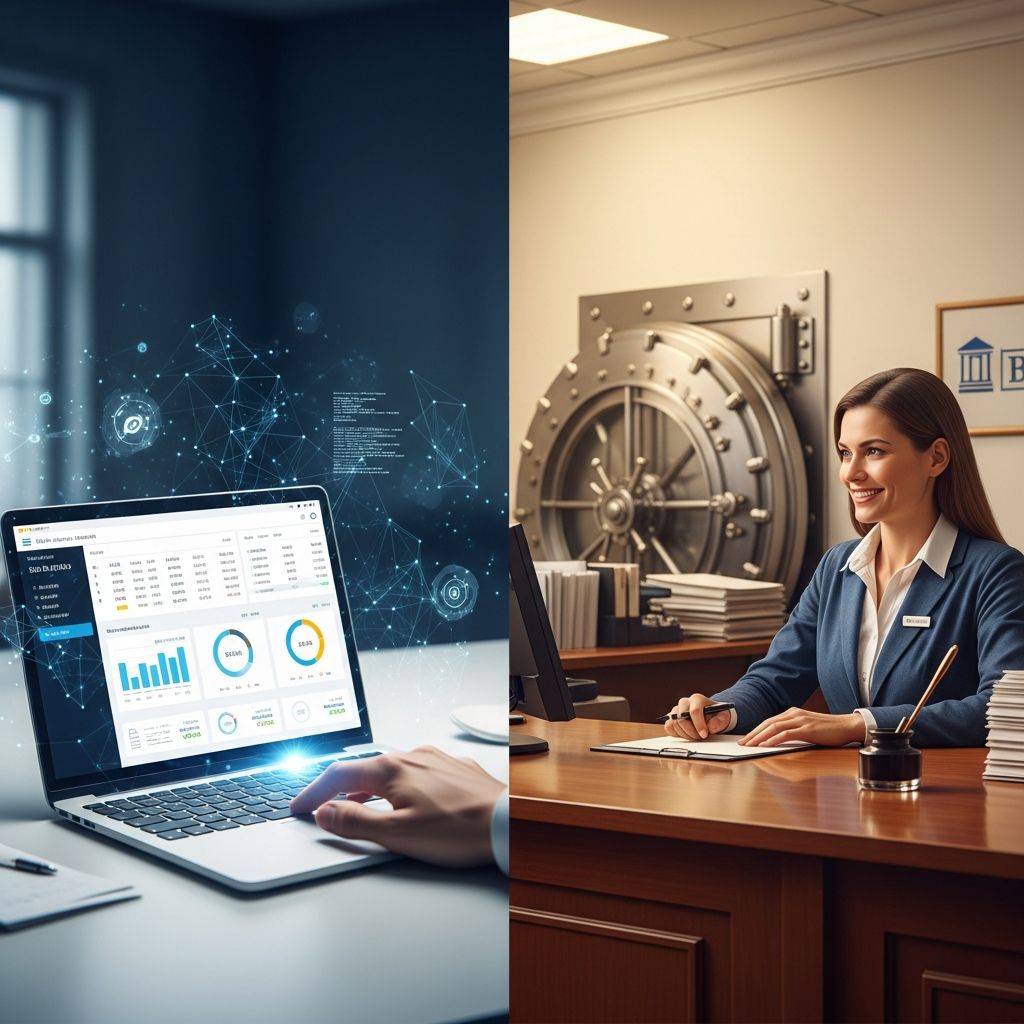
Small business owners face a pivotal choice between digital banks, which prioritize online efficiency, and brick-and-mortar institutions offering physical presence. Digital options excel in cost savings and round-the-clock access, while traditional banks provide personalized interactions and comprehensive services. This analysis draws from industry comparisons to guide entrepreneurs toward the optimal banking strategy based on operational demands.
Core Differences in Accessibility and Operations
Digital banks operate entirely through apps and websites, enabling 24/7 management of accounts, payments, and transfers from any location with internet. This suits mobile entrepreneurs handling global transactions or irregular hours. In contrast, traditional banks rely on branch networks, restricting services to business hours and local proximity, which can hinder remote or expanding firms.
| Feature | Digital Banking | Traditional Banking |
|---|---|---|
| Access Hours | 24/7 via app/web | Branch hours only |
| Location Flexibility | Anywhere with internet | Local branches required |
| Account Opening | Instant online process | In-person paperwork |
| Daily Transactions | Unlimited electronic often free | Potential limits and fees |
These distinctions impact daily workflows: digital platforms streamline bill payments and reconciliations, while traditional setups demand physical visits for routine tasks.
Cost Structures: Fees, Rates, and Savings Potential
Digital banks minimize overhead by skipping branches, passing savings to customers through zero monthly fees, no minimum balances, and high-yield accounts. For example, a $50,000 savings balance might earn 0.5% APY digitally versus 0.01% traditionally, generating $250 annually instead of $5—enough to offset typical fees elsewhere. Traditional banks often impose maintenance charges, wire fees, and balance requirements, eroding thin margins for startups.
- No-fee models: Digital accounts frequently waive overdraft, incoming wire, and ACH charges.
- Interest advantages: Rates 10-50x higher on deposits support cash flow.
- Traditional drawbacks: Fees can total hundreds yearly, per user reports from active businesses.
Budget-conscious firms save significantly with digital, but those needing bundled services might justify traditional costs for value-added features.
Customer Support and Relationship Building
Traditional banks shine in personal service, offering face-to-face consultations ideal for nuanced advice on loans or strategies. About 75% of small business loans originate from nearby branches, underscoring the value of local relationships. Digital banks counter with chat, phone, and email support, often extended hours, but lack physical meetings, potentially slowing complex resolutions.
For tech-savvy owners comfortable with self-service, digital suffices; relationship-dependent firms benefit from bankers who understand local markets.
Cash Management and Deposit Challenges
Cash-heavy businesses like retail face hurdles with digital banks, which limit or charge for deposits via ATMs or partners. Traditional branches provide unlimited teller deposits, change orders, and coin handling seamlessly. Digital alternatives reimburse some ATM fees but cap volumes, pushing users toward third parties.
Cash-reliant operations favor traditional for frictionless handling; low-cash digital natives avoid these limitations entirely.
Lending, Credit, and Financial Products
Traditional banks dominate lending with in-person underwriting and vast options, including lines of credit and merchant services. Digital lenders offer quick online approvals but fewer personalized terms, especially for larger sums. Business credit cards and payment processing abound traditionally, while digital focuses on basic loans with competitive rates.
- Digital pros: Faster applications, potentially lower rates.
- Traditional pros: Broader products, relationship-based approvals.
Technology and Integration Tools
Digital banks lead with intuitive apps featuring auto-categorization, real-time dashboards, and integrations to QuickBooks, Xero, or payroll systems. These cut bookkeeping time dramatically. Traditional tech varies, often lagging with clunky interfaces despite ongoing upgrades.
Modern tools like API access and expense tracking empower digital users for scalable growth.
Security and Regulatory Safeguards
Both types carry FDIC insurance up to $250,000 per account, ensuring deposit safety. Digital employs advanced encryption, biometrics, and fraud alerts; traditional adds physical security. Risks balance: digital phishing versus traditional insider issues, but both maintain robust compliance.
Strategic Approaches: Exclusive vs Hybrid Models
Pure digital suits transaction-focused firms; traditional fits service-intensive ones. Many adopt hybrids: digital for core operations (low fees, tech), traditional for cash/loans (relationships, deposits). This leverages strengths, e.g., main digital account plus minimal traditional for occasional needs.
Factors to Evaluate Before Choosing
Assess business type: cash volume, tech comfort, growth stage, and service needs dictate fit.
- Transaction profile: High electronic volume? Go digital.
- Cash flow: Frequent cash? Stay traditional.
- Expansion plans: Multi-location? Digital flexibility wins.
- Lending horizon: Near-term loans? Build local ties.
- Team size: Multi-user needs? Check granular permissions.
Real-World Scenarios for Decision-Making
E-commerce thrives digitally: unlimited transfers, integrations, high yields. Brick-and-mortar retail pairs hybrid for deposits/loans. Service pros (consultants) favor digital convenience. Startups test digital scalability before traditional commitments.
Future Trends Shaping Business Banking
Digital adoption surges with AI analytics and embedded finance. Traditional banks digitize aggressively, blurring lines via apps. Hybrids may dominate as needs evolve.
Frequently Asked Questions
Are digital banks safe for business funds?
Yes, FDIC-insured like traditional, with cutting-edge security features.
Can I get business loans from online banks?
Often yes, via streamlined apps, though options may be narrower.
Which has better fees for small businesses?
Digital typically, with no maintenance or low transaction costs.
Is cash deposit possible digitally?
Limited; use partner ATMs, but caps apply versus unlimited traditional.
Should I use both banking types?
Hybrid works well for balanced coverage of strengths.
References
- Online Banking vs. Traditional Banking: A Guide for Small Business Owners — Finli. 2024. https://finli.com/learn/online-banking-vs-traditional-banking-a-guide-for-small-business-owners/
- Traditional vs. Online Banking for Your Small Business — Experian. 2024. https://www.experian.com/blogs/ask-experian/traditional-vs-online-banking-for-small-business/
- Online vs. Traditional Banking: Differences, Pros, and Cons — Brex. 2024. https://www.brex.com/spend-trends/business-banking/online-banking-vs-traditional-banking
- Digital Bank vs. Traditional Bank: What’s best for business? — Relay. 2024. https://relayfi.com/blog/digital-bank-vs-traditional-bank/
- Online vs. Traditional Banking: How to Choose a Small Business… — Found. 2024. https://found.com/resources/online-vs-traditional-banking
- Online Business Banking vs. Traditional Banks: Which Is Better? — Bluevine. 2024. https://www.bluevine.com/blog/is-online-business-banking-better-than-traditional-banks
Similar Articles








Read full bio of medha deb