Digital Payment Cards: Security and Convenience
Explore how digital payment cards enhance online security while simplifying modern transactions.
Understanding Digital Payment Cards
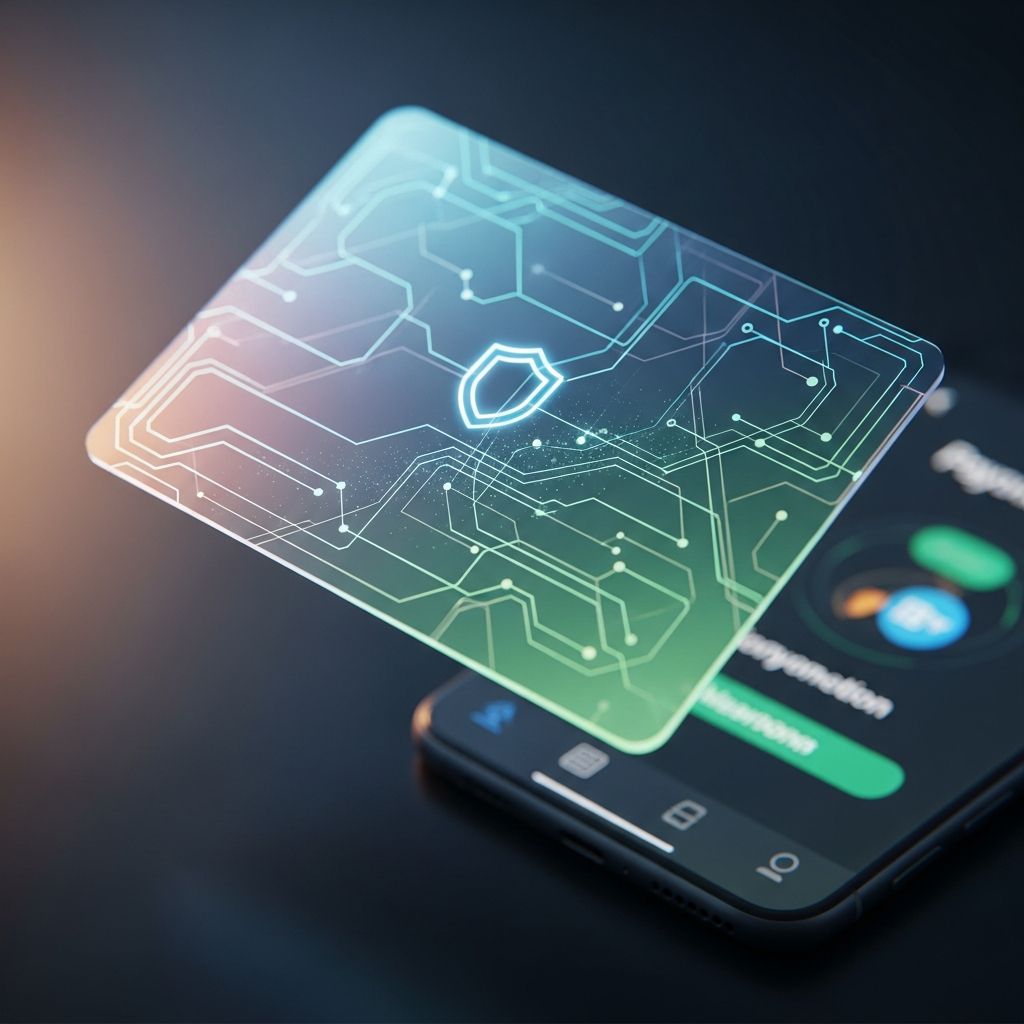
Digital payment cards represent a modern evolution in how consumers and businesses handle financial transactions in an increasingly online world. Unlike traditional plastic cards that you carry in your wallet, these cards exist purely in digital form and are designed specifically for electronic payments. When you use a digital payment card, instead of providing your actual banking information or primary credit card number, the system generates a unique, temporary card number that is valid only for that specific transaction or a defined set of transactions.
This innovative approach to payment processing emerged in the early 2000s, initially serving niche markets such as travel businesses and fleet management companies. Over the past two decades, adoption has expanded dramatically across virtually every industry and consumer segment. Today, digital payment cards serve millions of transactions daily, from individual online shoppers to large corporations managing employee expenses and vendor payments.
How Digital Payment Cards Function
The mechanics of digital payment cards operate on a straightforward but sophisticated principle. When you initiate a purchase or transaction, the digital card system generates a unique numerical identifier that acts as a proxy for your actual banking details. This temporary number is linked to your existing bank account or credit card but maintains complete separation from your real financial information.
You can use this temporary card number exactly as you would a physical card—entering the details into online checkout forms, mobile payment applications, or digital wallets. The merchant processing your payment receives only this temporary identifier, not your actual account information. After the transaction concludes, this temporary number becomes inactive and cannot be reused for any additional purchases. If you choose to generate another card for a future transaction, the system creates an entirely new temporary number, ensuring that no single merchant or intercepted payment data can compromise your actual banking credentials.
Core Security Advantages
Fraud Prevention Through Isolation
The primary security benefit of digital payment cards lies in their fundamental architecture. Because each transaction uses a unique, temporary number, the exposure of your real banking information is virtually eliminated. If a cybercriminal manages to intercept or steal a digital card number during transit, that stolen number is useless for making additional purchases. The criminal cannot use it at a different merchant, and they cannot extract your actual bank account or credit card details from it.
This isolation principle provides protection against several common fraud scenarios. Compromised merchant databases, which frequently appear in news reports about data breaches, cannot expose your primary financial accounts when you’ve used a digital card for that transaction. The merchant’s systems contain only a temporary number that holds no value once that specific payment is complete.
Protection from Physical Card Threats
Digital cards eliminate entire categories of fraud risks associated with physical cards. Traditional plastic cards face threats such as skimming devices at gas pumps and ATMs, where criminals capture your card number and expiration date for unauthorized use. Digital cards, existing only in digital form, are immune to these physical security threats. No one can steal what doesn’t exist as a tangible object.
Immediate Deactivation Capability
If you suspect unauthorized activity or believe a digital card number has been compromised, you can deactivate it instantaneously without affecting your primary account. This stands in stark contrast to physical cards, where deactivation requires contacting your bank, requesting a replacement card, and waiting several business days for a new physical card to arrive. With digital cards, the entire process of disabling a potentially compromised number takes seconds.
Control and Customization Features
Modern digital payment card systems offer sophisticated controls that go far beyond what traditional cards provide. These customization options allow users to establish specific parameters for how each card can be used:
- Spending Limits: Set maximum transaction amounts or overall spending caps that cannot be exceeded
- Merchant Restrictions: Limit card usage to specific merchants or categories of merchants, preventing use at unauthorized vendors
- Geographic Controls: Restrict transactions to specific countries or regions, preventing international fraud or unauthorized use in unexpected locations
- Expiration Parameters: Set exact expiration dates and times, ensuring cards automatically deactivate at a predetermined moment
- Transaction Frequency Limits: Establish rules about how many times or how often the card can be used within a specified timeframe
Practical Applications and Use Cases
Personal Online Shopping
For individual consumers, digital cards provide peace of mind when purchasing from online retailers. Rather than exposing your primary credit card number to dozens of different merchant websites with varying security standards, you can generate a unique digital card for each shopping session. This is particularly valuable when shopping at unfamiliar retailers or international merchants where you’re less certain about their data security practices.
Subscription Management
Recurring payments such as software subscriptions, streaming services, and cloud storage represent a significant use case for digital cards. You can generate a digital card specifically for subscription payments with the exact amount needed, creating a controlled environment for these ongoing charges. If a subscription service experiences a security breach, your primary financial accounts remain protected because only a temporary card number was exposed.
Business and Employee Expense Management
Organizations increasingly deploy digital cards as a comprehensive solution for managing employee spending. Instead of issuing physical corporate cards or requiring employees to use personal cards and seek reimbursement, companies can generate digital cards with predetermined spending limits for specific purposes. An employee traveling for business might receive a digital card limited to a specific hotel chain and airline, preventing unauthorized charges while still providing necessary purchasing flexibility.
Vendor and Supplier Payments
Businesses use digital cards as part of their accounts payable processes, creating cards pre-programmed for exact payment amounts to specific vendors. Because each digital card can be configured to charge only the precise amount owed and can be restricted to a single merchant, the opportunity for payment fraud or errors is dramatically reduced. This application has proven particularly valuable for managing payments to smaller suppliers who may not have adopted more sophisticated supply chain finance solutions.
Advantages Over Traditional Payment Methods
| Feature | Digital Payment Cards | Physical Credit Cards | Paper Checks |
|---|---|---|---|
| Security Exposure | Minimal; temporary numbers only | High; permanent card number at risk | Very High; account details visible |
| Activation Speed | Instant, seconds | Several business days | Several business days |
| Fraud Control | Comprehensive customization available | Limited merchant controls | No transaction controls |
| Reconciliation Ease | Automated tracking and matching | Requires manual categorization | Requires manual processing |
| Deactivation Time | Instant if compromised | Multiple business days | Cannot be deactivated |
Expense Tracking and Financial Insights
Digital payment card systems provide comprehensive transaction data that simplifies expense management and financial analysis. Each transaction generates detailed information including the merchant identity, transaction date, exact amount, and merchant category. For businesses managing employee expenses, this automated data collection eliminates the need for employees to submit paper receipts or manually categorize expenses—the system handles this automatically.
Real-time visibility into spending patterns allows managers and finance teams to identify trends, prevent budget overages, and quickly spot unusual or unauthorized transactions. Reconciliation becomes significantly faster because the payment system automatically matches each digital card transaction to the corresponding merchant invoice or expense record, creating one-to-one payment matching that would require hours of manual work with traditional payment methods.
Working Capital and Cash Flow Benefits
For organizations issuing digital cards to multiple employees or customers, these cards can represent a meaningful working capital advantage. When digital cards are issued as prepaid instruments, customers and employees load funds onto them, creating a pool of capital that the issuing organization maintains. This incoming cash flow before actual spending occurs provides improved liquidity and working capital flexibility.
Frequently Asked Questions
Where can I use a digital payment card?
Digital payment cards can be used anywhere that accepts traditional credit or debit cards for online transactions. This includes e-commerce websites, mobile applications, and online subscription services. If your digital card is compatible with mobile wallet services such as Google Pay or Apple Pay, you can also use it for contactless payments at physical retail locations.
Are digital payment cards accepted everywhere?
Digital payment cards are accepted at any merchant that accepts traditional payment cards online. However, acceptance at physical retail locations depends on whether your digital card is integrated into a mobile wallet service that supports contactless payments.
What happens if my digital card number is stolen?
If you discover that a digital card number has been compromised, you can deactivate it immediately without affecting your primary financial accounts. The temporary nature of the card number means that even if a criminal obtains it, they cannot extract your actual banking information from it, and the number will be useless for transactions at other merchants.
How quickly can digital cards be created and deactivated?
Digital cards can be generated instantly—typically within seconds of initiation. Similarly, they can be deactivated or canceled immediately if needed, providing rapid response to fraud concerns or changing circumstances.
Do digital payment cards cost money?
Most digital payment card services are offered at no additional cost to users, as the security and fraud prevention benefits justify the service provision from the issuing institution’s perspective. However, specific terms may vary by provider and use case.
Limitations and Considerations
While digital payment cards offer substantial advantages, potential users should be aware of some limitations. Not all merchants accept digital cards for every transaction type—some high-value purchases or specific merchant categories may have restrictions. Recurring billing arrangements sometimes present challenges with automatic renewal on digital cards, as the temporary number structure may conflict with merchants’ recurring billing systems. Additionally, digital cards are less useful for in-person retail transactions unless integrated into mobile wallet services, and adoption remains incomplete across all payment platforms and merchant networks.
The Future of Digital Payments
Digital payment cards represent a fundamental shift toward more secure, flexible, and transparent financial transactions. As consumer awareness of data breaches and fraud risks continues to grow, adoption of digital cards is expected to accelerate. Technology companies, financial institutions, and payment processors continue investing in enhanced features, broader merchant integration, and more sophisticated controls that expand the utility of digital cards across consumer and business use cases.
References
- Virtual Cards: How It Works, Meaning, Examples & Benefits — DigiPay Guru. https://www.digipay.guru/blog/how-virtual-cards-work-and-their-benefits/
- The Benefits of Virtual Cards for Online Transaction Security — ePaySpace. https://epayspace.com/en/blog-en/the-benefits-of-virtual-cards-for-online-transaction-security/
- Electronic Credit Cards 101: What They Are and How They Work — Stripe. https://stripe.com/resources/more/electronic-credit-cards-101-what-they-are-and-how-they-work
- 7 Advantages to Virtual Cards for Your B2B Payment Needs — WEX Inc. https://www.wexinc.com/resources/blog/advantages-virtual-cards-b2b-payments/
- Virtual Cards 101: Simplifying Commercial Payments — Mastercard. https://www.mastercard.com/us/en/news-and-trends/Insights/2024/virtual-cards-101-simplifying-commercial-payments.html
- What Is a Virtual Card? — SAP Taulia. https://taulia.com/glossary/what-is-a-virtual-card/
- Virtual Cards vs Physical Cards – Difference & Benefits — BILL. https://www.bill.com/learning/virtual-cards-vs-physical-cards
- 10 Pros & Cons of Virtual Cards in 2024 — Airwallex US. https://www.airwallex.com/us/blog/virtual-cards-benefits-and-disadvantages
Similar Articles








Read full bio of Sneha Tete