Digital Banking vs Branch Banking
Explore the key differences between digital-only banks and traditional branch networks to find the best fit for your financial needs and lifestyle.
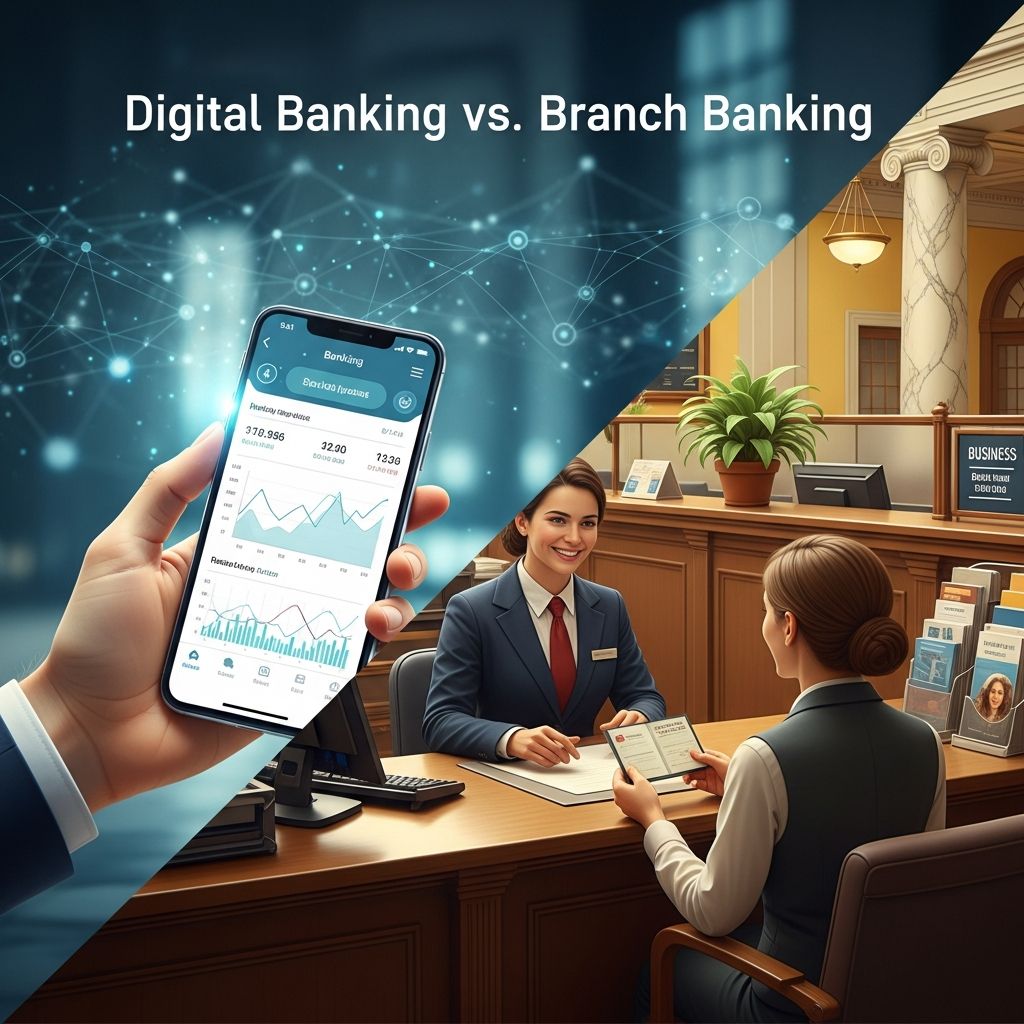
Choosing between digital banking and traditional branch banking depends on your priorities, from convenience and costs to personal service and cash handling. Digital banks operate entirely online, offering lower fees and higher interest rates, while branch banks provide physical locations for in-person interactions and immediate cash services.
Understanding the Core Models of Modern Banking
Digital banks, also known as online or virtual banks, function without physical branches, relying on websites, mobile apps, and digital tools for all transactions. This model cuts overhead costs associated with real estate and staffing, allowing them to pass savings to customers through competitive rates and minimal fees.
Branch banking, in contrast, maintains a network of physical locations where customers can conduct business face-to-face. These institutions often combine digital platforms with in-person services, catering to those who value tangible interactions alongside online access.
Both models have evolved significantly. Many traditional banks now invest heavily in apps and online portals that rival digital natives, blurring the lines between the two.
Financial Advantages: Fees, Rates, and Savings Potential
One of the standout benefits of digital banking is its fee structure. Without branch maintenance costs, these banks frequently waive monthly service fees, eliminate minimum balance requirements, and provide unlimited electronic transactions, including free ACH transfers and bill payments.
Interest rates tell a similar story. Digital banks often deliver annual percentage yields (APYs) on savings accounts that are 10 to 50 times higher than those from traditional banks. For instance, a $50,000 business savings balance might earn $250 yearly at 0.5% with a digital bank versus just $5 at 0.01% elsewhere, creating substantial long-term gains.
| Feature | Digital Banks | Branch Banks |
|---|---|---|
| Monthly Fees | Often $0, no minimums | Common $10-25, with minimums |
| Savings APY | Up to 5% or higher | Typically 0.01-0.5% |
| Transaction Limits | Unlimited free electronic | Limits or fees on excess |
| ATM Reimbursements | Frequent, nationwide | Free at own ATMs only |
Traditional banks counter with broader product offerings, such as loans, mortgages, and investment services, often bundled with relationship discounts that reduce fees for loyal customers.
Accessibility and Convenience in Everyday Use
Digital banking shines in flexibility. Access your accounts 24/7 from any device, anywhere with internet, making it ideal for remote workers, travelers, or those with irregular schedules. Tasks like transfers, bill payments, and check deposits via mobile apps happen instantly, saving hours otherwise spent commuting to branches.
A quick calculation illustrates the time savings: two weekly branch visits, each involving 40 minutes round-trip, equate to over 60 hours annually—time better spent on productive activities.
Branch banks excel for users needing geographic consistency. Their widespread ATM networks and deposit-taking locations support cash-heavy lifestyles, such as small businesses dealing in daily receipts. You can withdraw large sums, obtain cashier’s checks on the spot, or deposit coins without workarounds.
- Digital perks: Global access, no wait times, automated tools like expense tracking.
- Branch perks: Local presence, immediate cash services, relationship building.
Technology and Tools for Smarter Money Management
Digital banks lead in fintech integration. Features include automatic categorization of expenses, real-time cash flow dashboards, and seamless connections to accounting software like QuickBooks or payment processors like Stripe. These tools automate bookkeeping, providing insights that help businesses and individuals optimize spending.
Traditional banks vary by size. Large national players offer robust apps with mobile deposits, instant alerts, and analytics comparable to digital options. Smaller regionals may lag, sticking to basic online access.
Both leverage APIs for third-party integrations, but digital banks often prioritize developer-friendly platforms for custom solutions.
Security Measures: Protecting Your Funds in a Digital World
Security is robust across both models, backed by FDIC insurance up to $250,000 per depositor—identical for digital and physical banks.
Digital banks employ advanced tech: military-grade encryption, multi-factor authentication (including biometrics), and AI-driven fraud detection that flags anomalies in seconds.
Branch banks add layers like physical vaults, on-site guards, and human fraud experts who can handle complex cases through personal consultations. Their established protocols, refined over decades, complement digital safeguards in hybrid services.
For cash-intensive operations, branches offer tangible security, reducing risks associated with transporting funds.
Customer Support: From Chatbots to Face-to-Face
Digital banks provide support via phone, email, chat, and AI assistants, available around the clock. While efficient, it lacks the personal touch some prefer.
Branches deliver immediate, in-person assistance for nuanced issues like loan applications or dispute resolutions. Staff can guide you through products tailored to your situation, fostering trust through direct relationships.
Handling Cash: A Key Deciding Factor
Cash deposits pose the biggest challenge for digital banks. Many don’t accept them directly; users must use partner ATMs or mail checks, incurring potential fees or delays.
Branch banks handle cash effortlessly, with tellers providing change, large withdrawals, and deposit slips. Their ATMs often allow deposits too, integrated into daily operations.
Businesses in retail or hospitality, where cash flow is king, often stick with branches despite digital alternatives.
Who Should Choose Digital Banking?
Opt for digital if you:
- Prioritize low costs and high yields.
- Rarely handle cash.
- Value tech tools and mobility.
- Manage finances digitally already.
Ideal for tech-savvy millennials, remote professionals, and savers focused on growth.
Who Benefits Most from Branch Banking?
Choose branches if you:
- Deal with cash regularly.
- Need personalized advice or complex services.
- Prefer human interaction for peace of mind.
- Run a cash-based business.
Suits seniors, small business owners, and those new to finance.
Hybrid Approaches: The Best of Both Worlds
Many traditional banks now offer comprehensive digital services, allowing customers to blend online convenience with occasional branch visits. This hybrid model provides flexibility without sacrificing in-person options.
Some digital banks partner with ATM networks or retailers for cash services, mitigating their primary drawback.
Future Trends Shaping Banking Choices
Digital adoption surges, with mobile apps handling 80% of transactions for many users. Embedded finance—banking within apps like Uber or Shopify—further erodes branch necessity.
Yet, branches evolve into advice centers for high-value services like wealth management, ensuring their relevance.
Frequently Asked Questions
Are digital banks safe?
Yes, they use top-tier encryption, multi-factor authentication, and FDIC insurance, matching branch bank protections.
Can I deposit cash at a digital bank?
Limited options exist via partner ATMs or transfers, but it’s less convenient than branches.
Do traditional banks have good apps?
Large ones do, offering features like digital deposits and analytics rivaling pure digital banks.
Which has lower fees?
Digital banks generally, due to no branch costs, but check specifics.
Is online banking available 24/7?
Most functions yes, though some processes like deposits may process next business day.
References
- Online vs. Traditional Banking: Differences, Pros, and Cons — Brex. 2024. https://www.brex.com/spend-trends/business-banking/online-banking-vs-traditional-banking
- Online Banking vs. Traditional Banking: Key Differences — PNC Insights. 2024. https://www.pnc.com/insights/personal-finance/spend/online-vs-traditional-banking.html
- Traditional Banks vs. Online Banking — Citi.com. 2024. https://www.citi.com/banking/personal-banking-guide/basic-finance/traditional-vs-online-banking
- Brick-And-Mortar Banks Vs. Online Banks: Pros And Cons — Bankrate. 2024. https://www.bankrate.com/banking/savings/online-vs-brick-and-mortar-banks/
- Online vs Traditional Banks: Pros, Cons, and More Explained — Synchrony. 2024. https://www.synchrony.com/blog/bank/online-vs-traditional-banks
- Online Banks vs Traditional Banks — Huntington Bank. 2024. https://www.huntington.com/learn/checking-basics/online-banking-vs-traditional-banking
Similar Articles








Read full bio of Sneha Tete