Digital Banking on Your Phone: A Modern Guide
Manage your finances anytime, anywhere with mobile banking technology
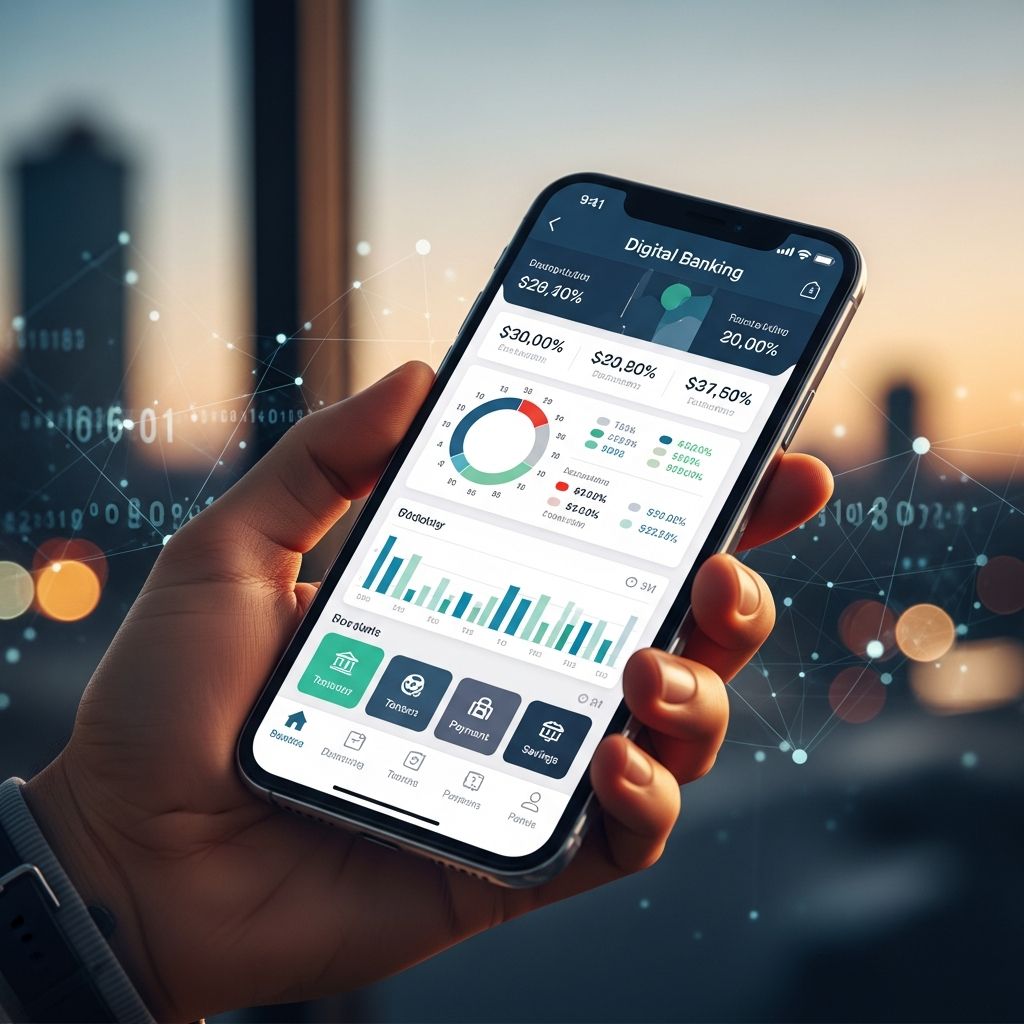
The evolution of personal finance has taken a dramatic turn in recent years, shifting the power of banking directly into the hands of consumers through their smartphones and tablets. Rather than being confined to banking hours or specific locations, individuals now have the ability to manage virtually all their financial matters from virtually anywhere with an internet connection. This transformation represents one of the most significant changes in how people interact with their financial institutions, fundamentally altering the traditional banking landscape.
Understanding Modern Digital Banking
Digital banking through mobile applications refers to the ability to conduct financial transactions and manage money using a smartphone or tablet rather than visiting a physical branch or using a desktop computer. These applications serve as a gateway to your financial accounts, enabling you to perform transactions that would traditionally require an in-person visit or phone call to your bank.
The distinction between mobile banking and other forms of digital financial interaction is important to understand. Mobile banking specifically focuses on using handheld devices, distinguishing it from mobile payments, which involve purchasing goods or services at checkout terminals or online retailers. Mobile banking is fundamentally about account management and financial control, while mobile payments are transactional in nature.
Essential Functions and Capabilities
Modern banking applications provide a comprehensive range of features that cover most financial activities you would need throughout your day:
- Real-time balance inquiries and transaction history review
- Remote check deposits using your device’s camera
- Bill payment scheduling and electronic transfers
- Peer-to-peer money transfers to friends and family
- Account alerts when spending thresholds are reached
- Budget tracking and expense categorization tools
- Card management and fraud prevention controls
- Direct access to customer service representatives
Beyond these basic functions, banking apps increasingly offer investment portfolio management, loan application tracking, and access to insurance policy information. The variety of available features means that most individuals can handle their complete financial portfolio without needing to visit a physical location.
The Convenience Revolution
Accessibility stands as perhaps the most transformative advantage of mobile banking technology. Unlike traditional banks, which operate during specific hours and require you to be physically present, mobile banking applications work around your schedule. Whether you need to check your balance at midnight, pay a bill on a Sunday, or deposit a check while on vacation, your bank is always available.
This continuous availability eliminates a significant barrier that has long characterized traditional banking: temporal constraints. No longer do individuals need to plan their day around banking hours or rush to complete transactions before closing time. The freedom to conduct financial matters at your convenience represents a fundamental shift in how banking relationships work.
The practical implications of this accessibility are substantial. If you discover a forgotten bill at 11 PM, you can immediately schedule a payment. If you receive a check while traveling, you can deposit it without waiting for your return home. This flexibility extends to routine account monitoring, allowing you to verify your balance whenever financial decisions need to be made.
Financial Visibility and Control
One of the most valuable benefits of banking applications is the unprecedented visibility into personal financial data. Rather than waiting for monthly statements to arrive in the mail, users can access detailed transaction information immediately, including merchant details and transaction locations.
This transparency enables several important financial management practices:
- Immediate identification of fraudulent charges
- Real-time monitoring of spending patterns and trends
- Rapid detection of duplicate charges or billing errors
- Better understanding of where money is being spent
- More informed decision-making regarding financial goals
The ability to see your complete financial picture in real time fundamentally changes how you interact with your own money. Rather than being surprised by charges when a statement arrives, you can monitor your account continuously and address issues immediately. This proactive approach to financial management has become increasingly important in a digital economy where transactions happen instantly and from various locations.
Expense Tracking and Budget Management
Managing personal finances requires understanding where your money goes, and banking applications have revolutionized this process through automated tracking and categorization. Rather than manually recording expenses in a ledger or spreadsheet, modern banking apps automatically sort transactions into categories such as groceries, utilities, entertainment, and transportation.
Budget management features take this a step further by allowing you to set spending limits and receive alerts when you approach or exceed predetermined thresholds. For budget-conscious individuals, this automatic monitoring provides ongoing feedback about spending patterns without requiring constant manual review.
Many advanced applications also offer predictive analytics, showing you trends in your spending and suggesting areas where you might be able to reduce expenses. Some apps can even automatically transfer money to savings accounts on payday, removing the mental friction from saving. These features transform your banking app from a simple account viewer into an active partner in financial management.
Security Features and Protection Mechanisms
Digital banking security has evolved significantly to protect sensitive financial information from unauthorized access. Banks employ multiple layers of security technology to ensure that mobile transactions are as safe as, or safer than, traditional in-person banking.
Key security measures include:
| Security Feature | Purpose | How It Works |
|---|---|---|
| Encryption Technology | Protect data transmission | Converts banking information into code to prevent interception |
| Biometric Authentication | Verify user identity | Fingerprint or facial recognition replaces passwords |
| Multi-Factor Authentication | Add verification layers | Requires multiple forms of identification for login |
| Fraud Detection Systems | Identify suspicious activity | Algorithms analyze transactions and flag unusual patterns |
| Card Control Features | Restrict unauthorized use | Ability to turn off cards or set spending limits |
The integration of banking security with your device’s built-in security mechanisms creates a robust protective framework. Your smartphone already contains security features designed to protect all data on the device, and banking apps leverage these existing protections rather than reinventing security from scratch.
Practical Applications in Daily Financial Life
Remote check deposits exemplify how mobile banking has eliminated specific banking inconveniences. Rather than driving to a branch or ATM to deposit a check, users can photograph the check using their smartphone camera and submit it through their app. In many cases, funds are available immediately.
Bill payment scheduling demonstrates another practical advantage. Rather than manually writing and mailing checks, or remembering to log in to pay individual businesses, users can schedule recurring payments or one-time payments directly through their banking app. Many applications even send reminders before payment due dates, reducing the likelihood of missed payments.
Peer-to-peer payment features have transformed how people handle shared expenses. Rather than one person paying for dinner and waiting to be reimbursed, payments can be sent instantly directly through the banking app. This eliminates awkward conversations about reimbursement and provides instant settlement.
Benefits Beyond Individual Transactions
While individual transactions and real-time access are important, the broader impact of mobile banking extends to fundamental changes in financial responsibility. The ease of checking balances and monitoring spending creates natural incentives toward financial awareness that previously required deliberate effort.
Young adults entering banking for the first time often develop better financial habits when using mobile apps compared to traditional banking methods. The visibility and ease of use combine to encourage more frequent monitoring and more thoughtful spending decisions. This behavioral shift toward financial consciousness represents a significant societal benefit beyond the technological convenience itself.
For individuals managing multiple accounts or financial products, mobile banking apps consolidate information in a single location, reducing cognitive load and making comprehensive financial planning simpler. Rather than logging into multiple websites or calling different customer service numbers, users can see their complete financial picture in one app.
Cost Reduction and Operational Efficiency
From the banking institution’s perspective, mobile banking provides significant operational advantages. By reducing the number of customers who need to visit physical branches for routine transactions, banks reduce their operational costs substantially. This efficiency gain enables banks to offer better rates and lower fees to customers, creating a mutually beneficial relationship.
The reduction in paper-based transactions also contributes to environmental benefits, as mobile banking eliminates the need for printed statements, checks, and other physical banking documents that previously required mail delivery.
Limitations and Important Considerations
While mobile banking offers tremendous advantages, important limitations exist. Mobile banking cannot process cash transactions—you must still visit an ATM or branch for cash withdrawals and deposits. This requirement ensures that not all banking functions can be fully virtualized, and some situations still necessitate physical location visits.
Additionally, mobile banking depends on internet or mobile service connectivity. In areas with poor network coverage or during service outages, access to accounts may be temporarily unavailable. Planned maintenance updates can also create periods when the app is inaccessible.
The Future of Banking
Mobile banking continues to evolve, with new features and capabilities being added regularly. Artificial intelligence and machine learning are beginning to power more sophisticated financial insights, while new payment technologies expand the capabilities of mobile devices. As technology continues to advance, mobile banking will likely become even more integral to how people manage their finances.
The shift toward mobile banking represents a broader trend of digital transformation in financial services. As consumers become more comfortable with managing complex financial matters through apps, and as technology becomes more secure and capable, mobile banking will continue to assume a larger role in how people interact with their money.
Frequently Asked Questions
Is mobile banking secure?
Yes, mobile banking employs sophisticated encryption technology and biometric authentication to protect your financial information. In many cases, mobile banking is more secure than traditional methods because it integrates with your device’s built-in security features and provides real-time fraud detection.
Can I access all banking services through my mobile app?
Mobile apps provide access to most banking functions, but some services like cash deposits and withdrawals still require visiting a physical ATM or branch. Check with your specific bank about which services are available through their app.
What happens if I lose my phone?
Most banking apps allow you to remotely disable access or lock your card through the app itself. Additionally, you can contact your bank directly to secure your accounts. Your bank can help you regain access once you verify your identity.
Are there fees for mobile banking?
Most banks offer mobile banking as a free service included with your account. However, check with your specific bank about any potential fees or premium features that might require additional charges.
How quickly are mobile check deposits processed?
Many banks process mobile check deposits immediately, making funds available right away, especially if deposited before 10 PM ET. Some deposits may take longer depending on bank policies and the amount deposited.
References
- Benefits of Mobile Banking — Liberty National Bank. Accessed 2026. https://www.weareliberty.bank/blog/post/benefits-of-mobile-banking
- 5 Key Benefits Of Mobile Banking — Bankrate. Accessed 2026. https://www.bankrate.com/banking/checking/benefits-of-mobile-banking/
- Mobile banking — Wikipedia. Accessed 2026. https://en.wikipedia.org/wiki/Mobile_banking
- How mobile banking makes it convenient to manage your money — Hands On Banking. Accessed 2026. https://handsonbanking.org/resources/online-and-mobile-banking/
- The 6 benefits of mobile banking apps — Citizens Bank. Accessed 2026. https://www.citizensbank.com/learning/benefits-of-mobile-banking-apps.aspx
Similar Articles








Read full bio of Sneha Tete