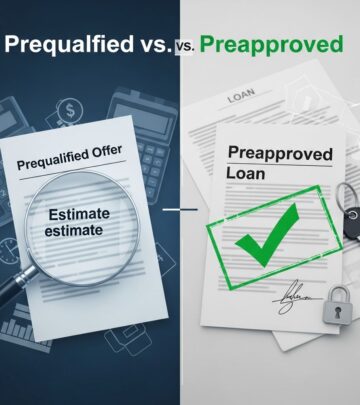
Pre-Qualified vs. Pre-Approved Loans: Key Differences
Understand the critical differences between pre-qualification and pre-approval for loans and credit products.
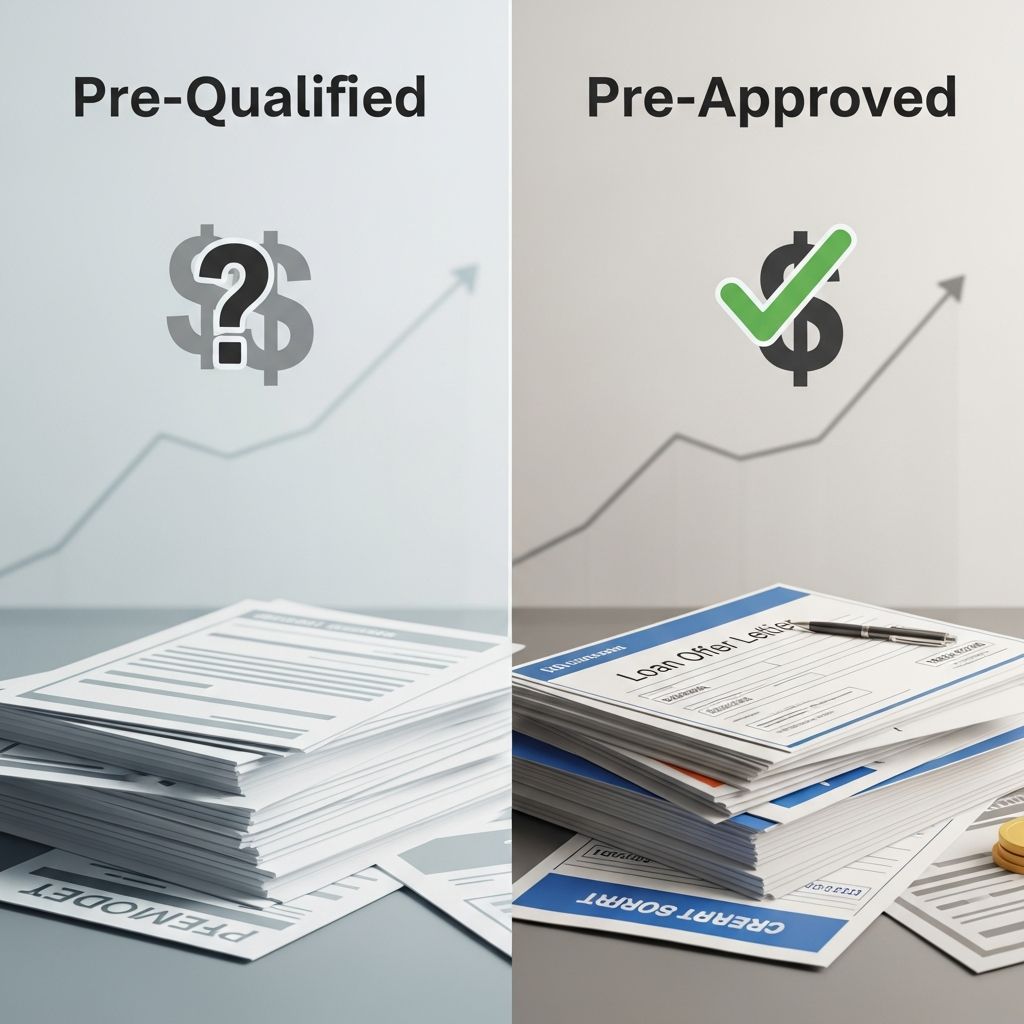
What Is the Difference Between Pre-Qualified and Pre-Approved Loans?
Key Highlights
- Both pre-qualified and pre-approved mean that a lender has reviewed your financial situation and determined that you meet at least some of their requirements to be approved for a loan.
- Getting a pre-qualification or pre-approval letter is generally not a guarantee that you will receive a loan from the lender.
- Being pre-qualified or pre-approved for a loan may help you prove to a seller that you are able to receive financing for your purchase.
- Pre-qualification typically involves a soft credit inquiry, while pre-approval usually involves a hard credit inquiry that may temporarily impact your credit score.
- The pre-approval process is more comprehensive and requires detailed financial documentation.
When exploring lending options, you may encounter the terms “pre-qualified” and “pre-approved” used somewhat interchangeably by lenders and financial institutions. However, these two processes represent distinct stages in the lending journey, each with its own characteristics, requirements, and implications for your credit profile and financial readiness.
Are Pre-Qualifications and Pre-Approvals the Same Thing?
While pre-qualification and pre-approval are often used interchangeably by lenders, there are slight differences in each process. Both terms generally mean that a lender has reviewed your financial situation and determined that you meet at least some of their requirements to be approved for a loan. However, the biggest difference between the two is that getting pre-qualified is typically a faster and less detailed process, while pre-approvals are more comprehensive and take longer.
Understanding these differences is crucial for anyone preparing to apply for major financing such as mortgages, auto loans, or credit products. The distinction between these two stages can significantly impact your timeline, credit score, and the strength of your borrowing position.
The Fundamental Difference
At its core, pre-qualification represents an informal estimate of your borrowing power based on information you provide, while pre-approval involves a thorough review of your financial credentials with verified documentation. Think of pre-qualification as a preliminary assessment that helps you understand what you might be able to borrow, whereas pre-approval is a more definitive statement about what you can actually borrow based on verified financial information.
Understanding Pre-Qualification
Pre-qualification is the initial step in the lending process where a lender conducts a basic review of your creditworthiness. During this stage, you provide self-reported information about your financial situation, and the lender uses this information to determine if you likely qualify for a loan or credit product.
What Pre-Qualification Involves
Pre-qualification typically involves providing basic information such as your annual income, employment status, existing debts, and monthly housing payments. The process is straightforward and can often be completed through a brief phone conversation, online form, or quick meeting with a lender. For many pre-qualifications, lenders will check your credit using a soft inquiry—the type of inquiry that does not impact your credit scores. This soft inquiry is a significant advantage because it allows you to explore your borrowing options without any negative effects on your creditworthiness.
Speed and Simplicity
One of the primary advantages of pre-qualification is its speed. Results are often available almost instantly, allowing you to quickly understand your approximate borrowing capacity. This rapid turnaround makes pre-qualification an excellent starting point for anyone beginning their search for a home, vehicle, or other significant purchase. You can get a prequalification amount by providing basic information to a lender without extensive documentation or verification.
What Pre-Qualification Does Not Guarantee
It is important to understand that pre-qualification does not guarantee approval. The lender has conducted only a basic review of your financial information, and approval for actual credit still depends on a more thorough examination of your complete financial picture during the formal application process. Pre-qualification provides an estimate of what you might be able to borrow, but it is not a binding commitment from the lender.
Understanding Pre-Approval
Pre-approval represents a more advanced stage in the lending process and is considered closer to actual approval. When you receive a pre-approval, a lender has conducted a comprehensive assessment of your financial situation using verified documentation and information.
The Pre-Approval Process
Unlike pre-qualifications, pre-approvals typically require a “hard inquiry,” which can temporarily lower your credit scores. The lender takes a much more thorough approach, reviewing detailed financial information and requesting copies of important documents such as pay stubs, W-2 statements, and signed tax returns from previous years. This in-depth review allows the lender to make a more accurate assessment of your borrowing capacity and financial reliability.
Documentation and Timeline
The pre-approval process may take up to 10 days or more to complete due to the manual review of financial documents and verification processes involved. While this takes longer than pre-qualification, the extra time allows for a more thorough evaluation. Upon completion, your pre-approval letter will include specific details about the offer, such as a specific loan amount at a designated interest rate, the types of loan programs you may qualify for, and an estimated annual percentage rate.
Strength of Pre-Approval
Pre-approval is generally considered a stronger indication of your likelihood to obtain financing. Because the lender has verified your financial information and conducted a hard inquiry, a pre-approval letter carries more weight with sellers and other parties. When making an offer on a property, for example, including a pre-approval letter demonstrates to the seller that you have already undergone financial scrutiny and have been deemed creditworthy by a lender, giving you a competitive advantage in negotiations.
Comparing Pre-Qualification and Pre-Approval
| Aspect | Pre-Qualification | Pre-Approval |
|---|---|---|
| Credit Check | Typically involves a soft inquiry that does not affect credit scores | Typically involves a hard inquiry that may temporarily lower credit scores |
| Information Required | Basic self-reported financial information such as income and debts | Detailed documentation including pay stubs, tax returns, and bank statements |
| Process Duration | Results are often instant | May take up to 10 business days or longer for manual review |
| Approval Guarantee | Does not guarantee approval | Does not guarantee approval but is a stronger indicator |
| Accuracy | May be less accurate than a pre-approval offer | More accurate due to verification of financial information |
| Loan Amount | Provides an estimate of borrowing capacity | Provides a specific loan amount you are eligible for |
| Use Case | Helpful for initial exploration and understanding general borrowing power | Ideal for making competitive offers and demonstrating financial readiness |
Credit Inquiries: Soft vs. Hard
Understanding the difference between soft and hard credit inquiries is essential when distinguishing between pre-qualification and pre-approval processes. These two types of inquiries have very different impacts on your credit profile.
Soft Inquiries
Soft inquiries are used during pre-qualification and do not affect your credit score. They are typically used by lenders to get a preliminary sense of your creditworthiness without making a formal assessment. You can have multiple soft inquiries without any negative impact on your credit profile, making pre-qualification a risk-free way to explore your borrowing options.
Hard Inquiries
Hard inquiries, used in pre-approval processes, do temporarily lower your credit score—typically by a few points. However, this impact is usually minor and short-lived, typically disappearing within several months. Hard inquiries signal to credit bureaus that you are actively seeking new credit, which is why they have a measurable effect on your score. Multiple hard inquiries within a short period (usually 14 to 45 days) for the same type of credit are typically counted as a single inquiry, helping minimize the cumulative impact.
Practical Applications for Different Loan Types
Mortgages
For mortgage lending, pre-qualification helps you understand how much you might be able to borrow before you start house hunting. You can then move forward to pre-approval when you are serious about making an offer on a property. A pre-approval letter is particularly valuable in competitive real estate markets because it demonstrates to sellers that your financing is backed by verified financial information.
Credit Cards
For credit card products, both pre-qualification and pre-approval indicate that you likely meet the card issuer’s basic eligibility requirements. Pre-approved offers may be stronger indicators of approval than pre-qualified offers, and card issuers sometimes use different criteria for each. If you receive a pre-approved credit card offer that you did not initiate, the card issuer may have worked with a credit bureau to identify individuals likely to qualify.
Auto Loans
With auto loans, pre-qualification gives you an estimate of your borrowing capacity, helping you shop for vehicles within your potential price range. Pre-approval provides a specific loan amount and terms, which you can then use when negotiating with car dealerships.
What Happens After Pre-Qualification or Pre-Approval?
Receiving a pre-qualification or pre-approval letter is an important milestone, but it is not the final step in the lending process. Understanding what comes next is essential for managing your expectations and timeline.
The Application Process
After pre-qualification or pre-approval, the next step is to complete a formal loan application if you decide to proceed. When you apply, you will provide additional information and documentation, and the lender will conduct a more thorough review of your financial situation. If you were pre-qualified, the lender will now conduct a hard inquiry as part of the formal application review. If you were pre-approved, the lender will verify that your financial circumstances have not changed materially since the pre-approval was issued.
Underwriting and Final Approval
Following your formal application, your loan enters the underwriting phase. During underwriting, the lender thoroughly examines all aspects of your financial profile, the property (if applicable), and the loan terms. Assuming you continue to meet the lender’s financial loan qualifications during this process, your lender will be able to issue a final loan approval. Even with pre-approval in hand, final approval is not guaranteed until underwriting is complete.
Frequently Asked Questions
Q: Does pre-qualification affect my credit score?
A: No, pre-qualification typically does not affect your credit score because it usually involves only a soft inquiry. A soft inquiry does not appear on your credit report in a way that lenders can see, and it does not factor into credit score calculations.
Q: Does pre-approval affect my credit score?
A: Pre-approval may temporarily lower your credit score because it typically involves a hard inquiry. However, this impact is usually minor (typically 5 to 10 points) and short-lived, usually disappearing within a few months.
Q: Is pre-approval a guarantee of loan approval?
A: No, pre-approval is not a guarantee of final loan approval. It indicates that you likely meet the lender’s basic requirements, but your application must still go through underwriting, and you must continue to meet the lender’s financial qualifications throughout the process.
Q: How long is a pre-approval letter valid?
A: Pre-approval letters are typically valid for 60 to 90 days, though this varies by lender. If your pre-approval expires, you may need to apply for a new one, which would involve another hard inquiry.
Q: Can I get pre-qualified for multiple loans without damaging my credit?
A: Yes, you can get pre-qualified from multiple lenders without affecting your credit score because pre-qualifications involve soft inquiries. However, once you move to the pre-approval stage with multiple lenders, each hard inquiry will have a small impact on your credit score.
Q: Should I get pre-approved before making an offer on a home?
A: Yes, getting pre-approved before making an offer on a home is highly recommended. A pre-approval letter demonstrates to sellers that your financing is backed by verified financial information, making your offer more competitive and showing that you are a serious buyer.
Q: What if my financial situation changes after I receive pre-approval?
A: You should inform your lender immediately if your financial situation changes significantly, such as job loss, new debts, or changes in income. These changes could affect your final loan approval, and it is important to be transparent with your lender.
Conclusion
Understanding the difference between pre-qualification and pre-approval empowers you to navigate the lending process more effectively. Pre-qualification offers a quick, no-impact way to explore your borrowing capacity, while pre-approval provides a more definitive assessment that carries weight in competitive lending situations. Neither guarantees final approval, but both represent important steps toward securing financing for major purchases. By understanding where each stage fits in the lending journey, you can make informed decisions about when and how to pursue credit opportunities.
References
- Pre-Qualified vs. Pre-Approved: Compared — Capital One. Accessed January 2026. https://www.capitalone.com/learn-grow/money-management/credit-card-pre-approval-pre-qualification/
- Pre-Qualified vs Pre-Approved: What’s the Difference? — Zillow. Accessed January 2026. https://www.zillow.com/learn/pre-qualification-vs-pre-approval/
- Prequalified vs. Preapproved: What’s the Difference? — Experian. Accessed January 2026. https://www.experian.com/blogs/ask-experian/pre-approved-vs-pre-qualified-whats-the-difference/
- Mortgage Pre-Qualification vs. Pre-Approval — Bank of America. Accessed January 2026. https://www.bankofamerica.com/mortgage/learn/mortgage-prequalification/
- Pre-Qualified vs. Pre-Approved: Learn the Differences — Discover. Accessed January 2026. https://www.discover.com/credit-cards/card-smarts/prequalified-vs-preapproved-differences/
Similar Articles








Read full bio of medha deb