Develop Better Money Habits: 5 Practical Steps For Stability
Master proven strategies to build stronger financial habits, track spending, save effectively, and achieve long-term stability during any economic climate.

Developing better money habits is crucial, especially during economic challenges like recessions. By tracking your finances, spending less than you earn, maintaining an emergency fund, paying down debt, and reevaluating goals, you can build financial stability and resilience. These habits not only help weather tough times but also pave the way for long-term wealth.
1. Track your personal finances carefully
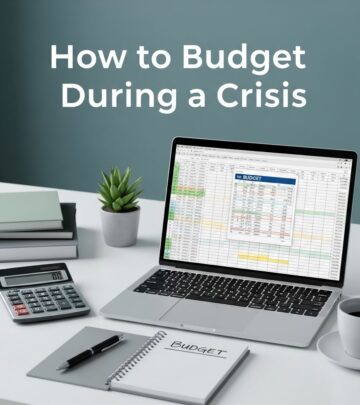
Budgeting stands as one of the most effective tools for managing personal finances, particularly when aiming to understand spending patterns and identify cutback opportunities. Start by calculating your monthly household income, which encompasses salary, spousal income, child support, alimony, retirement distributions, and other consistent sources. For variable incomes, base your budget on the conservative lower end to ensure reliability.
Next, compile a comprehensive list of monthly expenses tailored to your lifestyle. Common categories include:
- Housing: Rent or mortgage payments.
- Utilities: Electricity, water, internet, and gas.
- Transportation: Gas, public transit, car maintenance, or loans.
- Healthcare: Insurance premiums, copays, and medications.
- Food and household goods: Groceries, cleaning supplies.
- Debt payments: Credit cards, student loans, personal loans.
- Education and childcare: Tuition, daycare fees.
- Discretionary spending: Entertainment, dining out, hobbies, travel.
Once expenses are mapped, pinpoint areas for reduction, prioritizing discretionary items like retail shopping, takeout, and leisure activities. Tools such as budgeting apps can automate tracking, providing real-time insights into your financial flow.
Regularly reviewing credit card and bank statements reveals forgotten subscriptions or unused services, freeing up cash. Aim to categorize expenses as mandatory (essentials) or discretionary to prioritize cuts without sacrificing necessities.
2. Spend less money than you earn
The cornerstone of financial health is simple: consistently spend less than your income. Use your budget to enforce this by dividing expenses into essentials (unavoidable like housing and food) and discretionary (cuttable like entertainment). This discipline ensures coverage of bills while allocating surplus to savings.
Adopt rules like the 50/30/20 guideline, where 50% of after-tax income covers needs, 30% funds wants, and 20% tackles debt and savings. This framework promotes balance, preventing lifestyle inflation.
Responsible spenders embody traits like sticking to budgets, distinguishing needs from wants, and prioritizing goals such as home buying or vacations. Mindful consumption counters consumerism by questioning advertised desires and curbing credit card impulses.
| Expense Type | Examples | 50/30/20 Allocation |
|---|---|---|
| Needs (50%) | Housing, utilities, groceries, healthcare | Essential survival costs |
| Wants (30%) | Dining out, entertainment, hobbies | Lifestyle enhancements |
| Savings/Debt (20%) | Emergency fund, retirement, loan payments | Future security |
Automate savings transfers post-paycheck to bypass temptation, redirecting freed funds directly to high-yield accounts.
3. Maintain an emergency fund
An emergency fund acts as your financial safety net, covering 3-6 months of living expenses for unforeseen events like job loss or medical bills. Begin by assessing current savings; if deficient, prioritize building it via automated deposits.
Use savings buckets—separate accounts for emergencies, short-term goals, and major purchases like a home down payment—to maintain organization. Start small: aim for $1,000 initially, then expand to full coverage.
During mid-year reviews, verify your fund’s adequacy against updated expenses. If ahead, redirect excess to debt or investments; if short, trim discretionary spending.
- Target: 3-6 months of essentials (housing, food, utilities, transport).
- Placement: High-yield savings account for liquidity and interest.
- Replenish: Immediately after use to restore buffer.
4. Continue to pay down debt
Debt reduction remains vital even in downturns, as high-interest obligations compound financial stress. Prioritize high-interest debts like credit cards using strategies such as the debt snowball (smallest balances first for momentum) or avalanche (highest interest first for savings).
Integrate minimum payments into your budget, then allocate surplus income aggressively. Consolidate debts if rates allow, and avoid new borrowing by living within means.
Mid-year checks confirm progress; celebrate milestones to sustain motivation. Combine with credit monitoring to dispute inaccuracies, boosting scores for better refinancing terms.
5. Reevaluate your financial goals and habits
Periodic reevaluation keeps you aligned with evolving priorities. Review budgets biannually, adjusting for life changes like raises or family additions. Cancel unused subscriptions via statement audits, potentially saving hundreds annually.
Enhance security by updating passwords quarterly and monitoring for fraud. Explore methods like cash stuffing: allocate cash into envelopes per category for tangible spending control, reducing overdraft risks and fostering discipline.
Long-term, scale savings by age: in 20s/30s, build foundations; by 40s/50s, aim for 3-8x annual salary in retirement via automated contributions.
Additional Strategies for Lasting Habits
Beyond basics, leverage apps for automation and insights. Change passwords regularly for security, and mid-year checklists ensure progress: budget updates, subscription purges, credit reviews.
Cash stuffing details: Categorize budget, withdraw cash, stuff envelopes, spend accordingly, track residuals, repeat. Ideal for visual learners resistant to digital tools.
Frequently Asked Questions (FAQs)
What is the first step to better money habits?
Track your income and expenses meticulously to create a realistic budget, identifying cutback opportunities.
How much should my emergency fund cover?
Aim for 3-6 months of essential living expenses, stored in a liquid, high-yield account.
What’s the 50/30/20 rule?
50% needs, 30% wants, 20% savings/debt—a balanced spending framework.
Is cash stuffing effective?
Yes, it provides visual spending limits, curbs debt, and enforces budgeting discipline.
How often should I review my finances?
Monthly for tracking, mid-year and year-end for comprehensive goal adjustments.
References
- 5 Healthy Financial Habits for the Year Ahead — Equifax. 2023-01-01. https://www.equifax.com/personal/education/personal-finance/articles/-/learn/good-financial-habits/
- How to Develop Better Money Habits During a Recession — Equifax. 2023-01-01. https://www.equifax.com/personal/education/personal-finance/articles/-/learn/develop-better-money-habits/
- Smart Money Management: A Guide to Responsible Spending — Equifax UK. 2024-06-15. https://www.equifax.co.uk/resources/money-management/smart-money-management
- Cash Stuffing: A New Method for Saving Money — Equifax. 2023-05-10. https://www.equifax.com/personal/education/personal-finance/articles/-/learn/cash-stuffing/
- How Much Money Should I Have Saved by My 20s and 30s? — Equifax. 2023-08-20. https://www.equifax.com/personal/education/personal-finance/articles/-/learn/how-much-should-i-have-saved-by-20s-30s/
- Your Mid-Year Financial Checklist — Equifax. 2023-07-01. https://www.equifax.com/personal/education/personal-finance/articles/-/learn/mid-year-financial-goal-checklist/
Similar Articles








Read full bio of Sneha Tete