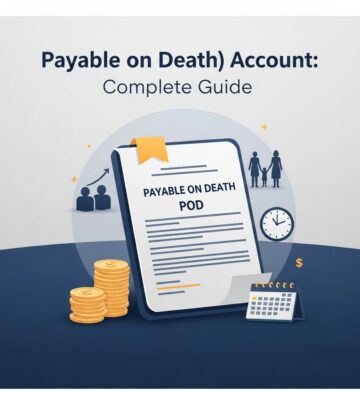
Designating Beneficiaries on Savings Accounts
Discover how to name beneficiaries on savings accounts to bypass probate, ensure quick asset transfer, and protect your loved ones' financial future effectively.

Adding a beneficiary to a savings account allows funds to pass directly to designated individuals upon the account holder’s death, bypassing the lengthy probate process. This mechanism, often called Payable on Death (POD), simplifies inheritance and ensures loved ones gain prompt access to resources during challenging times.
Understanding Beneficiary Designations in Banking
A beneficiary on a savings account is a person or entity named to receive the account balance after the owner’s passing. Unlike wills, which may route through probate courts, POD designations operate outside this system, providing a direct transfer. Banks typically support this for checking, savings, and certificates of deposit (CDs), making it a versatile estate planning tool for everyday accounts.
This feature empowers account holders to dictate asset flow precisely, overriding potential disputes or state intestacy laws that might otherwise dictate distribution. For instance, without a beneficiary, funds could enter probate, delaying access by months or years while incurring legal fees.
Key Advantages of Naming Beneficiaries
- Probate Avoidance: Funds transfer immediately to beneficiaries, evading court oversight and associated expenses, which can consume 3-7% of estate value.
- Speedy Access: Heirs receive money quickly, often within weeks, aiding urgent needs like funeral costs or bills.
- Privacy Maintenance: Transactions remain confidential, unlike public probate records.
- Control Retention: Specify exact recipients and percentages, superseding will instructions.
- Cost Efficiency: No executor fees or attorney costs apply to POD transfers.
These benefits position beneficiary designations as essential for modern financial planning, particularly for those with modest estates where probate burdens are disproportionately heavy.
Types of Accounts Eligible for Beneficiaries
Most standard bank products accommodate POD setups:
| Account Type | POD Availability | Key Notes |
|---|---|---|
| Savings Accounts | Yes | Direct transfer post-death; no ownership changes during life. |
| Checking Accounts | Yes | Useful for immediate liquidity needs of heirs. |
| Certificates of Deposit (CDs) | Yes | Beneficiary claims full value upon maturity or death. |
| Money Market Accounts | Often | Verify with bank; similar to savings. |
Investment or retirement accounts like IRAs have distinct rules, but bank deposit accounts universally support POD across major institutions.
Primary vs. Contingent Beneficiaries Explained
Designate
primary beneficiaries
as your top choices, allocating percentages that sum to 100%. For example, 50% to a spouse and 25% each to two children. If primaries cannot inherit—due to predecease or disclaimer—**contingent beneficiaries** step in as backups.Advanced options include:
- Per Stirpes: Shares pass to a deceased beneficiary’s descendants.
- Per Capita: Contingents receive equal portions if primaries fail.
State laws may mandate spousal consent for certain designations, especially on retirement-linked accounts, ensuring marital rights are respected.
Step-by-Step Guide to Adding Beneficiaries
- Contact Your Bank: Visit a branch, call, or use online banking portals where available.
- Gather Beneficiary Details: Full name, date of birth, Social Security number, address.
- Complete the Form: Fill out POD/ITF (In Trust For) paperwork, specifying primaries and contingents.
- <
- Select Distribution Method: Choose percentages or equal shares.
- Review and Sign: Bank verifies and records the update.
- Notify Beneficiaries: Inform them of their role for smooth claims.
- Update Periodically: Review after life events like births, deaths, or divorces.
The process typically takes 15-30 minutes and incurs no fees, though online options vary by bank.
Potential Drawbacks and Considerations
While powerful, POD has limitations:
- No Lifetime Access: Beneficiaries gain no control until death; creditors cannot claim during life.
- Irrevocable Nature: Changes require bank approval; minors need trusts.
- Tax Neutrality: No estate tax on transfers under federal exemptions ($13.61 million in 2024), but income taxes may apply to interest.
- State Variations: Some jurisdictions limit non-spouse primaries or require notarization.
Minors as beneficiaries trigger court-supervised accounts until age 18-21, so consider UTMA/UGMA or trusts instead.
Beneficiaries in Context of Broader Estate Planning
POD complements wills and trusts but overrides them for designated accounts. Coordinate to avoid conflicts—e.g., don’t will funds already POD-bound. For complex estates, trusts offer superior protection against spendthrift heirs or blended families.
Retirement accounts follow SECURE Act rules: non-spouse beneficiaries often deplete within 10 years, differing from POD’s immediate lump-sum transfer.
Frequently Asked Questions
Can I change beneficiaries anytime?
Yes, contact your bank to update; no restrictions beyond spousal consents in community property states.
What if no beneficiary is named?
Funds enter probate, distributed per will or intestacy laws, delaying access.
Do banks charge for POD setup?
Typically free; confirm with your institution.
Can I name a trust as beneficiary?
Yes, providing asset protection and control.
How do beneficiaries claim funds?
Present death certificate, ID; bank releases within days.
Best Practices for Effective Designations
To maximize utility:
- Review annually and post-life events.
- Name contingents always.
- Use specific percentages for clarity.
- Consult advisors for large balances.
- Harmonize with overall estate documents.
Regular audits prevent lapsed designations, a common pitfall costing families dearly.
References
- Retirement topics – Beneficiary — Internal Revenue Service. 2024-01-15. https://www.irs.gov/retirement-plans/plan-participant-employee/retirement-topics-beneficiary
- What Is a Beneficiary? Types & How to Choose — Vanguard. 2023-11-20. https://investor.vanguard.com/investor-resources-education/beneficiaries
- Do your savings or checking account need beneficiaries? — The Federal Savings Bank. 2024-02-10. https://www.thefederalsavingsbank.com/Blog/do-your-savings-or-checking-account-need-beneficiaries/
- Setting Up Beneficiaries for Your Bank Accounts — FNB Michigan. 2023-09-05. https://fnbmichigan.bank/news/setting-up-beneficiaries-for-your-bank-accounts-why-it-matters-and-how-to-do-it/
- Guide to Adding a Beneficiary to a Bank Account — SoFi. 2024-03-12. https://www.sofi.com/learn/content/bank-account-beneficiary-rules/
Similar Articles








Read full bio of Sneha Tete