Designating Beneficiaries for Non-Retirement Investments
Discover how to efficiently transfer non-retirement assets to heirs using TOD plans, with key eligibility rules and strategic considerations for seamless inheritance.

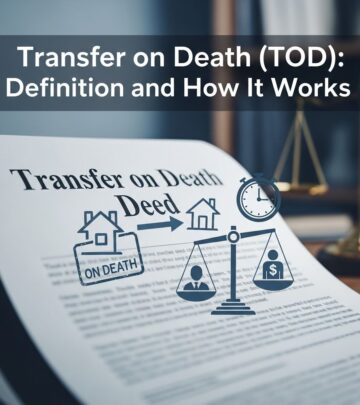
Transferring investment assets held in non-retirement accounts to heirs can be streamlined through specialized mechanisms like Transfer on Death (TOD) designations. These tools allow account owners to bypass probate, ensuring quicker and often less costly distribution to designated recipients upon death. This approach is particularly useful for individual brokerage and mutual fund accounts, providing a direct path for assets to pass outside of wills or trusts in many cases.
Understanding Transfer on Death Mechanisms
The core concept behind TOD plans revolves around naming successors who gain ownership of the account assets automatically after the owner’s passing. Unlike traditional wills, which may subject assets to court-supervised probate processes, TOD registrations operate under state-specific uniform acts, such as Pennsylvania’s version adopted by firms like Vanguard. This setup maintains full control for the account holder during their lifetime, with changes revocable at any time.
Key benefits include probate avoidance, which reduces administrative delays and fees, and privacy since proceedings remain out of public court records. However, TOD does not address all estate complexities, such as creditor claims or blended family dynamics, making it a complementary rather than standalone tool.
Ideal Scenarios for Implementing TOD Plans
TOD designations suit investors with straightforward circumstances. Consider adopting this if your portfolio consists mainly of non-retirement holdings without intricate ownership structures or tax-minimization needs beyond basic step-up in basis.
- Simple family structures with clear primary heirs.
- Desire for hassle-free asset handover without legal formalities.
- No existing comprehensive will or trust specifying alternative distributions.
Conversely, avoid TOD if your situation involves multiple stakeholders, high-value estates vulnerable to taxes, or desires for conditional inheritances. Complex setups demand tailored trusts or professional advice to align with broader goals.
| When TOD Fits Best | When to Look Elsewhere |
|---|---|
| Straightforward personal and financial profile | Intricate family or asset arrangements |
| No plans for detailed estate documents | Existing will, trust, or legal directives |
| Equal, unrestricted shares for heirs | Conditions on usage or timed distributions |
| Attorney approval for basic needs | Estate tax reduction strategies required |
Eligible Account Types for Beneficiary Designations
Not all non-retirement accounts qualify for TOD beneficiary additions. Focus on standard ownership forms that permit post-death transfers.
- Individual Accounts: Solely owned brokerage or mutual fund accounts fully eligible.
- Joint Tenants with Rights of Survivorship (JTWROS): Assets pass first to surviving joint owner; remaining balance then follows TOD upon final owner’s death.
Ineligible types include joint tenants in common, uniform gifts to minors (UGMA/UTMA), community property accounts, trusts, estates, bankruptcy filings, organizational holdings, and certain custodial setups. Joint accounts inherently transfer via survivorship, negating separate beneficiary needs.
Choosing the Right Beneficiary Categories
Options span individuals, legal entities, and organizations, each with procedural nuances.
Naming Individual Heirs
Select family, friends, or others by full legal name and birth date for accuracy. Allocate percentages flexibly—e.g., 50% to a spouse, 25% each to two children—totaling 100%. Multiple primaries and contingents (backup recipients) provide layers of protection against predecease.
Designating Trusts
Irrevocable or living trusts under existing agreements work well for controlled distributions. Provide the trust’s formation date; payout requires documentation verification later. This bridges simple TOD with advanced planning.
Including Charities or Non-Profits
Direct gifts to qualified organizations support philanthropy while reducing taxable estates. Verify tax-exempt status and consult professionals for optimal structuring.
State laws may impose spousal consents or inheritance restrictions, so review local regulations.
Primary vs. Contingent Beneficiaries Explained
Structure designations hierarchically: primaries inherit first; contingents activate if all primaries cannot (e.g., predecease or disclaim). Distribution methods matter:
- Per Stirpes: Shares cascade to descendants if a primary dies first, preserving branch allocations.
- Per Capita: Equal split among surviving primaries or contingents, potentially consolidating shares.
Example: Two primaries (A: 50%, B: 50%). Per stirpes keeps A’s line intact if A predeceases; per capita shifts fully to B or splits with contingents.
Tax and Legal Ramifications
Basis step-up at death minimizes capital gains for heirs on appreciated assets—a key advantage over lifetime gifts. No immediate income taxes apply to transfers, but beneficiaries face taxes on future gains or dividends. TOD overrides conflicting will provisions, prioritizing account-specific instructions.
Always integrate with holistic estate strategies. For instance, community property states demand spousal considerations. Vanguard urges legal consultations pre-enrollment, as TOD isn’t tax advice or a full plan substitute.
Step-by-Step Process to Add Beneficiaries
- Log into your Vanguard account online.
- Navigate to profile or account services for beneficiary management.
- Select eligible non-retirement accounts.
- Enter beneficiary details: names, DOBs, percentages, categories.
- Review for accuracy; submit for processing (5-7 business days).
- Confirm via statement or portal; update as life changes occur.
For joint JTWROS, designations apply post-survivorship. Changes remain owner-controlled until death.
Inheritance Process for Recipients
Upon notification of death, beneficiaries contact Vanguard with death certificate and ID. Transfers occur into inheritor’s name or cash payout, subject to verification. Trusts need agreement proofs; charities provide exemption docs. Processing aims for efficiency, often weeks versus probate’s months.
Common Pitfalls and Best Practices
Avoid mismatches between nicknames and legal names, forgotten updates post-life events (marriage, birth), or over-reliance without attorney input. Regularly audit designations annually.
- Coordinate across all financial institutions.
- Discuss intentions with heirs to preempt disputes.
- Consider minor heirs via trusts, as direct TOD to minors complicates guardianship.
FAQs
Can joint accounts have TOD beneficiaries?
No, JTWROS passes automatically to survivor; TOD activates thereafter on remainder.
Does TOD affect estate taxes?
It removes assets from probate estate but not necessarily taxable estate; consult for federal thresholds.
What if no beneficiaries survive me?
Assets default to your estate for probate distribution.
Are Vanguard IRA beneficiaries separate?
Yes, retirement designations don’t transfer to non-retirement accounts.
How do I remove or change a beneficiary?
Via online portal anytime while account owner lives.
Integrating TOD into Broader Estate Planning
While powerful for simplicity, pair TOD with powers of attorney, healthcare directives, and revocable trusts for comprehensiveness. Digital asset inventories and professional fiduciaries enhance robustness. Investors with substantial non-retirement portfolios benefit from periodic reviews amid tax law evolutions.
For high-net-worth individuals, TOD complements irrevocable life insurance trusts or charitable remainder vehicles. Ultimately, personalized advice ensures alignment with legacy objectives.
References
- Transfer on Death (TOD) plan – Vanguard — Vanguard Investor Resources. 2023-2024. https://investor.vanguard.com/investor-resources-education/beneficiaries/nonretirement-account-beneficiaries
- What Is a Beneficiary? Types & How to Choose – Vanguard — Vanguard Investor Resources. 2023-2024. https://investor.vanguard.com/investor-resources-education/beneficiaries
- Transfer on Death Plan Kit – Vanguard — Vanguard Forms (PDF). Accessed 2024. https://personal1.vanguard.com/forms/bdbp.pdf
- Understanding the basics of estate planning — Washington University (GME). 2020-04-01. https://gme.wustl.edu/app/uploads/2020/04/Vanguard-estate-planning-1.pdf
- Uniform Transfer on Death Security Registration Act — Uniform Law Commission (.org, official standards body). Ongoing. https://www.uniformlaws.org/viewdocument/final-act-with-comments-71?CommunityKey=043b9067-bc2c-46b7-8436-07c9054064a3&tab=librarydocuments
Similar Articles








Read full bio of medha deb