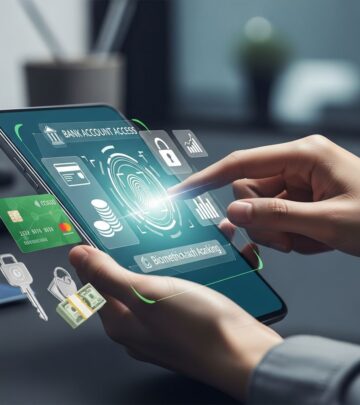
Designate a Trusted Contact for Account Security
Strengthen your financial defenses by naming a trusted contact to shield against fraud, health crises, and communication gaps in your investment accounts.

Financial accounts represent years of hard work and planning, yet vulnerabilities like fraud, health emergencies, or simple communication breakdowns can jeopardize them. Naming a trusted contact person (TCP) offers a straightforward safeguard, allowing your bank or brokerage to reach out to a reliable individual in critical situations without handing over control of your assets.
Understanding the Trusted Contact Mechanism
A trusted contact serves as an emergency liaison for financial institutions facing concerns about your account. This designation emerged from regulatory efforts to combat rising financial exploitation, particularly among seniors. Institutions like brokerages can contact this person solely to address specific issues, such as confirming your whereabouts or assessing potential abuse.
Unlike legal authorizations, a TCP holds no transactional power. They act purely as an informational bridge, helping firms navigate uncertainties while respecting your privacy. This limited role ensures your autonomy remains intact.
Core Functions of a Trusted Contact
Your TCP steps in during predefined scenarios, providing clarity without overstepping boundaries. Here’s what they handle:
- Updating Contact Details: If your phone number or address changes without notification, or if you’re temporarily unreachable, the TCP verifies or supplies accurate information to reconnect with you.
- Health and Welfare Checks: In cases of suspected illness or incapacity, they confirm your status, enabling firms to pause suspicious activities until resolved.
- Authorizing Third Parties: They identify valid power of attorney holders, trustees, or executors, streamlining transitions during crises.
- Flagging Exploitation Risks: If unusual transactions suggest scams, the TCP receives limited details to corroborate concerns and protect assets.
These functions create a safety net, intervening only when direct contact fails.
Key Distinctions: TCP vs. Power of Attorney
| Aspect | Trusted Contact Person | Power of Attorney |
|---|---|---|
| Account Access | No access to balances, statements, or data | Full or limited access depending on scope |
| Transaction Authority | Cannot trade, withdraw, or alter accounts | Can execute trades, transfers, or changes |
| Purpose | Informational support for institutions | Legal decision-making on your behalf |
| Contact Trigger | Specific concerns like fraud or incapacity | Any time holder deems necessary |
| Revocability | Easily updated anytime | Requires formal legal processes |
This table highlights why a TCP complements, rather than replaces, formal powers. Institutions regulated by FINRA often prompt for TCPs during account openings, especially for brokerage services.
Critical Reasons to Implement a TCP Now
Procrastination risks leaving accounts exposed. Consider these pressing motivations:
- Fraud Detection Boost: Scammers target unreachable individuals; a TCP enables swift verification, halting exploits early.
- Emergency Responsiveness: Natural disasters or illnesses can sever communication—TCPs bridge gaps without delays.
- Vulnerability Protection: Aging populations face heightened exploitation risks; TCPs provide proactive oversight.
- Regulatory Compliance: Many firms mandate or strongly recommend TCPs, aligning with SEC and FINRA guidelines.
- Layered Security: Like two-factor authentication, it adds defense without complexity.
Statistics underscore urgency: Elder financial abuse costs billions annually, with TCPs proven to mitigate incidents. Acting preemptively mirrors insurance—low effort for high reward.
Selecting the Ideal Trusted Contact
Choose wisely to maximize effectiveness. Prioritize:
- Unwavering Trust: A close relative or lifelong friend who knows your habits and won’t exploit the role.
- Accessibility: Someone responsive, with stable contact info, ideally nearby.
- Neutrality: Avoid beneficiaries if possible, to prevent conflicts; non-beneficiaries offer impartiality.
- Tech Savvy: Familiarity with financial alerts ensures quick responses.
Discuss expectations upfront. Multiple TCPs (up to two or three, per firm policy) diversify reliability. Review annually or after life changes like moves or family shifts.
Step-by-Step Guide to Adding a TCP
Implementation is simple and often digital:
- Log Into Your Accounts: Access online portals or mobile apps for banks, brokerages, or insurers.
- Locate Security Settings: Search for ‘trusted contact,’ ’emergency contact,’ or ‘account protection’ sections.
- Enter Details: Provide name, relationship, phone, email; some require relationship verification.
- Confirm and Save: Review for accuracy; updates take effect immediately.
- Notify Your TCP: Brief them on their role to prepare for potential outreach.
Paper forms suit non-digital users; call customer service for assistance. Firms like Schwab and Chase integrate this seamlessly.
Real-World Scenarios Demonstrating TCP Value
Consider a retiree hospitalized after a fall, unreachable amid odd wire transfers. The firm contacts her TCP (daughter), who confirms the health crisis and identifies the fraudulent activity, freezing the account.
Or an investor abroad during a scam wave; TCP verifies travel details, averting losses. These cases illustrate TCPs turning potential disasters into manageable events.
Overcoming Hesitations About TCPs
Privacy worries deter some, but regulations limit disclosures to essentials only—no balances or full histories shared. Others fear burdening contacts; yet, involvement is rare and appreciated for its guardianship role.
For joint accounts, both parties should designate TCPs, ensuring comprehensive coverage.
Frequently Asked Questions
Can I change my trusted contact anytime?
Yes, updates are straightforward via account settings, with no penalties.
Is a spouse automatically a TCP?
No; explicitly designate them, as joint ownership doesn’t confer TCP status.
Do all institutions offer TCPs?
Most regulated brokerages and banks do, per FINRA/SEC rules; confirm with yours.
What if my TCP declines contact?
Firms respect this but may escalate internally or legally if risks persist.
Are TCPs required?
Not universally, but recommended and sometimes prompted at account opening.
Enhancing Protections Beyond TCPs
Combine with beneficiaries, powers of attorney, and monitoring tools for holistic security. Regular audits and fraud alerts amplify safeguards.
In summary, a trusted contact fortifies your financial fortress subtly yet powerfully, ensuring institutions can protect you when needed most.
References
- Why You Should Consider Adding a Trusted Contact Person to Your Financial Accounts — Chase. 2023. https://www.chase.com/personal/investments/learning-and-insights/article/why-you-should-consider-adding-a-trusted-contact-to-your-financial-accounts
- Trusted Contacts: Why They’re Important and 5 Reasons to Have One — Bankers Life. 2024-05-15. https://www.bankerslife.com/insights/personal-finance/trusted-contacts-why-theyre-important-and-5-reasons-to-have-one/
- Why You Should Consider Adding a Trusted Contact to Your Account — NASAA. 2023-11-01. https://www.nasaa.org/76874/nasaa-investor-bulletin-why-add-trusted-contact-to-your-account/
- Don’t Leave it to Chance: Appoint a Trusted Contact — Aldrich Wealth Advisors. 2024. https://wealthadvisors.com/insights/dont-leave-chance-appoint-trusted-contact/
- Trusted Contacts and Beneficiaries — Corebridge Financial. 2023. https://www.corebridgefinancial.com/insights-education/trusted-contacts-and-beneficiaries
- Why You Should Establish Trusted Contacts — Charles Schwab. 2024-02-20. https://www.schwab.com/learn/story/why-you-should-establish-trusted-contacts
- Investor Bulletin: Why You Should Consider Adding a Trusted Contact — Investor.gov (SEC). 2023. https://www.investor.gov/introduction-investing/general-resources/news-alerts/alerts-bulletins/investor-bulletins-trusted-contact
Similar Articles








Read full bio of Sneha Tete