Derogatory Marks On Credit Reports: 5 Ways To Remove
Understand what derogatory marks mean, their lasting effects on your credit score, and proven strategies to recover and rebuild your financial standing effectively.
Derogatory marks represent damaging entries on your credit reports that signal past financial missteps to lenders. These negative notations, such as late payments or bankruptcies, can drastically reduce your credit score and limit access to favorable loan terms for years.
Defining Derogatory Marks and Their Origins
At their core, derogatory marks are red flags indicating you failed to meet credit obligations. Lenders report these directly to major credit bureaus—Equifax, Experian, and TransUnion—when payments are overdue or accounts go into default. Public records from courts or government agencies, like tax liens or judgments, can also appear as derogatory items.
These marks fall into two categories: minor ones from isolated issues like a single late payment, and major ones from severe events such as foreclosures. Minor marks tend to have a shorter recovery path, while major ones cast a longer shadow over your financial profile.
Common Types of Derogatory Marks
Numerous events can trigger these negative entries. Here’s a breakdown of the most frequent offenders:
- Late Payments: Occur when a bill is 30+ days overdue. Severity escalates every 30 days, with 90+ day delinquencies causing the most harm.
- Collections Accounts: Unpaid debts sold to third-party agencies, appearing after prolonged non-payment.
- Charge-Offs: Creditors declare the debt uncollectible after about 180 days of delinquency, closing the account but not forgiving the debt.
- Repossessions: Lenders seize collateral, like a vehicle, due to missed secured loan payments.
- Foreclosures: Loss of property ownership after mortgage default, often following months of non-payment.
- Bankruptcies: Legal debt relief processes; Chapter 7 liquidates assets (10 years on report), Chapter 13 restructures payments (7 years).
- Civil Judgments and Tax Liens: Court-ordered payments or government claims for unpaid taxes or lawsuit damages.
| Type | Description | Typical Duration on Report |
|---|---|---|
| Late Payments | 30+ days past due | 7 years from delinquency date |
| Collections/Charge-Offs | Unpaid debt in agency hands | 7 years from original delinquency |
| Bankruptcy (Chapter 7) | Asset liquidation | 10 years from filing |
| Bankruptcy (Chapter 13) | Repayment plan | 7 years from filing |
| Foreclosure/Repossession | Collateral seizure | 7 years |
| Tax Lien (Paid) | Government tax claim | 7 years from filing |
How Derogatory Marks Affect Your Credit Score
These marks influence key scoring factors: payment history (35% of FICO score) and amounts owed (30%). A single late payment might drop your score by 60-110 points, while bankruptcy can subtract 200+ points.
The damage varies by your starting score—higher scores suffer more proportionally—and mark severity. Recent marks hurt most; their weight fades over time if no new issues arise.
Beyond scores, expect higher interest rates, loan denials, or stricter terms on mortgages, auto loans, and credit cards. Rental applications and job offers in finance may also scrutinize these marks.
Duration and Natural Fade-Out
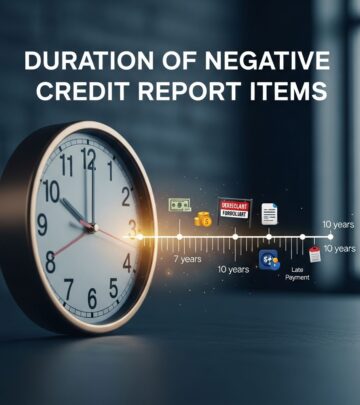
Federal law under the Fair Credit Reporting Act (FCRA) limits reporting periods. Most marks vanish after 7 years from the delinquency date, not resolution. Bankruptcies extend to 10 years for Chapter 7.
Unpaid tax liens may linger indefinitely until settled, though paid ones follow the 7-year rule. Their scoring impact diminishes gradually, especially with positive behaviors like on-time payments.
Steps to Address and Remove Derogatory Marks
Proactive management can shorten or eliminate these marks’ presence:
- Obtain Free Credit Reports: Check AnnualCreditReport.com weekly for accuracy. Note open vs. closed accounts.
- Dispute Errors: File online, by mail, or phone with bureaus if info is wrong (e.g., incorrect dates). Provide evidence; investigations take 30 days.
- Negotiate with Creditors: Request ‘pay-for-delete’ agreements for collections—pay in full for removal. Not guaranteed, but effective for valid debts.
- Goodwill Letters: Politely ask original creditors for late payment removal, citing good history.
- Wait It Out: Marks auto-expire; focus on positives meanwhile.
Success rates for disputes hover around 40-50% if inaccuracies exist. Always document communications.
Rebuilding Credit After Derogatory Marks
Recovery demands discipline:
- Pay Everything On Time: Automate payments; use reminders. Builds positive history quickly.
- Lower Utilization: Keep balances under 30% of limits.
- Secure Starter Credit: Opt for secured cards or credit-builder loans.
- Diversify Accounts: Mix revolving and installment credit.
- Monitor Progress: Use free tools from Credit Karma or bureau apps.
Expect gradual improvement: scores can rise 100+ points in 12-24 months with consistency.
Preventing Future Derogatory Marks
Avoid repeats by budgeting strictly, building emergencies funds (3-6 months expenses), and communicating early with lenders during hardships. Enroll in autopay for essentials.
| Action | Benefit | Timeline for Impact |
|---|---|---|
| On-Time Payments | 35% score boost | Immediate to 6 months |
| Reduce Debt | Lowers utilization | 1-3 months |
| New Positive Accounts | Ages credit mix | 6-12 months |
Frequently Asked Questions (FAQs)
What is the quickest way to remove a derogatory mark?
Disputing proven errors is fastest (30 days). Otherwise, negotiate pay-for-delete or wait for expiration.
Do derogatory marks affect employment?
Not directly for most jobs, but finance roles may check credit. Some states limit this.
Can I get a loan with derogatory marks?
Yes, but expect higher rates or secured options. Subprime lenders specialize here.
How many derogatory marks is too many?
Even one hurts; multiples compound damage. Prioritize addressing all.
Do paid collections still hurt scores?
Yes, the mark remains, but paying stops further decline.
Long-Term Financial Health Strategies
Beyond marks, cultivate habits like annual credit checks, debt snowball/avalanche methods, and professional counseling if overwhelmed. Tools from nonprofits like NFCC offer free advice.
Understanding these marks empowers recovery. Consistent actions turn negatives into a stronger profile over time.
References
- Derogatory Marks on Your Credit Report: What They Mean — Credit Karma. 2023. https://www.creditkarma.com/credit/i/what-does-derogatory-mean
- How Can You Fix Derogatory Marks on Your Credit Report — Jibrael Law. 2024. https://jibraellaw.com/what-are-derogatory-marks-on-your-credit-report-and-how-can-you-fix-them/
- Understand Derogatory Marks on Credit Report — Capital One. 2023-08-24. https://www.capitalone.com/learn-grow/money-management/derogatory-credit/
- What are Derogatory Remarks? — Yendo. 2024. https://www.yendo.com/glossary/what-are-derogatory-remarks
- What Is A Derogatory Mark On Your Credit Report? — Bankrate. 2024. https://www.bankrate.com/personal-finance/credit/what-is-a-derogatory-mark-on-your-credit/
- What Does “Derogatory” Mean on a Credit Report? — Experian. 2024. https://www.experian.com/blogs/ask-experian/what-the-term-derogatory-means-in-a-credit-report/
Similar Articles








Read full bio of medha deb