Depreciation: Definition, Methods, and Accounting
Master depreciation accounting: Learn methods, calculations, and tax implications.

What Is Depreciation?
Depreciation is an accounting method that allocates the cost of a tangible asset over its useful life. It represents the reduction in value of a fixed asset due to wear and tear, obsolescence, or the passage of time. Rather than expensing the entire cost of an asset when purchased, depreciation allows businesses to spread that expense across multiple years, matching the asset’s usage to the revenue it generates.
Depreciation is a non-cash expense, meaning it does not involve an actual outflow of money. Instead, it serves as a way to account for the diminishing value of an asset and provides a more accurate picture of a company’s financial position. This accounting practice is essential for both financial reporting and tax purposes, as it directly impacts a company’s profitability and tax liabilities.
Understanding Depreciation
Tangible assets such as machinery, vehicles, buildings, and equipment lose value over time due to regular use and aging. Depreciation acknowledges this decline in value and distributes the cost systematically across accounting periods. This principle aligns with the matching principle in accounting, which requires expenses to be matched with the revenue they help generate.
Key characteristics of depreciable assets include:
- They must be tangible (physical items)
- They must have a finite useful life
- They must be used in business operations or held for investment
- They must have a cost basis greater than zero
Land is typically not depreciated because it has an indefinite useful life. However, buildings and improvements to land can be depreciated. Intangible assets like patents and trademarks are not depreciated; instead, they are amortized.
Key Depreciation Concepts
Useful Life
Useful life refers to the estimated period during which an asset will provide economic benefits to the business. The Internal Revenue Service (IRS) provides guidelines for useful life estimates across various asset categories. For example, vehicles typically have a useful life of 5-7 years, while commercial buildings may have a useful life of 27.5 to 39 years.
Salvage Value
Salvage value, also known as residual or scrap value, is the estimated amount an asset will be worth at the end of its useful life. This value is subtracted from the original cost to determine the depreciable base. For instance, if a vehicle costs $30,000 and has an estimated salvage value of $5,000 after seven years, the depreciable base would be $25,000.
Depreciable Base
The depreciable base is the total amount subject to depreciation, calculated as the original cost of the asset minus its salvage value. This figure forms the foundation for calculating annual depreciation expenses under most depreciation methods.
Depreciation Methods
Various depreciation methods exist, each providing different expense distributions over an asset’s useful life. The choice of method depends on the nature of the asset, business needs, and regulatory requirements.
Straight-Line Depreciation
The straight-line method is the most commonly used depreciation approach. It allocates an equal depreciation expense each year throughout the asset’s useful life. The formula is straightforward:
Annual Depreciation Expense = (Cost of Asset – Salvage Value) / Useful Life in Years
Example: A company purchases machinery for $100,000 with a salvage value of $10,000 and a useful life of 10 years. The annual depreciation would be ($100,000 – $10,000) / 10 = $9,000 per year.
Advantages of straight-line depreciation include its simplicity, predictability, and fairness. It is also the most straightforward method for financial reporting and tax purposes.
Declining Balance Method
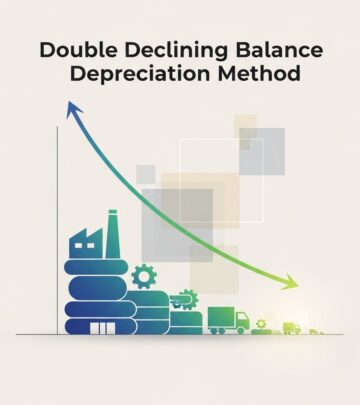
The declining balance method is an accelerated depreciation technique that records higher depreciation expenses in the earlier years of an asset’s life and lower expenses in later years. This method applies a constant depreciation rate to the book value of the asset each year.
Formula: Annual Depreciation = Book Value at Beginning of Year × Depreciation Rate
The depreciation rate is typically double the straight-line rate, leading to the term “double declining balance” method. This approach is particularly useful for assets that lose value quickly or become obsolete rapidly, such as technology equipment.
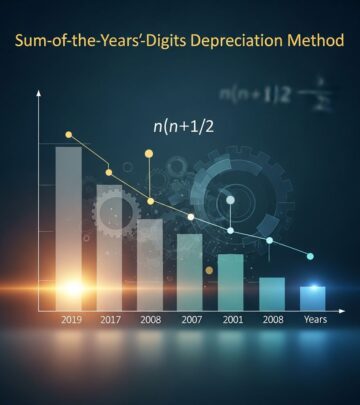
Sum-of-Years-Digits Method
This accelerated depreciation method applies a changing fraction to the asset’s depreciable base each year. The numerator changes each year (starting with the number of years and decreasing by one each year), while the denominator is the sum of all years’ digits.
For example, with a five-year asset, the sum of years’ digits would be 5+4+3+2+1 = 15. The depreciation fractions would be 5/15, 4/15, 3/15, 2/15, and 1/15 for years one through five, respectively.
Units of Production Method
This method bases depreciation on actual asset usage rather than time. Depreciation expense is calculated by multiplying the depreciable base by the ratio of units produced during the period to total estimated units the asset will produce over its lifetime.
Formula: Depreciation Expense = Depreciable Base × (Units Produced This Period / Total Estimated Units)
This method is ideal for manufacturing equipment where usage directly correlates to wear and tear, ensuring depreciation aligns with actual asset consumption.
Depreciation vs. Amortization
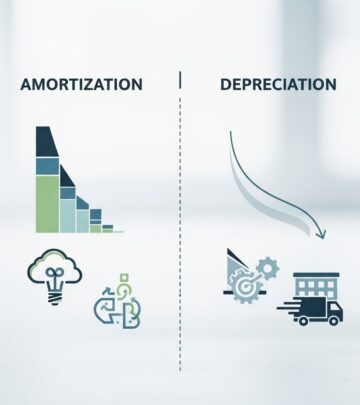
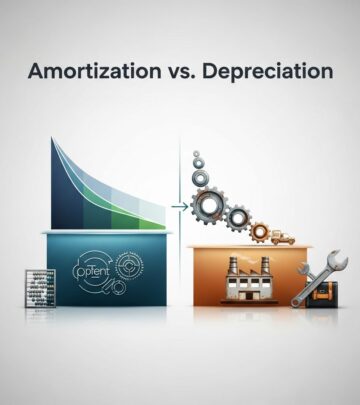
While depreciation applies to tangible assets, amortization applies to intangible assets such as patents, copyrights, trademarks, and goodwill. Both methods allocate costs over time but serve different asset types. Understanding the distinction is crucial for accurate financial reporting.
Tax Depreciation Methods
The IRS provides specific depreciation methods for tax purposes, which may differ from book depreciation. The Modified Accelerated Cost Recovery System (MACRS) is the primary method used in the United States for tax depreciation, allowing businesses to depreciate assets faster than they may appear on financial statements.
Key features of MACRS include:
- Prescribed asset class lives based on asset type
- Predetermined depreciation methods (generally straight-line or accelerated)
- Specific conventions for depreciation start and end dates
- Ability to claim bonus depreciation in certain circumstances
Impact of Depreciation on Financial Statements
Income Statement
Depreciation expense appears on the income statement as an operating expense, reducing net income. Since it is a non-cash expense, it effectively lowers taxable income without requiring a cash outflow, providing a tax benefit.
Balance Sheet
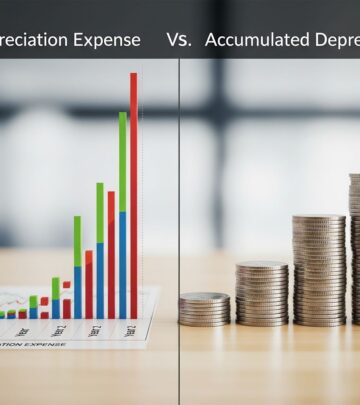
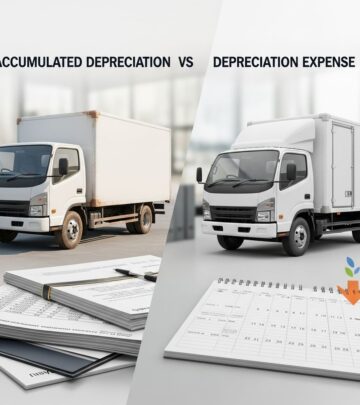
On the balance sheet, accumulated depreciation appears as a contra-asset account, offsetting the original asset cost. The net book value of an asset is calculated as the original cost minus accumulated depreciation, providing a realistic representation of the asset’s current value in the company’s records.
Cash Flow Statement
Since depreciation is a non-cash expense, it is added back to net income in the operating activities section of the cash flow statement. This adjustment recognizes that the expense did not involve an actual cash payment.
Depreciation Example Scenarios
| Method | Year 1 | Year 2 | Year 3 | Total |
|---|---|---|---|---|
| Straight-Line ($100,000 asset, 10-year life, $10,000 salvage) | $9,000 | $9,000 | $9,000 | $27,000 |
| Declining Balance (20% rate) | $18,000 | $14,400 | $11,520 | $43,920 |
| Sum-of-Years (10-year life) | $16,364 | $14,727 | $13,091 | $44,182 |
Advantages of Depreciation
- Tax Benefits: Depreciation reduces taxable income, lowering tax liabilities and improving cash flow.
- Accurate Reporting: Spreads asset costs across periods when they generate revenue, improving financial accuracy.
- Better Decision-Making: Provides a clearer picture of profitability and asset efficiency.
- Matching Principle: Aligns expenses with the revenue generated by the assets.
- Financial Planning: Helps forecast future capital expenditure needs.
Limitations of Depreciation
- Estimation Challenges: Determining useful life and salvage value involves subjective judgment.
- Method Selection: Different methods produce different results, affecting comparability between companies.
- Inflation Impact: Traditional depreciation may not fully account for inflation effects on asset values.
- Market Value Disconnect: Book value rarely reflects actual market value.
- Non-Cash Expense: While useful for accounting, depreciation does not represent actual cash outflows.
Frequently Asked Questions
Q: Why is depreciation considered a non-cash expense?
A: Depreciation is a non-cash expense because no actual money changes hands. It is an accounting allocation of a previously paid cost distributed over multiple periods, providing a tax deduction without cash outflow.
Q: How does depreciation affect taxes?
A: Depreciation reduces taxable income, thereby lowering the amount of taxes owed. This creates a tax benefit even though no cash is spent, improving overall cash flow for businesses.
Q: Can depreciation be reversed or adjusted?
A: Yes, depreciation can be adjusted if there is a significant change in the asset’s expected useful life, salvage value, or if the asset is impaired. Such adjustments must be documented and comply with accounting standards.
Q: What assets cannot be depreciated?
A: Land, personal property not used in business, and assets with indefinite useful lives cannot be depreciated. Intangible assets are amortized instead. However, buildings and improvements on land can be depreciated.
Q: How do you calculate book value?
A: Book value is calculated by subtracting accumulated depreciation from the original cost of the asset. Formula: Book Value = Original Cost – Accumulated Depreciation.
Q: Is depreciation the same for book and tax purposes?
A: No, tax depreciation often differs from book depreciation. The IRS allows businesses to use MACRS for tax purposes, which may result in faster depreciation than book methods.
Q: What is the difference between depreciation and depletion?
A: Depreciation applies to tangible assets like machinery and buildings, while depletion applies to natural resources like minerals and timber that are physically extracted from the earth.
Conclusion
Depreciation is a fundamental accounting concept that allows businesses to allocate the cost of tangible assets systematically over their useful lives. By understanding various depreciation methods, companies can make informed decisions about financial reporting, tax planning, and asset management. Whether using straight-line, accelerated, or units-of-production methods, proper depreciation accounting ensures accurate financial statements and optimized tax positions. Mastering depreciation principles is essential for accountants, business owners, and financial professionals seeking to enhance their financial acumen.
References
- Publication 946: How to Depreciate Property — Internal Revenue Service (IRS). 2024-01-15. https://www.irs.gov/publications/p946
- Generally Accepted Accounting Principles (GAAP) — Asset Depreciation Standards — Financial Accounting Standards Board (FASB). 2023-06-01. https://www.fasb.org
- Accounting Standards Update (ASU) 2016-02: Leases (Topic 842) — FASB. 2023-12-20. https://www.fasb.org/cs/ContentServer
- Modified Accelerated Cost Recovery System (MACRS) Rules — U.S. Internal Revenue Service. 2024-02-10. https://www.irs.gov/businesses/small-businesses-self-employed/macrs
- International Financial Reporting Standards (IFRS 16): Property, Plant and Equipment — International Accounting Standards Board (IASB). 2023-11-30. https://www.ifrs.org
Similar Articles








Read full bio of medha deb