Depreciation and Amortization on the Income Statement
Understand how depreciation and amortization affect your income statement and financial reporting.

Depreciation and amortization are fundamental accounting concepts that every business owner, accountant, and investor should understand. These non-cash expenses play a critical role in financial reporting and can significantly impact how a company’s profitability is calculated. When assets are purchased, their costs don’t simply disappear from financial statements—instead, they are systematically allocated over time through depreciation and amortization. Understanding how these expenses appear on the income statement is essential for accurate financial analysis and tax planning.
What Is Depreciation?
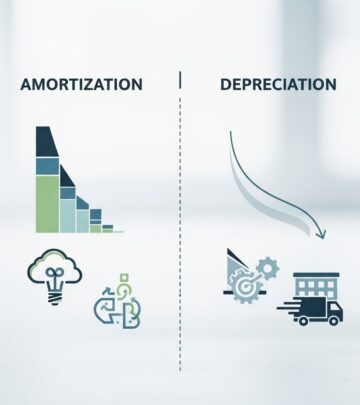
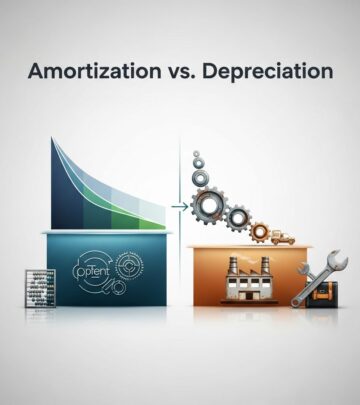
Depreciation is the accounting method used to allocate the cost of tangible assets—such as equipment, buildings, vehicles, and machinery—over their useful life. Rather than recording the entire purchase price as an expense in a single year, depreciation spreads this cost across multiple accounting periods, matching the expense recognition with the periods in which the asset generates revenue.
The depreciation expense represents the portion of a fixed asset that is considered consumed during the current accounting period. This non-cash expense is recorded on the income statement but does not involve an actual outflow of cash. Depreciation helps companies more accurately match asset usage with the benefits the asset provides, ensuring that financial statements reflect the true economic consumption of assets over time.
Most companies assume a salvage value of zero when calculating depreciation, particularly for financial reporting purposes under Generally Accepted Accounting Principles (GAAP). The difference between the original cost of the asset and any estimated salvage value is then depreciated over the asset’s estimated useful life using an appropriate depreciation method.
What Is Amortization?
Amortization is similar to depreciation but applies to intangible assets rather than tangible ones. Intangible assets include patents, trademarks, copyrights, brand names, licenses, and goodwill. These assets have no physical form but represent valuable rights or intellectual property owned by a company. Like depreciation, amortization systematically allocates the cost of these intangible assets over their useful life.
The amortization expense is recorded on the income statement to recognize the gradual consumption or expiration of these intangible assets. The straight-line method is the most commonly used approach for amortization, uniformly reducing the asset’s value each year until the asset’s useful life is exhausted. This mandatory accounting treatment for both financial reporting and tax purposes ensures that companies recognize amortization expenses in the same period as the economic benefit from the intangible asset is received.
How Depreciation and Amortization Appear on the Income Statement
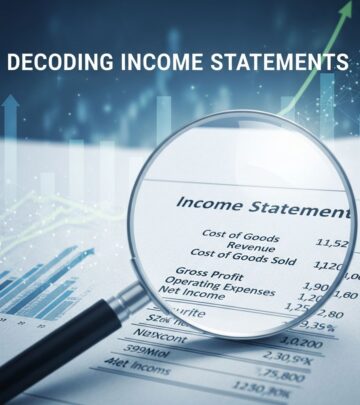
On the income statement, depreciation and amortization expenses are typically recorded as deductions from revenue. These expenses are classified as operating expenses and are included in the calculation of operating income. While seldom explicitly broken out as separate line items on the income statement, depreciation and amortization expenses are usually embedded within either the cost of goods sold (COGS) or the broader operating expenses (OpEx) section.
Both depreciation and amortization reduce a company’s net income, which is calculated by subtracting all expenses—including these non-cash expenses—from revenue. The recognition of these expenses is crucial because they directly impact the earnings before interest and taxes (EBIT), which is a key metric used by investors and analysts to assess a company’s operational profitability.
The Impact on Pre-Tax Income
One of the most significant effects of depreciation and amortization is their impact on pre-tax income, also known as earnings before taxes (EBT). A higher depreciation and amortization expense results in lower pre-tax income, while a lower expense results in higher pre-tax income. This relationship is straightforward: as you increase non-cash expenses, taxable income decreases.
The formula is: Income Tax Provision = Earnings Before Taxes (EBT) × Applicable Tax Rate. Since depreciation and amortization reduce EBT, they correspondingly reduce the income tax liability that a company owes. This tax-saving benefit is one of the primary reasons companies are motivated to accurately calculate and claim depreciation and amortization deductions.
Depreciation and Amortization Methods
The method chosen to calculate depreciation significantly affects the timing and amount of expense recognition on the income statement. Different methods produce different results and can have varying impacts on reported earnings.
Straight-Line Depreciation
The straight-line method is a straightforward approach where the depreciable base of an asset is divided equally across its useful life. This method results in equal depreciation expense in each period. Straight-line depreciation evenly distributes the depreciation expense on the income statement, providing consistent and predictable expense recognition over time.
Accelerated Depreciation Methods
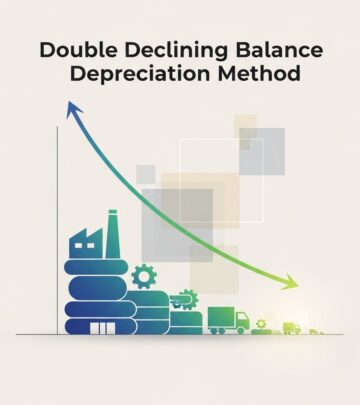
Accelerated depreciation methods, such as the double declining balance method and the sum-of-the-years’ digits (SYD) method, recognize higher depreciation expenses in earlier periods and lower expenses in later periods. These methods are more common in practice for tangible assets compared to amortization. With accelerated depreciation, reported earnings are lower in the early years of an asset’s life but higher in later years. This approach frontloads expenses and can provide significant tax savings early on.
Tax Implications and Benefits
One of the most important considerations regarding depreciation and amortization is their tax impact. Since these are non-cash expenses that reduce taxable income, they provide significant tax benefits to companies. To claim depreciation and amortization deductions on tax returns, companies must file Form 4562 with their annual tax return.
Depreciation expenses can substantially lower a company’s tax liability by reducing the taxable income subject to income tax. Higher depreciation expense means greater tax savings. This tax benefit makes it advantageous for companies to accurately calculate and claim all allowable depreciation deductions. However, it’s important to note that while amortization expenses typically cannot be claimed for tax purposes in the same way as depreciation, they must still be recognized for financial reporting purposes.
By depreciating assets over their useful life and charging depreciation as an expense, companies can better manage their tax burden while adhering to the matching principle of accounting. This principle ensures that expenses are recognized in the same period as the revenue they help generate, providing a more accurate picture of a company’s profitability.
Impact on the Balance Sheet
While depreciation and amortization expenses appear on the income statement, their effects also flow through to the balance sheet. Accumulated depreciation is recorded as a contra-asset account on the balance sheet. A contra-asset account is an account that offsets the balance of a related asset account.
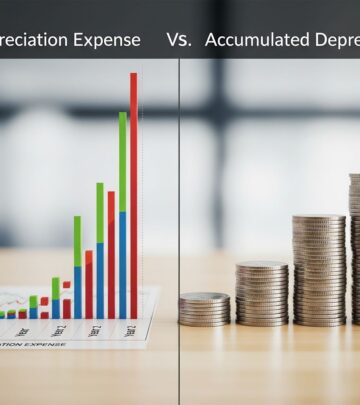
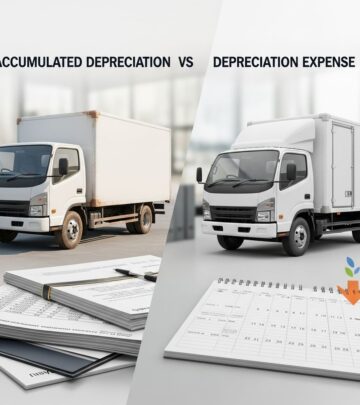
Accumulated depreciation is continuously updated by adding the annual depreciation expense each period. This accumulated total is then subtracted from the original cost of the asset to determine the asset’s net book value. Similarly, accumulated amortization, which represents the total amortization expense recorded over time, is reflected on the balance sheet as a contra account tied to the intangible assets line item.
As depreciation and amortization expenses increase year after year, the accumulated depreciation and accumulated amortization accounts grow, gradually reducing the carrying value of the long-term assets on the balance sheet. This depreciation process enables companies to more accurately report assets at their net book value, providing stakeholders with a clearer picture of the actual economic value of company assets.
Impact on the Cash Flow Statement
Despite being recorded as expenses on the income statement, depreciation and amortization are non-cash expenses. This means they do not represent an actual outflow of cash during the period in which they are recorded. Because they don’t involve immediate cash impact, depreciation and amortization are added back to net income when calculating cash flow from operating activities on the cash flow statement.
However, because depreciation and amortization reduce taxable income, they indirectly affect cash flow by reducing the amount of income taxes owed. This tax savings has a positive impact on overall cash flow. Understanding the distinction between accounting expenses (which affect net income) and cash expenses is crucial for accurate financial analysis. A company might report a loss on its income statement due to high depreciation charges while still maintaining positive cash flow from operations.
Key Differences Between Depreciation and Amortization
While depreciation and amortization serve similar purposes in financial reporting, there are important distinctions between these two accounting methods:
| Aspect | Depreciation | Amortization |
|---|---|---|
| Asset Type | Tangible assets (buildings, equipment, vehicles) | Intangible assets (patents, trademarks, goodwill) |
| Primary Method | Often accelerated methods (double declining balance, SYD) | Straight-line method |
| Tax Treatment | Can provide direct tax deductions | Tax treatment varies; generally recognized for financial reporting |
| Calculation Basis | Original cost minus salvage value | Original cost with zero salvage value assumed |
| Balance Sheet Impact | Accumulated depreciation shown as contra-asset | Accumulated amortization shown as contra-asset |
The Matching Principle
Both depreciation and amortization are rooted in the matching principle, one of the fundamental concepts in accounting. The matching principle states that expenses should be recognized in the same period as the revenue they help generate. By spreading the cost of an asset over its useful life through depreciation or amortization, companies ensure that the expense of using the asset is matched with the periods in which the asset generates revenue.
This principle results in more accurate financial statements and provides a clearer picture of a company’s profitability in each period. Without depreciation and amortization, companies would have to expense their entire asset purchases in a single year, distorting financial results and making year-to-year comparisons difficult.
Understanding Non-Cash Expenses
A critical aspect of depreciation and amortization is recognizing them as non-cash expenses. While these expenses reduce reported profit on the income statement, no cash actually leaves the company when they are recorded. This distinction is important for several reasons:
Financial Analysis: Investors and analysts often adjust net income by adding back non-cash expenses like depreciation and amortization when analyzing a company’s profitability and cash-generating ability. This adjusted metric, known as EBITDA (Earnings Before Interest, Taxes, Depreciation, and Amortization), provides insight into operational profitability.
Cash Flow Management: A company might report negative net income due to substantial depreciation charges but still have strong positive cash flow from operations. Understanding this distinction prevents misinterpretation of a company’s financial health.
Tax Planning: Because depreciation reduces taxable income without affecting cash, companies can strategically use depreciation to manage their tax liability while maintaining adequate cash reserves.
Asset Valuation and Financial Reporting
Depreciation and amortization play a crucial role in proper asset valuation on financial statements. By systematically reducing asset values on the balance sheet through accumulated depreciation and accumulated amortization, companies provide more accurate representations of their assets’ actual economic value. This process helps financial statement users better understand what the company’s assets are truly worth, rather than seeing only the original purchase prices.
The net book value of an asset—calculated as the original cost minus accumulated depreciation—represents the portion of the asset’s cost that hasn’t yet been expensed. This accounting treatment ensures that balance sheets reflect realistic asset values that correspond to the company’s actual economic position.
Frequently Asked Questions
Q: Why are depreciation and amortization important for financial reporting?
A: Depreciation and amortization are important because they ensure that the cost of assets is matched with the periods in which those assets generate revenue. This improves the accuracy of financial statements and provides a clearer picture of profitability. Additionally, these expenses reduce taxable income, providing tax benefits to companies.
Q: Can depreciation and amortization be different for tax and financial reporting purposes?
A: Yes. Companies can use different depreciation methods for tax purposes and financial reporting. For example, a company might use accelerated depreciation for tax purposes to maximize early tax deductions while using straight-line depreciation for financial reporting purposes.
Q: How do depreciation and amortization affect cash flow?
A: While depreciation and amortization are non-cash expenses that don’t directly impact cash flow, they reduce taxable income, which lowers income taxes owed. This tax savings positively affects overall cash flow. On the cash flow statement, depreciation and amortization are added back to net income when calculating operating cash flow.
Q: Where exactly do depreciation and amortization appear on the income statement?
A: Depreciation and amortization are typically embedded within either the cost of goods sold (COGS) or operating expenses (OpEx) sections of the income statement. They are rarely shown as separate line items but are included in the calculation of operating income and net income.
Q: What is the difference between salvage value and book value?
A: Salvage value is the estimated amount an asset will be worth at the end of its useful life and is used to calculate the depreciable base. Book value, on the other hand, is the current value of an asset on the balance sheet, calculated as the original cost minus accumulated depreciation.
Q: Is amortization the same as depreciation?
A: While both depreciation and amortization serve similar purposes, they differ in application. Depreciation applies to tangible assets, while amortization applies to intangible assets. Additionally, different calculation methods are typically used, with amortization commonly using the straight-line method and depreciation often using accelerated methods.
References
- Understanding Depreciation and Amortization — Commerce Bank. 2025. https://www.commercebank.com/business/trends-and-insights/2025/understanding-depreciation-and-amortization
- Depreciation and Amortization (D&A) | Definition + Examples — Wall Street Prep. https://www.wallstreetprep.com/knowledge/depreciation-vs-amortization/
- Amortization vs. Depreciation: What Are the Differences? — Thomson Reuters Tax & Accounting. https://tax.thomsonreuters.com/blog/amortization-vs-depreciation-what-are-the-differences/
- Impact on Income Statement and Balance Sheet — Taxfyle. https://www.taxfyle.com/blog/depreciation-income-statement
- Lease Accounting: Depreciation and Amortization — Occupier. https://www.occupier.com/blog/depreciation-and-amortization/
- Depreciation and Amortization Basics — ZenBusiness. https://www.zenbusiness.com/depreciation-and-amortization/
Similar Articles








Read full bio of Sneha Tete