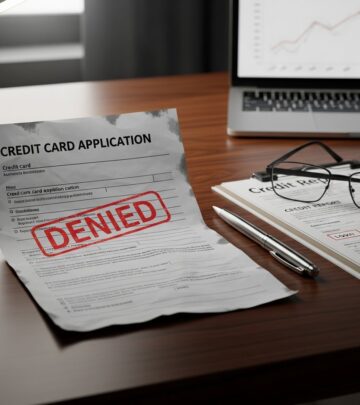
Denied Credit Card? Steps to Recovery
Discover why your credit card application was rejected and master proven strategies to boost approval odds next time.

Receiving a denial letter after applying for a credit card can feel discouraging, but it’s a common experience that offers valuable insights into your financial profile. Federal regulations require issuers to provide specific reasons for rejection, empowering you to address issues head-on. This guide explores frequent denial triggers and delivers practical solutions to strengthen your position for future applications.
Understanding the Denial Notice
Every credit card denial comes with an adverse action notice, a legally mandated document detailing the primary reasons for rejection. This notice often cites your credit score range, debt levels, or recent inquiries, sometimes referencing the credit bureau used. Review it carefully to pinpoint exact concerns, as it may include scores from FICO or VantageScore models.
- Notice must arrive within 30 days of denial per federal law.
- Includes credit score used, if any, plus key factors influencing the decision.
- Provides free credit report access from the named bureau for 60 days.
Use this information as your roadmap. If reasons seem unclear or incorrect, contact the issuer immediately for clarification.
Primary Culprits Behind Application Rejections
Denials stem from issuers’ risk assessments based on credit reports, income verification, and application details. Here’s a breakdown of leading factors.
Insufficient Credit Score
A low credit score signals potential repayment risk. Scores below 670 often disqualify applicants from premium rewards cards, as issuers favor those above 700 for better terms. Payment history (35% of FICO score) and utilization (30%) heavily influence this metric.
Limited or Absent Credit History
Newcomers to credit or those with thin files lack data for evaluation. Without accounts spanning at least six months, scoring models can’t generate reliable predictions, leading to automatic denials.
Excessive Debt Burdens
High debt-to-income (DTI) ratios—monthly debts divided by gross income—over 36% raise red flags. Similarly, credit utilization exceeding 30% of limits suggests overextension.
| Debt Metric | Ideal Range | Risk Level if Exceeded |
|---|---|---|
| DTI Ratio | <36% | High risk; pay down debts first |
| Credit Utilization | <30% | Appears desperate for credit |
| Total Debt Load | Manageable per income | Struggles with new payments |
Recent Hard Inquiries
Multiple applications within 12 months, each triggering a hard pull, imply financial distress. Five or more inquiries can drop scores by 10+ points temporarily.
Inadequate Income Verification
Issuers verify reported income against ability to cover charges. Unemployed applicants or those with low earnings relative to requested limits face rejection, especially under 21 without independent income.
Past Payment Issues
Late payments, collections, or bankruptcies linger 7 years, dominating 35% of scores. Even one 30-day delinquency can tank eligibility.
Frozen Credit Files
Security freezes block access during applications, mimicking no-report scenarios. Temporary thaws are needed pre-application.
Immediate Actions Post-Denial
Don’t reapply impulsively. Prioritize diagnostics and corrections.
- Retrieve Free Reports: Access annualcreditreport.com for Equifax, Experian, TransUnion reports. Scrutinize for inaccuracies.
- Dispute Errors: Online portals allow 30-day challenges. Common fixes: wrong personal info, duplicate accounts, outdated negatives.
- Request Reconsideration: Call the issuer; provide updated income proof or explain one-time issues.
- Lift Freezes: Use bureau apps for PIN-based thaws, valid 1-15 days.
Strategic Fixes for Long-Term Success
Boost Your Credit Score
Aim for 3-6 months of improvements before retrying. Pay bills early, reduce balances below 10% utilization, avoid new inquiries.
- Enroll in autopay for 100% on-time payments.
- Request limit increases on existing cards (soft inquiries often).
- Add positive history via authorized user status on trusted accounts.
Target Beginner-Friendly Cards
For thin files or low scores (below 600), secured cards require deposits matching limits ($200-$500), reporting payments to bureaus. Responsible use leads to unsecured upgrades.
Student cards or those for fair credit (580-669) offer entry points without deposits.
Pre-Qualify Before Applying
Use issuer tools for soft-pull pre-approvals, revealing match likelihood sans score impact. Bank sites list personalized offers.
Manage Debt Effectively
Prioritize high-interest revolving debt. Debt snowball (smallest balances first) or avalanche (highest APR) methods accelerate relief. Balance transfers to 0% intro APR cards consolidate.
Age and Eligibility Hurdles
Under 21? Prove independent income; no pooling parental earnings. Over 62? Age discrimination is illegal, but thin files persist.
Application Best Practices
Tailor choices to profile: rewards for excellent credit (740+), cashback for good (670-739), secured for building.
- Honest income reporting; verify with stubs if requested.
- Space applications 3-6 months apart.
- Match requested limit to 30% monthly spending.
Frequently Asked Questions
How long does a denial impact my score?
The hard inquiry lasts 2 years, affecting scores 12 months; focus on positives to offset.
Can I get a card with no credit history?
Yes, via secured or authorized user routes to establish history.
What’s a good DTI for approval?
Under 36%; ideally below 28% for top cards.
Does checking my own score hurt credit?
No, soft pulls are invisible to others.
Bankruptcy denial timeline?
Post-discharge, 6-12 months with secured cards; 2+ years for unsecured.
Building a Resilient Financial Future
View denial as a pivot opportunity. Consistent habits—budgeting via 50/30/20 rule (needs/wants/savings), emergency funds covering 3-6 months expenses—fortify profiles. Track progress monthly via free score apps from bureaus. With patience, approvals follow stronger standings.
References
- Why Credit Card Applications Get Denied — Capital One. 2024. https://www.capitalone.com/learn-grow/money-management/reasons-your-credit-card-application-was-denied/
- Why Was My Credit Card Application Denied? — Experian. 2025. https://www.experian.com/blogs/ask-experian/why-was-my-credit-card-application-denied/
- 7 Common Reasons Credit Card Applications Get Denied — CareCredit. 2024. https://www.carecredit.com/well-u/financial-health/why-credit-application-denied/
- 8 reasons why your credit card application was denied — The Points Guy. 2025. https://thepointsguy.com/credit-cards/reasons-credit-card-application-denied/
- Why Was My Credit Card Application Denied? — Citi. 2026-03-19. https://www.citi.com/credit-cards/understanding-credit-cards/why-was-my-credit-card-application-denied
Similar Articles








Read full bio of medha deb