Mortgage Rates: Complete Guide To Cutting Home Loan Costs
Unlock the secrets of mortgage rates to make smarter home financing choices and save thousands over your loan's lifetime.

Mortgage rates represent the cost of borrowing money to purchase a property, expressed as an annual percentage applied to the loan balance. This figure fundamentally shapes your monthly payments and the total expense of homeownership over decades. Understanding these rates empowers borrowers to navigate the lending landscape effectively, potentially saving tens of thousands in interest.
The Fundamentals of Mortgage Interest Rates
At its core, a mortgage interest rate is the lender’s compensation for providing funds to buy a home. Lenders calculate this rate based on the outstanding principal—the amount borrowed minus principal repayments. For instance, on a $300,000 loan at 5% interest, the annual interest charge starts at $15,000, divided monthly.
Interest accrues daily or monthly but is typically paid as part of fixed monthly installments that cover both principal and interest (P&I). Early in the loan, payments heavily favor interest; later, more goes toward principal reduction, a process known as amortization.
- Daily interest example: Divide annual rate by 365 for the daily rate, then multiply by remaining balance.
- Monthly application: Ensures predictable budgeting despite fluctuating balances.
Fixed-Rate Mortgages: Stability First
Fixed-rate mortgages lock in the interest rate for the entire term, usually 15, 20, or 30 years. This predictability appeals to buyers seeking unchanging payments amid economic shifts. Shorter terms like 15 years often carry lower rates due to reduced lender risk from quicker repayment.
| Loan Term | Typical Rate Range (2026) | Pros | Cons |
|---|---|---|---|
| 15-Year | 4.5%-5.5% | Less total interest; faster equity buildup | Higher monthly payments |
| 30-Year | 5.0%-6.5% | Lower monthly payments; more affordability | Higher total interest paid |
These loans shield against rate hikes, making them ideal for long-term homeowners planning to stay put.
Adjustable-Rate Mortgages: Flexibility with Risks
Adjustable-rate mortgages (ARMs) start with a lower introductory fixed rate for 5, 7, or 10 years, then adjust periodically based on an index like the Secured Overnight Financing Rate (SOFR) plus a margin. Adjustments cap at 2% per period and 5% lifetime, protecting against sharp spikes.
- Ideal for: Short-term stays or expecting rate drops.
- Risks: Payments can rise significantly post-initial period.
ARMs suit those comfortable with variability or refinancing before adjustments kick in.
Interest Rate vs. APR: What Borrowers Need to Know
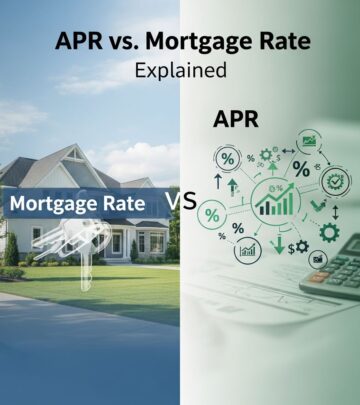
While the interest rate focuses solely on borrowing costs, the Annual Percentage Rate (APR) encompasses the full loan expense, including fees, points, and insurance. APRs are invariably higher, offering a truer cost comparison.
| Metric | Components | Use Case |
|---|---|---|
| Interest Rate | Only loan interest | Calculates monthly P&I |
| APR | Interest + fees + points | Compares total loan costs |
Always review both when shopping lenders— a lower rate with high fees might yield a higher APR.
Key Factors Shaping Your Mortgage Rate
Lenders assess risk through personal and market indicators. Personal factors are controllable; market ones require timing.
Personal Influences
- Credit Score: Scores above 760 secure prime rates; below 620 limit options and raise rates. FICO models predict repayment likelihood.
- Debt-to-Income (DTI) Ratio: Ideal under 36%; measures debt payments against income. High DTI signals overextension risk.
- Down Payment & LTV: 20%+ avoids PMI and lowers rates by reducing loan size relative to home value (LTV).
- Loan Characteristics: Larger loans or longer terms increase rates due to prolonged exposure.
Market and Economic Drivers
Rates track the 10-year Treasury yield plus spreads for risk and costs. Federal Reserve policies indirectly influence via short-term rates, while inflation and employment data sway investor demand for mortgage-backed securities (MBS).
- Treasury Yields: Benchmark for long-term rates; rises push mortgage rates up.
- MBS Spreads: Cover origination, servicing, and credit risks.
- Economic Indicators: Strong job growth or inflation prompts hikes.
Strategies to Lower Your Rate
Proactive steps can shave points off your rate:
- Boost Credit: Pay down debt, correct errors; aim for 740+.
- Increase Down Payment: Reduces LTV, potentially eliminates PMI.
- Buy Points: Prepay interest (1 point = 1% of loan) for 0.25% rate reduction. Breakeven in 5-7 years.
- Shop Multiple Lenders: Rates vary; compare APRs from 3-5 sources.
- Lock Rates: Secure current rates for 30-60 days during processing.
- Consider Lender Credits: Trade higher rates for lower upfront fees if not staying long-term.
Even 0.5% savings on $400,000 over 30 years saves over $70,000 in interest.
How Rates Impact Total Homeownership Costs
Small rate changes amplify over time. For a $400,000 loan:
| Rate | Monthly P&I | Total Interest (30 Yrs) | Lifetime Savings vs. 6% |
|---|---|---|---|
| 6.0% | $2,398 | $463,608 | – |
| 5.5% | $2,272 | $418,025 | $45,583 |
| 5.0% | $2,147 | $373,210 | $90,398 |
Lower rates accelerate equity and free cash for other goals.
Navigating Government-Backed Loans
FHA, VA, and USDA loans offer lower rates via government insurance, easing entry for modest-income or veteran buyers. FHA requires 3.5% down; VA often 0%.
- FHA: Flexible credit, but mortgage insurance premium (MIP).
- VA: No down payment for eligible vets; funding fee applies.
- USDA: Rural areas, income limits, 0% down.
These beat conventional rates for qualifying borrowers.
Timing the Market: When to Buy or Refinance
Monitor Fed announcements, Treasury yields, and rate surveys. Refinance if rates drop 0.5-1% below current, factoring closing costs (2-5% of loan).
2026 trends: Persistent inflation may keep rates elevated, but cooling could prompt cuts.
Frequently Asked Questions (FAQs)
What causes mortgage rates to fluctuate daily?
Rates adjust with bond markets, economic news, and lender competition.
Is it better to get a fixed or adjustable rate?
Fixed for stability; ARM for initial savings if selling soon.
How does credit score affect my rate?
Higher scores mean lower risk, thus better rates—760+ gets top tier.
What’s the average mortgage rate in 2026?
Around 5.5-6.5% for 30-year fixed, varying by market.
Should I buy points to lower my rate?
Yes, if planning long-term stay; calculate breakeven.
Can I refinance multiple times?
Yes, but each incurs costs; ensure savings outweigh fees.
References
- What is a Mortgage Interest Rate and How Does it Work? — Chase. 2025. https://www.chase.com/personal/mortgage/education/financing-a-home/mortgage-rates-explained
- Home Mortgage Rates Explained: A Beginner’s Guide — Alcova Mortgage. 2024-10-15. https://alcova.com/home-mortgage-rates-explained-a-beginners-guide/
- What Factors Determine And Move Mortgage Rates? — Bankrate. 2025-01-20. https://www.bankrate.com/mortgages/how-interest-rates-are-set/
- What Determines the Rate on a 30-Year Mortgage? — Fannie Mae. 2024. https://www.fanniemae.com/research-and-insights/publications/housing-insights/rate-30-year-mortgage
- How are Mortgage Rates Determined? — Rocket Mortgage. 2025. https://www.rocketmortgage.com/learn/how-are-mortgage-rates-determined
- What Determines the Rate on a 30-Year Mortgage? — Fannie Mae (Primary Source). 2024. https://www.fanniemae.com/research-and-insights/publications/housing-insights/rate-30-year-mortgage
Similar Articles








Read full bio of medha deb