Demographics: Definition, Importance, and Applications
Understanding demographics: How population data shapes business, policy, and society.
What Are Demographics?
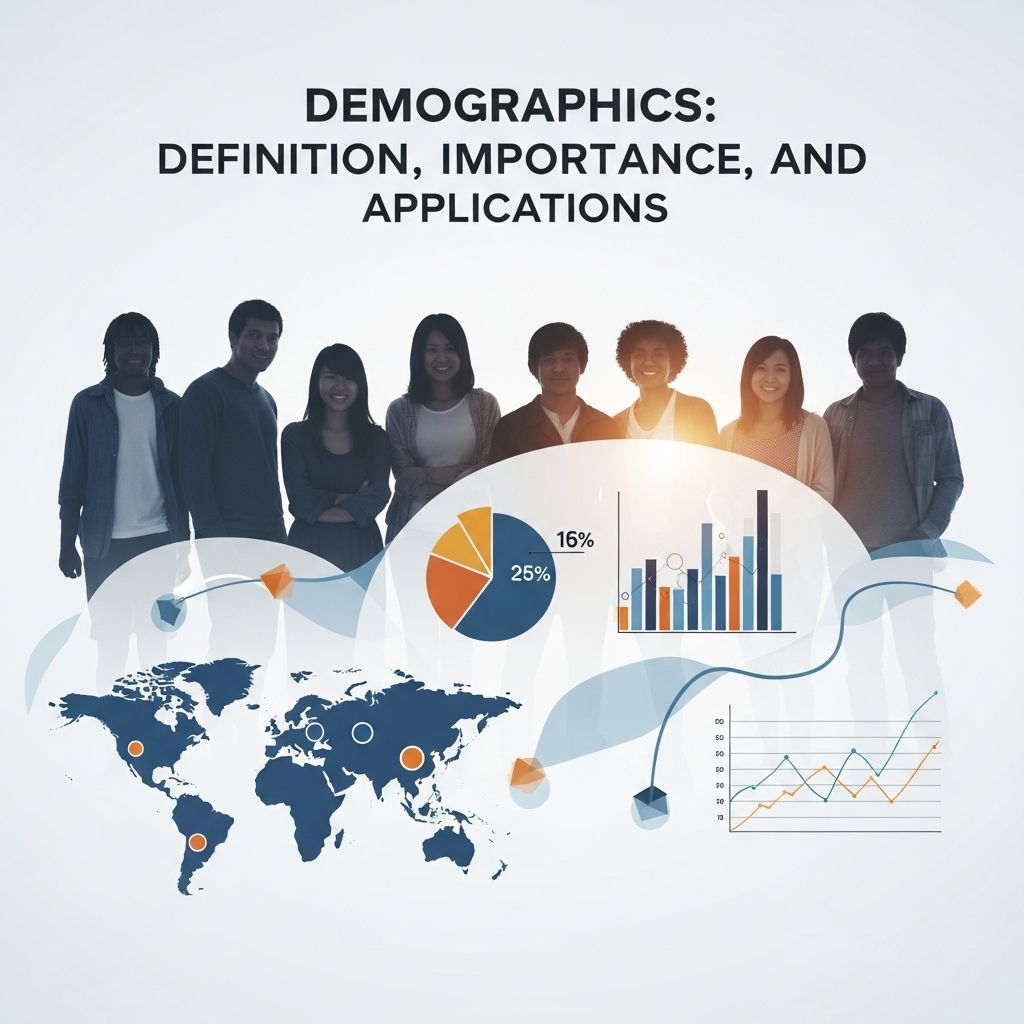
Demographics refers to the statistical characteristics and data of human populations. It encompasses information about age, gender, ethnicity, income, education level, marital status, employment, and other measurable attributes of groups of people. Unlike demography, which is the broader scientific study of human populations and their dynamics, demographics specifically focuses on the quantifiable data points that describe a population at any given time.
The term “demographics” comes from the Greek words “demos” (people) and “graphia” (description or writing about). In modern usage, demographic data has become essential for organizations across all sectors—from government agencies to private corporations—seeking to understand and predict population trends and behaviors.
Understanding Demographic Data
Demographic data consists of measurable statistics that characterize a specific population. These statistics provide a snapshot of who people are and help identify patterns and trends within groups. Key demographic variables include:
- Age: Typically grouped into ranges such as 18-24, 25-34, 35-44, and so forth, age demographics help organizations understand different life stages and consumer behaviors.
- Gender: Data on male and female populations, often used to target specific products or services.
- Income Level: Categorizes populations by earning capacity, from low-income to high net-worth individuals.
- Education: Measures educational attainment, from high school completion to advanced degrees.
- Ethnicity and Race: Identifies cultural and racial backgrounds within populations.
- Family Structure: Describes household composition, including family size and type.
- Employment Status: Indicates whether individuals are employed, self-employed, unemployed, or retired.
- Geographic Location: Identifies where populations live, from urban to rural areas.
- Marital Status: Categorizes individuals as single, married, divorced, or widowed.
Why Demographics Matter
Business and Marketing Applications
Businesses rely heavily on demographic analysis to identify target markets and develop effective marketing strategies. Companies use demographic segmentation to understand which groups are most likely to purchase their products or services. By analyzing factors such as age, income, education, and family structure, marketing teams can create targeted campaigns that resonate with specific audiences.
For instance, a luxury car manufacturer might focus marketing efforts on high-income, college-educated individuals aged 35-55, while a fast-food chain might target younger consumers and families with children. Retailers use demographic data to determine product assortment, pricing strategies, and store locations. Commercial and marketing surveys gather demographic information to guide companies in decisions about which products to develop, how to price them, and which media channels to use for promotion.
Government and Public Policy
Government agencies utilize demographic data to inform public policy decisions and allocate resources effectively. Census data, collected every ten years in most countries, provides comprehensive demographic information used for apportionment of legislative representation, allocation of federal funding, and planning of public services. Demographers help elected officials evaluate whether government programs effectively reach their intended audiences and use tax dollars efficiently.
Demographic analysis informs decisions in areas such as education planning, healthcare resource allocation, infrastructure development, and social services. Understanding population growth patterns, age distribution, and migration trends allows governments to anticipate future needs and plan accordingly.
Healthcare and Social Planning
Healthcare systems use demographic data to forecast disease prevalence, plan hospital capacity, and allocate medical resources. Public health professionals analyze demographic trends to identify health disparities across different populations and develop targeted intervention programs. Schools use demographic information to plan educational services, and city planning departments use population data to design infrastructure and urban development projects.
Sources of Demographic Data
Census Data
National censuses represent the most comprehensive source of demographic information. Conducted periodically (typically every ten years), censuses collect detailed information from entire populations or representative samples. Census data provides accurate baseline information about population size, composition, and geographic distribution.
Surveys and Sampling
When complete population data is impractical or expensive to collect, researchers conduct surveys and use statistical sampling methods. These surveys can target specific populations or focus on particular demographic characteristics. Commercial survey firms and academic research organizations regularly conduct demographic surveys to gather timely information between census periods.
Administrative Records
Government agencies maintain administrative records that contain demographic information, including birth records, death certificates, tax records, and employment data. These records provide ongoing demographic information that supplements census data.
Private Sector Data
Companies collect demographic information through customer surveys, website analytics, purchase history, and social media engagement. Nielsen and other market research firms compile and analyze demographic data from various sources to create commercial demographic reports. These insights help businesses understand consumer behavior and market opportunities.
Demographic Segmentation in Marketing
Demographic segmentation divides markets into distinct groups based on demographic variables. This approach allows companies to develop more precise marketing messages and product offerings tailored to specific demographic segments. Different demographic groups often have different needs, preferences, and purchasing behaviors.
For example, products marketed to baby boomers might emphasize reliability and health benefits, while products for millennials might focus on sustainability and digital connectivity. Age-based segmentation helps determine appropriate advertising channels—younger consumers may be reached through social media and streaming platforms, while older consumers might respond better to traditional television or radio advertising.
Career Opportunities in Demographics
Professionals with expertise in demographic analysis work across various sectors and industries. Common career paths for demographers include:
- Government Analysis: Working for agencies like the U.S. Census Bureau, Department of Housing and Urban Development, and local planning departments.
- Market Research: Employed by marketing research firms and consumer products companies to analyze market trends and consumer behavior.
- Public Health: Contributing to epidemiological studies and public health policy in government health agencies or research institutions.
- Urban Planning: Using demographic data to inform city planning, infrastructure development, and community development initiatives.
- Policy Analysis: Supporting government and non-profit organizations in developing evidence-based policies.
- Academic Research: Conducting demographic research at universities and research centers.
- Management Consulting: Advising corporations and organizations on market opportunities and organizational planning.
The Future of Demographic Analysis
Demographic analysis continues to evolve with technological advances and changing data collection methods. The integration of big data analytics, artificial intelligence, and machine learning enables more sophisticated demographic segmentation and predictive modeling. Real-time data collection through digital platforms provides more current demographic information than traditional survey methods.
Emerging demographic concerns include aging populations in developed nations, climate migration, digital divide disparities, and shifting workforce dynamics. Demographers increasingly focus on understanding how demographic changes interact with economic development, environmental sustainability, and social equity. As populations continue to change globally, the importance of demographic expertise in planning for sustainable futures remains paramount.
Frequently Asked Questions
Q: What is the difference between demography and demographics?
A: Demography is the scientific study of human populations, including their size, composition, distribution, and the processes that affect these characteristics over time. Demographics refers specifically to the statistical data and characteristics of populations derived from demographic studies, such as age, income, and education level.
Q: Why do businesses use demographic data?
A: Businesses use demographic data to identify target markets, understand consumer behavior, develop effective marketing strategies, and make decisions about product development, pricing, and distribution. Demographic segmentation allows companies to tailor their offerings to specific population groups most likely to purchase their products or services.
Q: What are the main sources of demographic information?
A: Primary sources include national censuses, government surveys, administrative records (birth certificates, tax records), commercial market research surveys, and private sector data collection. Each source provides different types of demographic information at varying levels of detail and frequency.
Q: How do governments use demographic data?
A: Governments use demographic data to allocate representation in legislatures, distribute federal funding, plan public services (education, healthcare, infrastructure), evaluate program effectiveness, and develop policies addressing population trends and needs.
Q: What demographic factors are most important for marketing?
A: The most important demographic factors for marketing typically include age, gender, income level, education, family status, employment, and geographic location. These variables help marketers understand their target audiences and develop relevant, effective campaigns.
Q: How are demographic trends changing?
A: Key demographic trends include aging populations in developed countries, increasing urbanization globally, changing family structures, rising education levels, and growing diversity in many populations. Climate change is also creating new demographic patterns through migration and displacement.
Q: What job opportunities exist in demographics?
A: Demographic professionals work in government agencies, market research firms, public health organizations, urban planning departments, management consulting firms, and academic institutions. Job titles include demographer, policy analyst, market research analyst, and survey researcher.
References
- Demography and Demographics | Research Starters — EBSCO Information Services. 2024. https://www.ebsco.com/research-starters/science/demography-and-demographics
- U.S. Census Bureau Official Website — U.S. Department of Commerce. https://www.census.gov
- Bureau of Labor Statistics: Occupational Outlook Handbook — U.S. Department of Labor. 2024. https://www.bls.gov/ooh
- Nielsen Market Research Reports — Nielsen Holdings. https://www.nielsen.com
- U.S. Department of Housing and Urban Development — HUD.gov. https://www.hud.gov
Similar Articles








Read full bio of Sneha Tete