Demand Schedule: Definition and Real-Life Examples
Understanding demand schedules: Learn how price and quantity demanded interact in real markets.
Understanding Demand Schedules: Definition and Real-Life Examples
In the study of economics, few concepts are as fundamental to understanding market behavior as the demand schedule. A demand schedule serves as a critical tool for economists, businesses, and policymakers who seek to comprehend how consumer purchasing behavior responds to price changes. By examining the relationship between price and quantity demanded, stakeholders can make informed decisions about production levels, pricing strategies, and resource allocation. This comprehensive guide explores what demand schedules are, why they matter, and how they function in real-world scenarios.
What is a Demand Schedule?
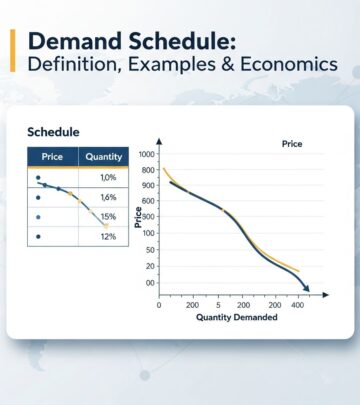
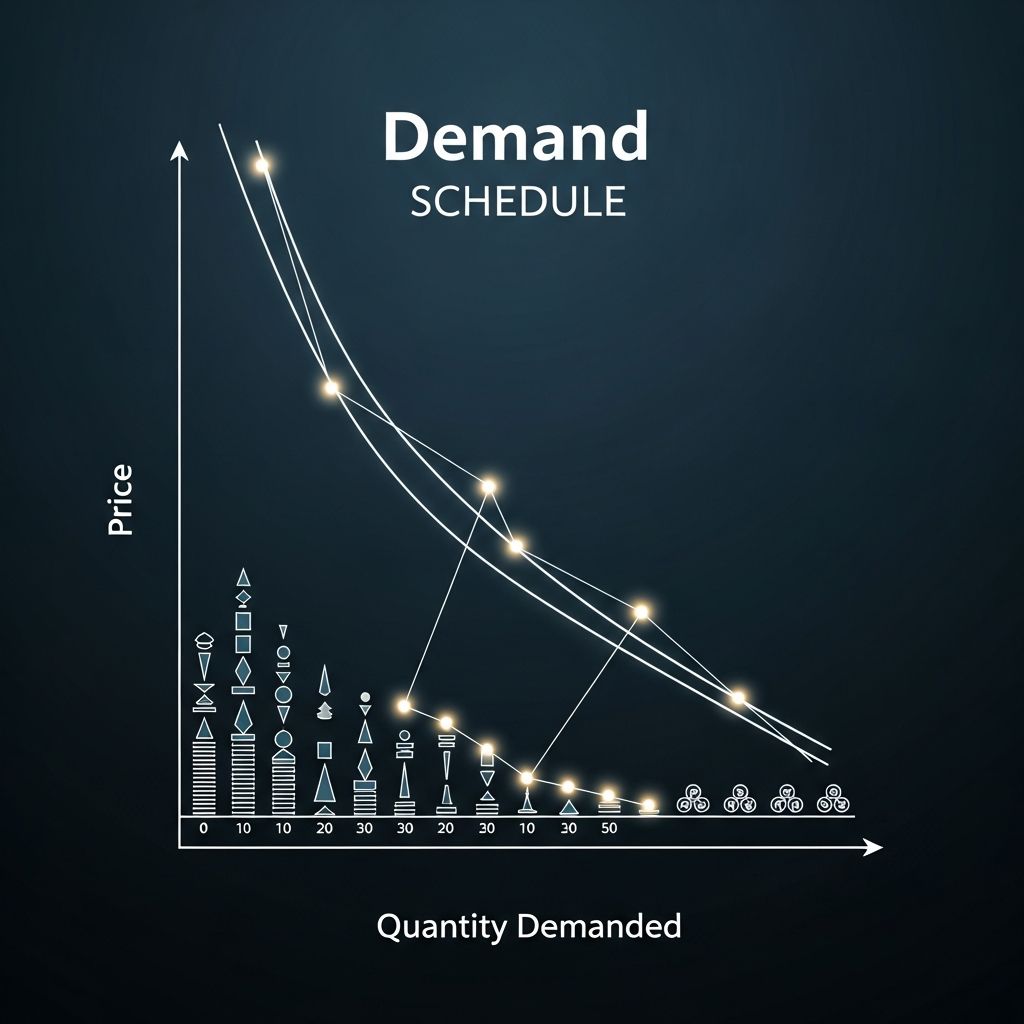
A demand schedule is a tabular representation that illustrates the relationship between the price of a good or service and the quantity that consumers are willing and able to purchase at various price points during a specific time period. Rather than presenting information in narrative form, a demand schedule organizes this data into a clear, easy-to-read table format. Typically, this table contains two columns: one showing different price levels and another displaying the corresponding quantity demanded at each price.
The concept of the demand schedule is grounded in the fundamental economic principle known as the law of demand. This principle states that as the price of a good or service decreases, the quantity demanded by consumers increases, and conversely, as price increases, quantity demanded decreases, assuming all other factors remain constant. This inverse relationship between price and quantity demanded is central to understanding how markets function and how consumers make purchasing decisions.
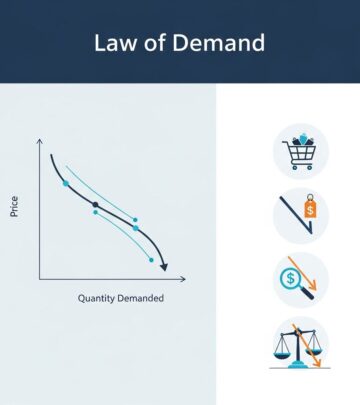
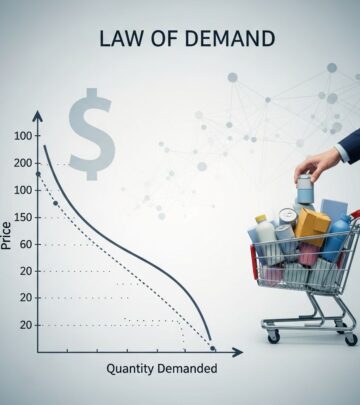
Demand schedules differ from demand curves, though the two are closely related. While a demand schedule presents information in tabular form, a demand curve is the graphical representation of that same data plotted on a coordinate plane. When points from a demand schedule are plotted and connected, they typically form a downward-sloping line, visually demonstrating the inverse relationship between price and quantity demanded.
Key Components of a Demand Schedule
To fully understand demand schedules, it is essential to recognize the core components that make up this economic tool:
Price Levels
Price levels represent the various costs at which a product or service can be offered to consumers. In a demand schedule, prices are typically listed in ascending or descending order. These price points might range from very low prices to high prices, allowing economists and businesses to observe how demand responds across the entire price spectrum. The selection of specific price points often depends on the product being analyzed and the market conditions being studied.
Quantity Demanded
Quantity demanded refers to the specific number of units of a good or service that consumers are willing and able to purchase at each designated price level within a given time frame. This metric is crucial for understanding market dynamics, as it indicates exactly how many units will be purchased at different price points. The quantity demanded is directly influenced by the price—as prices fall, consumers typically purchase more units, and as prices rise, they purchase fewer units.
Time Period
The time period in a demand schedule specifies the duration over which the data has been collected and analyzed, which might be a day, week, month, quarter, or year. Defining a specific time frame is essential because consumer behavior and market conditions fluctuate over time. For instance, demand for winter coats will vary dramatically between summer and winter months. By specifying the time period, businesses and economists can better contextualize the data and make more accurate predictions about future demand patterns.
Types of Demand Schedules
Understanding the different types of demand schedules is crucial for analyzing consumer behavior at both the micro and macro levels. There are two primary categories:
Individual Demand Schedule
An individual demand schedule shows the quantity of a specific good or service that a single consumer is willing and able to purchase at different price points. This type of schedule provides insight into the purchasing behavior of one consumer across various price levels. For example, an individual demand schedule might show that one person will buy 5 coffee cups at $3 each, but only 2 coffee cups at $5 each. Individual demand schedules help economists understand personal consumer preferences and behavior patterns.
Market Demand Schedule
A market demand schedule represents the aggregation of all individual demand schedules of consumers in a particular market for a given product or service. This schedule provides a broader picture of total demand, showing how an entire market reacts to price changes. For example, if a town has 1,000 coffee consumers and each person buys 5 cups at $3 per cup, the market demand at that price would be 5,000 cups. Market demand schedules are essential for understanding overall market trends, forecasting demand on a larger scale, and developing effective business strategies.
Real-Life Examples of Demand Schedules
Coffee Shop Example
Consider a local coffee shop analyzing demand for its specialty lattes. The business might create a demand schedule tracking how many lattes customers purchase at different price points over a one-month period:
| Price per Latte | Quantity Demanded (Monthly) |
|---|---|
| $2.50 | 800 lattes |
| $3.00 | 700 lattes |
| $3.50 | 600 lattes |
| $4.00 | 500 lattes |
| $4.50 | 400 lattes |
This demand schedule clearly demonstrates the inverse relationship between price and quantity demanded. As the price increases from $2.50 to $4.50, the quantity demanded falls from 800 lattes to 400 lattes monthly. The coffee shop can use this information to determine optimal pricing that balances profitability with customer demand.
Retail Clothing Example
A clothing retailer might track demand for a popular t-shirt style across different price points during a quarter:
| Price per T-Shirt | Quantity Demanded (Quarterly) |
|---|---|
| $15 | 2,500 units |
| $20 | 2,000 units |
| $25 | 1,500 units |
| $30 | 1,000 units |
This example shows how a $5 price increase consistently reduces the quantity demanded by approximately 500 units. The retailer can use this data to make informed decisions about inventory levels and pricing strategies.
Why Demand Schedules Matter
Pricing Optimization
Businesses use demand schedules to determine optimal pricing that balances profitability with consumer demand. By understanding how quantity demanded changes at different prices, companies can identify the price point that maximizes revenue or achieves other business objectives. This prevents both underpricing (leaving money on the table) and overpricing (losing market share).
Demand Forecasting
Identifying patterns in demand helps businesses and economists predict future consumer behavior. Historical demand schedules provide a foundation for forecasting future demand, which is essential for production planning and resource allocation. If a business knows that demand typically increases by 10% when prices drop by $1, it can plan inventory accordingly.
Resource Allocation
Understanding demand allows businesses to allocate resources efficiently, avoiding both overproduction and underproduction. By knowing the quantity demanded at various price points, companies can manufacture exactly the right amount of product, reducing waste and storage costs while ensuring products are available when customers want them.
Policy and Regulation
Governments use demand schedules to assess the impact of economic policies such as taxes, subsidies, or price controls on goods and services. Policymakers can model the effects of potential policies on demand before implementing them, helping ensure that regulations achieve their intended outcomes without unintended negative consequences.
Demand Schedule Versus Supply Schedule
While demand schedules show what consumers are willing to buy at different prices, supply schedules show what producers are willing to offer at different prices. A supply schedule is a table showing the quantity of a good that suppliers will offer for sale at various price levels. Unlike demand schedules, which typically show an inverse relationship between price and quantity, supply schedules usually show a positive relationship—higher prices incentivize producers to supply more.
Together, demand and supply schedules help determine market equilibrium. When graphed, the demand curve and supply curve intersect at the equilibrium point, which represents the price and quantity that balance what consumers want to buy with what producers want to sell.
The Demand Curve: Visual Representation
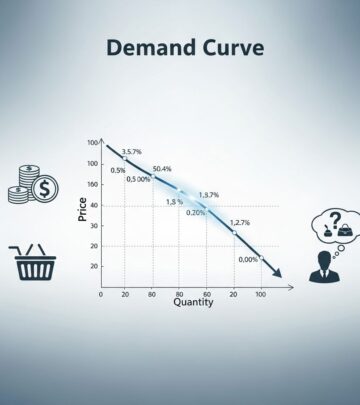
When a demand schedule is plotted on a graph with price on the vertical axis and quantity demanded on the horizontal axis, it creates a demand curve. This graphical representation makes it easier to visualize the relationship between price and quantity demanded. The demand curve typically slopes downward from left to right, illustrating that as price increases, quantity demanded decreases.
The demand curve is a powerful analytical tool that allows economists and businesses to quickly assess how demand responds to price changes, identify elasticity (the sensitivity of demand to price changes), and make strategic decisions about pricing and production.
Frequently Asked Questions
Q: What is the difference between quantity demanded and demand?
A: Quantity demanded refers to the specific amount of a good consumers will purchase at a particular price point, while demand represents the entire relationship between price and the amounts consumers are willing to buy across all price levels. Demand can be shown as a demand schedule or curve.
Q: How do economists create demand schedules?
A: Economists gather and analyze market data through surveys, historical sales records, and market research to determine how quantity demanded responds to different prices. This information is organized into a tabular format to create the demand schedule.
Q: Why is the time period important in a demand schedule?
A: The time period is crucial because consumer behavior and market conditions change over time. Specifying whether data covers a week, month, or year helps contextualize findings and allows for accurate comparisons and forecasting of future demand patterns.
Q: Can a demand schedule ever show a positive relationship between price and quantity?
A: In most normal circumstances, demand schedules show an inverse relationship due to the law of demand. However, in rare cases involving Giffen goods or Veblen goods (luxury items where higher prices signal higher status), the relationship might appear positive.
Q: How do businesses use demand elasticity information from demand schedules?
A: By analyzing how dramatically quantity demanded changes in response to price changes, businesses can determine if a product is elastic (very responsive to price) or inelastic (relatively unresponsive). This information guides pricing decisions and revenue strategies.
References
- Understanding Demand Schedule: Its Concept and Applications — OneMoneyWay. 2025. https://onemoneyway.com/en/dictionary/demand-schedule/
- Demand Schedule — BYJU’S. 2025. https://byjus.com/commerce/demand-schedule/
- Law of Demand — Khan Academy. 2025. https://www.khanacademy.org/economics-finance-domain/microeconomics/supply-demand-equilibrium/demand-curve-tutorial/a/law-of-demand
- Market Demand Schedule — Wikipedia. 2025. https://en.wikipedia.org/wiki/Market_demand_schedule
- Demand Schedule: Definition, Examples and Why It’s Important — Indeed. 2025. https://www.indeed.com/career-advice/career-development/demand-schedule
- What is Demand Function and Demand Schedule? — GeeksforGeeks. 2025. https://www.geeksforgeeks.org/microeconomics/what-is-demand-function-and-demand-schedule/
- Demand Schedule | Definition & Curve – Lesson — Study.com. 2025. https://study.com/academy/lesson/market-demand-schedule.html
Similar Articles








Read full bio of medha deb