Demand Schedule: Definition, Examples & Economics
Master demand schedules: Learn how price and quantity demanded interact in economics.
Understanding Demand Schedules: A Comprehensive Economic Guide
In economics, understanding consumer behavior and market dynamics is essential for businesses and policymakers alike. One of the most fundamental tools used to analyze how consumers respond to price changes is the demand schedule. This economic instrument provides valuable insights into the relationship between product pricing and the quantity consumers are willing to purchase. Whether you’re a business owner trying to determine optimal pricing, an economist analyzing market trends, or a student learning economic principles, demand schedules offer critical information that shapes decision-making across industries.
A demand schedule serves as a foundational building block for economic analysis, helping stakeholders predict consumer behavior and plan for future market conditions. By understanding what a demand schedule is and how to interpret it, you can make more informed decisions about pricing strategies, inventory management, and market positioning.
What Is a Demand Schedule?
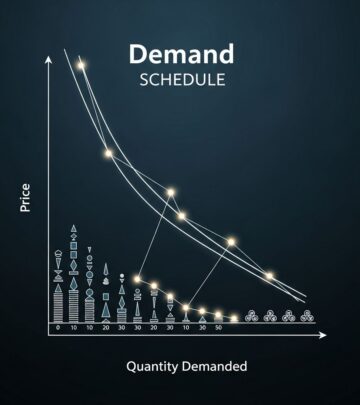
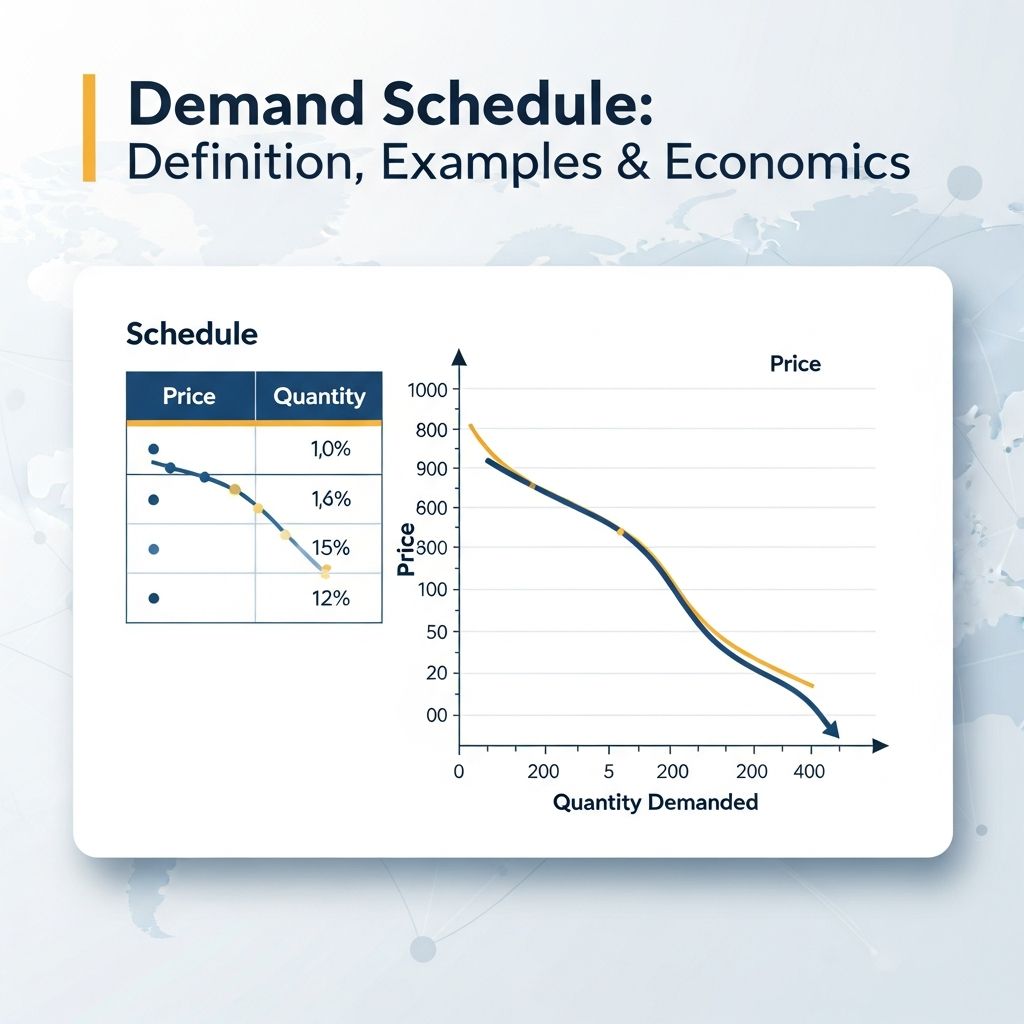
A demand schedule is a table that illustrates the relationship between the price of a product and the quantity that consumers are willing and able to purchase at various price points. Rather than offering a vague understanding of consumer preferences, a demand schedule provides concrete numerical data showing exactly how many units customers will buy at each price level.
At its core, demand represents how much or how many of something customers choose to purchase based on the price of that product. The demand schedule captures this relationship by showing paired values: specific prices alongside the corresponding quantities demanded. Demand schedules typically demonstrate a fundamental economic principle: as the price of a product increases, the quantity demanded decreases, and conversely, as prices fall, consumers tend to purchase more.
This inverse relationship between price and quantity demanded reflects consumer behavior patterns observed consistently across markets. When prices are lower, products become more affordable and accessible to a broader range of consumers, naturally leading to higher demand. When prices rise, some consumers may switch to alternative products, reduce their consumption, or forgo purchases altogether.
Why Demand Schedules Matter
Demand schedules hold significant importance for multiple stakeholders in the economic ecosystem. Economists create demand schedules by gathering and analyzing extensive data to predict the future demand of materials or goods based on their price. Understanding their importance helps explain why businesses and economists invest considerable effort in developing these analytical tools.
Determining Optimal Pricing Strategy
For marketing teams and business administration, demand schedules provide invaluable guidance in determining the most appealing price point for products or services. The demand curve generated from a schedule can reveal critical insights about consumer purchasing behavior at different price levels. By analyzing this curve, companies can identify the price point at which buyers begin to purchase fewer items, potentially reducing overall profits. This insight allows businesses to avoid pricing strategies that inadvertently decrease revenue through excessive price increases.
Calculating Price Elasticity
Elasticity represents the relationship between the price of a product and how much of that product the market demands. Demand schedules enable economists and businesses to calculate elasticity with precision. If price changes significantly affect the quantity demanded, the product exhibits high elasticity, meaning consumers are highly responsive to price changes. Conversely, if quantity demanded remains relatively stable despite price changes, the product is inelastic, indicating consumer demand is less sensitive to pricing. This distinction is crucial for pricing decisions and revenue forecasting.
Predicting Quantity Demands
Demand schedules can be used to predict the amount of material and resources necessary based on the price of a product. If the demand schedule predicts that quantity demanded rises substantially as price decreases, the company may need to secure additional supplies or increase production capacity to meet anticipated demand. This predictive capability helps businesses avoid stockouts or excess inventory situations.
Identifying Other Demand Determinants
While price is the primary variable in a demand schedule, these tools can also help identify if other determinants of demand are affecting quantity demanded. Factors such as consumer trends, income levels, competitive pressures, and market expectations influence demand independently of price. By examining demand schedules over time or across different market segments, analysts can detect whether these other variables are shifting consumer preferences.
Creating Visual Representations
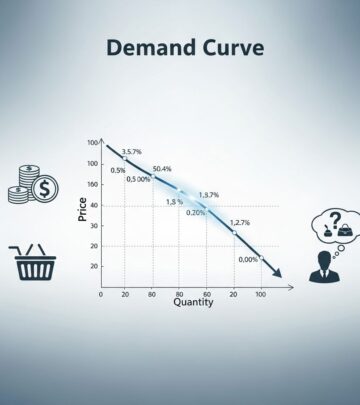
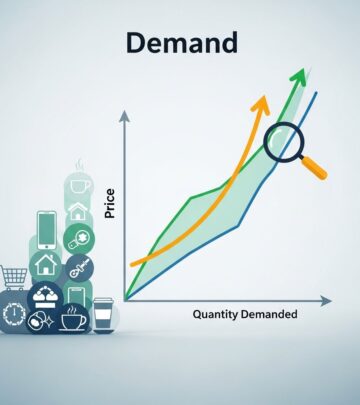
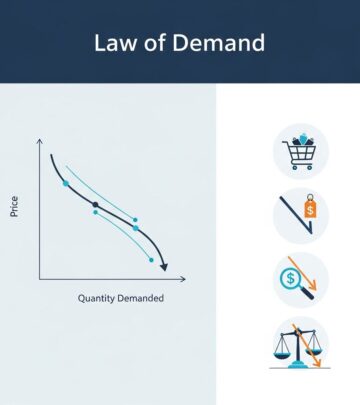
Data from a demand schedule can be transformed into a demand curve, a visual representation that makes the price-consumption relationship immediately apparent. By plotting price on the vertical axis and quantity on the horizontal axis, analysts create a downward-sloping curve that visually demonstrates how quantity demanded changes with price. This graphical representation facilitates communication and understanding among stakeholders who may not be familiar with interpreting raw numerical data.
Key Components of a Demand Schedule
While all demand schedules include information about the price of a product and the corresponding quantity demanded, effective demand schedules often incorporate additional components that provide context and clarity. Understanding what elements constitute a comprehensive demand schedule helps in both creating and interpreting these valuable analytical tools.
Essential Elements
The two fundamental elements present in every demand schedule are the price of the product and the quantity demanded. The price represents how much money consumers must exchange for the product, typically expressed in standard currency units. Quantity demanded indicates how much of the product consumers will purchase at each price point, usually measured in units, pounds, gallons, or other appropriate measures.
Optional but Valuable Components
Beyond the essential elements, demand schedules may include several additional components:
Consumer Groups: Some demand schedules separate the quantity demanded by different consumer segments, such as residential versus commercial buyers, or domestic versus international customers. This segmentation reveals how different market segments respond to price changes.
Detailed Labels: Many demand schedules include descriptive labels for values to provide context. These labels might specify whether prices are per pound, per gallon, per unit, or in other measurements. Similarly, quantity labels clarify the measurement units being used.
Time Information: When demand schedules track specific periods or make future predictions, including month or year information adds temporal context. This helps analysts understand whether they’re examining historical demand patterns or projecting future scenarios.
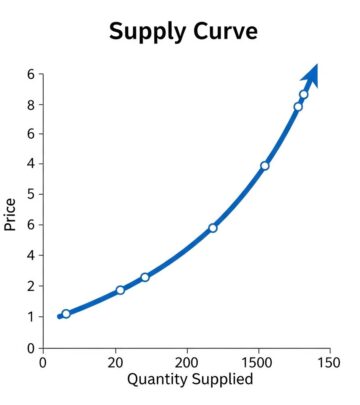
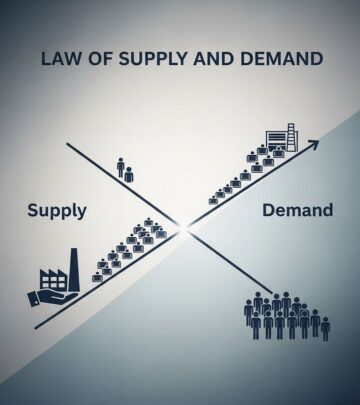
Quantity Supplied: When a demand schedule also includes quantity supplied (the amount sellers are willing to provide at each price), the table becomes a supply and demand schedule. This combined view shows equilibrium points where supply and demand meet.
Real-World Demand Schedule Examples
Example 1: Coffee Beans Market Analysis
Consider the market for coffee beans over a nine-month period. Suppose the price of coffee beans per pound increased by 54.8% during this timeframe. Remarkably, despite this drastic price increase, the quantity of coffee beans purchased only decreased by 2.13%. This scenario demonstrates that coffee beans constitute a relatively inelastic commodity—consumers continue purchasing nearly the same quantity regardless of significant price changes. This might occur because coffee is a staple good for many consumers, or because substitute products are limited. A demand schedule for this market would show the specific monthly prices and corresponding purchase quantities, illustrating this inelastic relationship graphically.
Example 2: Water Bottle Consumer Behavior
Imagine a household shopping for water bottles and finding an attractive bottle priced at $10. At this price point, the consumer decides to purchase one bottle for each household member—perhaps five bottles total. However, as the price increases to $15, the consumer might reduce purchases to three bottles, buying only for the primary users. When the price reaches $20, the purchase quantity drops to two bottles. Finally, at $25 per bottle, the consumer purchases only one bottle for personal use.
| Price per Bottle | Quantity Demanded |
|---|---|
| $10 | 5 bottles |
| $15 | 3 bottles |
| $20 | 2 bottles |
| $25 | 1 bottle |
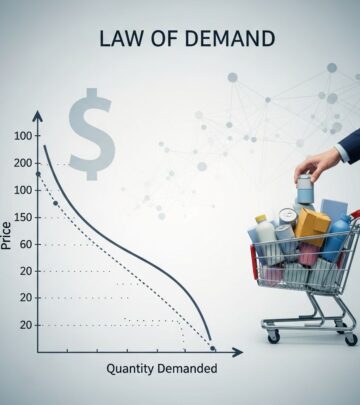
This demand schedule clearly demonstrates the law of demand in action. The water bottle company can use this information to determine optimal pricing by analyzing at what price point revenue is maximized. Sometimes slightly lower prices that increase quantity demanded substantially can generate more total revenue than higher prices with lower quantities.
Example 3: Airline Ticket Pricing Strategy
An airline might prepare separate demand schedules for domestic and international flights, recognizing that these market segments respond differently to price changes. By segmenting their analysis this way, the airline can assess how price changes affect each market independently. Domestic flights might show higher price elasticity if consumers have more alternative travel options, while international flights might demonstrate lower elasticity due to fewer substitutes. This segmented approach allows airlines to optimize pricing for each market segment independently.
The Connection Between Demand Schedules and Demand Curves
While a demand schedule presents information in tabular format, a demand curve provides the same information in graphical form. When you plot the price-quantity pairs from a demand schedule on a graph, with price on the vertical axis and quantity on the horizontal axis, you create a demand curve. This visual representation makes patterns and trends immediately obvious. The downward slope of the demand curve graphically illustrates the law of demand—as price decreases, quantity demanded increases.
Demand curves also help economists and businesses visualize demand elasticity. A steep demand curve indicates inelastic demand (quantity doesn’t change much with price), while a flatter curve suggests elastic demand (quantity changes substantially with price).
How Businesses Use Demand Schedules Practically
Demand schedules aren’t merely theoretical economic tools; they have concrete practical applications in business operations. Companies use demand schedules to inform inventory management decisions, ensuring they stock appropriate quantities at different price points. Marketing departments use them to develop pricing promotions that maximize revenue. Supply chain managers use them to forecast material requirements. Financial analysts incorporate demand schedule data into revenue and profitability projections. Understanding demand schedules thus becomes essential knowledge for professionals across business functions.
Frequently Asked Questions About Demand Schedules
Q: What is the difference between a demand schedule and a supply schedule?
A: A demand schedule shows the quantity consumers are willing to purchase at various prices, while a supply schedule shows the quantity producers are willing to supply at those same prices. Together, they help determine market equilibrium where supply equals demand.
Q: Can a demand schedule change over time?
A: Yes, demand schedules frequently shift due to changes in consumer preferences, income levels, competitor pricing, market expectations, and other economic factors. A shift in the entire demand schedule differs from a movement along an existing demand curve caused by price changes.
Q: How do economists collect data for demand schedules?
A: Economists gather demand schedule data through various methods including historical sales records, consumer surveys, market experiments, and statistical analysis of purchasing patterns across different price points and time periods.
Q: What does elastic versus inelastic demand mean?
A: Elastic demand means quantity demanded is highly responsive to price changes—small price increases cause large decreases in quantity demanded. Inelastic demand means quantity demanded changes little despite price changes. Necessities like coffee or gasoline tend to be inelastic, while luxury items are often elastic.
Q: How can businesses use demand schedules to improve profitability?
A: Businesses can use demand schedules to identify the price point that maximizes revenue, avoid pricing strategies that reduce profit margins unnecessarily, anticipate inventory needs, and develop targeted pricing strategies for different customer segments.
References
- Demand Schedule: Definition, Examples and Why It’s Important — Indeed Career Advice. 2024. https://www.indeed.com/career-advice/career-development/demand-schedule
- Supply and Demand — Wikipedia. 2024. https://en.wikipedia.org/wiki/Supply_and_demand
- Law of Demand Definition and Example — Khan Academy Economics. 2024. https://www.khanacademy.org/economics-finance-domain/ap-macroeconomics/basic-economics-concepts-macro/demand
Similar Articles








Read full bio of Sneha Tete