Demand-Pull Inflation: Definition, Causes, and Effects
Understanding demand-pull inflation: when too much money chases too few goods in the economy.

Demand-Pull Inflation: Definition and Core Concept
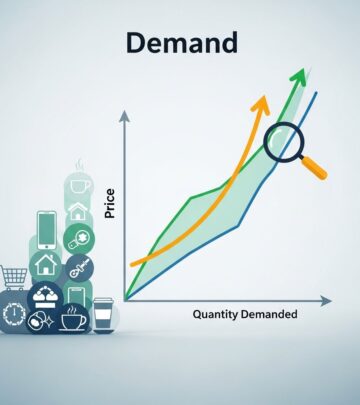
Demand-pull inflation represents a fundamental economic phenomenon characterized by rising price levels when an economy’s aggregate demand exceeds its aggregate supply. Often described using the memorable phrase “too much money chasing too few goods,” this type of inflation occurs during periods of robust economic growth when consumers and businesses have substantial purchasing power but the economy cannot produce enough goods and services to meet demand.
In essence, demand-pull inflation emerges when the total amount of money spent in an economy surpasses the value of goods and services available for purchase. This imbalance creates upward pressure on prices as sellers recognize the scarcity of products relative to buyer interest. Unlike other forms of inflation that stem from production cost increases, demand-pull inflation originates directly from consumer and business demand exceeding productive capacity.
Understanding the Mechanics of Demand-Pull Inflation
The mechanism through which demand-pull inflation develops involves several interconnected economic processes. According to Keynesian economic theory, when employment increases, aggregate demand rises simultaneously. This increased demand prompts businesses to hire more workers to expand output and meet customer needs.
However, due to capacity constraints inherent in any economy, production increases become progressively smaller even as demand continues climbing. As the economy approaches or reaches full employment, further production becomes difficult, and prices begin rising more steeply. This relationship between unemployment and inflation is illustrated by the Phillips curve, which demonstrates the inverse correlation between joblessness and price levels.
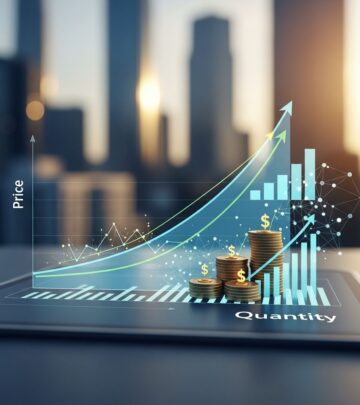
The progression typically unfolds as follows: initial demand increases lead to moderate price increases and rising employment. As the economy tightens and approaches full capacity, subsequent demand increases produce smaller quantity increases but disproportionately larger price increases. This escalating price pressure characterizes demand-pull inflation in an overheating economy.
Primary Causes of Demand-Pull Inflation
Multiple factors can trigger demand-pull inflation. Understanding these causes is essential for policymakers and investors seeking to anticipate inflationary pressures:
Increased Consumption and Investment: When consumers and businesses become increasingly confident about economic prospects, spending accelerates rapidly. This surge in both consumption and investment expands aggregate demand beyond the economy’s productive capacity.
Rising Exports: A sudden increase in export demand, sometimes resulting from currency undervaluation making domestic goods more competitive internationally, can overwhelm domestic production capacity and fuel inflation.
Government Spending: Expansionary fiscal policy involving substantial government expenditures increases overall aggregate demand. When government spending occurs during periods of full employment or near-capacity production, it inevitably drives prices upward.
Inflation Expectations: Perhaps counterintuitively, expectations about future inflation can become self-fulfilling prophecies. When workers and firms anticipate rising inflation, they preemptively increase their wages and prices to protect purchasing power, thereby creating the very inflation they feared.
Excessive Monetary Growth: Central banks expanding the money supply excessively create conditions where abundant money pursues limited goods. This classic recipe for inflation increases the “price” of goods as competition for scarce resources intensifies.
Population Growth: Rising populations increase aggregate demand as more consumers enter the economy, potentially outpacing productive capacity growth.
Distinguishing Demand-Pull from Cost-Push Inflation
While demand-pull inflation originates from excessive aggregate demand, cost-push inflation represents a distinct phenomenon where price and wage increases spread from one economic sector to another due to rising production costs. These represent different aspects of an overall inflationary process.
Demand-pull inflation explains how price inflation initially develops, while cost-push inflation demonstrates why sustained inflation becomes difficult to eliminate once started. Understanding this distinction is crucial for implementing appropriate policy responses, as the two types require different remedies. Demand-pull inflation typically responds to restrictive monetary policy reducing money supply, whereas cost-push inflation may require managing wage-price spirals and supply-side improvements.
Real-World Examples and Historical Context
Demand-pull inflation has manifested throughout economic history. The 1960s witnessed demand-pull inflation in the United States as the government simultaneously pursued the Vietnam War and the Great Society social programs without corresponding tax increases. This expansion of government spending without revenue matching created powerful demand pressures.
The late 1970s and early 1980s presented another instructive example, where accommodative monetary policy combined with supply shocks created stagflation—simultaneously high inflation and unemployment. More recently, post-pandemic stimulus spending in 2021-2022 contributed to demand-pull inflation as economies reopened but production could not immediately match stimulus-fueled demand.
Consequences and Economic Effects
Demand-pull inflation produces several significant economic consequences. First, it erodes purchasing power, meaning money buys fewer goods and services over time. This particularly harms individuals on fixed incomes and savers holding cash.
Second, demand-pull inflation distorts economic decision-making. Businesses may struggle to distinguish between genuine demand increases and inflation-driven price increases, potentially leading to overinvestment in certain sectors.
Third, sustained demand-pull inflation can become embedded in expectations, making it increasingly difficult to control through policy adjustments alone. Workers demand higher wages anticipating continued inflation, and businesses raise prices expecting their input costs to rise, perpetuating inflationary pressures.
Finally, demand-pull inflation may encourage excessive consumption and discourage savings, potentially reducing capital accumulation and long-term productivity growth.
Policy Responses and Monetary Control
Central banks typically respond to demand-pull inflation by implementing restrictive monetary policies. These measures include raising interest rates, which increases borrowing costs and discourages consumption and investment; reducing the money supply through open market operations; and adjusting reserve requirements for financial institutions.
The Federal Reserve and other central banks monitor inflation carefully, typically targeting inflation rates around two percent annually as consistent with healthy economic growth. When demand-pull inflation threatens to exceed target levels, policymakers face the challenging task of restraining demand sufficiently to control inflation without triggering recession.
Fiscal authorities may also employ complementary policies, including reducing government spending or increasing taxes to diminish aggregate demand. However, political considerations often make fiscal restraint more difficult to implement than monetary tightening.
The Phillips Curve Relationship
The Phillips curve, developed by economist A.W. Phillips, illustrates the empirical relationship between unemployment and inflation rates. During demand-pull inflation, the economy moves along the Phillips curve, with declining unemployment rates corresponding to rising inflation. This relationship provides policymakers with a framework for understanding inflation-unemployment tradeoffs.
However, the Phillips curve relationship proved less stable than originally believed, particularly during the 1970s stagflation period when high inflation and high unemployment coexisted—seemingly impossible according to traditional Phillips curve logic. This experience taught economists that inflation expectations significantly influence the inflation-unemployment relationship.
Measuring and Monitoring Demand-Pull Inflation
Economists employ several metrics to identify and measure demand-pull inflation. The Consumer Price Index (CPI) and Producer Price Index (PPI) track price changes across goods and services. Output gaps—the difference between actual and potential GDP—indicate whether demand is excessive relative to supply.
Capacity utilization rates measure what percentage of productive capacity the economy is using. High utilization rates signal potential demand-pull inflation as firms operate near maximum production. Labor market tightness, indicated by low unemployment rates and rising wage growth, provides another signal of demand-pull inflationary pressures.
Long-Term Implications and Economic Stability
While moderate inflation supports economic growth and incentivizes productive investment over hoarding cash, sustained demand-pull inflation undermines economic stability and efficiency. High and volatile inflation rates increase business uncertainty, complicate long-term planning, and reduce the reliability of money as a store of value.
Controlling demand-pull inflation represents a critical responsibility of modern central banks committed to price stability. Successful inflation control requires timely policy adjustments, clear communication about policy intentions, and careful management of inflation expectations. When central banks successfully maintain stable, low inflation rates, they foster conditions for sustainable economic growth and efficient resource allocation.
Frequently Asked Questions
Q: What is the difference between demand-pull inflation and cost-push inflation?
A: Demand-pull inflation occurs when aggregate demand exceeds aggregate supply, driving prices upward due to excessive purchasing power chasing limited goods. Cost-push inflation results from rising production costs—such as higher wages or resource prices—that businesses pass on to consumers through price increases. While demand-pull inflation starts the inflationary process, cost-push inflation explains why inflation persists once initiated.
Q: How does the Phillips curve relate to demand-pull inflation?
A: The Phillips curve illustrates the inverse relationship between unemployment and inflation rates. During demand-pull inflation, as the economy tightens and unemployment falls, inflation rises. This relationship helps policymakers understand the tradeoff between achieving lower unemployment and maintaining price stability during periods of strong aggregate demand.
Q: Can demand-pull inflation occur during recession?
A: Demand-pull inflation typically does not occur during recessions because recessions are characterized by weak aggregate demand and rising unemployment. Demand-pull inflation generally emerges during periods of robust economic growth, full employment, or overheating economies where demand outpaces productive capacity.
Q: How can central banks prevent demand-pull inflation?
A: Central banks can prevent demand-pull inflation by implementing restrictive monetary policies including raising interest rates, reducing the money supply, and tightening credit conditions. These measures increase borrowing costs and discourage consumption and investment, reducing aggregate demand to levels sustainable by productive capacity.
Q: Why does inflation expectation matter in demand-pull inflation?
A: When workers and businesses anticipate rising inflation, they preemptively increase wages and prices, creating self-fulfilling inflation prophecies. Managing inflation expectations through credible central bank communication and consistent policy helps prevent this wage-price spiral from perpetuating demand-pull inflation.
References
- Demand-pull inflation — Wikipedia. Accessed 2025-11-29. https://en.wikipedia.org/wiki/Demand-pull_inflation
- Demand-Pull Inflation — Fiveable. Accessed 2025-11-29. https://fiveable.me/key-terms/principles-econ/demand-pull-inflation
- What Is Demand-Pull Inflation? Learn About Demand-Pull Inflation in Economics With Examples — MasterClass. 2022-10-12. https://www.masterclass.com/articles/what-is-demand-pull-inflation-learn-about-demand-pull-inflation-in-economics-with-examples
- The Determination of Money Wages — Phillips, A.W. Economica, 1958. https://doi.org/10.2307/2550759
- Inflation: Causes and Effects — Board of Governors of the Federal Reserve System. 2024. https://www.federalreserve.gov/
Similar Articles








Read full bio of medha deb