Demand Draft: Definition, Uses, and How It Works
Complete guide to demand drafts: Learn how this secure payment instrument works in banking.

What Is a Demand Draft?
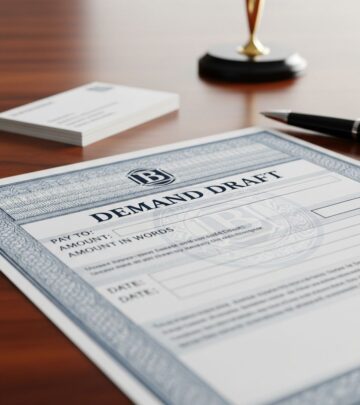
A demand draft (DD) is a negotiable instrument issued by a bank to facilitate the safe transfer of funds from one party to another. Unlike personal cheques written by individual account holders, demand drafts are formal banking instruments created and guaranteed by financial institutions themselves. This fundamental difference makes demand drafts significantly more secure and widely accepted in various commercial and personal transactions.
When a bank issues a demand draft, it directs either another bank or one of its own branches to pay a specified sum of money to a designated payee. The bank customer who requests the demand draft is known as the drawer, while the institution responsible for making the payment is called the drawee. The party receiving the funds is the payee. This three-party structure creates a clear chain of responsibility and accountability throughout the transaction process.
Demand drafts are also commonly referred to as sight drafts because they are payable on demand when presented to the drawee bank. This immediate payment capability distinguishes them from other banking instruments that may have delayed payment conditions or specific maturity dates.
Key Characteristics of Demand Drafts
Demand drafts possess several distinctive features that make them a preferred payment method in numerous situations:
Security and Authenticity
One of the most significant advantages of demand drafts is their enhanced security. A demand draft comes with an official bank stamp and is backed by the issuing bank’s guarantee, providing assurance of authenticity. Unlike cheques, which may bounce if insufficient funds exist in the account, a demand draft cannot be dishonored once issued by the bank. The bank debits the drawer’s account at the time of issuance, ensuring that funds are secured before the instrument is released.
Validity Period
A demand draft remains valid for three months from the date of issuance. This three-month validity window gives the payee adequate time to present the instrument to the drawee bank for payment or deposit. After this period expires, the demand draft cannot be encashed, and the payee would need to request a new one.
Non-Customer Eligibility
Unlike some banking services that require an existing account relationship, it is not compulsory for the drawer to be a bank customer to obtain a demand draft. Any individual or business entity can request a demand draft from a bank by providing the necessary information and paying the associated fees. This accessibility makes demand drafts useful for a wide range of transactions.
Pay-to-Order Nature
Demand drafts can only be made payable to a specified party, known as pay-to-order instruments. This restriction differs from cheques, which can be made payable to bearer, allowing anyone in possession of the cheque to cash it. The pay-to-order characteristic of demand drafts adds an additional layer of security by ensuring that only the named payee can receive the funds.
How Demand Drafts Work
The process of obtaining and using a demand draft is straightforward and can be completed through various channels. Here’s how the demand draft system operates:
Obtaining a Demand Draft
To acquire a demand draft, the drawer must visit a bank branch or use an online application offered by their financial institution. The applicant needs to provide several pieces of information, including their bank account details, the full name and address of the payee, the amount of money to be transferred, the currency, and the reason for payment.
The drawer must then pay the amount specified on the demand draft either in cash or through any other accepted payment method. The drawer may also be required to pay a fee to the bank for issuing the demand draft. Once the payment is received and processed, the bank issues the demand draft with its official stamp and guarantee.
Presentation and Payment
When the payee receives the demand draft, they can present it to their own bank for payment or deposit. The drawee bank then verifies the authenticity of the instrument and immediately credits the funds to the payee’s account or provides cash, depending on the payee’s preference and the bank’s procedures. Because the funds are already secured by the issuing bank, payment is guaranteed upon presentation.
Types of Demand Drafts
Demand drafts come in two primary variations, each serving different purposes in international and domestic transactions:
Sight Demand Drafts
A sight demand draft is payable immediately upon presentation to the drawee bank. This type is commonly used in international commerce when buyers and sellers need to ensure rapid fund transfer. For example, when a seller ships goods to a buyer, the seller may still retain the title to the goods until payment is received. The buyer can use a sight demand draft to transfer funds instantly, allowing the seller to release the title of goods to the buyer and complete the transaction promptly. This immediate payment capability is essential in scenarios where trust between trading parties is limited or when goods need to be transferred quickly.
Time Demand Drafts
A time demand draft comes with a specified payment date in the future and is not payable immediately upon presentation. Instead, it becomes payable only after a certain period has elapsed or specific conditions have been met. Time demand drafts are frequently used in international trade arrangements where parties prefer to stagger payment and delivery. For instance, an importer might issue a time demand draft to an exporter, with payment due 15 days after the goods arrive and the title transfers to the importer. This arrangement gives the importer time to verify that goods meet specifications before committing to payment.
Demand Drafts vs. Other Payment Instruments
| Feature | Demand Draft | Cheque | Money Order |
|---|---|---|---|
| Issued By | Bank | Account Holder | Bank or Postal Service |
| Payment Guarantee | Guaranteed by Bank | Dependent on Account Balance | Guaranteed |
| Revocation | Cannot be Revoked | Can be Stopped/Cancelled | Difficult to Revoke |
| Bearer Option | Pay-to-Order Only | Can be Bearer or Order | Pay-to-Order |
| Validity | 3 Months | 6 Months (varies by country) | 1-3 Years |
| Cost | Moderate Fee | Minimal or Free | Higher Fee |
While demand drafts, cheques, and money orders all serve as payment instruments, they differ significantly in their issuance, security, and acceptability. Demand drafts are issued and backed directly by banks, making them more secure than personal cheques, which depend on the drawer’s account balance. Many educational institutions and large organizations prefer demand drafts over cheques because of their superior security. Unlike cheques, which can often be stopped or cancelled by the drawer, demand drafts are difficult to revoke once issued, providing greater certainty to the payee.
Common Uses of Demand Drafts
Demand drafts serve numerous practical purposes in both personal and commercial contexts:
Educational Institutions
One of the most common applications of demand drafts is in educational settings. Many colleges and universities require demand drafts for admission fees, tuition payments, and other educational expenses. The widespread acceptance of demand drafts in academic institutions reflects their reputation as a secure and verifiable payment method. Educational institutions prefer demand drafts because they eliminate the risk of cheque fraud or bounced payments.
International Commerce
In international trade and cross-border transactions, demand drafts play a crucial role in facilitating payments between buyers and sellers who may not have established relationships or may be located in different countries. Both sight and time demand drafts are used extensively in import-export businesses to manage payment risks and coordinate with goods delivery.
Utility and Service Payments
Utility companies, credit card companies, insurance agencies, and telemarketers frequently use demand drafts for recurring payments and customer transactions. These organizations often use remotely created cheques (a variant of demand drafts in some jurisdictions) authorized by customers through phone or internet to collect payments automatically.
Online and Remote Purchases
Demand drafts can be used when purchasing items online or over the phone. They provide a secure alternative to credit cards or other payment methods when remote transactions are involved. The security features of demand drafts make them attractive for high-value purchases where buyers want assurance of payment legitimacy.
Bank-to-Bank Transfers
Demand drafts are primarily orders of payment by one bank to another bank, making them ideal for transferring large sums between financial institutions. This differs from cheques, which are typically orders of payment from an account holder to their bank.
Advantages and Disadvantages
Advantages
Security and Reliability: Demand drafts are guaranteed by the issuing bank, ensuring that funds are available and payment will be made. This eliminates the risk of insufficient funds or fraud commonly associated with personal cheques.
Wide Acceptance: Due to their secure nature, demand drafts are accepted by organizations that may not accept cheques. This makes them essential for many formal transactions, particularly in educational and commercial sectors.
Irrevocability: Once issued, a demand draft cannot be revoked or stopped, providing certainty to the payee and eliminating disputes over payment cancellation.
Official Documentation: Demand drafts come with official bank stamps and documentation, making them suitable for formal and official records.
Disadvantages
Fraud Susceptibility: In some jurisdictions, remotely created demand drafts can be susceptible to fraud because they do not require the drawer’s signature. Scammers need only bank account information to potentially create unauthorized demand drafts. However, banks typically monitor for suspicious activity and deny unauthorized instruments.
Limited Flexibility: Demand drafts cannot be revoked or modified once issued, which can be problematic if payment details change or the transaction is cancelled.
Processing Time: While generally fast, demand drafts may take a few business days to clear, unlike immediate electronic transfers.
Fees: Banks charge fees for issuing demand drafts, making them more expensive than personal cheques for routine payments.
Fraud Protection and Dispute Resolution
To protect consumers and drawers from fraudulent demand drafts, various regulatory frameworks have been established. In the United States, the Federal Reserve issued regulations that shift liability for unauthorized demand draft losses from the drawer’s bank to the payee’s bank. This regulatory protection helps drawers avoid paying for fraudulent demand drafts and encourages banks to implement robust security measures.
Most banks provide a dispute window of approximately 90 days from the time a demand draft is deposited to allow the drawer to challenge unauthorized or fraudulent transactions. The specific timeline and protection mechanisms vary depending on the bank and the country where the transaction occurs. Customers are encouraged to report suspicious demand draft activity immediately to their banks to initiate investigations and potential reversal of unauthorized payments.
Frequently Asked Questions
Q: What is the difference between a demand draft and a cheque?
A: A demand draft is issued and guaranteed by a bank, whereas a cheque is written by an account holder. Demand drafts cannot be revoked and are accepted more widely, while cheques can be stopped by the drawer and may bounce if insufficient funds exist. Demand drafts can only be made payable to a specified party, whereas cheques can be made payable to bearer.
Q: How long is a demand draft valid?
A: A demand draft is valid for three months from the date of issuance. After this period, the demand draft cannot be encashed, and a new one must be requested if payment is still needed.
Q: Can anyone obtain a demand draft?
A: Yes, it is not compulsory to be a bank customer to obtain a demand draft. Any individual or business entity can request a demand draft from a bank by providing necessary information and paying the required fee.
Q: What are the main uses of demand drafts?
A: Demand drafts are commonly used for educational payments, international commerce, utility bill payments, online purchases, and transfers between bank accounts. They are widely accepted by educational institutions, utility companies, insurance agencies, and credit card companies.
Q: How do I obtain a demand draft?
A: You can visit your bank branch or use an online application. You’ll need to provide your bank account information, the payee’s name and address, the amount, currency, and payment reason. You must pay the specified amount plus any applicable fees before the demand draft is issued.
Q: Are demand drafts susceptible to fraud?
A: Remotely created demand drafts without signatures can be vulnerable to fraud if someone obtains your bank account information. However, banks monitor for suspicious activity and typically deny unauthorized demand drafts. Federal regulations also protect drawers by shifting fraud liability to the payee’s bank.
Q: What is the difference between sight and time demand drafts?
A: A sight demand draft is payable immediately upon presentation to the bank, while a time demand draft is payable only after a specified period or when certain conditions are met. Sight drafts are used for immediate transactions, while time drafts are common in international trade.
References
- Demand Draft — Wikipedia. Accessed November 2025. https://en.wikipedia.org/wiki/Demand_draft
- Demand Draft – Overview, Characteristics, Types — Corporate Finance Institute. Accessed November 2025. https://corporatefinanceinstitute.com/resources/wealth-management/demand-draft/
- Uniform Commercial Code Article 3: Negotiable Instruments — National Conference of Commissioners on Uniform State Laws. https://www.uniformlaws.org/
- Federal Reserve Regulation CC: Availability of Funds and Collection of Checks — Board of Governors of the Federal Reserve System. https://www.federalreserve.gov/
Similar Articles








Read full bio of medha deb