Demand: Definition, Economics, and Market Impact
Understanding demand in economics: How consumer desire drives market prices and production decisions.

What Is Demand?
Demand is a fundamental economic principle that represents the quantity of a good or service that consumers are willing and able to purchase at various price levels during a specific period. It is one of the most critical concepts in microeconomics and serves as a cornerstone for understanding how markets function, prices are determined, and resources are allocated in an economy.
In essence, demand reflects the relationship between consumer desire and their purchasing power. While many consumers may want a luxury car, only those with sufficient income and willingness to pay can create actual demand. This distinction between wanting something and having the economic means to purchase it is crucial in understanding how real market demand operates.
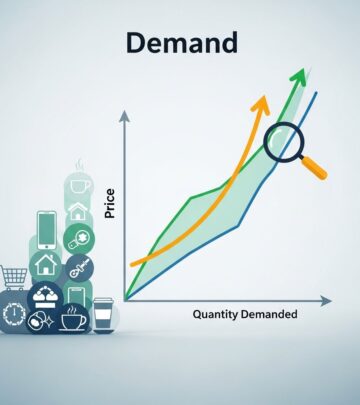
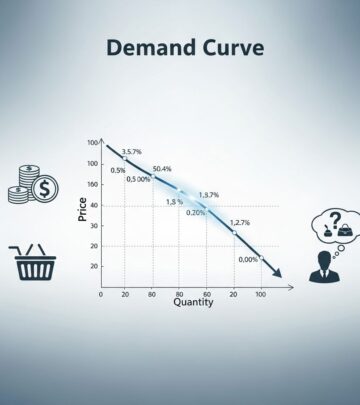
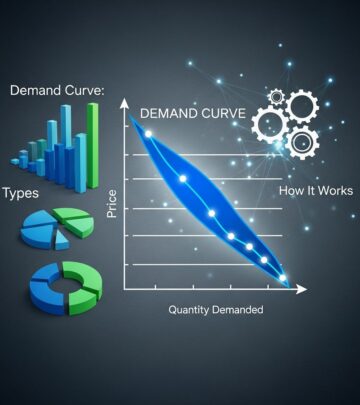
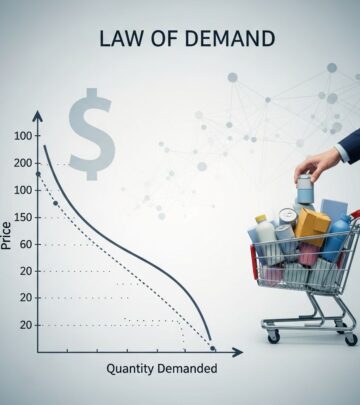
Demand is typically represented graphically as a downward-sloping curve on a price-quantity diagram, demonstrating the inverse relationship between price and quantity demanded. As prices increase, the quantity demanded generally decreases, and vice versa. This relationship is so consistent and predictable that economists have formalized it as the Law of Demand.
The Law of Demand
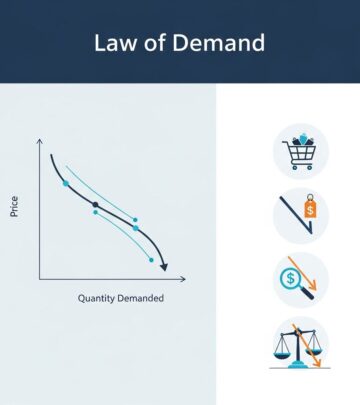
The Law of Demand is one of the most fundamental principles in economics. It states that, all else being equal, as the price of a good or service increases, the quantity demanded decreases, and as the price decreases, the quantity demanded increases. This inverse relationship between price and quantity demanded forms the basis of demand theory.
This law holds true across nearly all goods and services in most market conditions. The intuition behind the Law of Demand is relatively straightforward: consumers respond rationally to price changes. When prices are lower, consumers find it more affordable to purchase the good, so they buy more of it. Conversely, when prices rise, the good becomes less affordable, and consumers reduce their purchases or switch to alternative products.
The Law of Demand applies to most goods, though there are rare exceptions called Giffen goods and Veblen goods, where the normal demand relationship may not hold due to unique circumstances or psychological factors related to status and prestige.
Understanding Market Demand vs. Individual Demand
It is important to distinguish between individual demand and market demand. Individual demand refers to the quantity of a good that a single consumer is willing to purchase at different price points. Market demand, conversely, is the aggregate quantity demanded by all consumers in a market at various price levels.
Market demand is derived by horizontally adding all individual demand curves. This aggregation is crucial for businesses and policymakers because market demand determines the overall attractiveness of a product category and helps estimate the total addressable market for a particular good or service.
Understanding both levels of demand is essential for businesses to make informed production and pricing decisions, and for policymakers to forecast economic trends and implement appropriate economic policies.
Factors That Affect Demand
While price is the most immediate factor affecting quantity demanded, numerous other variables influence demand for a good or service. These factors can cause the entire demand curve to shift, representing a change in demand rather than merely a movement along the existing demand curve.
Consumer Income
Changes in consumer income have a significant impact on demand. For normal goods, an increase in consumer income typically leads to increased demand, while a decrease in income reduces demand. However, for inferior goods (products consumers buy less of as their income increases), the relationship is reversed. For example, as household income rises, families may purchase more high-quality food and less instant ramen.
Preferences and Tastes
Consumer preferences and tastes directly influence which products they choose to buy and in what quantities. Changes in cultural trends, fashion, health consciousness, or technological preferences can cause significant shifts in demand. Social media influence, celebrity endorsements, and health trends can dramatically alter consumer preferences for specific products.
Price of Related Goods
The prices of substitute goods and complementary goods affect demand for a product. Substitute goods are products that can be used in place of each other, such as butter and margarine. When the price of a substitute increases, demand for the original good typically rises. Complementary goods are products typically consumed together, such as hot dogs and hot dog buns. When the price of a complement increases, demand for the primary good may decrease.
Consumer Expectations
Expectations about future prices, income, and economic conditions influence current purchasing decisions. If consumers expect prices to rise in the future, they may increase current demand to avoid paying higher prices later. Conversely, if consumers anticipate economic hardship or job loss, they may reduce their current spending.
Number of Consumers
Changes in the size of the consumer population directly affect market demand. Population growth, migration, aging demographics, and changes in target market size all influence the overall demand for goods and services. A growing population typically increases market demand for most products.
Advertising and Marketing
Effective advertising campaigns can shift consumer preferences and increase demand for products. Marketing efforts that build brand awareness, communicate product benefits, or create emotional connections with consumers can substantially increase demand independent of price changes.
Demand Curves and Demand Schedules
Economists use demand curves and demand schedules to visualize and analyze the relationship between price and quantity demanded. A demand schedule is a table showing the quantity demanded at different price levels, while a demand curve is the graphical representation of this relationship.
| Price per Unit | Quantity Demanded |
|---|---|
| $10 | 1,000 units |
| $8 | 1,500 units |
| $6 | 2,000 units |
| $4 | 2,500 units |
| $2 | 3,000 units |
The demand curve typically slopes downward from left to right, illustrating the inverse relationship between price and quantity demanded. The steepness of the demand curve indicates the price sensitivity of consumers, also known as price elasticity. A steep curve indicates that quantity demanded is relatively insensitive to price changes (inelastic demand), while a flatter curve suggests consumers are more responsive to price changes (elastic demand).
Demand Elasticity
Price elasticity of demand measures how responsive consumers are to price changes. It is calculated as the percentage change in quantity demanded divided by the percentage change in price. Understanding elasticity helps businesses determine optimal pricing strategies and predict the impact of price changes on total revenue.
Elastic Demand: When elasticity is greater than 1, demand is elastic, meaning consumers are very responsive to price changes. A small price decrease can lead to a large increase in quantity demanded, potentially increasing total revenue.
Inelastic Demand: When elasticity is less than 1, demand is inelastic, meaning consumers are relatively unresponsive to price changes. Products with few substitutes, such as prescription medications or utilities, typically have inelastic demand.
Unit Elastic Demand: When elasticity equals 1, the percentage change in quantity demanded equals the percentage change in price, resulting in constant total revenue regardless of price changes.
Demand vs. Supply: Market Equilibrium
Demand and supply are two forces that work together to determine market prices and quantities. While demand represents consumer willingness to purchase, supply represents producer willingness to sell. The intersection of the demand curve and supply curve determines the market equilibrium price and quantity.
At equilibrium, the quantity demanded equals the quantity supplied, and there is no tendency for price to change. When price is above equilibrium, a surplus exists, putting downward pressure on price. When price is below equilibrium, a shortage exists, putting upward pressure on price. These forces naturally drive the market back toward equilibrium.
Types of Demand
Economists recognize several different types of demand based on various characteristics and market conditions:
- Effective Demand: The quantity of goods or services that consumers actually purchase at prevailing market prices, backed by purchasing power.
- Latent Demand: The desire for products that are not yet available or not sufficiently supplied, representing future potential market opportunities.
- Derived Demand: Demand for intermediate goods that arises from demand for final consumer goods. For example, demand for steel is derived from demand for automobiles.
- Joint Demand: Demand for complementary products that are typically consumed together, such as peanut butter and jelly.
- Competitive Demand: Demand for substitute products where consumers must choose between alternatives.
Real-World Applications of Demand Analysis
Understanding demand has practical applications across various industries and business contexts. Companies use demand forecasting to plan production schedules, manage inventory, and set appropriate pricing levels. Retailers analyze demand patterns to stock appropriate quantities of products. E-commerce platforms use demand data to recommend products to consumers.
Policymakers use demand analysis to understand economic trends, forecast tax revenues, and implement monetary and fiscal policies. Central banks monitor demand trends to make decisions about interest rates. Governments analyze demand for public services to allocate budgets efficiently.
Shifts in Demand vs. Movements Along the Demand Curve
It is crucial to distinguish between a shift in the demand curve and a movement along the demand curve. A movement along the curve occurs when only the price of the good changes, causing a change in quantity demanded. This is consistent with the Law of Demand and does not change the demand curve itself.
A shift in the demand curve occurs when factors other than price change, causing an increase or decrease in demand at every price level. For example, a successful advertising campaign might shift the entire demand curve to the right, indicating increased demand at all price points. Similarly, a decrease in consumer income might shift the demand curve to the left.
Frequently Asked Questions
Q: What is the difference between demand and quantity demanded?
A: Demand refers to the entire relationship between price and quantity, typically represented by the demand curve. Quantity demanded refers to the specific amount consumers will purchase at a particular price point. Changes in price cause movements along the demand curve (changes in quantity demanded), while other factors cause shifts in the entire demand curve (changes in demand).
Q: How does income elasticity affect demand?
A: Income elasticity of demand measures how demand changes in response to changes in consumer income. For normal goods, income elasticity is positive—demand increases as income increases. For inferior goods, income elasticity is negative—demand decreases as income increases. Luxury goods typically have higher income elasticity than necessities.
Q: Can demand ever be perfectly inelastic?
A: Yes, demand can be perfectly inelastic when quantity demanded does not change regardless of price changes. This typically occurs for essential goods with no substitutes, such as life-saving medications. In these cases, consumers will purchase the same quantity even if prices increase significantly.
Q: How do businesses use demand forecasting?
A: Businesses use demand forecasting to predict future customer demand, which helps them plan production capacity, manage inventory levels, set pricing strategies, and allocate marketing resources effectively. Accurate demand forecasting reduces excess inventory and stockouts.
Q: What causes a decrease in demand?
A: Demand can decrease due to several factors including reduced consumer income, changing preferences away from the product, increased prices of complementary goods, decreased number of consumers in the market, negative advertising or reviews, or consumer expectations of price decreases in the future.
References
- Principles of Economics — N. Gregory Mankiw. Cengage Learning. 2020. https://www.cengage.com/
- Microeconomic Theory — Andreu Mas-Colell, Michael D. Whinston, and Jerry R. Green. Oxford University Press. 1995. https://global.oup.com/
- The Economics of Consumer Behavior — U.S. Bureau of Labor Statistics. U.S. Department of Labor. 2024. https://www.bls.gov/
- International Organization for Standardization: Consumer Behavior Standards — ISO (International Organization for Standardization). 2023. https://www.iso.org/
- Economic Research: Market Demand Analysis — Federal Reserve Economic Data (FRED). Federal Reserve Bank of St. Louis. 2024. https://fred.stlouisfed.org/
Similar Articles








Read full bio of medha deb