Demand Curve: Definition, Types, and How It Works
Master demand curves: Learn definitions, types, and economic principles that drive market behavior.
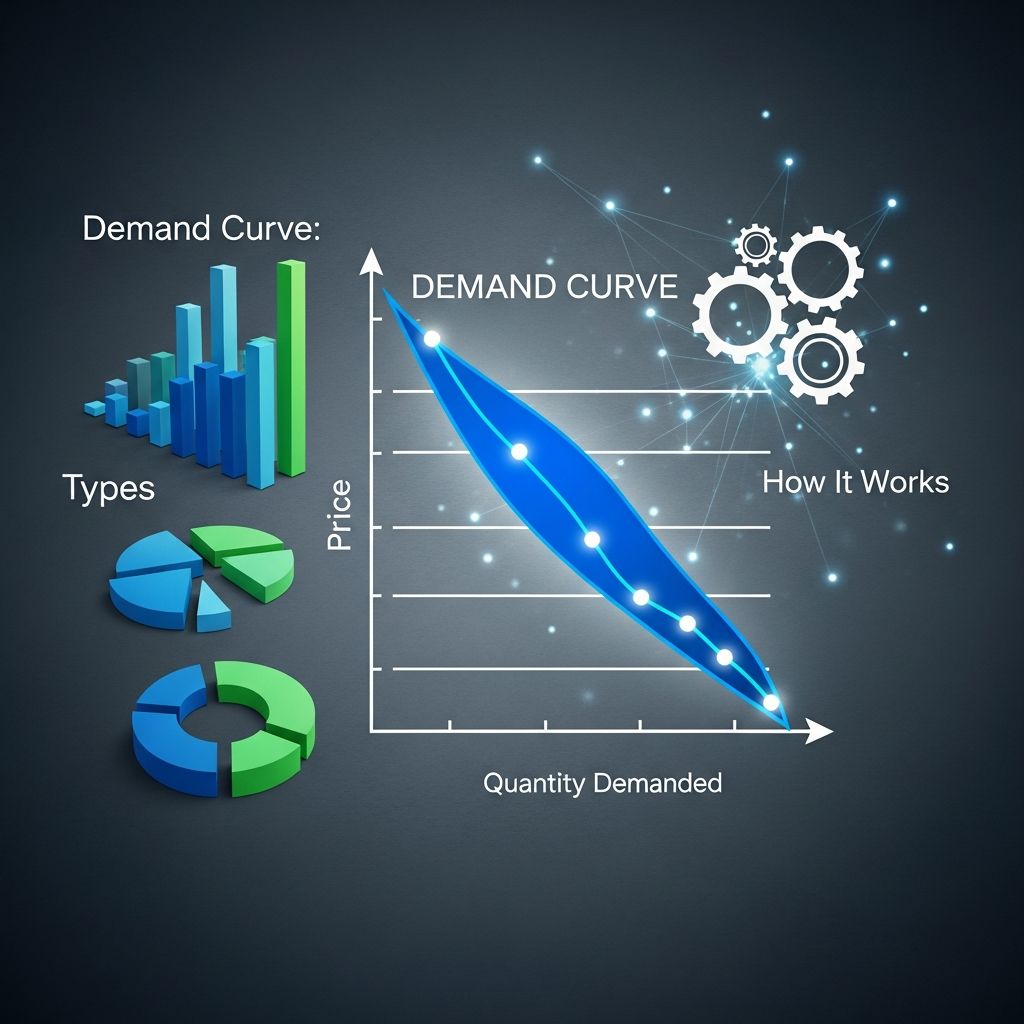
The demand curve stands as one of the most fundamental concepts in economics, serving as a visual representation of consumer behavior and market dynamics. Understanding how demand curves work provides valuable insights into pricing strategies, inventory management, and overall market equilibrium. This comprehensive guide explores the definition, types, characteristics, and practical applications of demand curves in modern economics.
What Is a Demand Curve?
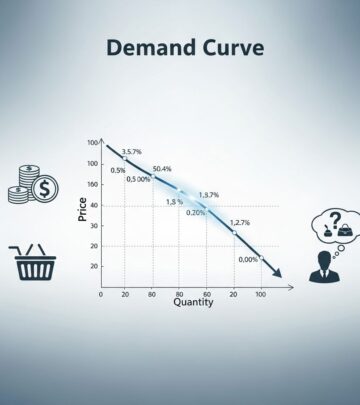
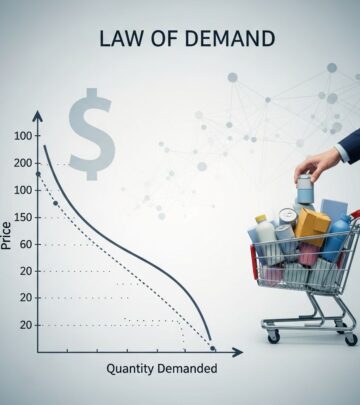
A demand curve is a graphical representation that illustrates the relationship between the price of a product or service and the quantity that consumers are willing to purchase at various price points. The curve is plotted on a two-dimensional graph with price displayed on the vertical axis (y-axis) and quantity demanded positioned on the horizontal axis (x-axis). This visual tool enables economists, businesses, and analysts to understand consumer purchasing patterns and predict market behavior.
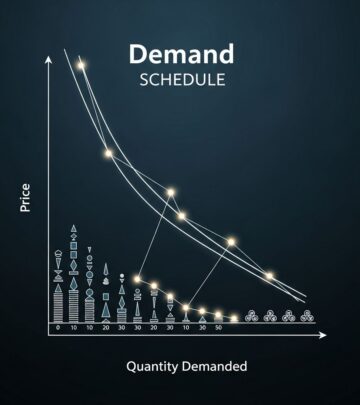
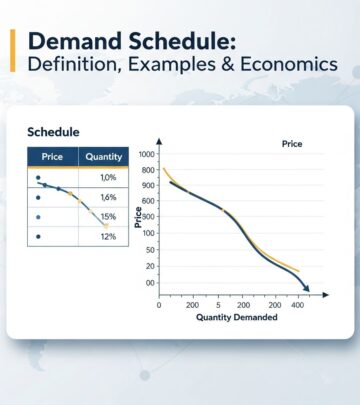
The demand curve is fundamentally based on the demand schedule, which is a table or list showing exactly how many units of a good or service consumers will purchase at different price levels. Once this data is collected, it is transformed into a graphical format to create the demand curve. The relationship depicted in this graph follows the law of demand, which establishes that as the price of a product increases, the quantity demanded typically decreases, and conversely, as the price falls, consumers demand more of the product.
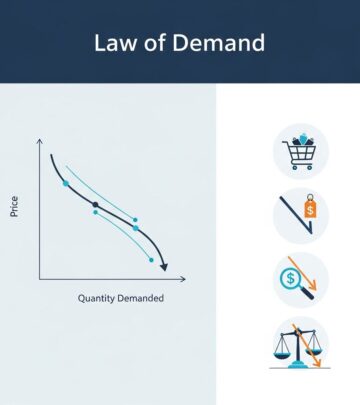
With few exceptions, demand curves slope downward from left to right because price and quantity demanded maintain an inverse relationship. This downward slope visually demonstrates a fundamental economic principle: consumers respond to price changes by adjusting their purchasing behavior. When prices are lower, people can afford to buy more, and they demonstrate a greater willingness to purchase. When prices rise, consumers often reduce their purchases or seek alternative products.
Understanding the Law of Demand
The law of demand forms the foundation upon which demand curves are built. This economic principle states that there is an inverse relationship between the price of a commodity and the quantity demanded by consumers. In practical terms, this means that as prices increase, consumers typically reduce their purchases, while price decreases lead to increased consumption.
This principle applies to most typical goods and services in market economies. The reasoning behind this relationship is intuitive: higher prices represent an increased cost relative to buyers’ incomes, typically leading consumers to spend less on nonessential goods and luxury expenses such as dining out, entertainment, or travel, preferring instead to allocate their limited resources to basic needs like housing, food, and utilities.
Understanding the law of demand helps businesses anticipate how consumers will respond to price changes and allows policymakers to predict the effects of taxation or subsidy programs on consumption patterns.
Types of Demand Curves
Demand curves exist in multiple categories, each serving different analytical purposes depending on the scope of analysis and the market being examined. Understanding these distinctions is crucial for accurate market analysis and strategic planning.
Individual Demand Curve
An individual demand curve represents the relationship between the quantity of a product that a single consumer is willing to buy and its price. This curve shows the purchasing behavior of one household or buyer as prices change. Individual demand curves help businesses and marketers understand customer preferences and price sensitivity at the consumer level. For example, if a consumer purchases 5 units of a product at $10 per unit but only 3 units when the price rises to $15, the individual demand curve would reflect this price-quantity relationship specifically for that consumer.
Market Demand Curve
A market demand curve aggregates all individual demand curves within a particular market to show the relationship between price and the total quantity demanded by all consumers in that market. The market demand curve is obtained by horizontally adding up the individual demand curves of all consumers in the industry. This curve represents the total market size and overall consumer behavior patterns. For instance, if Market A has 1,000 consumers and Consumer B has 500 consumers at a given price point, the market demand curve would reflect a quantity of 1,500 units at that price. The market demand curve typically has a steeper slope than individual curves because it represents the aggregate effect of all buyers responding to price changes.
Firm Demand Curve
A firm demand curve, also referred to as the demand curve facing a firm or the market demand curve to which a firm is exposed, represents the relationship between the number of customers willing to buy a particular product from a specific enterprise and its price. This curve is particularly relevant in competitive markets where multiple firms produce similar products. The slope of a firm’s demand curve is less steep than the slope of the industry’s demand curve, reflecting the fact that individual firms typically have less control over total market demand than the entire industry combined.
Demand Curve Shape and Characteristics
Demand curves can take different shapes depending on the nature of the product and consumer behavior patterns. Understanding these shapes provides insights into market dynamics and elasticity.
Linear Demand Curves
Linear demand curves appear as straight lines on a graph, typically sloping downward from left to right. This shape demonstrates a consistent inverse relationship between price and quantity demanded. For products with linear demand curves, each unit increase in price results in a proportional decrease in quantity demanded. Linear curves are commonly used in economic models because they are relatively simple to analyze and understand mathematically.
Nonlinear Demand Curves
Nonlinear demand curves take the form of curved lines rather than straight lines. These curves typically begin with a steep decline at high prices and gradually flatten out as they move toward lower prices. This shape reflects realistic consumer behavior at price extremes: when prices are very high, even small price reductions may cause significant increases in quantity demanded, while at very low prices, demand may approach saturation levels where price reductions have minimal impact on purchasing behavior.
Demand Curve Convexity
Demand curvature is classified based on how it bends in relation to the origin point of the graph. A demand curve is considered convex (with respect to the origin) if it bends upward, while it is considered concave if it bends downward. Demand curves are generally considered to be convex in accordance with the principle of diminishing marginal utility, which suggests that as consumers acquire more units of a product, each additional unit provides less additional satisfaction than the previous unit.
What Shifts the Demand Curve?
While price changes cause movements along an existing demand curve, other factors can cause the entire demand curve to shift either left or right. These shifts represent changes in the underlying demand for a product independent of price changes. Understanding what causes these shifts is essential for businesses planning inventory, production, and pricing strategies.
Income Changes
Changes in consumer income levels significantly impact demand. For normal goods, higher income levels lead to an outward shift of the demand curve (to the right), indicating increased demand at every price point. Conversely, lower income levels lead to an inward shift (to the left), reducing demand. This relationship reflects the reality that wealthier consumers generally purchase more goods and services. During economic expansions, rising incomes typically push demand curves outward, while recessions cause inward shifts as consumer purchasing power declines.
Population and Market Size Changes
Changes in population directly affect market demand. A growing population or expanding market results in an outward shift of the demand curve, while a shrinking population causes an inward shift. A larger market size results from having more consumers, which increases total demand for products. This principle explains why businesses often focus on markets with growing populations as sources of growth opportunity.
Complementary and Substitute Goods
The prices of related products significantly influence demand curves. When the price of complementary goods decreases, the demand curve shifts outward because consumers purchase more of the original product in combination with the cheaper complement. For example, if the price of hot dog buns decreases significantly, the demand for hot dogs typically increases. Conversely, if the price of complementary goods increases, the demand curve shifts inward. With substitute goods, the relationship reverses: when the price of substitute goods decreases, demand for the original product decreases, shifting the curve inward.
Changes in Consumer Preferences and Tastes
Shifts in consumer preferences and tastes directly impact demand curves. When a product becomes more fashionable or desirable, the demand curve shifts outward as more consumers want to purchase it at each price point. Conversely, when preferences shift away from a product, the demand curve shifts inward. These preference changes can result from marketing campaigns, cultural trends, health information, or technological innovations that make competing products more attractive.
Consumer Expectations
Expectations about future prices, incomes, and product availability influence current demand. If consumers expect prices to rise in the future, they may increase current purchases, shifting the demand curve outward. If they expect prices to fall, they may postpone purchases, shifting the curve inward. Similarly, expectations of future income changes affect current consumption patterns.
Government Regulations and Policies
Government interventions can shift demand curves through various mechanisms. New regulations, taxes, subsidies, or bans on certain products affect consumer behavior and demand. For instance, subsidies for electric vehicles can shift the demand curve for EVs outward by making them more affordable, while cigarette taxes shift the demand curve for cigarettes inward by making them more expensive.
Movement Along vs. Shifts of the Demand Curve
An important distinction in demand curve analysis is the difference between movements along the curve and shifts of the entire curve. This distinction is critical for accurate economic analysis and decision-making.
Movements along the demand curve occur exclusively when prices change. These movements follow the law of demand: price increases cause downward movements along the curve (decreased quantity demanded), while price decreases cause upward movements (increased quantity demanded). For example, if a product originally priced at $6 results in a quantity demanded of 2,000 units, and the price increases to $8, the quantity demanded might decrease to 1,500 units. This change represents a movement along the existing demand curve, not a shift of the entire curve.
Shifts of the demand curve occur when factors other than price change, such as income, preferences, or population. These shifts change the relationship between price and quantity demanded at all price points. An outward shift indicates increased demand at every price level, while an inward shift indicates decreased demand at every price level. Shifts fundamentally change the demand curve itself, creating a new relationship between price and quantity.
Price Elasticity of Demand
The elasticity of demand varies depending on the price level and product characteristics. The elasticity of demand generally varies depending on the price. For linear demand curves, demand is inelastic (less responsive to price changes) at high prices and elastic (more responsive to price changes) at low prices, with unitary elasticity occurring somewhere between these extremes.
Products with inelastic demand experience smaller percentage changes in quantity demanded in response to price changes, typically because consumers view them as necessities with few substitutes. Products with elastic demand experience larger percentage changes in quantity demanded from price changes because consumers have readily available alternatives or view them as discretionary purchases.
Demand Curves in Market Equilibrium
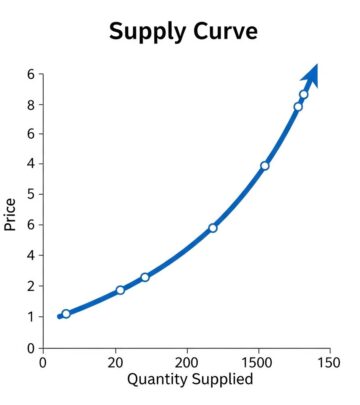
Demand curves are frequently combined with supply curves to determine market equilibrium, which represents the balance point where the quantity supplied equals the quantity demanded. The equilibrium price is the point where these curves intersect, representing the price at which sellers together are willing to sell the same amount as buyers together are willing to buy. At this price, there is no surplus or shortage in the market, and the market is considered to be in balance.
Understanding demand curves helps analysts and businesses predict what equilibrium price and quantity will prevail in different market conditions and how changes in demand factors will affect these equilibrium outcomes.
Practical Applications of Demand Curves
Demand curves have numerous practical applications in business and economics:
- Pricing Strategy: Businesses use demand curves to determine optimal pricing strategies that maximize revenue or profit.
- Inventory Management: Understanding demand helps businesses maintain appropriate inventory levels at different price points.
- Sales Forecasting: Demand curves enable businesses to forecast sales at various price points and market conditions.
- Marketing Decisions: Demand information guides marketing investments and promotional strategies.
- Policy Analysis: Policymakers use demand curves to analyze the effects of taxes, subsidies, and regulations on consumer behavior.
Frequently Asked Questions
Q: What is the primary reason demand curves slope downward?
A: Demand curves slope downward because of the law of demand, which establishes an inverse relationship between price and quantity demanded. As prices increase, consumers demand less of a product, and as prices decrease, consumers demand more.
Q: How do individual demand curves differ from market demand curves?
A: Individual demand curves show the quantity demanded by a single consumer at various prices, while market demand curves aggregate all individual demand curves to show total market demand. Market demand curves are created by horizontally adding individual demand curves.
Q: What causes a demand curve to shift rather than move along the curve?
A: Demand curves shift when factors other than price change, such as consumer income, population, preferences, expectations, or prices of related goods. Price changes alone cause movements along the existing curve, not shifts.
Q: How do businesses use demand curves for pricing decisions?
A: Businesses analyze demand curves to understand price elasticity and consumer responsiveness to price changes. This information helps them set prices that maximize revenue while considering cost structures and competitive positioning.
Q: What is the relationship between demand curves and market equilibrium?
A: Demand curves are combined with supply curves to find market equilibrium, the point where the quantity supplied equals quantity demanded. The equilibrium price is where these curves intersect.
Q: Can demand curves have positive slopes?
A: In rare cases, demand curves can slope upward for Giffen goods (inferior goods where quantity demanded increases as price increases) or Veblen goods (luxury goods where higher prices increase demand). However, the vast majority of goods follow the normal downward-sloping demand curve pattern.
References
- Demand Curve — Britannica Money. 2024. https://www.britannica.com/money/demand-curve
- Demand Curve – Definition, Example, How it Works — Corporate Finance Institute. 2024. https://corporatefinanceinstitute.com/resources/economics/demand-curve/
- Demand Curve — Wikipedia. 2024. https://en.wikipedia.org/wiki/Demand_curve
- Law of Demand — Khan Academy. 2024. https://www.khanacademy.org/economics-finance-domain/microeconomics/supply-demand-equilibrium/demand-curve-tutorial/a/law-of-demand
- The Demand Curve — Marginal Revolution University. 2024. https://mru.org/courses/principles-economics-microeconomics/demand-curve-shifts-definition
Similar Articles








Read full bio of medha deb