Deflation vs. Disinflation: What’s Better for the Economy?
Understanding the critical difference between deflation and disinflation and their economic impacts.
Inflation has remained stubbornly high in recent years, leaving consumers feeling the impact on their wallets at every turn. However, while it might seem intuitive to wish for prices to decrease, economists warn that we should be careful what we wish for. The terms deflation and disinflation are often confused, yet they represent fundamentally different economic scenarios with vastly different consequences for households, businesses, and the broader economy.
Understanding the distinction between these two phenomena is crucial for making informed financial decisions and grasping the current economic landscape. Both deflation and disinflation involve changes in the rate of inflation, but they operate in opposite directions and carry very different implications for economic health and consumer welfare.
Understanding the Key Definitions
What is Disinflation?
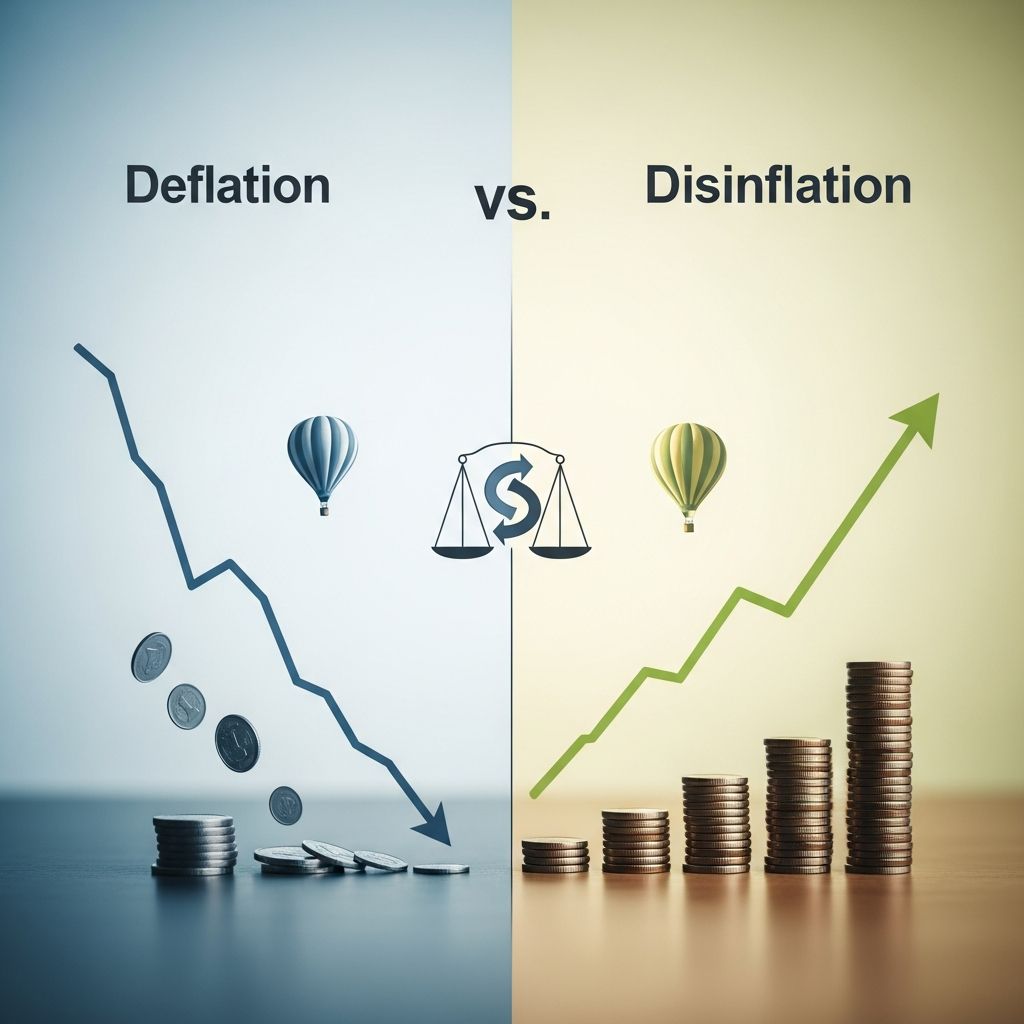
Disinflation is a decrease in the rate of inflation. In simpler terms, disinflation occurs when prices continue to rise, but they rise at a slower pace than they did previously. It’s an important distinction: prices are still going up, but the rate at which they’re increasing has slowed considerably.
Think of it this way: if inflation was running at 9% one year and drops to 3% the next year, that’s disinflation. The prices of goods and services haven’t stopped increasing, but they’re increasing much more gradually. This is precisely what the U.S. experienced throughout much of 2023, as the Federal Reserve’s aggressive interest rate hikes began to cool the economy.
In fact, the Federal Reserve has been actively working to engineer disinflation as part of its monetary policy strategy. After inflation peaked at 9.1% in June 2022—a rate many would prefer to forget—it slowed dramatically to around 3.5% by early 2024. This disinflationary period has been the Fed’s primary goal in attempting to restore price stability without triggering a severe economic downturn.
What is Deflation?
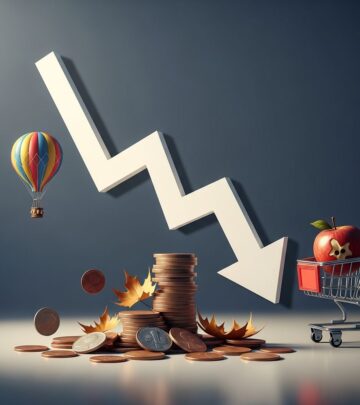
Deflation is a sustained decrease in the price level of goods and services. Unlike disinflation, deflation means that prices are actually declining across the economy. Consumer goods cost less than they did the previous month or year, creating a situation where the inflation rate turns negative.
While deflation might sound appealing to consumers facing high prices, it typically signals serious economic problems. Deflation usually occurs during recessions or severe economic contractions, when there’s a collapse in demand, an excess supply of goods and services, or a significant reduction in money and credit throughout the economy.
As Jared Bernstein, chair of the U.S. Council of Economic Advisers, explained to Money magazine, analysts don’t want to see broad deflation across the economy “because the only way that happens is if the bottom falls out”. This sobering assessment underscores why economists treat deflation as a serious threat rather than a welcome development.
The Crucial Difference Between Deflation and Disinflation
To truly understand these concepts, let’s examine a practical example. Consider a basket of goods worth $10 in Year 1, with an inflation rate of 4%.
| Scenario | Inflation Rate | Price Change | New Price |
|---|---|---|---|
| Inflation | 5% | Prices increase | Higher than $10 |
| Disinflation | 3% | Prices increase slightly | Slightly higher than $10 |
| Deflation | -1% | Prices decrease | Lower than $10 |
The critical insight here is that during both inflation and disinflation scenarios, prices increase and inflation rates remain positive. However, in the disinflation scenario, prices increase less than they would under higher inflation. In the deflation scenario, by contrast, prices actually fall, and the inflation rate becomes negative.
Why Disinflation is Generally Preferable
Economic Stability and Growth
Disinflation is typically preferable to deflation because it allows the economy to function more smoothly while still addressing price stability concerns. Although the process of disinflation can be uncomfortable for some segments of the population, the outcome of a disinflationary period is generally beneficial for the broader economy.
When inflation gradually declines through disinflation, businesses can adjust their pricing strategies and cost structures more gradually. Workers can eventually see their wage increases outpace price increases, improving real purchasing power over time. This gradual adjustment process helps prevent the severe shocks that deflation can create.
Protection for Vulnerable Households
One of the most important benefits of disinflation concerns its impact on low- and fixed-income households. High inflation disproportionately harms these groups because they spend a larger share of their income on essential goods like food and energy. When they face rising prices, they often cannot reduce spending on necessities, creating significant financial strain.
Disinflation helps reduce this burden by slowing the rate at which prices increase. While prices may still rise, the pace is manageable enough that these households can gradually adjust their budgets without falling into deeper financial hardship. This makes disinflation a more equitable path toward price stability than either high inflation or deflation.
The Dangers and Risks of Deflation
The Deflationary Spiral
Deflation poses serious risks to economic health because it typically coincides with recessions and severe economic downturns. Lower prices might seem attractive to consumers, but deflation creates perverse incentives throughout the economy that can be deeply damaging.
When companies face falling prices and declining revenues, they often respond by cutting wages or reducing their workforce to maintain profitability. This creates a devastating cycle: lower wages mean consumers spend less, which leads to even lower prices and more layoffs. This deflationary spiral can quickly turn a mild recession into a severe economic crisis.
Increased Real Debt Burden
Deflation also makes debt more burdensome. When prices fall, the real value of money increases, which means debts become harder to pay off. For households with mortgages, car loans, or credit card debt, deflation effectively increases the burden of their obligations. Similarly, businesses with significant debt loads may find themselves unable to service their obligations as revenues decline.
Historical Lessons: The Great Recession
We have unfortunate historical examples of how deflation can unfold. During the Great Recession from 2008 to 2009, the U.S. economy experienced all three phenomena in sequence. From April to November 2008, inflation was present. From July to November 2008, disinflation occurred as inflation rates declined but prices continued rising. Finally, from March to October 2009, deflation took hold as prices actually fell.
This progression demonstrates the danger: without careful management, disinflation can deteriorate into deflation if economic conditions worsen significantly. The economy doesn’t naturally stabilize at a desirable point but rather swings like a pendulum, often overshooting in one direction or another.
Recent Economic Context and Monetary Policy
Thanks to the Federal Reserve’s aggressive rate hikes over recent years, massive price increases have abated considerably. However, the path from high inflation to price stability has not been straightforward. Some economists have even coined the term “immaculate disinflation” to describe the scenario where inflation falls significantly without triggering a severe recession.
While Federal Reserve Chair Jerome Powell has been somewhat cautious about declaring victory on inflation, the disinflationary trend has been clear. The challenge facing policymakers is maintaining this disinflationary momentum without allowing the economy to slide into deflation, which would present an entirely different set of problems.
What This Means for Your Financial Planning
Understanding the difference between deflation and disinflation has practical implications for personal financial planning. During disinflation, real interest rates on savings can become more attractive as nominal rates don’t fall as quickly as inflation. Bonds and fixed-income investments may perform better as interest rates potentially stabilize or decline.
Conversely, if deflation were to emerge, traditional investment strategies might need adjustment. Bonds would likely outperform equities, and the focus would shift toward capital preservation rather than growth. Deflation would also reduce the burden of cash holdings, making cash a more attractive asset class than during inflationary periods.
Frequently Asked Questions
Q: Can the Federal Reserve engineer a soft landing with disinflation?
A: The Fed’s goal is to achieve “immaculate disinflation”—reducing inflation without triggering a severe recession. While challenging, disinflation provides a better pathway than deflation for achieving price stability while maintaining economic growth and employment.
Q: Why is deflation considered dangerous if prices are falling?
A: While falling prices might seem appealing, deflation typically signals an economic crisis with collapsing demand. It leads to business failures, job losses, wage cuts, and increased real debt burdens, creating a destructive deflationary spiral.
Q: How does disinflation affect workers and consumers?
A: Disinflation is generally more favorable for consumers and workers because prices still rise but more gradually. This is especially beneficial for low-income households and workers on fixed incomes, as it reduces the financial strain from high inflation.
Q: Is the U.S. currently experiencing disinflation or deflation?
A: As of recent reports, the U.S. is experiencing disinflation, with inflation rates declining from their 2022 peaks but remaining positive. This is the scenario most economists prefer.
Q: Could disinflation turn into deflation?
A: Yes, if economic conditions worsen significantly, disinflation can deteriorate into deflation. This is why central banks must carefully balance their monetary policies to maintain stable prices without triggering an economic crisis.
References
- Inflation, Disinflation and Deflation: What Do They All Mean? — Federal Reserve Bank of St. Louis. 2023-08. https://www.stlouisfed.org/open-vault/2023/august/explaining-inflation-disinflation-deflation
- Inflation, Deflation, and Stagflation Explained — Charles Schwab. https://www.schwab.com/learn/story/inflation-deflation-and-stagflation-explained
- Disinflation vs Deflation: How Are They Different? — Modern Wealth Management. https://www.modwm.com/disinflation-vs-deflation-how-are-they-different/
- Deflation vs. Disinflation: What’s Better for the Economy? — Money Magazine. https://money.com/deflation-vs-disinflation/
- Exploring Disinflation: Which Items Have Decreased in Cost? — Currency Transfer. 2023. https://www.currencytransfer.com/blog/expert-analysis/exploring-disinflation-deflation-2023
Similar Articles








Read full bio of Sneha Tete