Deflation: Definition, Effects, and Economic Impact
Understanding deflation: causes, consequences, and implications for the economy.
What is Deflation?
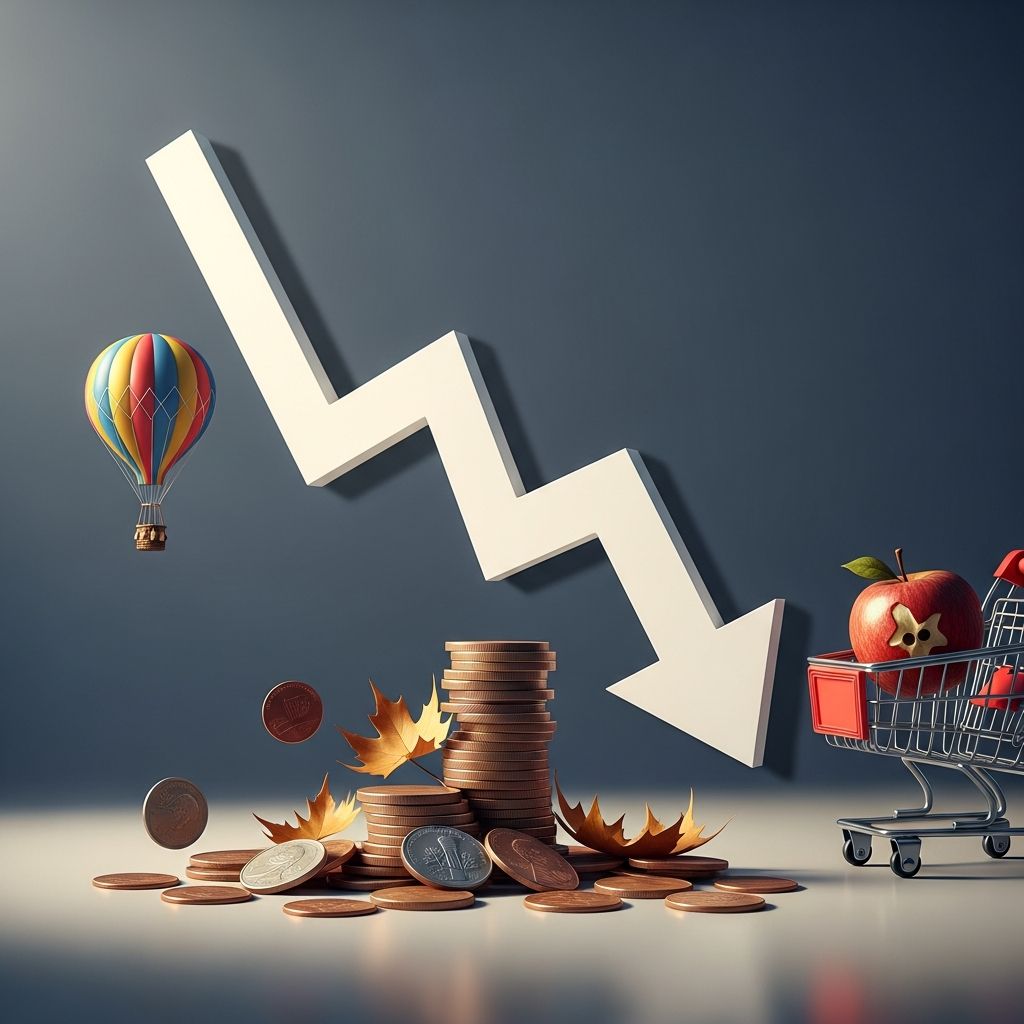
Deflation is an economic condition characterized by a sustained and widespread decline in the general price level of goods and services within an economy over a period of time. Unlike inflation, which represents rising prices, deflation involves falling prices across the board. This decrease in the price level means that the purchasing power of money increases—consumers can buy more goods and services with the same amount of currency. While lower prices might initially seem beneficial to consumers, deflation can have profound negative consequences for economic growth, employment, and financial stability.
Deflation is typically measured through changes in the Consumer Price Index (CPI), Producer Price Index (PPI), and the Gross Domestic Product (GDP) deflator. When these indices show consistent declines over consecutive quarters, economists classify the situation as deflationary. It’s important to distinguish deflation from disinflation, which is simply a slowdown in the rate of inflation rather than a decline in prices themselves.
Key Characteristics of Deflation
- Sustained Price Decline: Prices fall across multiple sectors and categories, not just isolated industries
- Increased Purchasing Power: Consumers can purchase more goods with the same amount of money
- Negative Inflation Rate: The overall price level shows negative growth over time
- Widespread Economic Impact: Affects consumers, businesses, investors, and government finances simultaneously
- Often Associated with Economic Weakness: Frequently occurs during recessions or periods of economic contraction
Causes of Deflation
Deflation can stem from several economic factors and conditions. Understanding these causes is essential for policymakers attempting to prevent or mitigate deflationary pressures.
Decreased Aggregate Demand
One of the primary causes of deflation is a significant reduction in overall demand for goods and services throughout the economy. When consumers and businesses reduce spending due to economic uncertainty, loss of confidence, or reduced purchasing power, businesses respond by lowering prices to stimulate sales. If this demand reduction becomes persistent and widespread, it can trigger deflationary trends.
Increased Aggregate Supply
Deflation can also result from a substantial increase in the supply of goods and services without a corresponding increase in demand. Technological improvements, increased productivity, and enhanced efficiency in production can lead to excess supply. When businesses compete in an oversupplied market, they typically reduce prices to maintain market share, contributing to deflation.
Monetary Contraction
When the money supply in an economy contracts significantly, there is less currency available for transactions. This reduction in the money supply can lead to lower prices as there is insufficient money to purchase goods at existing price levels. Monetary contraction can occur due to restrictive central bank policies, banking system failures, or financial crises that reduce credit availability.
Technological Innovation
While technological advancement generally benefits the economy, rapid technological changes can sometimes contribute to deflation. When new technologies dramatically improve productivity and reduce production costs, prices for goods and services can fall significantly. The digital revolution and e-commerce expansion have contributed to price declines in various sectors.
Effects of Deflation on the Economy
Deflation presents numerous challenges and consequences for different economic participants. Understanding these effects helps explain why central banks generally work to avoid sustained deflation.
Impact on Consumers
While falling prices initially appear advantageous for consumers, the broader effects are often harmful. Deflation creates incentives for consumers to delay purchases in anticipation of even lower prices in the future. This postponement of spending reduces demand further, creating a vicious cycle. Additionally, if wage growth fails to keep pace with price declines, real purchasing power may not improve significantly.
Impact on Businesses
Deflation threatens business profitability and growth. Companies face declining revenues as customers delay purchases and prices fall. The reduction in profit margins makes it difficult for businesses to invest in expansion, research and development, and employee compensation. Many businesses struggle to service debt when revenues decline, leading to potential defaults and bankruptcies.
Impact on Employment
Deflation typically leads to deteriorating employment conditions. As business revenues decline, companies reduce their workforce to cut costs. Unemployment rises, exacerbating the economic contraction. Furthermore, even employed workers may face wage reductions or reduced hours as businesses attempt to maintain profitability in a deflationary environment.
Impact on Debt Burdens
One of the most damaging effects of deflation is the real increase in debt burdens. When prices fall, the real value of existing debt increases. Borrowers who took out loans when prices were higher now face obligations that represent a larger portion of their income or assets. This increased debt burden can lead to defaults and financial instability throughout the economy.
Impact on Investment
Deflation discourages investment and capital formation. Investors become reluctant to commit resources to new projects when future returns are uncertain and potentially declining. The real return on debt instruments increases, making them more attractive relative to equity investments, which can starve productive sectors of capital.
Historical Examples of Deflation
Throughout economic history, several notable periods of deflation have occurred, each with distinct characteristics and consequences.
The Great Depression (1929-1939)
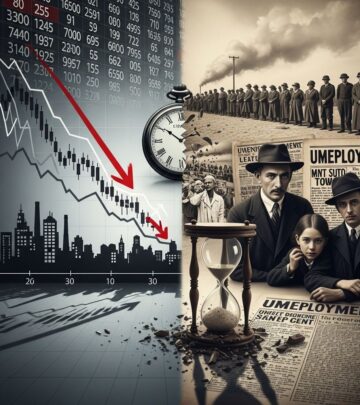
The most severe deflationary episode in modern history occurred during the Great Depression. Prices fell dramatically—the U.S. Consumer Price Index declined approximately 25% from 1929 to 1933. This period of extreme deflation, combined with bank failures and monetary contraction, created unprecedented economic hardship, with unemployment reaching approximately 25% at its peak.
Japanese Lost Decade (1990s-2000s)
Japan experienced prolonged deflation following the burst of its asset bubble in the early 1990s. Despite efforts by the Bank of Japan to stimulate the economy, prices continued to decline for nearly two decades. This period demonstrated the difficulty of escaping deflationary traps and the limitations of conventional monetary policy in combating deflation.
Post-2008 Financial Crisis
Following the global financial crisis of 2008-2009, many developed economies experienced deflationary pressures. While outright deflation was largely avoided through aggressive monetary and fiscal policy interventions, many countries experienced extended periods of very low inflation, approaching deflationary levels.
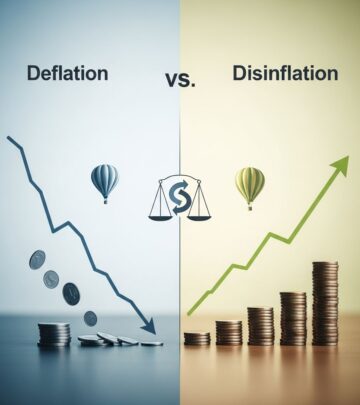
Deflation vs. Disinflation: Understanding the Difference
It is crucial to distinguish between deflation and disinflation, as these terms are sometimes confused despite representing different economic conditions.
| Aspect | Deflation | Disinflation |
|---|---|---|
| Definition | Sustained decline in overall price levels | Slowdown in the rate of inflation |
| Price Direction | Prices falling | Prices still rising, but more slowly |
| Severity | Generally more harmful to the economy | Often viewed as more manageable |
| Policy Response | Requires significant intervention | May require modest policy adjustments |
| Example | Prices down 2% year-over-year | Inflation down from 5% to 3% year-over-year |
How Central Banks Combat Deflation
Central banks employ various tools and strategies to prevent or counteract deflationary pressures in the economy.
Monetary Policy Tools
- Reducing Interest Rates: Lower interest rates make borrowing cheaper, encouraging spending and investment
- Quantitative Easing: Central banks purchase long-term securities to increase money supply and lower long-term interest rates
- Forward Guidance: Communicating future policy intentions helps influence expectations and behavior
- Negative Interest Rates: Some central banks implement negative rates to encourage spending rather than hoarding currency
Fiscal Policy Interventions
Governments may implement fiscal stimulus through increased government spending or tax cuts to boost aggregate demand. These measures aim to increase purchasing power and encourage economic activity, offsetting deflationary pressures.
Deflation FAQs
Q: Is deflation always bad for the economy?
A: While mild deflation might seem beneficial due to lower prices, sustained deflation typically harms economic growth, employment, and financial stability. The negative effects usually outweigh any short-term consumer benefits.
Q: Can deflation occur during economic growth?
A: Yes, though rare. Deflation can occur alongside economic growth when productivity improvements and supply increases outpace demand growth. However, most deflationary episodes occur during recessions.
Q: How does deflation differ from recession?
A: A recession is a period of declining economic activity with negative GDP growth. Deflation is a decline in the price level. They often occur together, but deflation can persist after recessions end, and recessions can occur without deflation.
Q: What is the relationship between deflation and the money supply?
A: Deflation is often associated with a contracting money supply. The quantity theory of money suggests that a reduction in the money supply relative to economic output leads to lower prices.
Q: How do consumers behave during deflation?
A: Consumers often delay purchases anticipating further price declines, reduce spending overall, and seek to hold cash rather than invest. This behavior exacerbates deflationary pressures.
Q: Can deflation be beneficial to savers?
A: While savers benefit from increased purchasing power of their cash holdings, the broader economic damage caused by deflation typically outweighs individual benefits. Savings can also be threatened by financial instability and defaults during deflationary periods.
Key Takeaways
- Deflation represents a sustained decline in the general price level of goods and services, increasing the purchasing power of money
- Primary causes include decreased aggregate demand, increased aggregate supply, monetary contraction, and technological improvements
- Deflation negatively impacts consumers through delayed spending, harms businesses through reduced profitability, increases unemployment, and raises real debt burdens
- Historical examples include the Great Depression, Japan’s Lost Decade, and post-2008 deflationary pressures
- Central banks actively work to prevent deflation through monetary policy tools and fiscal authorities through spending measures
- Understanding deflation is essential for investors, businesses, and policymakers navigating complex economic conditions
References
- Consumer Price Index Summary — U.S. Bureau of Labor Statistics. 2024. https://www.bls.gov/news.release/cpi.nr0.htm
- Monetary Policy and Deflation — Board of Governors of the Federal Reserve System. 2024. https://www.federalreserve.gov/monetarypolicy.htm
- The Great Depression: Overview and Analysis — U.S. History Archives, Library of Congress. 2023. https://www.loc.gov/collections/
- Japan’s Lost Decade: Lessons and Policy Implications — International Monetary Fund (IMF) Working Papers. 2023. https://www.imf.org/external/pubs/
- Understanding Deflation and Its Economic Consequences — National Bureau of Economic Research (NBER). 2024. https://www.nber.org/
- Producer Price Index: Methodology and Calculation — U.S. Bureau of Labor Statistics. 2024. https://www.bls.gov/ppi/
Similar Articles








Read full bio of medha deb