Deferred Revenue: Definition, Examples, and Accounting
Master deferred revenue accounting: Learn how to record advance payments and manage unearned income properly.

What Is Deferred Revenue?
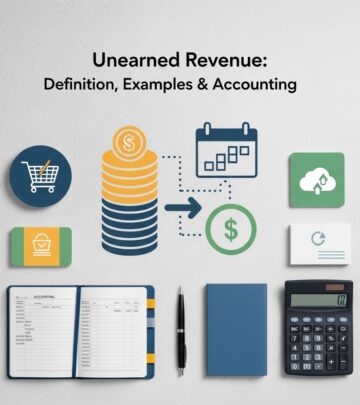
Deferred revenue, also known as unearned revenue, represents payment received by a company in advance for goods or services that have not yet been delivered or completed. This financial concept is fundamental to accrual accounting, where revenue recognition depends on the delivery of products or services rather than the timing of cash receipt. When a customer pays upfront for something they will receive later, the company receiving that payment cannot immediately recognize it as revenue on the income statement.
Under accrual accounting principles, revenue is only considered “earned” when the promised product or service has been delivered to the customer. During the time lag between receiving payment and fulfilling the company’s obligation, that payment is recorded as a liability on the balance sheet rather than as revenue. This ensures that financial statements accurately reflect the company’s actual performance and obligations to its customers.
Understanding Deferred Revenue as a Liability
Deferred revenue is classified as a liability on the balance sheet because it represents an outstanding obligation. The company owes the customer something—whether that’s a product, service, or access to a digital platform. Until that obligation is fulfilled, the prepayment cannot be counted as income. Think of it like holding a deposit: the money doesn’t belong to the company yet because the other party hasn’t received what they paid for.
The liability classification serves an important accounting purpose. It distinguishes between cash that truly belongs to the company (revenue) and cash that represents a promise to deliver value in the future. This distinction is crucial for:
- Accurately representing financial position to investors and stakeholders
- Complying with accrual accounting standards
- Ensuring proper tax reporting and compliance
- Calculating key financial metrics and ratios
Deferred revenue can be classified as either a current liability (if the obligation will be fulfilled within one year) or a long-term liability (if fulfillment will take longer than one year). This distinction is important for tax purposes and influences how much income can be included on financial statements in any given period.
Common Examples of Deferred Revenue
Deferred revenue appears across many industries and business models. Understanding these examples helps illustrate how the concept works in practice.
Subscription Services
One of the most prevalent examples is subscription-based businesses. When a customer pays for an annual newspaper subscription, monthly streaming service, or yearly software license upfront, the entire payment is recorded as deferred revenue initially. Then, as the customer receives the service each month or week, a proportional amount is recognized as earned revenue. For example, if Netflix receives a $120 annual subscription payment in January, it recognizes approximately $10 in revenue each month as the customer has access to the streaming service.
Gift Cards
Unused gift cards represent another classic example. When a retail store sells a $50 gift card, it receives $50 in cash but cannot recognize it as revenue until the customer redeems the card for merchandise. The $50 sits on the balance sheet as deferred revenue, and only when the customer uses the gift card is it recognized as sales revenue.
Service Agreements and Software Maintenance
Software companies often bundle products with service agreements that include future upgrades or support. When a customer purchases software with a three-year maintenance and upgrade agreement for $1,000, the company cannot recognize the entire amount as immediate revenue. Instead, it recognizes revenue proportionally as it provides the software upgrades and support services over the three-year period.
Insurance Premiums
Insurance companies receive premium payments upfront but must recognize revenue gradually as coverage is provided over time. An annual insurance policy paid upfront creates deferred revenue that is recognized monthly as the insurer provides coverage protection.
Advance Rent Payments
Property managers and landlords often receive rent payments in advance. While they receive cash upfront, the revenue is recognized as the tenant occupies the property each month, not when the payment is received.
How Deferred Revenue Is Recorded
The accounting treatment of deferred revenue follows specific journal entry procedures. When payment is initially received, the company debits cash (increasing assets) and credits deferred revenue (increasing liabilities) on the balance sheet. This entry reflects that cash has been received but no revenue has been earned yet.
As the company fulfills its obligation by delivering products or services, it makes additional journal entries to recognize earned revenue. These entries include a debit to deferred revenue (decreasing the liability) and a credit to revenue (increasing income on the income statement). The process continues systematically until the entire obligation has been fulfilled and the deferred revenue account reaches zero.
Step-by-Step Revenue Recognition Process
For services or products delivered over time, companies typically follow these steps:
- Allocate the total transaction price: Calculate the total amount expected from the customer and distribute it among each performance obligation (such as software, services, and training in a bundled offering).
- Record the initial payment: When cash is received, debit cash and credit deferred revenue.
- Recognize revenue systematically: As obligations are fulfilled, use methods such as straight-line recognition or percentage-of-completion to determine how much revenue to recognize each period.
- Adjust financial statements: Record the appropriate entries to move amounts from deferred revenue to recognized revenue.
- Monitor liability reduction: Track the deferred revenue balance to ensure it decreases appropriately as obligations are met.
Illustrative Example: Software Subscription
Consider a practical example to demonstrate how deferred revenue works in real-world accounting. Suppose a company receives $1,200 from a customer on August 1 for a 12-month software subscription.
On August 1, when payment is received:
- Cash increases by $1,200
- Deferred revenue (liability) is recorded as $1,200
- Revenue recognized on the income statement: $0
On August 31, after one month of service is delivered:
- Revenue recognized: $100 ($1,200 ÷ 12 months)
- Deferred revenue liability decreases by $100
- Deferred revenue balance: $1,100
This pattern continues each month. By the end of 12 months:
- Total revenue recognized: $1,200
- Deferred revenue balance: $0
- Retained earnings increase by $1,200
- Cash remains at $1,200
Impact on Financial Statements
Deferred revenue significantly affects how a company’s financial statements present its financial condition and performance. On the balance sheet, deferred revenue appears as a liability, either classified as current (if fulfilled within 12 months) or long-term (if fulfilled beyond 12 months). This classification affects important financial ratios and metrics that investors and creditors use to evaluate company health.
On the income statement, only the earned portion of revenue is recognized. This ensures that reported revenue accurately reflects the value delivered to customers during the period. A company might receive significant cash inflows from advance payments but show lower revenue recognition if those services are still being delivered in future periods.
Tax Implications of Deferred Revenue
For tax purposes, revenue is recognized and taxed only when it is earned, not when cash is received. This aligns with accrual accounting rules and the matching principle. Companies cannot accelerate tax liability by recognizing advance payments as immediate revenue. Instead, they follow the same revenue recognition timeline for both book accounting and tax purposes, avoiding the temptation to overstate profits through premature revenue recognition.
Cash Flow Benefits and Operational Considerations
From a cash flow perspective, deferred revenue creates significant advantages. It provides positive cash flow as customers pay upfront, giving companies cash to invest in operations or growth before they’ve incurred all the costs to deliver the promised goods or services. Subscription-based businesses like Netflix and Spotify benefit tremendously from this model, maintaining strong cash positions by collecting revenue in advance.
However, this cash flow advantage comes with important considerations. Companies must plan for delivering promised goods or services, which may require varying amounts of future spending. Understanding the difference between revenue and profit is crucial because deferred revenue boosts cash but doesn’t immediately boost profits. A company must have the operational capacity and resources to fulfill its obligations without creating cash flow problems later.
Deferred Revenue vs. Accrued Revenue
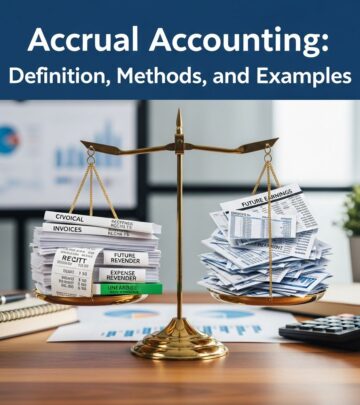
It’s important to distinguish between deferred revenue and accrued revenue, as they represent opposite situations. Deferred revenue occurs when a company receives cash but hasn’t earned it yet—it’s a liability. Accrued revenue occurs when a company has earned income by delivering goods or services but hasn’t yet received payment—it’s an asset on the balance sheet.
For example, a consulting company that bills clients at the end of a six-month project records accrued revenue each month as services are provided, even though no cash has been received. Conversely, if that consulting company receives an advance payment, it records deferred revenue initially, then recognizes revenue as work is completed. Understanding this distinction is essential for proper financial reporting.
Real-World Industry Applications
Different industries rely heavily on deferred revenue. Software-as-a-service (SaaS) companies recognize significant deferred revenue from annual and multi-year contracts. Publishing companies have deferred revenue from subscription payments. Airlines have deferred revenue from prepaid tickets and advance bookings. Insurance companies maintain substantial deferred revenue balances. Real estate developers collect advance deposits on properties under construction.
For any business model based on subscriptions, memberships, contracts, or advance payments, deferred revenue is a standard accounting feature that materially affects financial statements.
Frequently Asked Questions
Q: Why is deferred revenue classified as a liability?
A: Deferred revenue is a liability because the company has received cash but hasn’t yet fulfilled its obligation to deliver goods or services. The company owes the customer value, making it an outstanding obligation rather than earned income.
Q: How does deferred revenue affect cash flow?
A: Deferred revenue positively impacts cash flow because the company receives cash upfront. This provides liquidity for operations before costs are incurred to deliver the promised goods or services.
Q: When is deferred revenue recognized as earned revenue?
A: Deferred revenue is recognized as earned revenue when the company delivers the promised goods or services to the customer. The timing depends on the specific terms of the arrangement and follows accrual accounting principles.
Q: Can deferred revenue be classified as a long-term liability?
A: Yes, deferred revenue is classified as a long-term liability if the company’s obligation to deliver goods or services extends beyond 12 months. Otherwise, it’s classified as a current liability.
Q: How do subscription businesses manage deferred revenue?
A: Subscription businesses typically use systematic revenue recognition methods, such as straight-line recognition, to recognize a proportional amount of revenue each period as customers receive services.
Q: What’s the difference between deferred and accrued revenue?
A: Deferred revenue is cash received but not yet earned (liability), while accrued revenue is income earned but not yet received (asset). They represent opposite scenarios in revenue timing.
References
- Deferred Revenue: Definition + Journal Entry Examples — Wall Street Prep. 2025. https://www.wallstreetprep.com/knowledge/deferred-revenue/
- Deferred Revenue – Accounting, Definition, Example — Corporate Finance Institute. 2025. https://corporatefinanceinstitute.com/resources/accounting/deferred-revenue/
- What is Deferred Revenue? — Salesforce. 2025. https://www.salesforce.com/sales/revenue-lifecycle-management/deferred-revenue/
- Deferred Revenue Explained: A Guide for Finance Professionals — FinOptimal. 2025. https://www.finoptimal.com/resources/deferred-revenue-guide
- Deferred Revenue Explained — Stripe. 2025. https://stripe.com/resources/more/deferred-revenue-explained
Similar Articles








Read full bio of medha deb