Deferred Annuity: Definition, Types, Benefits & Drawbacks
Comprehensive guide to deferred annuities: Understanding tax-deferred growth and retirement planning strategies.

What Is a Deferred Annuity?
A deferred annuity is an insurance contract designed to accumulate wealth during a savings phase before converting those funds into regular income payments during retirement. Unlike immediate annuities that begin paying out shortly after purchase, deferred annuities delay income distribution until a date specified by the annuitant. This deferral period allows investors to benefit from tax-deferred compound growth on their contributions.
Deferred annuities are popular retirement planning vehicles because they provide a disciplined approach to saving and offer guaranteed income streams during retirement years. The contract holder, known as the annuitant, makes premium payments during the accumulation phase, and these funds grow tax-free until withdrawn or converted into annuity payments.
How Deferred Annuities Work
The mechanics of a deferred annuity involve two distinct phases:
Accumulation Phase
During the accumulation phase, investors make regular or lump-sum contributions to their annuity contract. These contributions grow on a tax-deferred basis, meaning no income taxes are owed on the earnings until distributions begin. The length of this phase varies depending on the contract terms and the investor’s retirement timeline, ranging from a few years to several decades.
The growth potential during this phase depends on the annuity type. Fixed deferred annuities offer guaranteed interest rates, while variable deferred annuities allow investments in market-based sub-accounts, potentially offering higher returns but with greater risk.
Annuitization or Distribution Phase
Once the annuitant reaches their chosen distribution date, they can annuitize the contract, converting accumulated funds into guaranteed periodic payments. Alternatively, they may choose to take systematic withdrawals or receive a lump-sum distribution, depending on contract terms and individual preferences.
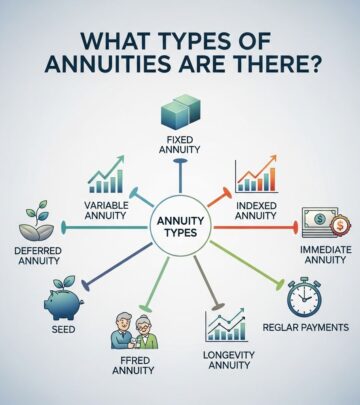
Types of Deferred Annuities
Several deferred annuity varieties serve different investor needs and risk tolerances:
Fixed Deferred Annuities
Fixed deferred annuities guarantee a specific interest rate for a predetermined period, typically ranging from one to ten years or longer. The insurance company assumes all investment risk, providing predictable growth and security. These annuities are ideal for conservative investors seeking guaranteed returns and stable retirement income. The downside is that returns may not keep pace with inflation, potentially reducing purchasing power over time.
Variable Deferred Annuities
Variable deferred annuities allow contract holders to direct their premiums into separate investment accounts containing stocks, bonds, and mutual funds. Returns fluctuate based on market performance, offering potentially higher growth than fixed annuities. However, this increased growth potential comes with investment risk. Variable annuities typically include protection features such as minimum income guarantees or death benefits, though these add to the cost structure.
Indexed Deferred Annuities
Indexed deferred annuities, also called equity-indexed annuities, offer returns linked to a stock market index like the S&P 500. These products provide a middle ground between fixed and variable annuities, offering growth potential tied to market performance while protecting principal from market downturns. Returns are typically capped at a percentage of index gains, and the insurance company retains upside above the cap.
Key Features and Benefits
Tax-Deferred Growth
The primary advantage of deferred annuities is tax-deferred accumulation. Unlike traditional savings or taxable investment accounts where earnings are taxed annually, deferred annuities allow all investment gains to compound without annual tax erosion. This tax deferral can significantly enhance long-term wealth accumulation, particularly for high earners in elevated tax brackets.
Guaranteed Income Streams
Upon annuitization, deferred annuities can provide lifetime income guarantees. This protection against longevity risk—the possibility of outliving retirement savings—offers invaluable peace of mind. Annuitants can select various payment options including single life annuities, joint-and-survivor annuities, or period-certain payments.
Creditor Protection
Many states provide creditor protection for annuity contracts, shielding accumulated funds from legal judgments or creditor claims. This feature appeals particularly to business owners, professionals in high-risk fields, and individuals concerned about asset protection.
No Contribution Limits
Unlike retirement accounts such as 401(k)s or IRAs, deferred annuities impose no annual contribution limits. High-net-worth individuals can accumulate substantial retirement savings without hitting contribution ceilings.
Drawbacks and Considerations
Early Withdrawal Penalties
Most deferred annuity contracts impose surrender charges on withdrawals during specified periods, often seven to ten years after purchase. These penalties, typically declining annually, can significantly reduce withdrawal amounts during the early accumulation years. Additionally, withdrawals before age 59½ may trigger a 10% federal tax penalty on earnings.
High Fees and Expenses
Deferred annuities, particularly variable annuities, carry multiple expense layers including mortality and expense (M&E) charges, administrative fees, and underlying investment management fees. These costs typically range from 1% to 3% annually, reducing net returns over time. Indexed and fixed annuities generally have lower internal costs but may include surrender charges.
Complexity and Transparency Issues
Deferred annuity contracts are notoriously complex legal documents with numerous provisions, riders, and fee structures. This complexity can make comparison shopping difficult and may lead to poor purchasing decisions. Some critics argue that sales practices lack adequate transparency, with certain fee structures or limitations inadequately disclosed to consumers.
Inflation Risk
Fixed deferred annuities guarantee specific dollar amounts during retirement. If inflation rises substantially, the purchasing power of guaranteed payments diminishes. Without inflation-adjustment riders, retirees may experience declining real income throughout retirement.
Illiquidity
Deferred annuities are designed for long-term wealth accumulation and retirement income. They lack the liquidity of other investments, with surrender charges and tax penalties discouraging access to funds before the scheduled distribution date.
Tax Implications
Qualified vs. Non-Qualified Annuities
Qualified deferred annuities are funded with pre-tax retirement account dollars, such as IRA rollovers or 403(b) plans. Non-qualified annuities are purchased with after-tax dollars. Tax treatment differs significantly between these categories.
For qualified annuities, the entire annuity payment is taxable as ordinary income since contributions were pre-tax. For non-qualified annuities, only the earnings portion of distributions is taxable; the principal portion (representing already-taxed contributions) is returned tax-free.
Required Minimum Distributions
IRS regulations require distributions from qualified deferred annuities to begin by age 73 (adjusted under SECURE 2.0 Act). Required minimum distribution (RMD) amounts are calculated based on life expectancy tables and account value. Failure to withdraw required amounts results in substantial tax penalties.
Deferred Annuities vs. Other Retirement Vehicles
| Feature | Deferred Annuity | 401(k) | Traditional IRA | Brokerage Account |
|---|---|---|---|---|
| Contribution Limits | None | $23,500 (2024) | $7,000 (2024) | None |
| Tax-Deferred Growth | Yes | Yes | Yes | No |
| Guaranteed Income | Yes | No | No | No |
| Liquidity | Limited | Limited | Limited | High |
| Fees | High | Moderate | Low | Variable |
Who Should Consider Deferred Annuities?
Deferred annuities may be appropriate for:
- Conservative investors prioritizing retirement income security over growth potential
- High-income earners seeking to maximize tax-deferred savings above retirement account limits
- Individuals concerned about longevity risk and wanting guaranteed lifetime income
- Business owners and professionals seeking asset protection strategies
- Those with substantial accumulated savings ready to be converted into retirement income
- Investors with long time horizons who can tolerate illiquidity and surrender charges
Purchasing Considerations and Best Practices
Understand Your Needs
Before purchasing a deferred annuity, clearly assess your retirement income goals, risk tolerance, and time horizon. Determine how much guaranteed income you need to supplement Social Security and other retirement sources.
Compare Products Carefully
Request detailed illustrations comparing different annuity products, fee structures, and payment options. Request fee breakdowns, surrender charge schedules, and rider options from multiple providers.
Review Insurer Ratings
Verify the financial strength and credit ratings of insurance companies through agencies like Moody’s, Standard & Poor’s, or A.M. Best, ensuring the company can meet future payment obligations.
Seek Professional Guidance
Consult with qualified financial advisors who can evaluate whether deferred annuities align with your overall retirement strategy and financial situation.
Common Annuity Riders and Enhancements
Annuity contracts offer various optional riders that modify coverage:
- Guaranteed Minimum Income Benefit (GMIB): Ensures minimum income during distribution phase regardless of market performance
- Long-Term Care Rider: Increases payouts if you require extended care services
- Enhanced Death Benefit: Guarantees beneficiaries receive contract value or accumulated earnings, whichever is greater
- Inflation Adjustment Rider: Increases payments to help offset inflation effects
- Period-Certain Option: Guarantees payments for a specific period, with remainder to beneficiaries if annuitant dies
Frequently Asked Questions
Q: What is the main difference between deferred and immediate annuities?
A: Deferred annuities have an accumulation phase where premiums grow tax-deferred before income payments begin. Immediate annuities begin making payments shortly after purchase, typically within one year, with minimal accumulation phase.
Q: Can I withdraw money from a deferred annuity before annuitization?
A: Yes, but early withdrawals typically incur surrender charges during specified periods and may trigger tax penalties if you’re under age 59½. Most annuities allow penalty-free withdrawals of a small percentage annually.
Q: Are deferred annuity earnings taxed when withdrawn?
A: Yes, accumulated earnings are taxed as ordinary income upon withdrawal or annuitization. For non-qualified annuities, only earnings are taxed; principal contributions are returned tax-free using the exclusion ratio method.
Q: What happens to my deferred annuity if the insurance company fails?
A: State insurance guarantee associations typically protect annuity values up to specified limits, usually $250,000 to $300,000 per contract. This protection is why reviewing insurer financial strength ratings is essential.
Q: Can I transfer my deferred annuity to another provider?
A: Yes, through a 1035 exchange, you can transfer a deferred annuity to another insurance company’s annuity without immediate tax consequences. However, surrender charges may apply, and new surrender periods may begin.
Q: Are deferred annuities suitable for young investors?
A: Generally, deferred annuities are more appropriate for investors near retirement who have completed their growth-focused investing phase. Young investors typically benefit more from diversified investment portfolios with greater liquidity and flexibility.
References
- Publication 575 (2023), Pension and Annuity Income — U.S. Internal Revenue Service. 2023. https://www.irs.gov/pub/irs-pdf/p575.pdf
- SECURE 2.0 Act of 2022: Key Provisions Related to Retirement Accounts — Congressional Research Service. 2023. https://crsreports.congress.gov/product/pdf/R/R47971
- Indexed Annuities: A Guide to Purchasing and Selling — National Association for Fixed Annuities (NAFA). 2024. https://www.nafa.org
- Annuities and the Older American Consumer: A Critical Examination — Consumer Financial Protection Bureau (CFPB). 2021. https://www.consumerfinance.gov/about-us/newsroom/consumer-financial-protection-bureau-report-examines-annuities-and-older-american-consumers/
- Standard & Poor’s Insurance Ratings Guide — S&P Global Market Intelligence. 2024. https://www.spglobal.com/marketintelligence/en/solutions/financial-services
Similar Articles








Read full bio of medha deb