Default vs Delinquency: Credit Risks Explained
Understand the critical differences between credit delinquency and default, their impacts on your financial health, and proven strategies to recover and avoid long-term damage.
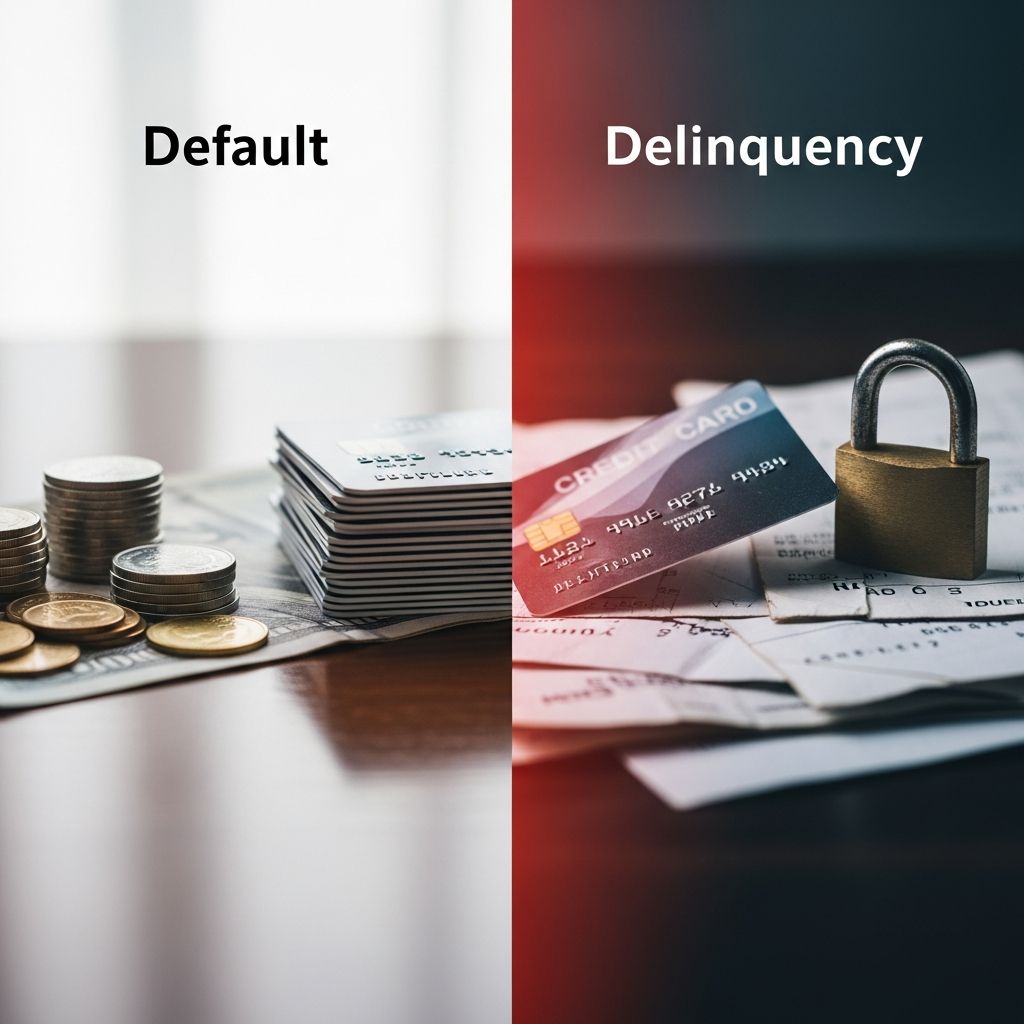
Managing credit responsibly is essential for financial stability, but missing payments can lead to delinquency or default, each with distinct implications for your credit profile and future borrowing power. Delinquency marks the initial stage of late payments, while default represents a more severe breach after prolonged non-payment.
Defining Delinquency in Credit Accounts
Delinquency begins when a borrower fails to make a payment by its due date, often starting with just one missed installment. For credit cards, this status typically triggers after 30 days past due, at which point lenders report it to major credit bureaus like Equifax, Experian, and TransUnion. This early warning phase incurs late fees and may raise interest rates, but prompt action can resolve it without long-term harm.
Unlike full non-repayment, delinquency signals temporary issues such as cash flow shortages. Lenders view it as recoverable, often sending reminders via statements or calls before escalating measures. For instance, credit card accounts become delinquent if the minimum payment isn’t met 31 days after due, encompassing both minor delays and severe cases including charged-off debt.
Understanding Loan and Credit Card Default
Default occurs after extended delinquency, when lenders deem repayment unlikely. Timelines vary: credit cards often default after 180 days of missed payments, while loans may default at 90 days or more depending on the creditor. At this stage, issuers may close accounts, accelerate the full balance due, or transfer debt to collections.
For federal student loans, default hits after 270 days without payment, potentially leading to wage garnishment or withheld tax refunds. Mortgages and auto loans can trigger repossession or foreclosure. Defaults signal to lenders a borrower’s unwillingness or inability to repay, severely eroding trust.
Timelines: From Late Payment to Severe Status
| Status | Credit Cards | Personal Loans | Student Loans |
|---|---|---|---|
| Delinquency Starts | 30 days past due | 30 days past due | 1 day late |
| Reported to Bureaus | 30-60 days | 30 days | 90 days |
| Default | 180 days | 90+ days | 270 days |
This table illustrates varying thresholds across debt types, highlighting why early intervention is crucial. Credit card delinquencies at 90 days or more indicate deeper distress and often precede charge-offs.
Immediate Financial Penalties and Escalations
- Late Fees: Typically $25-$40 per missed payment, compounding quickly.
- Penalty APR: Interest rates can surge to 29.99% or higher on delinquent balances.
- Collections: After default, agencies pursue debts aggressively, adding fees up to 25-50% of the principal.
- Charge-Offs: Lenders write off uncollectible debt after 120-180 days, yet pursue recovery.
These short-term hits strain budgets, but ignoring them accelerates to legal actions like lawsuits or asset seizure.
Long-Term Damage to Credit Scores
Delinquencies ding scores by 50-100 points initially, with impacts worsening over time. Defaults cause drops of 150+ points, lingering as the most derogatory mark. Both remain on reports for seven years from the first delinquency date, hindering approvals for mortgages, auto loans, or rentals.
Federal rules bar FHA loans for those with delinquent federal debts. Recent data shows credit card delinquency rates (30+ days) at 3.05% in Q1 2025, down from a 13-year high of 3.24% in Q2 2024, yet charge-off rates hover near 4.44%, mirroring unemployment trends. Severe 90-day delinquencies rose over 40% since 2021 across U.S. regions.
Recent Trends in U.S. Credit Delinquency Rates
Credit card delinquencies have climbed broadly since mid-2021, surpassing 2008 crisis levels in affected populations despite a robust job market. Low-income ZIP codes saw 63% relative increases in 30-day rates by Q1 2025, versus 44% in high-income areas. This signals widespread financial pressure, with 90-day rates growing slower post-2024 but still elevated.
The New York Federal Reserve tracks these metrics quarterly, noting charge-offs as proxies for severe distress. Borrowers in distress face compounded risks as delinquencies evolve into defaults amid rising living costs.
Strategies to Escape Delinquency Before Default
Act swiftly upon missing a payment: contact lenders for hardship programs, payment extensions, or reduced rates. Negotiate settlements paying partial balances for delinquency removal.
- Debt Consolidation: Combine debts into one lower-rate loan to simplify payments.
- Budget Overhaul: Track expenses using apps to prioritize essentials.
- Income Boost: Side gigs or overtime can cover shortfalls.
For student loans, servicers outline avoidance steps, including income-driven plans.
Recovery Roadmap After Default
Full recovery takes up to seven years, but proactive steps rebuild credit faster. Defaults are worse than delinquencies for scores, as they denote total repayment failure.
- Dispute Errors: Challenge inaccuracies via bureau investigations.
- Goodwill Requests: Politely ask lenders to remove marks, citing one-off issues and good history.
- Secured Cards: Build positive history with low-limit cards.
- Payment Plans: Negotiate with collectors for affordable installments.
Debt management plans through nonprofits can lower rates and waive fees. Avoid new debt during recovery to prevent cycles.
Preventing Delinquency and Default Altogether
Proactive habits safeguard credit: set autopay for minimums, maintain three-six months’ emergency savings, and monitor reports weekly via AnnualCreditReport.com. Understand grace periods—credit cards often allow 21-25 days post-statement before delinquency.
For high-risk groups like students, prioritize payments amid competing expenses. Tools like balance transfer cards offer 0% intro APR to manage revolving debt.
Special Considerations for Student and Mortgage Debt
Student loans enter delinquency instantly but default after 270 days, risking aid ineligibility and garnishments. Mortgages follow similar paths to foreclosure. Federal Perkins loans default at nine months. Borrowers should explore deferments or forbearance early.
Frequently Asked Questions
What counts as delinquency on a credit card?
Any payment 30 days or more past due, reported to bureaus and impacting scores.
How long until a missed payment becomes a default?
Typically 90-180 days for most debts, varying by lender and type.
Can I remove a delinquency from my credit report?
Yes, via negotiation, disputes, or goodwill letters if paid promptly.
Does default hurt more than delinquency?
Absolutely—defaults cause steeper, longer-lasting score damage.
Are delinquency rates rising in 2025?
Yes, credit card rates hit multi-year highs but eased slightly to 3.05% in Q1 2025.
How do I recover credit after default?
Pay debts, dispute errors, use secured credit, and build positive history over 7 years.
References
- Delinquency vs Default: Key Differences in Loan Repayment — Arnaiz Mortgage. 2023. https://arnaizmortgage.com/blog/delinquency-vs-default-key-differences-in-loan-repayment/
- Credit Card Defaults — Twin Cities Debt Help. 2024. https://atlawhelp.com/credit-card-defaults/
- The Broad, Continuing Rise in Delinquent U.S. Credit Card Debt Revisited — Federal Reserve Bank of St. Louis. 2025-05-01. https://www.stlouisfed.org/on-the-economy/2025/may/broad-continuing-rise-delinquent-us-credit-card-debt-revisited
- What’s new with delinquencies on credit cards and other loans? — Bankrate. 2025. https://www.bankrate.com/credit-cards/news/whats-new-with-delinquencies-credit-cards-other-loans/
- Default vs delinquency: How they impact credit — Chase Bank. 2025. https://www.chase.com/personal/credit-cards/education/build-credit/default-vs-delinquency
- Avoiding Default & Delinquency — UC San Diego Student Financial Solutions. 2024. https://sfs.ucsd.edu/campus-loans/default-delinquency.html
Similar Articles








Read full bio of Sneha Tete