Default: Definition, Types, and Financial Implications
Understanding default: When borrowers fail to meet loan obligations and its consequences.
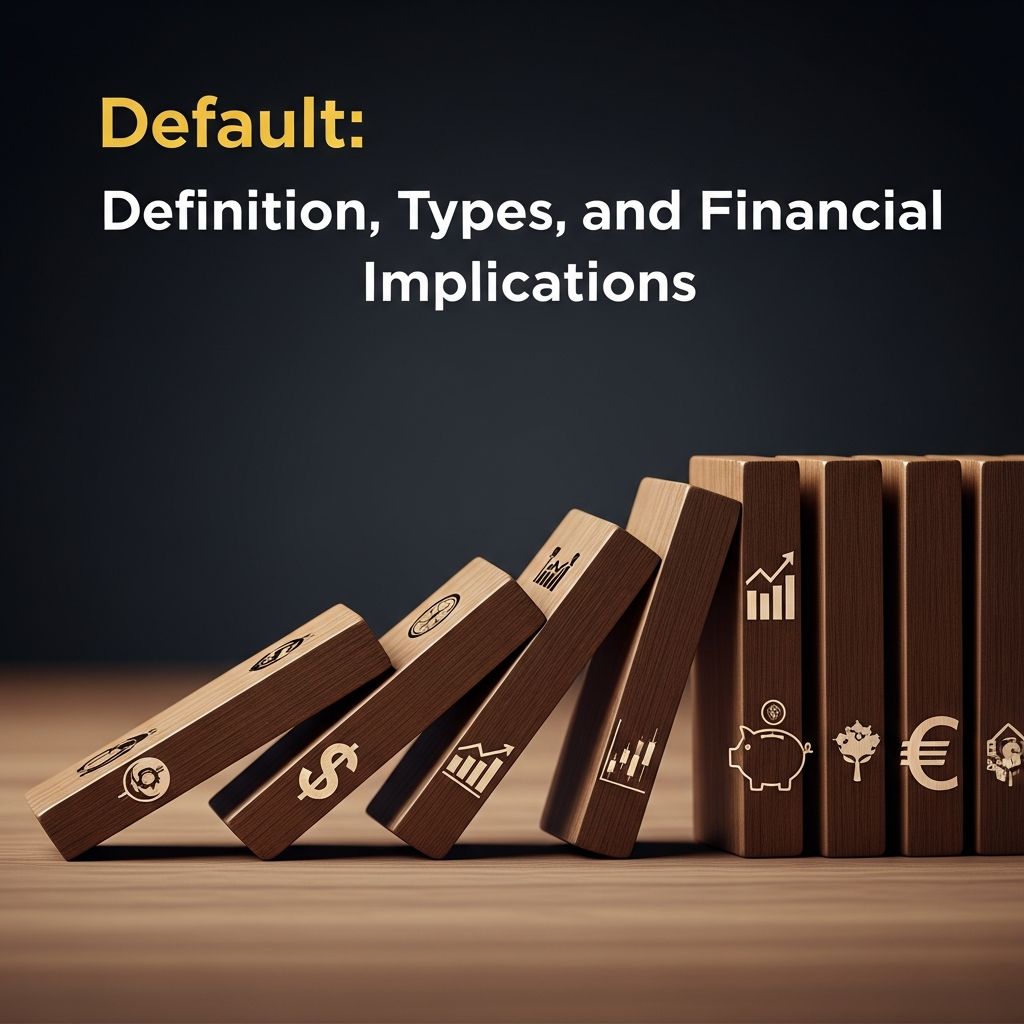
Default is a critical concept in finance that occurs when a borrower fails to meet the terms of a loan agreement or fails to pay back borrowed money within the agreed-upon timeframe. This fundamental financial term affects millions of individuals and businesses worldwide, influencing personal credit scores, institutional lending practices, and overall economic stability. Understanding default is essential for anyone involved in borrowing, lending, or investing in debt instruments.
What is Default?
Default refers to the failure of a borrower to fulfill the obligations outlined in a loan agreement. When a borrower defaults, they are in breach of contract, which can trigger various consequences ranging from penalties and increased interest rates to legal action and asset seizure. The concept applies to various types of debt, including mortgages, personal loans, credit cards, corporate bonds, and government securities.
A default occurs when a borrower misses one or more required payments or violates other material terms of the loan agreement. The specific conditions that constitute default are typically defined in the loan agreement or promissory note. Most lenders establish a grace period during which late payments are permitted without triggering a default status, though interest and penalties may still accrue.
Types of Default
Payment Default
Payment default is the most common type of default and occurs when a borrower fails to make scheduled payments on their debt obligations. This includes:
- Missed Payments: Failure to pay the full payment amount on the due date
- Partial Payments: Making payments that are less than the required minimum amount
- Consecutive Missed Payments: Missing multiple payments in succession, which typically accelerates default status
Technical Default
Technical default occurs when a borrower violates other terms of the loan agreement aside from payment requirements. Common examples include:
- Failure to maintain required insurance coverage on collateral
- Violation of debt covenants, such as maintaining a minimum net worth or debt-to-income ratio
- Selling pledged assets without lender permission
- Failure to pay property taxes or maintain property condition
Material Breach Default
This occurs when a borrower violates a significant term of the loan agreement that substantially affects the lender’s security interest or the loan’s viability. Material breaches can trigger immediate default and acceleration of the entire loan balance.
How Default Impacts Borrowers
The consequences of default extend far beyond the immediate debt situation and can significantly impact a borrower’s financial health and future opportunities.
Credit Score Damage
Default has severe consequences for a borrower’s credit score. Payment history comprises approximately 35% of most credit scoring models, making default one of the most damaging factors to creditworthiness. A single late payment can reduce a credit score by 50-100 points or more, depending on the borrower’s existing credit profile and the severity of the delinquency.
Legal Consequences
Lenders may pursue various legal remedies when a borrower defaults:
- Foreclosure: For mortgages, lenders can initiate foreclosure proceedings to reclaim and sell the property
- Repossession: For auto loans and secured loans, lenders can repossess the collateral
- Lawsuits: Lenders may file civil lawsuits to obtain judgment against the borrower
- Wage Garnishment: Courts may authorize deductions from the borrower’s wages to satisfy the debt
Financial Penalties
Borrowers in default typically face additional financial burdens, including:
- Late fees and penalty interest rates
- Collection agency fees and attorney fees
- Increased interest rates on remaining balance
- Acceleration of the entire loan balance (due in full immediately)
Future Borrowing Challenges
Default makes it extremely difficult to obtain future credit. Lenders view borrowers with default history as high-risk, resulting in:
- Higher interest rates on approved loans
- Smaller credit limits
- Denial of credit applications
- Difficulty securing employment in some industries
How Default Impacts Lenders
Default also creates significant challenges for lenders and the broader financial system. Lenders must incur substantial costs to manage defaulted loans, including:
- Legal and collection expenses
- Loss of expected interest income
- Administrative costs for default management
- Potential write-offs of uncollectible debt
For financial institutions, a high volume of defaults can impair their balance sheets, reduce profitability, and impact their ability to lend to other customers. This systemic risk can spread throughout the financial system, as demonstrated during major economic crises.
Default Rates and Economic Indicators
Default rates serve as important economic indicators reflecting the health of borrowers and overall economic conditions. Rising default rates often signal:
- Economic recession or downturn
- Increasing unemployment
- Declining consumer confidence
- Tightening credit conditions
Financial institutions closely monitor default rates on their loan portfolios to assess credit risk and adjust lending practices accordingly. Regulators also track default rates as a measure of systemic financial health.
Default Timeline and Stages
Default typically progresses through several stages, each with distinct implications:
| Stage | Timeline | Description | Consequences |
|---|---|---|---|
| Late Payment | 1-30 days past due | Payment received but after due date | Late fees, may not appear on credit report |
| Delinquency | 30-90 days past due | Missed payments reported to credit bureaus | Credit score damage, creditor contact |
| Severe Delinquency | 90+ days past due | Multiple missed payments | Collection efforts intensify |
| Default Status | Varies by agreement | Formal default declared | Legal action, acceleration, collection |
| Charge-off | Typically 180 days | Creditor writes off debt as uncollectible | Severe credit damage, potential lawsuit |
Causes of Default
Understanding why defaults occur is important for both lenders and borrowers. Common causes include:
Economic Factors
- Unemployment or job loss
- Income reduction or decreased earning capacity
- Economic recession or market downturn
- Rising living costs or unexpected inflation
Personal Circumstances
- Medical emergencies or health crisis
- Divorce or family separation
- Death of a household income earner
- Unexpected major expenses
Borrower-Related Factors
- Poor financial management and budgeting
- Overextension or excessive debt burden
- Lack of emergency savings
- Irresponsible spending habits
Loan-Related Factors
- Predatory lending practices
- Unaffordable loan terms or excessive interest rates
- Variable rate increases making payments unaffordable
- Inadequate credit assessment by lender
Recovery and Remedies
When borrowers face default risk, several options may be available to prevent or remedy the situation:
Loan Modification
Lenders may agree to modify loan terms, including extending the repayment period, reducing the interest rate, or deferring payments temporarily. Loan modifications can make payments more manageable and help borrowers avoid default.
Refinancing
Borrowers with equity and reasonable credit may refinance their debt at better terms or with a different lender, helping them manage their obligations more effectively.
Forbearance
Lenders may temporarily suspend or reduce required payments during hardship periods, giving borrowers time to stabilize their financial situation before resuming normal payments.
Settlement Negotiations
Borrowers and lenders may negotiate a settlement where the borrower pays a lump sum less than the full amount owed to satisfy the debt. This can be mutually beneficial as lenders recover some funds and borrowers avoid further damage.
Bankruptcy
For borrowers in severe financial distress, bankruptcy provides legal protection and a structured process for managing debts. Chapter 7 bankruptcy involves liquidating assets to pay creditors, while Chapter 13 establishes a reorganized repayment plan.
Default Prevention Strategies
Effective default prevention requires proactive financial management by borrowers and responsible lending practices by financial institutions.
For Borrowers
- Create and maintain a realistic budget
- Build emergency savings reserves (3-6 months of expenses)
- Avoid over-extending on debt obligations
- Communicate with lenders about financial difficulties
- Seek financial counseling and assistance
- Maintain stable income and employment
For Lenders
- Conduct thorough creditworthiness assessments
- Ensure affordability of loan terms relative to borrower income
- Provide clear loan documentation and terms
- Maintain borrower communication and early intervention programs
- Offer loan modification options during hardship
- Monitor portfolio performance and adjust lending practices
Frequently Asked Questions
Q: How long does default stay on a credit report?
A: Default typically remains on a credit report for seven years from the date of the first missed payment. However, the impact on credit scores diminishes over time, and the account can be removed sooner if paid or settled.
Q: What is the difference between default and delinquency?
A: Delinquency refers to being past due on payments, while default is the formal status declared when a borrower is substantially in breach of the loan agreement. Delinquency can lead to default if not resolved.
Q: Can I get a loan after defaulting?
A: Yes, but it will be challenging. Most lenders require several years to pass after default resolution before extending credit. You may qualify for subprime or specialized lending products at higher interest rates.
Q: What should I do if I’m facing default?
A: Contact your lender immediately to discuss options. Explore loan modification, forbearance, or refinancing. Seek credit counseling from a non-profit organization and consider bankruptcy if necessary.
Q: Does paying off a default remove it from my credit report?
A: Paying off a default improves your situation and can help restore credit over time, but the account history remains on your credit report for seven years. Future creditors will see the account was resolved, which is better than an unresolved default.
Conclusion
Default represents a serious breach of loan obligations with far-reaching consequences for borrowers, lenders, and the broader financial system. Understanding what constitutes default, its types, impacts, and prevention strategies is crucial for anyone managing debt. While default can severely damage creditworthiness and create immediate financial hardship, various remedies exist for those facing default risk. The key to avoiding default lies in responsible borrowing, maintaining realistic budgets, building financial reserves, and communicating proactively with lenders during times of financial stress. For lenders, responsible underwriting and supportive borrower relationships can reduce default rates and promote financial stability.
References
- Consumer Financial Protection Bureau (CFPB) – Loan Default and Delinquency — U.S. Consumer Financial Protection Bureau. 2024. https://www.consumerfinance.gov/
- Federal Reserve – Credit and Loan Default Statistics — Board of Governors of the Federal Reserve System. 2025. https://www.federalreserve.gov/
- Fair Credit Reporting Act (FCRA) – Credit Reporting Standards — Federal Trade Commission. 2024. https://www.ftc.gov
- National Foundation for Credit Counseling – Default Prevention Guide — NFCC. 2024. https://www.nfcc.org/
- U.S. Department of Housing and Urban Development – Mortgage Default Resources — HUD.gov. 2024. https://www.hud.gov/
- Equifax – Understanding Credit Reports and Default Impact — Equifax Inc. 2024. https://www.equifax.com/
Similar Articles








Read full bio of medha deb