Credit Report: 5 Key Sections And How To Fix Errors
Master the art of reading your credit report to unlock better financial opportunities and avoid costly mistakes.

Your credit report is a vital financial document that lenders, landlords, and even employers use to evaluate your reliability. Compiled by major bureaus like Equifax, Experian, and TransUnion, it details your borrowing history, payment behaviors, and more. Grasping its contents empowers you to safeguard your financial future, correct inaccuracies, and enhance your creditworthiness.
Why Credit Reports Matter in Everyday Finance
Credit reports influence everything from mortgage approvals to job offers. They form the basis for credit scores, which predict your likelihood of repaying debts. Regular reviews help detect fraud early and ensure accuracy, potentially saving thousands in interest costs. According to the Consumer Financial Protection Bureau, millions discover errors annually that could lower scores unnecessarily.
Obtaining reports is free weekly via AnnualCreditReport.com, mandated by federal law. Reviewing them quarterly keeps you proactive amid rising identity theft concerns.
Core Building Blocks of a Credit Report
Every credit report follows a standard layout with distinct sections. Familiarity with these prevents misunderstandings and highlights areas for improvement.
Identifying Details: Your Personal Profile
This foundational section verifies your identity. It lists full name variations, current and past addresses, date of birth, Social Security number (often partial), phone numbers, and employment history.
- Name and aliases: Includes nicknames or maiden names linked to accounts.
- Addresses: Recent moves or outdated entries signal instability to lenders.
- Employment: Past jobs help assess income stability, though not always comprehensive.
Inaccuracies here, like misspelled names, can fragment your history or enable fraud. Always cross-check against official documents.
Account Summaries: Tracking Your Debts
The heart of the report, this details all credit accounts: revolving (credit cards), installment (auto loans, student debt), and mortgages. Each entry shows:
| Element | Description |
|---|---|
| Date Opened | When the account began, affecting history length. |
| Credit Limit/Amount | Maximum borrowing capacity. |
| Balance | Current owed amount; high balances hurt scores. |
| Status | Open, closed, or in collections. |
| High Balance | Peak usage, indicating past habits. |
Revolving accounts emphasize utilization ratio—aim under 30% for optimal scores. Installment loans show remaining term and monthly payments.
Payment Patterns: The Score’s Heavyweight
Payment history dominates credit scoring at 35% of FICO models. It chronicles on-time payments, delinquencies (30+ days late), and severities like 60/90-day lates.
- Positive marks: Consistent payments build trust.
- Negatives: Lates linger 7 years; severity matters most.
- Collections: Unpaid debts transferred to agencies appear here.
Recent data weighs heavier; a single recent late payment impacts more than ancient ones. Automation like autopay minimizes risks.
Negative Markers and Their Long-Term Effects
Government and Legal Filings
Public records, though less common post-2017 reforms, include bankruptcies (Chapter 7/13 stay 10/7 years), foreclosures, liens, and judgments. These signal severe past distress but fade over time.
Bankruptcies offer fresh starts but tank scores initially. Tax liens, if paid, drop off sooner.
Hard vs. Soft Inquiries: Who’s Checking You?
Inquiries log access requests. Hard inquiries (new credit applications) temporarily ding scores (under 5 points each, visible 2 years). Soft ones (pre-approvals, your reviews) don’t affect scores.
- Multiple hard pulls in shopping periods (e.g., auto loans) count as one.
- Limit applications to essentials.
Navigating Variations Across Bureaus
Equifax, Experian, and TransUnion may differ due to varying lender reports. Compare all three for completeness. FICO and VantageScore interpret data uniquely, so scores vary too.
| Bureau | Strengths | Common Discrepancies |
|---|---|---|
| Equifax | Mortgage focus | Western state data |
| Experian | International reach | Retail accounts |
| TransUnion | Collections emphasis | Utility reports |
Spotting and Fixing Report Errors
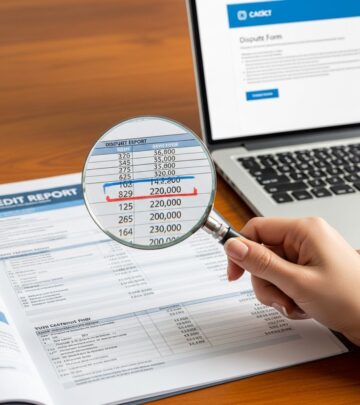
One in five reports has errors impacting scores. Common issues: wrong accounts, outdated negatives, ID mix-ups.
- Review meticulously: Check every detail.
- Dispute online: Bureaus must investigate within 30 days free via mail, phone, or portals.
- Provide proof: Attach bills, statements.
- Follow up: Get updated reports post-resolution.
Success rates exceed 40%; persistence pays. Notify furnishers (creditors) directly too.
Leveraging Your Report for Score Improvement
Understanding components ties to FICO factors:
- Payment history (35%): Pay on time always.
- Amounts owed (30%): Lower utilization.
- History length (15%): Keep old accounts open.
- New credit (10%): Avoid frequent apps.
- Credit mix (10%): Balance types responsibly.
Tools like credit monitoring track changes. Build history with secured cards if thin.
Frequently Asked Questions
How often should I check my credit report?
Weekly for free; more if applying for credit or suspecting issues.
Do closed accounts affect my score?
Yes, positively if paid well (stay 10 years); negatives 7 years.
What’s a good credit utilization ratio?
Under 30%, ideally 10% or less.
Can I remove accurate negative info?
No, but time-bound items drop off automatically.
Do medical debts appear?
Paid ones don’t; unpaid under $500 often omitted now.
Pro Tips for Lifelong Credit Health
– Set calendar reminders for due dates.
– Use balance transfers wisely for high-interest debt.
– Diversify credit types without overextending.
– Monitor for ID theft via alerts.
– Educate family on shared impacts (e.g., authorized users).
Mastering your credit report transforms it from mystery to asset. Proactive management yields lower rates, higher limits, and financial freedom.
References
- What is a credit report? — Consumer Financial Protection Bureau. 2023-10-01. https://www.consumerfinance.gov/ask-cfpb/what-is-a-credit-report-en-309/
- The Anatomy of a Credit Report — Utah State University Extension. 2022-05-15. https://extension.usu.edu/finance/research/anatomy-of-a-credit-report
- A Guide to What’s in Your Credit Report — myFICO. 2024-01-12. https://www.myfico.com/credit-education/whats-in-my-credit-report
- How to Understand Your Credit Score & Report — TD Bank. 2023-08-20. https://www.td.com/us/en/personal-banking/learning/understanding-your-credit
- What Is a Credit Report & What Is on It? — Equifax. 2024-03-05. https://www.equifax.com/personal/education/credit/report/articles/-/learn/what-is-a-credit-report-and-what-is-on-it/
Similar Articles








Read full bio of medha deb