Credit Card Statement: 7 Clear Steps To Decode Yours
Master the details of your monthly credit card bill to manage debt, spot errors, and optimize rewards effectively.
Your credit card statement arrives monthly, serving as a detailed record of your account activity during the billing cycle. It summarizes transactions, balances, payments due, and additional charges, helping you track spending and maintain financial health.
Why Reviewing Your Statement Matters
Regularly examining your credit card statement allows you to verify charges, detect fraud early, understand interest accrual, and plan payments effectively. Missing errors can lead to unnecessary fees or credit score damage. Statements provide insights into spending patterns, rewards earned, and available credit, empowering better decisions.
Financial experts recommend reviewing statements promptly upon receipt, either digitally or by mail, to ensure accuracy and stay ahead of due dates.
Identifying Key Identification Elements
Every statement begins with essential account identifiers. This top section lists the issuer’s name, your full name, mailing address, partial account number (often last four digits for security), and billing period dates—from the previous closing date to the current one, typically 28-31 days.
- Issuer details: Confirms the bank or company managing your card.
- Your information: Matches your records to prevent mix-ups.
- Billing cycle: Defines the period covered, e.g., “January 1-31.”
- Statement date: When the bill was generated.
These elements ground the document in your specific account, ensuring you’re reviewing the correct information.
Grasping the Account Snapshot
The account summary offers a quick overview of your financial position at cycle’s end. It calculates the new balance by starting with the prior balance, subtracting payments and credits, then adding purchases, fees, interest, and advances.
| Summary Item | Description |
|---|---|
| Previous Balance | Amount owed from last statement. |
| Payments & Credits | Money paid or refunds applied this cycle. |
| Purchases | Total new spending on goods/services. |
| Cash Advances | ATM withdrawals or cash equivalents. |
| Fees | Late, annual, or other charges. |
| Interest Charged | Finance charges on unpaid balances. |
| New Balance | Total due now. |
| Credit Limit | Maximum spending allowance. |
| Available Credit | Limit minus current balance. |
This table-like breakdown helps visualize changes. For instance, if purchases total $1,200, payments $500, and interest $20, your new balance might be $720 plus fees.
Understanding Payment Obligations
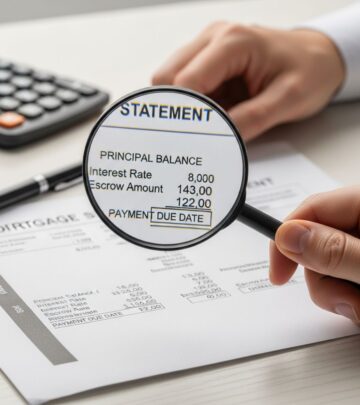
Payment details highlight what you must pay and by when. Key figures include the statement balance (full amount owed), minimum payment (smallest required sum, often 1-3% of balance plus interest/fees), and due date (typically 21-25 days after statement date).
Warnings often accompany this: late fees (up to $40) for missing due dates, and minimum payment alerts showing payoff timelines—e.g., paying only the minimum on $5,000 at 20% APR could take 30+ years with thousands in interest.
- Pay in full: Avoids all interest if done by due date.
- Minimum only: Covers interest/fees but extends debt.
- Grace period: Interest-free window for new purchases if balance paid fully.
Autopay options or reminders prevent oversights.
Analyzing Your Transaction History
The transactions section lists every activity chronologically or by type. Each entry details date of purchase/posting, merchant name, category (e.g., dining, fuel), reference number, and amount (debits negative, credits positive).
Scrutinize for unauthorized use—report discrepancies within 60 days to limit liability. Examples:
- Purchase: 02/15, “Grocery Store,” $45.67
- Refund: 02/20, “Online Retailer,” -$12.34
- Balance Transfer: 02/10, “Other Bank,” $1,000
Groupings by date or category aid pattern spotting, like excessive dining spend.
Unpacking Fees and Interest Costs
Separate sections detail add-ons. Fees cover late payments, cash advances (3-5% + immediate interest), foreign transactions (1-3%), or annual charges. Interest, or finance charges, applies to carried balances via APR (variable, e.g., 15-30%).
Year-to-date totals track cumulative costs. Interest calculations explain rates per balance type:
- Purchases APR
- Cash Advance APR (higher, no grace)
- Balance Transfer APR
Average daily balance method common: (daily balances sum / days in cycle) x APR / 365.
Exploring Rewards and Benefits
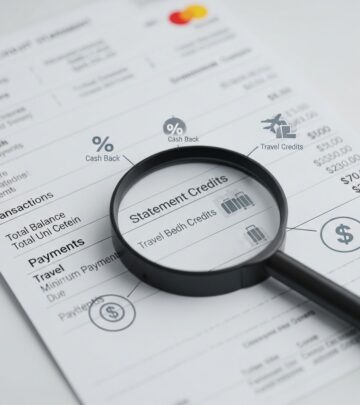
For rewards cards, statements tally points, miles, or cash back earned. Redemption instructions, current value, and year-to-date totals appear. Verify against spending to maximize value—e.g., 1.5% cash back on $2,000 spend yields $30.
Other perks like purchase protection or extended warranties may be noted.
Navigating Legal and Policy Notes
Fine print covers terms: APR explanations, cardholder rights under Fair Credit Billing Act (dispute process), privacy policies, customer service contacts, and changes notices. Read for updates on rates or fees.
Steps to Verify and Act on Your Statement
- Check account details match yours.
- Review summary math: previous + new – payments = balance.
- Scan transactions for errors/fraud.
- Note fees/interest sources.
- Confirm payment info; set reminders.
- Track rewards.
- Dispute issues promptly via phone/online.
Digital tools like apps enhance monitoring with alerts.
Common Pitfalls and How to Avoid Them
Avoid autopiloting reviews—fraudsters exploit delays. Don’t ignore minimum warnings; they signal debt traps. Understand grace periods to dodge interest. Compare statements monthly for trends.
| Pitfall | Consequence | Avoidance |
|---|---|---|
| Ignoring transactions | Fraud losses | Line-by-line check |
| Missing due date | Late fees, score drop | Calendar alerts |
| Minimum payments | Prolonged debt | Pay more aggressively |
| Untracked rewards | Missed value | Log earnings |
Frequently Asked Questions
What is a billing cycle?
The fixed period (usually monthly) between statement closing dates when activity is tallied.
How is minimum payment calculated?
Typically 1% of balance + interest + fees.
What if I spot an error?
Notify issuer in writing within 60 days; they investigate without charging disputed amount.
Does paying early avoid interest?
Yes, if full by due date, maintaining grace period.
Why is cash advance interest higher?
No grace period; accrues immediately at elevated APR.
Advanced Tips for Financial Mastery
Link statements to budgeting apps for categorization. Analyze YTD fees to negotiate waivers or switch cards. Use balance calculators to project payoff scenarios. For businesses, compare processing statements similarly, noting merchant IDs and third-party fees.
Statements evolve with regulations like CARD Act, mandating clearer disclosures.
By mastering your statement, you transform a routine mailer into a powerful financial tool, fostering discipline and awareness.
References
- How to Read a Credit Card Statement [+ Example] — Patriot Software. 2023-05-15. https://www.patriotsoftware.com/blog/accounting/credit-card-statement/
- How to Read A Credit Card Statement — Equifax. 2024-02-10. https://www.equifax.com/personal/education/credit-cards/articles/-/learn/how-to-read-credit-card-statement/
- How to Read a Credit Card Processing Statement — Gravity Payments. 2023-11-20. https://gravitypayments.com/blog/how-to-read-a-credit-card-statement/
- How to Read your Credit Card Statement — Bankrate. 2024-01-05. https://www.bankrate.com/credit-cards/advice/guide-to-reading-your-monthly-statement/
- How to Read Your Credit Card Statement — PNC Insights. 2023-09-12. https://www.pnc.com/insights/personal-finance/spend/how-to-read-your-credit-card-statement.html
Similar Articles








Read full bio of medha deb