Decoding Your Credit Card Statement: Complete Guide
Master the details of your monthly credit card statement to manage spending, avoid fees, and build better financial habits effectively.

Your credit card statement is more than just a bill—it’s a detailed financial snapshot that reveals your spending patterns, outstanding obligations, and potential costs. Arriving monthly, it summarizes activity over a specific billing cycle, helping you track usage, spot errors, and plan payments. Mastering its contents empowers you to avoid unnecessary fees, maximize rewards, and maintain a healthy credit profile.
Understanding the Billing Cycle Basics
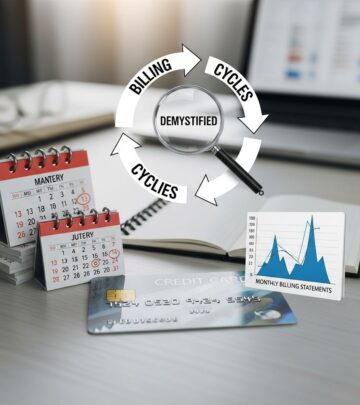
The billing cycle forms the foundation of your statement, typically spanning 28 to 31 days. It starts after your previous statement closes and ends when the new one generates. Transactions during this period appear on the statement, even if they post later. Knowing this cycle helps time large purchases to minimize interest accrual.
- Statement Closing Date: Marks the end of the cycle; pay by the due date (usually 21-25 days later) to avoid interest.
- Generation Date: When the statement is finalized and sent, often online or by mail.
- Grace Period: Time between closing and due date for interest-free payment if balance is paid in full.
Align payments with this timeline to leverage the grace period effectively, keeping costs low.
Key Account Identification Details
At the top, find essential identifiers like your name, address, contact info, and partial credit card number (for security). The full card number may appear masked. Credit limit and available credit are listed here, showing spending capacity. Available credit equals limit minus current balance.
| Element | Description | Why It Matters |
|---|---|---|
| Credit Card Number | Partial or full account number | Verifies it’s your statement |
| Credit Limit | Maximum spendable amount | Prevents over-limit fees |
| Available Credit | Limit minus balance | Guides remaining purchases |
| Available Cash Limit | Cash advance allowance | High-interest option awareness |
Payment Summary Breakdown
This critical section outlines what you owe. Previous balance carries over unpaid amounts, plus new purchases, fees, and interest. Payments and credits subtract from it, yielding the new statement balance—the full amount ideally paid by the due date.
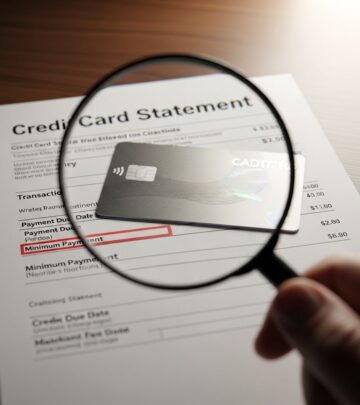
- Minimum Payment Due: Smallest amount to avoid late fees, but paying only this extends debt with high interest.
- Total Payment Due (Statement Balance): Clears balance fully, preserving grace period.
- Payment Due Date: Deadline; missing it triggers penalties and credit score damage.
Warnings often accompany: late payment notes detail fee/interest hikes, while minimum payment warnings project payoff timelines (e.g., years for $1,000 at minimums).
Detailed Transaction History
The longest section lists every activity chronologically or by type. Review meticulously for fraud—report discrepancies within 60 days.
Each entry includes:
- Date of purchase and posting.
- Merchant name and category (e.g., groceries, travel).
- Amount debited or credited.
- Reference numbers for disputes.
Groups may separate purchases, cash advances, balance transfers. Cash advances accrue interest immediately, no grace period.
Fees and Interest Charges Explained
Separate listings prevent surprises. Common fees: annual, late, over-limit, cash advance, foreign transaction (2-3%). Interest (APR) applies to unpaid balances post-grace, calculated daily on average balance.
| Fee Type | Typical Cost | Trigger |
|---|---|---|
| Late Fee | $25-$40 | Miss due date |
| Cash Advance Fee | 3-5% of amount | ATM withdrawals |
| Foreign Transaction | 1-3% | Non-local currency |
| Balance Transfer | 3-5% | Moving debt |
Interest sections show APRs (purchase, cash, penalty) and charged amounts. Pay in full to sidestep.
Rewards, Offers, and Extras
Rewards cards detail points, miles, or cash back earned, plus redemption info. Offers highlight promotions like bonus points or discounts. Past dues flag overdue amounts affecting credit.
- Track rewards to redeem optimally.
- Review offers for value.
- Address past dues promptly.
Strategies for Smart Statement Management
Beyond reading, act: Set autopay for full balance. Budget via transaction categories. Dispute errors online. Monitor utilization under 30% for credit health.
Digital tools from issuers offer alerts, spending graphs, enhancing oversight.
Frequently Asked Questions (FAQs)
What if I spot an unauthorized charge?
Contact issuer immediately; liability caps at $50 if reported promptly.
Does paying minimum cover everything?
No—interest balloons debt; aim for full payment.
How is interest calculated?
Daily rate (APR/365) times average daily balance.
Can I change my billing cycle?
Some issuers allow; request to align paydays.
What’s a minimum payment warning?
Projects long-term costs of minimum-only payments.
Advanced Tips for Power Users
Compare statements across cards for best rewards. Use for tax deductions (business spends). Analyze trends to cut impulse buys. Integrate with apps for holistic budgeting.
Statements evolve with regulations like CARD Act, mandating clearer disclosures.
References
- Decoding Your Credit Card Statement — Federal Bank. 2023. https://www.federal.bank.in/decoding-your-credit-card-statement
- What is a Credit Card Statement & How To Read It? — Areal.ai. 2024. https://www.areal.ai/blog/what-is-a-credit-card-statement-how-to-read-it
- How to Read a Credit Card Statement [+ Example] — Patriot Software. 2024-01-15. https://www.patriotsoftware.com/blog/accounting/credit-card-statement/
- How to Read A Credit Card Statement — Equifax. 2025. https://www.equifax.com/personal/education/credit-cards/articles/-/learn/how-to-read-credit-card-statement/
- How to read and understand your credit card statement — Chase Bank. 2024. https://www.chase.com/personal/credit-cards/education/basics/how-to-read-understand-credit-card-statement
- How to Read Your Credit Card Statement — PNC Insights. 2024. https://www.pnc.com/insights/personal-finance/spend/how-to-read-your-credit-card-statement.html
- How to Read and Understand Credit Card Statements — Skylacu. 2023. https://www.skylacu.com/learning-guidance/understanding-credit-card-statements
Similar Articles








Read full bio of medha deb