VA Mortgage Rates: 5 Strategies To Lower Your Rate In 2025
Discover the key forces shaping VA loan interest rates and how veterans can secure the best possible terms for home financing.

VA mortgage rates represent a critical factor for eligible veterans, active-duty service members, and their families pursuing homeownership. Unlike conventional loans, these rates benefit from government backing, often resulting in more favorable terms. Lenders individually establish these rates, influenced by a blend of market dynamics and personal financial profiles.
The Foundation of VA Loan Rate Structures
At their core, VA loans are guaranteed by the Department of Veterans Affairs up to a certain percentage of the loan amount. This guarantee mitigates lender risk against borrower defaults, enabling competitive interest rates typically 0.25% to 0.42% lower than conventional mortgages. Individual financial institutions, rather than the VA itself, determine the precise rates offered to borrowers.
This structure stems from the VA’s role as a guarantor, not a direct lender. Approved private lenders handle origination, underwriting, and servicing, setting rates based on their cost of funds, operational expenses, and profit margins. The VA’s involvement ensures standardized guidelines that promote accessibility while protecting lender interests.
Market Forces Driving Rate Fluctuations
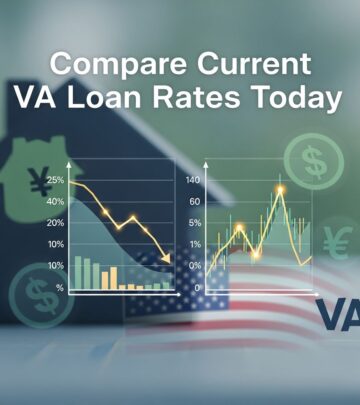
Broad economic conditions heavily impact VA mortgage rates. Key drivers include the overall state of the economy, Federal Reserve monetary policies, and investor appetite for mortgage-backed securities in the bond market. When the Fed raises benchmark rates to combat inflation, mortgage rates across all loan types, including VA, tend to climb accordingly.
Bond market demand also plays a pivotal role. Strong investor interest in mortgage bonds pushes rates downward as lenders compete to originate loans for securitization. Conversely, waning demand amid economic uncertainty elevates rates. Veterans monitoring these trends can time applications during favorable periods, potentially saving thousands over the loan term.
Borrower-Specific Factors Influencing Rates
Personal financial health significantly affects the rate a borrower qualifies for on a VA loan. Lenders scrutinize several borrower attributes:
- Credit Score: Higher scores signal lower default risk, unlocking the best available rates. While the VA imposes no minimum, lenders often require 620 or above.
- Debt-to-Income Ratio (DTI): A DTI below 41% is ideal; lower ratios improve rate eligibility by demonstrating repayment capacity.
- Loan-to-Value Ratio: Even without a required down payment, voluntary contributions reduce the loan amount and associated funding fees, often yielding better rates.
- Employment and Income Stability: Steady, verifiable income supports stronger underwriting outcomes and competitive pricing.
These elements allow lenders to tailor rates precisely to individual risk profiles, ensuring VA loans remain accessible yet responsibly underwritten.
VA Funding Fee and Its Rate Implications
The VA funding fee is a one-time charge that finances the loan guarantee program, calculated as a percentage of the loan amount. Rates vary by usage (first-time vs. subsequent), down payment size, and disability status:
| Scenario | Down Payment | Funding Fee Rate |
|---|---|---|
| First Use | None or <5% | 2.15% |
| First Use | 5-10% | 1.5% |
| Subsequent Use | None or <5% | 3.3% |
| Subsequent Use | 5-10% | 1.5% |
| Any Use with 10%+ Disability | Any | 0% (Exempt) |
For a $200,000 home with 5% down ($10,000), first-time users pay 1.5% on the $190,000 loan, equaling $2,850. Borrowers can finance this fee into the loan, slightly increasing the principal and thus monthly payments, or pay upfront to preserve lower overall costs.
Comparing VA Rates to Other Loan Types
VA loans consistently offer advantages over alternatives. Their government backing translates to lower rates and no private mortgage insurance (PMI), unlike conventional loans where PMI applies until 20% equity is reached. FHA loans, while accessible, carry mortgage insurance premiums that inflate costs long-term.
| Loan Type | Avg. Rate Advantage | Key Cost Difference |
|---|---|---|
| VA | Baseline | No PMI; Funding Fee |
| Conventional | +0.25-0.42% | PMI required <20% equity |
| FHA | Similar or higher | Lifetime MIP |
This edge makes VA loans particularly appealing for eligible borrowers, especially those with modest down payments or credit challenges.
Property and Loan Characteristics Affecting Rates
Beyond borrower metrics, loan specifics influence pricing. Primary residences and single-family homes qualify for the lowest rates, while condos or investment properties may incur premiums due to elevated risk. Loan term selection matters too: 15-year options build equity faster with lower total interest but higher monthly outlays compared to 30-year terms.
Opting for discount points—prepaid interest—can reduce rates by buying them down, ideal for long-term homeowners. Rolling closing costs into the loan balance might marginally elevate effective rates, so upfront payments are preferable when feasible.
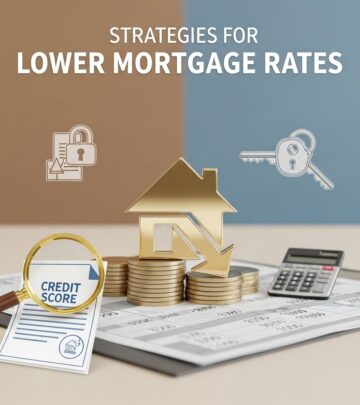
Strategies to Secure Optimal VA Rates
Eligible borrowers can proactively enhance their rate prospects:
- Shop Multiple Lenders: Rates vary; compare offers from VA-approved institutions for the best deal.
- Boost Credit Pre-Application: Pay down debts and correct errors to elevate scores.
- Lock Rates Strategically: Secure during dips, with float-down options for further improvements.
- Consider Down Payments: Even 5% reduces funding fees and loan size, improving terms.
- Leverage Exemptions: Disability ratings of 10%+ waive funding fees entirely.
Obtaining preapproval provides a personalized rate quote, strengthening negotiating power and budgeting accuracy.
Understanding Monthly Payment Breakdowns
VA mortgage payments encompass principal, interest, taxes, insurance (PITI), and sometimes HOA fees. Principal and interest amortize over the term, with early payments favoring interest. Escrowed taxes (often 1.2% of home value annually) and insurance (0.35%) ensure compliance.
Funding fees, when financed, integrate into principal calculations. Tools like VA-specific calculators factor these uniquely, unlike generic ones, for precise estimates including disability exemptions and prior usage.
Frequently Asked Questions
Who determines VA mortgage rates?
Private lenders set rates, guided by VA guidelines and market conditions.
Are VA rates always lower?
Typically yes, due to the VA guarantee reducing lender risk.
Does credit score impact VA rates?
Yes, higher scores yield better rates from lenders.
What is the VA funding fee?
A percentage-based charge (e.g., 2.15% first use, no down) financing the program; exemptions apply for disabilities.
Can I avoid a down payment with VA loans?
Yes, 0% down is standard, though contributions lower costs.
Navigating Current Rate Environments
As of recent data, VA rates reflect broader mortgage trends influenced by Fed actions. Borrowers should consult lender sites for real-time quotes, as personalized factors dominate final pricing. Staying informed empowers veterans to capitalize on opportunities in fluctuating markets.
References
- VA Funding Fee And Loan Closing Costs — U.S. Department of Veterans Affairs. 2023-10-01. https://www.va.gov/housing-assistance/home-loans/funding-fee-and-closing-costs/
- How are VA loan interest rates determined? — Rocket Mortgage. 2024-05-15. https://www.rocketmortgage.com/learn/va-mortgage-rates
- VA Loan Calculator – Estimate VA Mortgage Payments — Veterans United. 2025-01-20. https://www.veteransunited.com/education/tools/mortgage-calculator/
- What Affects VA Mortgage Interest Rates — The Federal Savings Bank. 2024-08-10. https://www.thefederalsavingsbank.com/Blog/what-affects-va-mortgage-interest-rates/
- Understanding your VA Loan Mortgage Payment — Arbor Home Loans. 2024-03-12. https://www.arborhl.com/blog/understanding-your-va-loan-mortgage-payment/
- VA Loan Calculator — Bankrate. 2025-02-01. https://www.bankrate.com/mortgages/va-loans-calculator/
Similar Articles








Read full bio of Sneha Tete