Income Statements: Essential Guide To Financial Performance
Master the essentials of income statements to evaluate business performance and make smarter investment choices with this comprehensive guide.
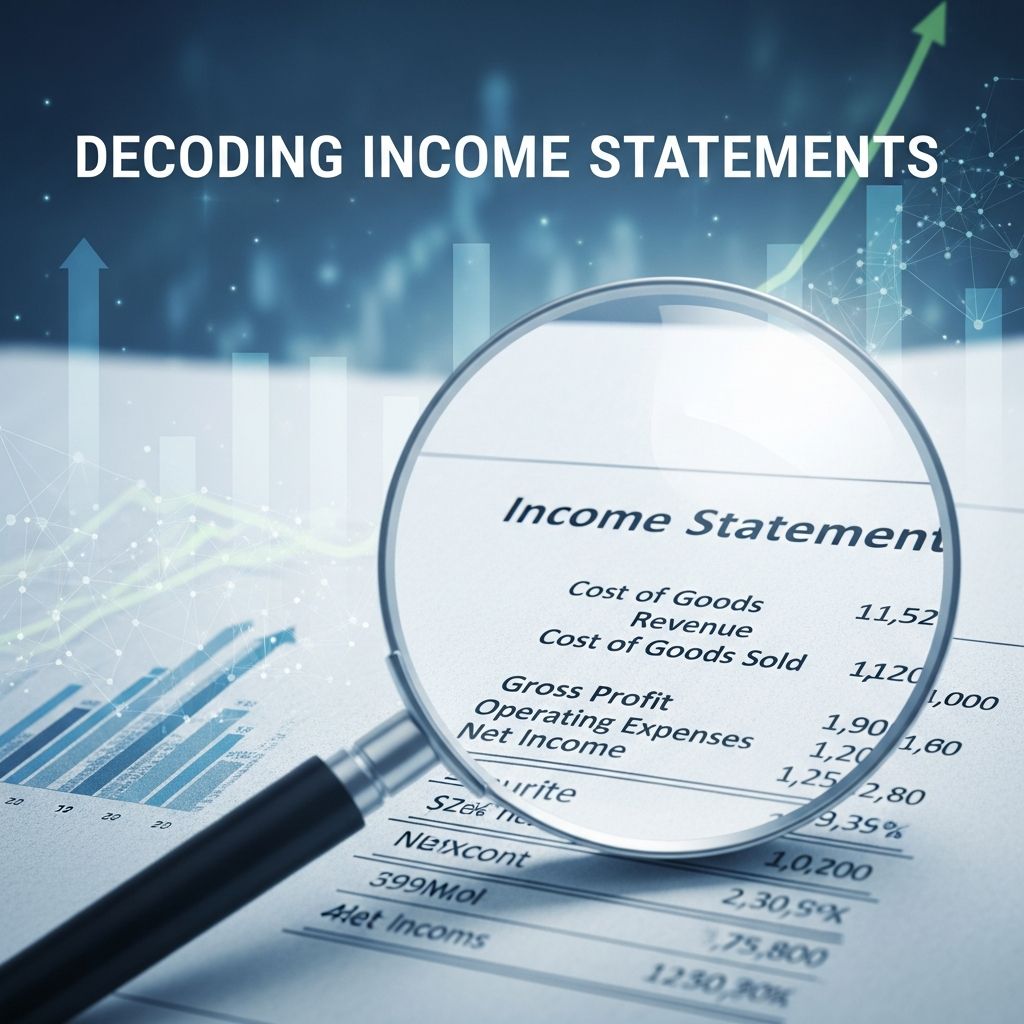
The income statement stands as a cornerstone of financial reporting, offering a clear view of a company’s profitability over a defined period, such as a quarter or fiscal year. Unlike a balance sheet, which captures a snapshot in time, this document tracks revenues earned against expenses incurred, culminating in net income or loss.
Why Income Statements Matter for Investors and Managers
Understanding an income statement empowers stakeholders to gauge operational efficiency, spot trends in earnings, and inform decisions on investments or cost controls. It reveals not just total profits but how they are generated, highlighting strengths in core operations or drags from ancillary costs.
For investors, consistent analysis of this statement alongside peers reveals competitive positioning. Managers use it to refine budgeting, while lenders assess repayment capacity through steady profitability indicators.
Core Building Blocks of an Income Statement
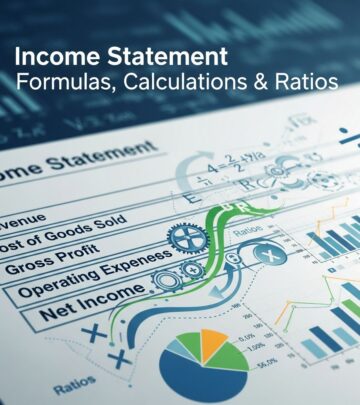
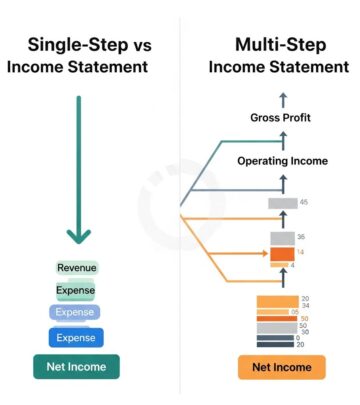
Every income statement follows a logical progression from top-line revenue to bottom-line net income. Key components include revenue, costs, profits at various stages, and final tax adjustments. Here’s a breakdown:
- Revenue (Top Line): The starting point, representing total inflows from primary business activities like product sales or services rendered. It excludes one-off gains, focusing on core operations.
- Cost of Goods Sold (COGS): Direct costs tied to production, such as raw materials and labor. Subtracting COGS from revenue yields gross profit.
- Gross Profit: Initial profitability measure after production costs, indicating pricing power and production efficiency.
- Operating Expenses: Indirect costs like marketing, salaries, and rent that support daily operations but aren’t directly linked to goods produced.
- Operating Income (EBIT): Gross profit minus operating expenses, showing earnings from core business before interest and taxes.
- Non-Operating Items: Gains or losses from peripheral activities, including interest income/expense or asset sales.
- Income Before Taxes: Operating income adjusted for non-operating items.
- Taxes and Net Income (Bottom Line): Final profit after tax deductions, the true measure of earnings available to shareholders.
Visualizing the Flow: A Sample Income Statement
To illustrate, consider this simplified table for a manufacturing firm over one year:
| Category | Amount ($) |
|---|---|
| Revenue | 500,000 |
| Less: COGS | (200,000) |
| Gross Profit | 300,000 |
| Operating Expenses: | |
| Selling & Admin | (95,000) |
| Operating Income | 205,000 |
| Non-Operating (Interest Expense) | (26,000) |
| Income Before Taxes | 179,000 |
| Taxes (25%) | (44,750) |
| Net Income | 134,250 |
This example, inspired by standard formats, demonstrates how figures cascade downward.
Distinguishing Revenue Types for Accurate Analysis
Revenue splits into operating (from main business) and non-operating (e.g., investment returns). Operating revenue drives sustainability assessments, while non-operating items signal diversification or risks.
Recognizing recurring vs. one-time revenue prevents over-optimism. For instance, a tech firm might report steady software subscriptions alongside a one-off patent sale—focus on the former for long-term viability.
Breaking Down Expenses: Operating vs. Non-Operating
Expenses are categorized to isolate core business costs. Operating expenses encompass:
- Selling, General, and Administrative (SG&A): Marketing, office supplies, executive pay.
- Research & Development (R&D): Innovation investments.
- Depreciation/Amortization: Asset value wear over time.
Non-operating expenses, like loan interest, affect the bottom line but not operational health. High operating expenses relative to revenue may flag inefficiency.
Key Profit Metrics and What They Reveal
- Gross Profit Margin: (Gross Profit / Revenue) x 100. Measures production efficiency; higher is better for cost control.
- Operating Margin: (Operating Income / Revenue) x 100. Reflects management of overheads.
- Net Profit Margin: (Net Income / Revenue) x 100. Overall profitability after all deductions.
These ratios, calculated from the statement, enable benchmarking against industry averages.
Real-World Example: Retail Company Breakdown
Imagine a retail chain: Annual revenue hits $1.2 million from store sales. COGS at $750,000 (merchandise) leaves $450,000 gross profit. Operating expenses total $300,000 (rent $100k, salaries $150k, marketing $50k), yielding $150,000 operating income. After $10,000 interest and $35,000 taxes, net income is $105,000.
Analysis: A 37.5% gross margin suggests strong supplier deals, but 25% operating expenses indicate room for admin cuts.
Common Pitfalls in Reading Income Statements
Avoid these errors:
- Ignoring period length—compare apples-to-apples (e.g., quarterly vs. annual).
- Overlooking adjustments like stock-based compensation, which inflate expenses.
- Neglecting trends—single-period views miss growth or declines.
- Confusing accrual vs. cash accounting; income statements use accrual, recognizing revenue when earned, not received.
Income Statement vs. Other Financial Reports
| Statement | Focus | Time Frame |
|---|---|---|
| Income Statement | Profitability (Revenues – Expenses) | Period (e.g., year) |
| Balance Sheet | Assets, Liabilities, Equity | Point in time |
| Cash Flow Statement | Cash movements | Period |
Integrating all three provides holistic insights; income drives equity changes on the balance sheet.
Advanced Tips for In-Depth Analysis
Trend analysis over multiple periods uncovers patterns. Ratio analysis, like EBITDA (Earnings Before Interest, Taxes, Depreciation, Amortization), approximates cash profitability.
Segment reporting, if available, breaks down performance by division, revealing stars or laggards.
Frequently Asked Questions (FAQs)
What is the primary purpose of an income statement?
It summarizes revenues, expenses, and profits over a period to show financial performance.
How does COGS differ from operating expenses?
COGS are direct production costs; operating expenses are indirect overheads.
Why might net income differ from cash flow?
Non-cash items like depreciation and accrual timing create variances.
Can small businesses skip formal income statements?
No—tracking is vital for tax compliance, loans, and growth planning.
How often are income statements prepared?
Public companies file quarterly and annually; privates vary by needs.
Leveraging Income Statements for Strategic Decisions
Beyond basics, dissect for cost creep or revenue concentration risks. Investors favor firms with expanding margins; managers target expense optimization. Tools like Excel models link statements for forecasting.
In volatile markets, focus on operating income for resilience signals. Pair with industry data for context—tech firms tolerate high R&D, while retailers prioritize low COGS.
References
- Income Statement: What are the key components? — Swoop Funding. 2023. https://swoopfunding.com/us/business-glossary/income-statement/
- 3 Key Components of the Income Statement — IBN Tech. 2023. https://www.ibntech.com/blog/components-of-an-income-statement/
- What is an income statement — DataSnipper. 2024. https://www.datasnipper.com/resources/what-is-an-income-statement
- What is an income statement — BDC. 2024. https://www.bdc.ca/en/articles-tools/entrepreneur-toolkit/templates-business-guides/glossary/income-statement
- Income Statement – Definition, Explanation and Examples — Corporate Finance Institute. 2024. https://corporatefinanceinstitute.com/resources/accounting/income-statement/
- The BEST BEGINNER’S Guide to the Income Statement! — YouTube (Wall Street Prep). 2023. https://www.youtube.com/watch?v=DT1lgLO02Wc
- What is an income statement? — SEC.gov. 2023. https://www.sec.gov/files/income-statement-building-blocks.pdf
Similar Articles








Read full bio of Sneha Tete