Credit Score Factors: 5 Steps To Build A Stronger Score
Master the key elements shaping your credit score to boost financial opportunities and secure better rates.

Your credit score acts as a financial report card, influencing everything from loan approvals to interest rates on mortgages and credit cards. Understanding its components empowers you to make informed decisions that elevate your score over time. This guide breaks down the core elements, drawing from established models like FICO, to help you navigate and optimize your credit profile effectively.
The Foundation of Credit Scoring Models
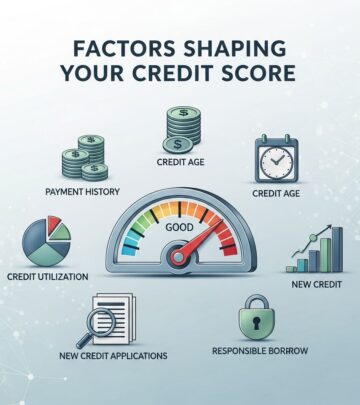
Credit scores, primarily calculated using FICO or VantageScore models, rely on data from your credit reports provided by bureaus such as Equifax, Experian, and TransUnion. These models weigh five main categories to predict your likelihood of repaying debt responsibly. Payment history dominates at 35%, followed by amounts owed at 30%, length of credit history at 15%, credit mix at 10%, and new credit at 10%. Variations exist between models, but these factors remain consistent across major scoring systems.
FICO, the most widely used model by lenders, analyzes patterns in credit behavior to assign scores typically ranging from 300 to 850. Higher scores signal lower risk, unlocking favorable terms. Regular monitoring via free annual credit reports from AnnualCreditReport.com or services like myFICO ensures you’re aware of your standing.
Payment History: The Heaviest Weight
Representing 35% of your FICO score, payment history tracks your reliability in settling debts on time. It encompasses on-time payments, late payments, delinquencies, collections, and public records like bankruptcies. A single late payment can drop your score by 100-150 points, with effects lingering for up to seven years, though the impact diminishes over time.
- On-time payments: Build positive history across all accounts, including credit cards, loans, and utilities if reported.
- Late payments: Defined as 30+ days past due; even one can signal risk to lenders.
- Severe negatives: Collections, foreclosures, or bankruptcies weigh heavily, but consistent good behavior post-event aids recovery.
To strengthen this factor, set up autopay for at least the minimum due and calendar reminders for others. If behind, contact creditors for hardship programs. Over time, positive payments outweigh past mistakes.
Amounts Owed: Managing Credit Utilization
This 30% factor evaluates total debt relative to available credit limits, known as credit utilization. Ideal ratios stay below 30%, with under 10% optimal for top scores. High balances, even if paid off monthly, can hurt if reported near statement dates.
| Utilization Range | Score Impact | Actionable Tip |
|---|---|---|
| 0-10% | Positive (Excellent) | Pay balances before statements close. |
| 10-30% | Neutral to Positive | Request limit increases without hard inquiries. |
| 30-50% | Neutral to Negative | Pay down revolving debt aggressively. |
| 50%+ | Strong Negative | Avoid maxing cards; consider balance transfer. |
Lenders view high utilization as overextension risk. Pay down cards strategically and avoid closing old accounts, which could raise ratios. Track via monthly statements or credit monitoring apps.
Length of Credit History: The Value of Time
Accounting for 15%, this measures the average age of accounts and age of your oldest account. Longer histories provide more data on sustained responsibility, benefiting established users. Newcomers face challenges but can build via secured cards.
- Average age: Weighted by balance; keep oldest accounts open.
- Oldest account: Retain even if unused, as closure shortens history.
- No history: Use secured products or become authorized user on trusted accounts.
Patience pays; histories grow naturally. Avoid unnecessary closures during major applications.
Credit Mix: Diversity in Borrowing
At 10%, credit mix assesses variety: revolving (cards) vs. installment (loans). A balanced portfolio—e.g., mortgage, auto loan, cards—demonstrates versatility, but don’t open accounts solely for this.
Most benefit from natural mix via life events. Forced diversification risks new credit dings. Focus on responsible management over quantity.
New Credit: Inquiries and Recent Accounts
The final 10% scrutinizes recent activity: hard inquiries (applications) and new accounts. Hard pulls drop scores 3-7 points temporarily (up to 12 months), multiple in short periods more so. Soft inquiries (self-checks) don’t affect scores.
- Hard inquiries: Rate-shop within 14-45 days (e.g., mortgages) to count as one.
- New accounts: Too many signal desperation; space applications.
- Duration: Inquiries visible 2 years, impact 1 year typically.
Apply judiciously; prequalify with soft pulls first.
Action Plan: Elevating Your Score Step-by-Step
Improving involves targeting weaknesses:
- Review reports: Dispute errors at Equifax, Experian, TransUnion.
- Prioritize payments: Use debt snowball or avalanche methods.
- Lower utilization: Pay twice monthly; consolidate high-interest debt.
- Build history: Secured cards for thin files.
- Limit applications: 1-2 per year max.
Expect gradual gains: 1-2 months for utilization tweaks, 3-6 for payment fixes. Tools like Experian Boost add positive utility/telecom payments.
Common Myths and Realities
| Myth | Reality |
|---|---|
| Closing cards helps scores. | Shortens history, raises utilization. |
| Carrying balances builds credit. | Interest accrues; pay in full. |
| Score drops erase permanently. | Impacts fade; positives accumulate. |
Steer clear of quick fixes like credit repair scams; FTC warns they’re often ineffective.
Frequently Asked Questions
What is a good credit score?
670-739 (good), 740-799 (very good), 800+ (exceptional) per FICO. Varies by lender.
How long do late payments affect scores?
Up to 7 years on reports, but score impact lessens sooner with good habits.
Does checking my score hurt it?
No—soft inquiries don’t count.
Can I improve score without credit cards?
Yes, via loans, rent reporting, or authorized user status.
Why do scores differ across bureaus?
Different data/reporting timing; lender pulls matter most.
Long-Term Strategies for Credit Excellence
Sustain gains by budgeting, emergency funds (3-6 months expenses), and annual reviews. Life events like job loss? Communicate with creditors early. For young adults, start with student loans or secured products. Retirees: Maintain activity without excess debt.
Insurance scores derive from credit data, affecting premiums; strong credit saves here too. Business owners: Personal scores impact startup loans.
By mastering these factors, you position yourself for lower rates—saving thousands on a 30-year mortgage (e.g., 760+ score vs. 620: ~$100/month less). Track progress quarterly.
References
- Factors That Affect Your Credit Score — Regions Bank. 2023. https://www.regions.com/insights/personal/article/credit-score-meaning-the-factors-that-affect-your-credit-score
- The 5 Factors that Make Up Your Credit Score — Freddie Mac. 2024-01-15. https://myhome.freddiemac.com/blog/financial-education/credit-score-factors
- 5 Key Factors That Impact Your Credit Score — Provident Credit Union. 2025. https://providentcu.org/blog/news/5-key-factors-that-impact-your-credit-score
- What affects your FICO credit score & how is your score calculated? — Nav. 2024-06-10. https://www.nav.com/resource/5-main-credit-scoring-factors/
- Five Factors That Impact Your Credit Score — Heartland Bank. 2024. https://www.hbtbank.com/personal-banking/five-factors-that-impact-your-credit-score/
- Credit Scores — Federal Trade Commission (FTC). 2025-02-01. https://consumer.ftc.gov/credit-scores
- How are FICO Scores Calculated? — myFICO. 2025. https://www.myfico.com/credit-education/whats-in-your-credit-score
Similar Articles








Read full bio of medha deb