Debts Surviving Bankruptcy Discharge
Discover which debts bankruptcy cannot erase and strategies to manage them effectively for lasting financial relief.
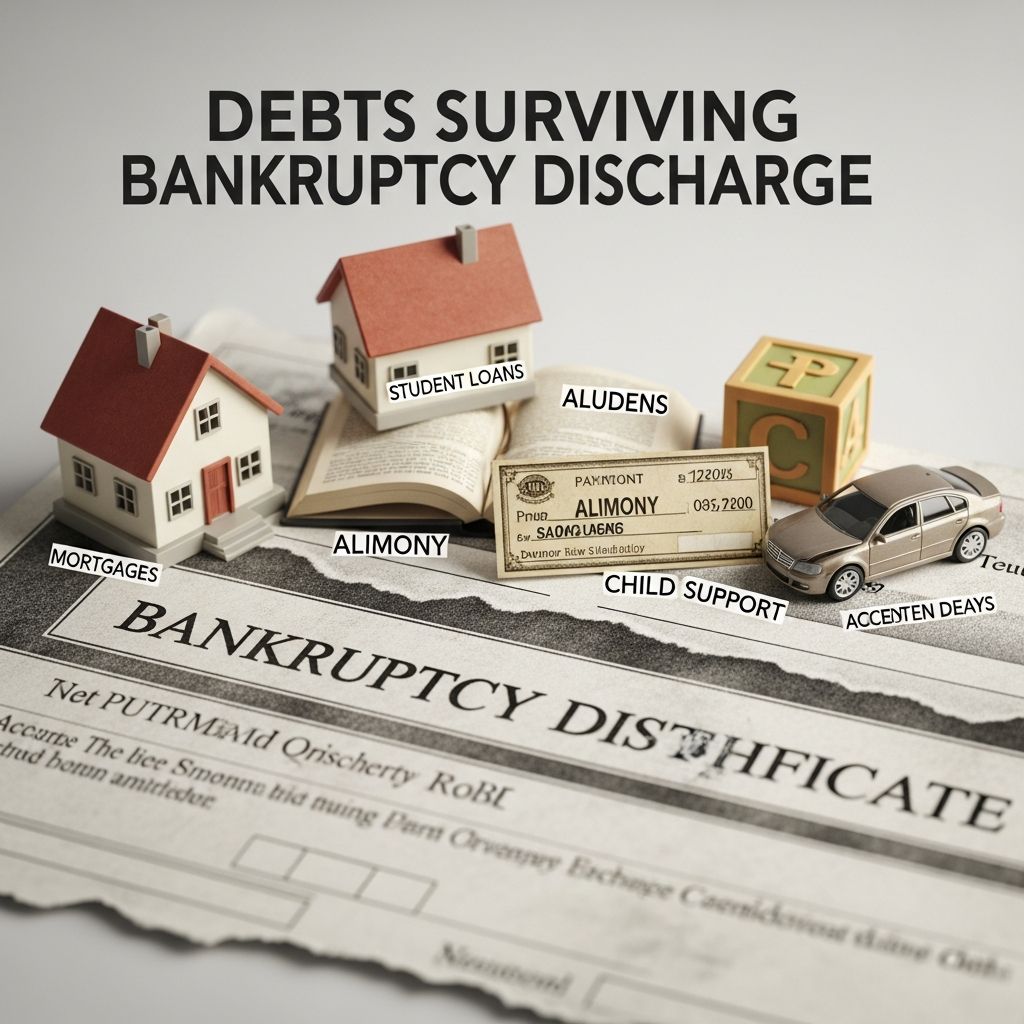
Bankruptcy offers a pathway to financial fresh starts by eliminating many unsecured debts, yet specific obligations remain intact post-discharge. These non-dischargeable debts prioritize public policy, family welfare, and legal accountability over individual relief. Understanding them is crucial for realistic expectations and proactive planning.
Core Principles of Debt Discharge in Bankruptcy
The U.S. Bankruptcy Code, particularly Section 523, outlines exceptions to discharge, categorizing debts into those automatically non-dischargeable and those challengeable by creditors. Chapter 7 liquidates assets for immediate relief, while Chapter 13 restructures payments over years, but both preserve certain liabilities. Courts enforce these rules to balance debtor protection with societal interests.
Dischargeable debts typically include credit card balances, medical bills, and utility arrears, freeing filers from personal liability. Secured debts like mortgages may see arrears discharged if collateral is surrendered, but liens persist. Non-dischargeable categories demand repayment regardless of filing type.
Family Support Obligations: Unbreakable Commitments
Domestic support tops the list of perpetual debts. Child support, alimony, and related divorce obligations survive bankruptcy to safeguard dependents. In Chapter 13, plans must cure arrears before final discharge, ensuring ongoing payments post-case.
- Child Support: Court-ordered payments for minor children remain enforceable via wage garnishment or license suspension.
- Alimony/Spousal Maintenance: Payments to ex-spouses for financial equity post-divorce.
- Other Family Debts: Attorney fees from custody battles or property settlements tied to support.
Public policy deems these essential, overriding bankruptcy’s relief. Filers must list them accurately; omission risks case dismissal.
Tax Liabilities: Government Claims That Endure
Recent income taxes (filed within three years), payroll taxes, and fraud-related penalties resist discharge. Older taxes may qualify if returns were timely filed and assessments predated filing by over 240 days. Tax liens attach to property, surviving even if the underlying debt discharges.
| Tax Type | Dischargeable? | Conditions |
|---|---|---|
| Recent Income Tax | No | Filed within 3 years; assessed within 240 days |
| Payroll/Trust Fund Taxes | No | Always non-dischargeable |
| Older Income Tax | Possibly | Timely filed, no fraud, aged requirements met |
| Tax Liens | No | Persist on assets |
Consult IRS guidelines or tax professionals pre-filing to identify dischargeable portions.
Student Loans: The Hardship Hurdle
Federal and private student loans endure unless undue hardship is proven, a stringent standard via the Brunner Test. Borrowers must show persistent inability to maintain minimal living standards while repaying, good-faith repayment efforts, and likely future insolvency.
- Courts rarely grant relief; success rates hover below 1%.
- Total/permanent disability discharges exist for federal loans via separate applications.
- Income-driven repayment plans offer affordability outside bankruptcy.
Recent reforms may ease paths, but discharge remains exceptional.
Debts from Wrongful Acts and Fraud
Obligations from deceit or harm persist. Creditors can object within 60 days, proving exceptions like luxury purchases over $675 or cash advances exceeding $950 near filing.
- Fraud/False Pretenses: Credit obtained via lies.
- Willful/Malicious Injury: Intentional harm to persons/property.
- DUI-Related: Injury/death debts from intoxicated driving.
- Embezzlement/Larceny: Theft or fiduciary breaches.
These require adversary proceedings; unchallenged, some discharge.
Government Fines, Penalties, and Restitution
Criminal fines, victim restitution, traffic tickets, and civil penalties to agencies like EPA endure. Bankruptcy addresses finances, not legal consequences.
- Court fines from violations.
- Restitution to crime victims.
- Government overpayments/forfeitures.
HOA/condo fees post-filing also survive.
Overlooked or Special Category Debts
Unscheduled debts discharge only if creditors knew of filing. Retirement plan withdrawals, certain HOA fees, and custody attorney fees join the list. Chapter 7 filers face luxury debt presumptions within 90 days pre-filing.
Strategic Planning Before Filing
Pre-bankruptcy audits reveal non-dischargeables. Prioritize Chapter 13 for support arrears catch-up. Negotiate settlements or seek hardship proofs judiciously. Post-discharge, budgeting and income boosts tackle survivors.
Chapter 7 vs. Chapter 13: Discharge Impacts
| Aspect | Chapter 7 | Chapter 13 |
|---|---|---|
| Support Arrears | Non-dischargeable | Must cure via plan |
| Taxes | Recent non-dischargeable | Priority paid over 3-5 years |
| Student Loans | Hardship only | Hardship only |
| Fines/Restitution | Non-dischargeable | Non-dischargeable |
Chapter 13 offers cramdowns on some secured debts but mandates full priority payment.
Common Myths and Realities
- Myth: All debts vanish. Reality: Exceptions abound.
- Myth: Student loans always stick. Reality: Rare discharges possible.
- Myth: Taxes fully wipe out. Reality: Recent ones endure.
Frequently Asked Questions
Can I discharge child support in bankruptcy?
No, child support and alimony are always non-dischargeable to protect family welfare.
Are all student loans non-dischargeable?
Yes, unless undue hardship is proven through strict court tests.
What tax debts survive bankruptcy?
Recent income, payroll taxes, liens, and fraud penalties persist.
Do DUI accident debts discharge?
No, personal injury or death from intoxicated driving remains.
How do I handle non-dischargeable debts post-filing?
Negotiate payments, seek settlements, or explore income-driven plans.
Can creditors still pursue me after discharge?
Only for non-dischargeable debts; discharged ones are permanently barred.
This guide empowers informed decisions. Consult attorneys for personalized advice, as laws evolve.
References
- 11 U.S. Code § 523 – Exceptions to discharge — U.S. Government Publishing Office. 2023. https://www.law.cornell.edu/uscode/text/11/523
- Debts That Are Not Discharged in Bankruptcy — Oklahoma Bar Association (OKLaw.org). 2023-10-01. https://oklaw.org/resource/debts-that-are-not-discharged-in-bankruptcy
- Debts that cannot be eliminated by bankruptcy — Maryland People’s Law Library. 2024. https://www.peoples-law.org/debts-cannot-be-eliminated-bankruptcy
- Non-Dischargeable Debt Under Bankruptcy Law — Justia. 2024-02-15. https://www.justia.com/bankruptcy/collections-credit/non-dischargeable-debt/
- What Debts Are Not Discharged in Bankruptcy? — Experian. 2024-05-20. https://www.experian.com/blogs/ask-experian/what-debts-are-not-discharged-in-bankruptcy/
Similar Articles








Read full bio of medha deb